Vosper Mini Fins Stabilisers retrofit on MiToS

  • Thread starter Thread starter vas
  • Start date Start date
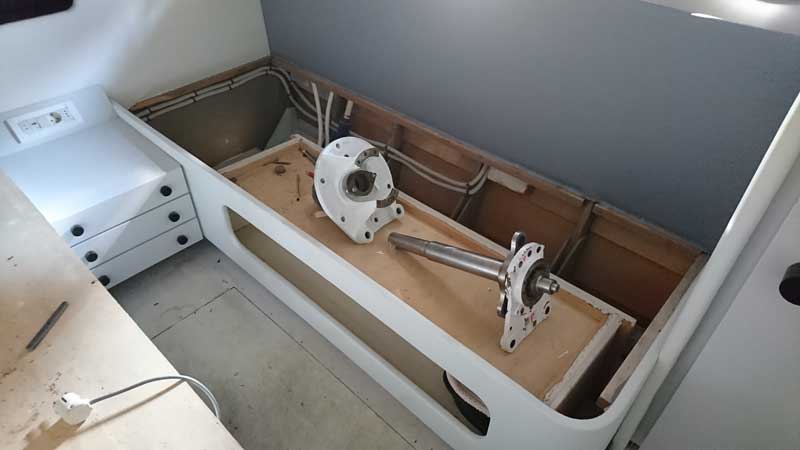
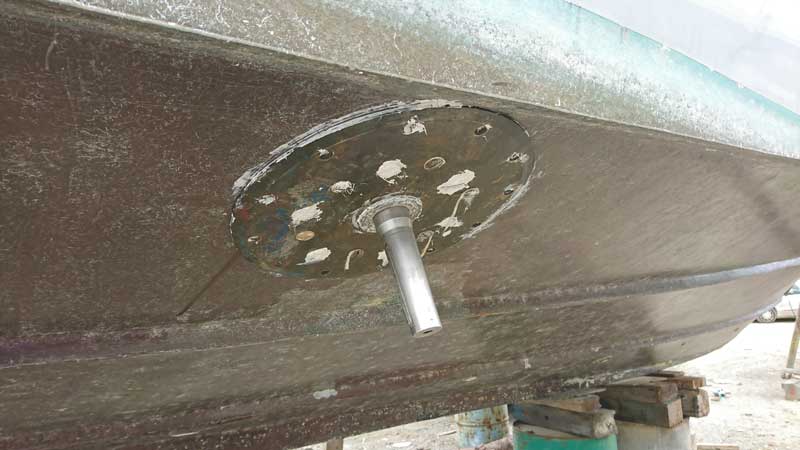
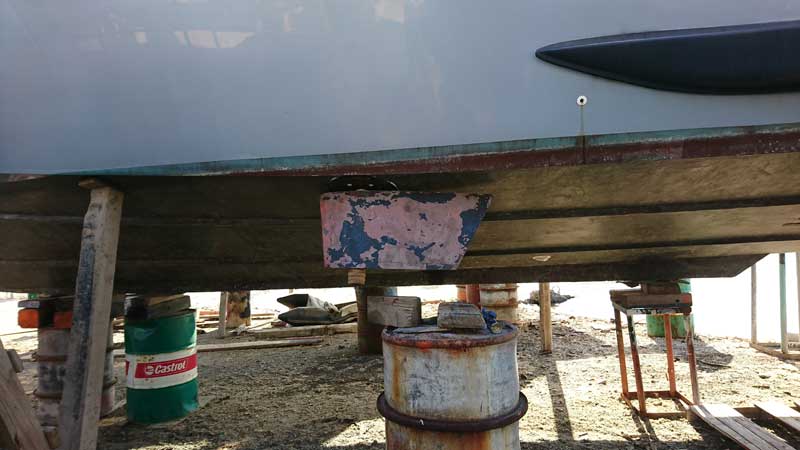
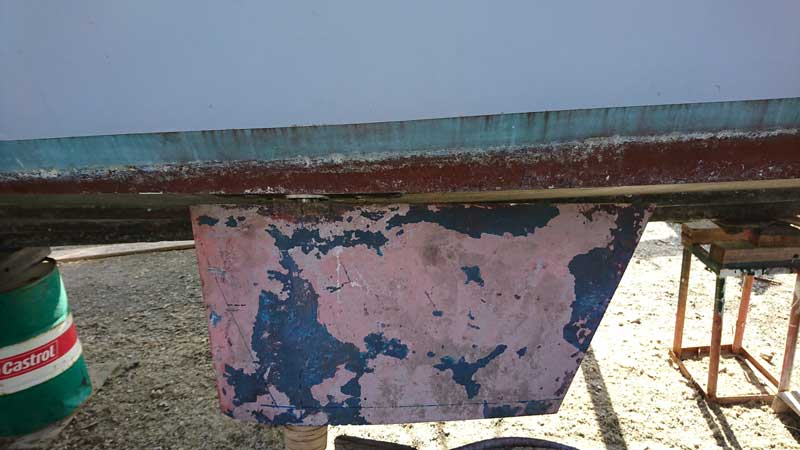
Actually these 400X1200mm of hull are the only ones not cleaned and treated properly during the rebuilt.
Impressive job as always, V.
I can't wait to see the final installation and hear about the results.

Ref. the bit I quoted above, actually the wooden bits look in excellent conditions also in that area.
I mean, aside from being obviously a bit dirt, I can't see any traces of rot anywhere, or blackened planks (which is usually the first indicator of troubles with wooden bits).
Also the parts where you broke the panels, or where you drilled the holes, show that the wood is still as solid as when the boat was built! :encouragement:
 
true P, very true!

Quite happy with the rebuilt, doesn't seem to cause any reasons for concern as I'm hoping not to have to do it again anytime soon...
Just make sure I keep rain water out, rest is just simple maintenance and I get the warmer (or cooler in the summer) environment with much better air quality and no odd smells compared to grp boats.


anyway, some news, both housings cleaned, checked, old flaking paint removed, masked and painted with matching colour. Ready to be sealed with sika 291 and bolted down only weather is not playing ball and has decided to drop all the water that it didn't rain over the last month and a half in the last few days... Forecast is bad for tomorrow, so going in during the w/e.
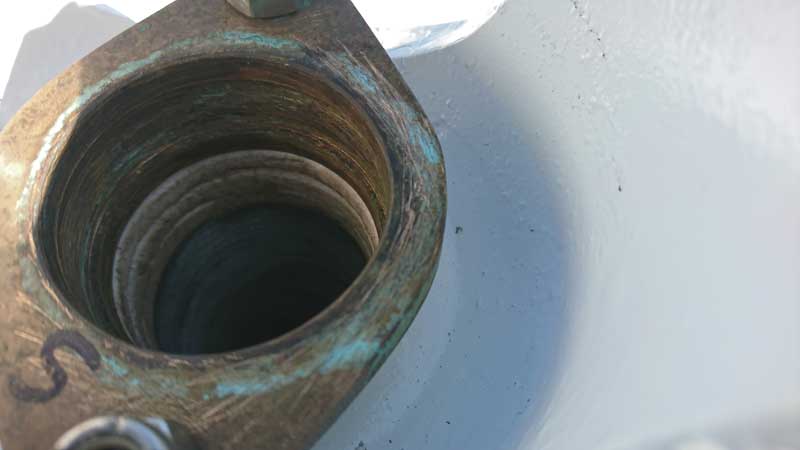
On each housing there are 6 layers of packing (8mm) in excellent nick if a bit dry to my liking, I guess SD had replaced them not too long ago, so just removed 2 top layers on each housing and will replace with new just in case.

Not having much luck with the prehistoric control box as it doesn't look like it's happy with the fin position sensors, so started working on a simple incarnation of an arduino controller.
TBH, to the extent I understood how the gyro worked on the control box, it was simple a matter of:
WHEN boat tilts, gyro turns straight to the end of the travel, pots move and INSTRUCT solenoid to OPEN the correct ram (one on each fin) up to reaching the set angle
WHEN it reaches set angle, return solenoid to centre position (effectively leaving both rams open with P(ump) and T(ank) - all ports interconnected so rams under pressure and tending to level. Pretty sure by that time boat tilts the other way so the above loop runs the other way round.

Pretty basic and easy to simulate in arduino. Even planning to use the same hi amp relays instead of going transistors as I'm not even sure how many amps the solenoid takes, my amp clamp registers peanuts but it must be more than that on engaging!

Anyway I believe I can do that fairly easily. Plan is to use my 7inch touchscreen display (stupidly slow refresh though but it was like 30euro from the depths of China...) to monitor angles for each fin and 9DOF sensor data and have a reasonable feedback of what works and what not.

Now, was about to order a new pump and I'm glad I didn't as the more I study these hydraulics the more I understand the complexity (and costs of a wrong decision!)

JFM mentioned swash plates revs vs pressure vs oil temps, and other fancy things I didn't understand last week, but now I seem to get more familiar with.

Now, for John (or any other sad ones, sorry J :rolleyes: ):
the two pumps with the double pulleys that Vosper has are simple internal gear pumps, so they are fixed displacement pumps producing constant pressure around the circuit, heating oil hence large tank and oil cooler.
All that is matched with the open centre directional valves on the actuators in a odd sized stack together with the pressure release and regulators. This means that if and when I decide to change to proportional directional valves or more expensive servo valves (John do you have servo or proportional valves? I bet the former!) I'll have to get rid of all the stack and buy all bits from the beginning.
Considering I've not even tried what I have and I don't know how it will behave on MiToS, I shouldn't be changing the directional valves as yet.
Further I should carefully select the pump(s) I'll buy to make sure they'll work later one, don't want to fill my garage with hydraulic kit...

BTW, for anyone interested on the above, this video is really great in explaining what happens and how this whole thing works (just too slow for my liking, he could have said all in 3mins max...)!

and this is a good graphical presentation of the various pump types.

So considering the open center directional valves I have, it seems that:
  • either have to buy two pumps or
  • change the typical parallel hydraulic arrangement to serial as shown on the above video (circa 8:10) and preferably get a variable displacement pressure compensated pump

Haven't got a clue how much variable displacement pressure compensated pumps cost I'll try to find out tomorrow, if only I can devise a way to describe them to the shop owner :rolleyes: although I think he's used of me going there and asking odd questions and buying stuff he doesn't understand what I'm going to do with... Most of the customers are JCB, Clark and CAT machinery users.

cheers

V.
 
Hi Vas
Going fast as need to do flight mode in 5 mins

Ok yes those pumps are gear pumps, non variable displacement. I think supplied by poster searanger on here (George)

Therefore you need the two pumps, or plumb series

Better answer is variable displacement pto pumps. If you have DIN mount on your gearboxes they are plug and play provided you buy correct rotation direction. I think e1000 ea but George can help. Then you don't need series plumbing.

I would get prop valves not servo. This job doesn't need servo, and they are a multiple of the price. In star mode the consistency of water isn't variable so you don't need servo feedback and the angular position sensor on the fun shaft is perfectly good. In underway mode the angle sensor is all you need. None of Sleipner, ABT et al use servo valves at 1000 euro +.

I have the vfd but have not had a trip into Eu where I can post it at other end. Next weekend likely - thanks for yr patience. Can you pm me you email addr and I will send you the tech manual as PDF. Also pm me again yr mailing address. I have it from before but it will be lost on my hard drive!

Btw I have a cat 216B3 and jcb 8014 for my garden (google them- nice toys) and I think (not 100% sure but will look tmrw) they have variable disp swash plate pumps so your guy might know what you're asking for. :D

Gotta go
 
John,

thanks for the info!

reason I was thinking that hi end systems would use servo valves is speed of response which I'd expect to be of paramount importance. From what I'm reading servos are 10X faster, but obviously the 10X slower prop valves are good enough for STAR so you save some small change on the overall install :D

I'm starting the hydraulic pump approach unconventionally as I think it's much easier (and cheaper!!!) to get the 3p motor and pump (circa 600euro both, pump less than 150euro...) test, run at lower revs, experiment and when I figure out what works and how much of what I need, I may get an engine mount pump for stabilisation on the way.
Generator and 3p motor will be good for STAR anyway (and assuming I manage it ;) )

Getting straight away 2K worth of pumps without knowing exactly where I'm standing is a bit of an overkill me thinks. Better take it easy, need to have a project running for some time, don't forget that!

No worries re vfd, it will probably be ten days before I get the special 3p motor that can run constantly at 20-50hz without overheating and burning out, so wont be testing the hydraulics before the end of the month. I'll PM my address in a mo.

er, should I ask how big is that garden? These are nice but BIG toys J. Is landscaping another hobby of yours? :p

PMed searanger re prop valves, see what options I have, I'd rather get them now and fit them before adding oil in the system rather than later making a bloody mess of the place (most likely)!
However, I'm not quite sure how I can drive the prop valves as yet, got to see documentation and specs.

Further I'm about to fit one or two pressure sensors as well as an oil tank temp sensor so that I have a feedback of the whole thing as it runs. Plotting a series of values (pressure, angle of fin, temp, and sensor data like tilt accel etc) over time will be the only way to debug my code.

cheers

V.

PS. for the record today I fitted for good the port fin assembly, took approx 1 tube of Sika 291i (and I only had one, so stbrd will be done on Monday after visiting the shop on the way to the boatyard...) Pics tomorrow after I fit the shaft and two rams in place for the first time.
 
Last edited:
hello, again late...

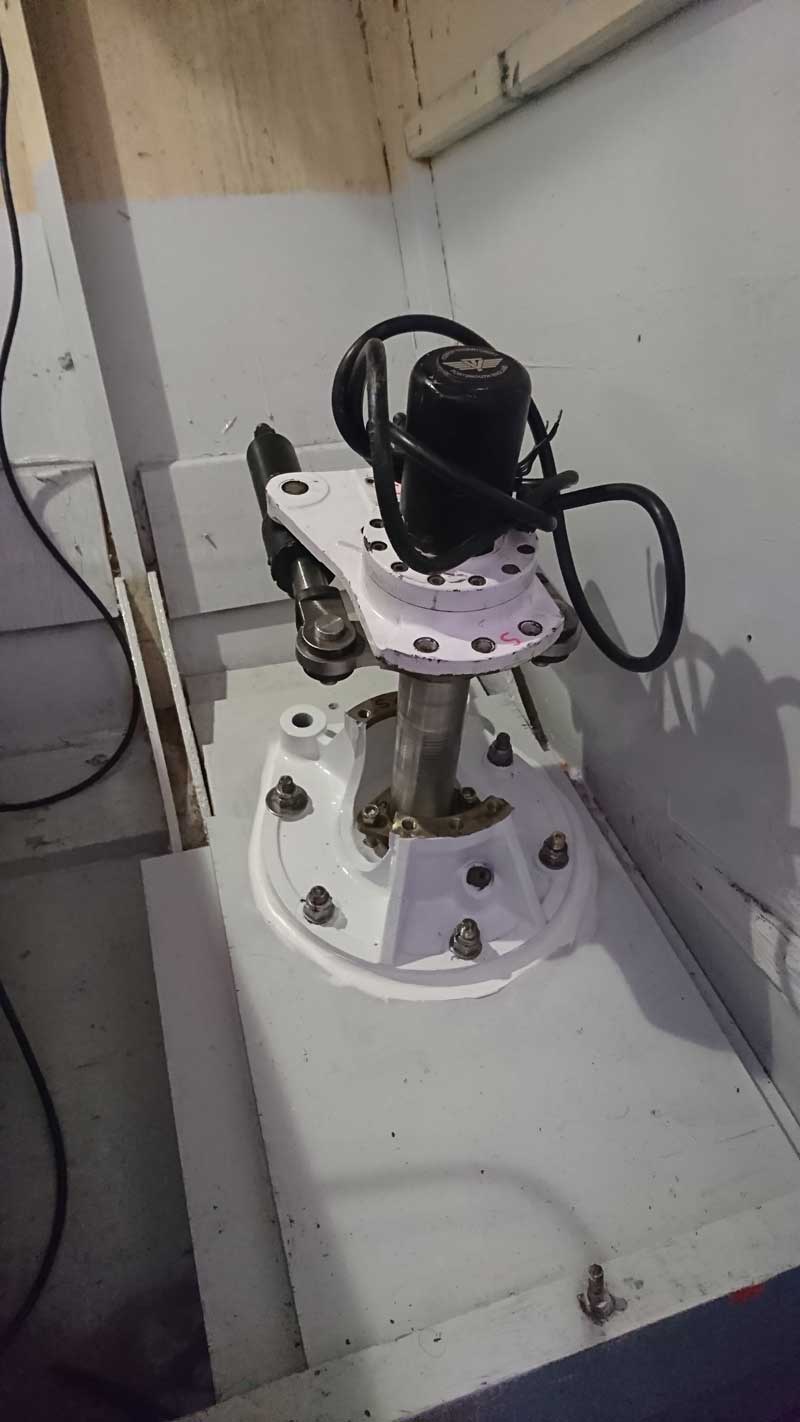
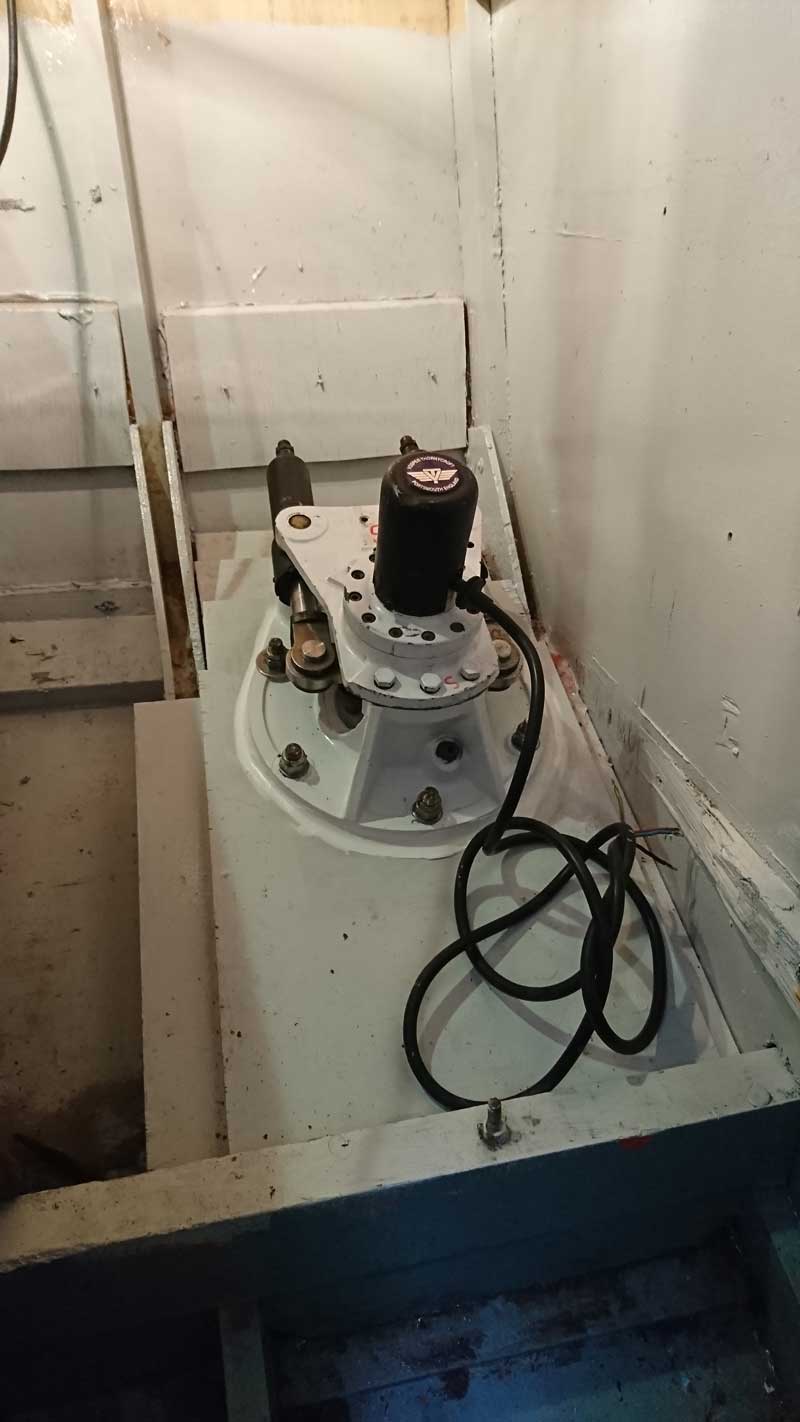
both housings are in place with lots of Sika 291i, bolted tightly with the 6bronze 1/2inch bolts with cotton string round their heads for good measure (typical procedure on wooden boats here)
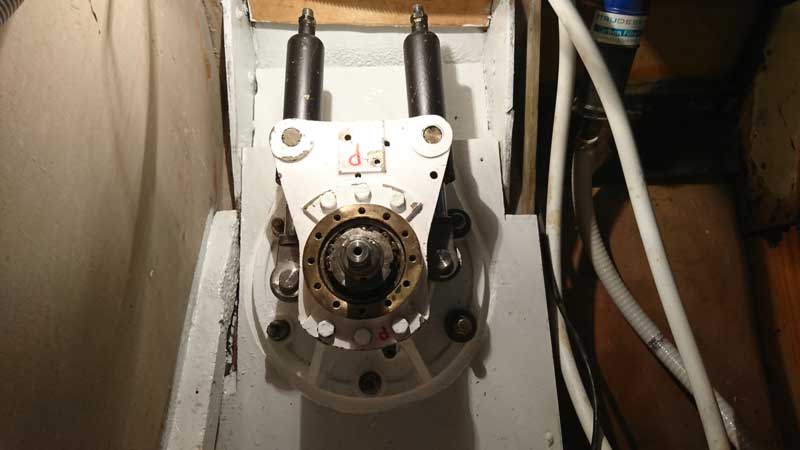
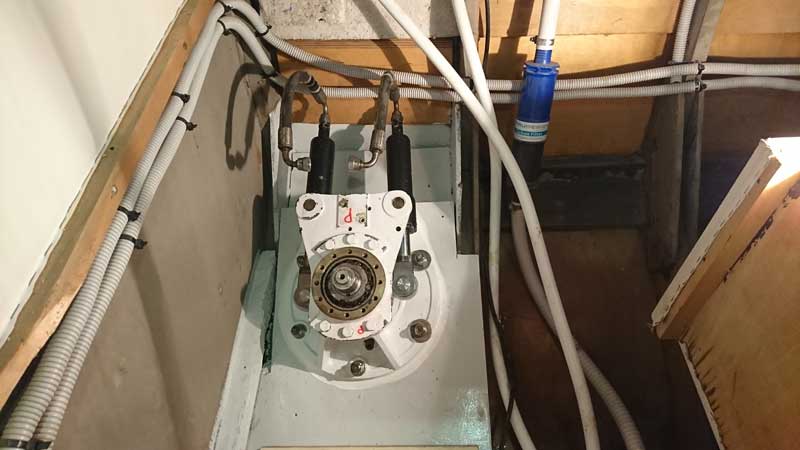
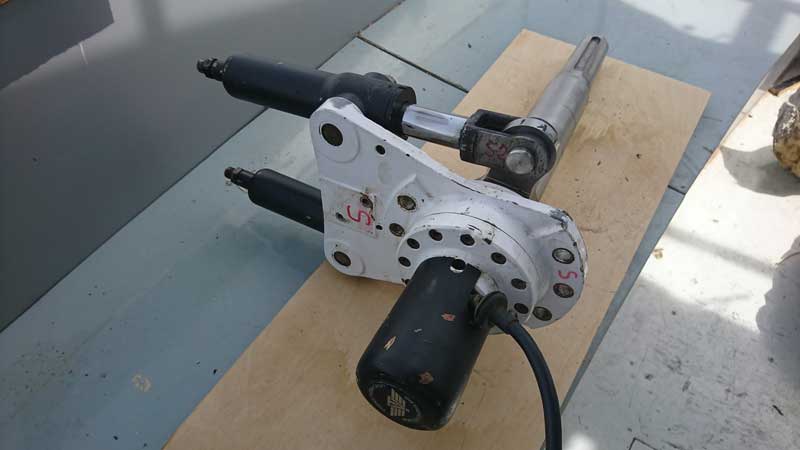
Both shafts/tiller and rams assemblies also bolted in place.
Port fin also temp fitted (has to be removed and used as a model for chopping the stbrd fin)

Some new high pressure hoses fabricated, using some old ones, not very lucky in terms of lengths tbh.
Motor and pump assembly to be purchased on Monday more likely.
Oil tank bolted in the side of the e/r on port side
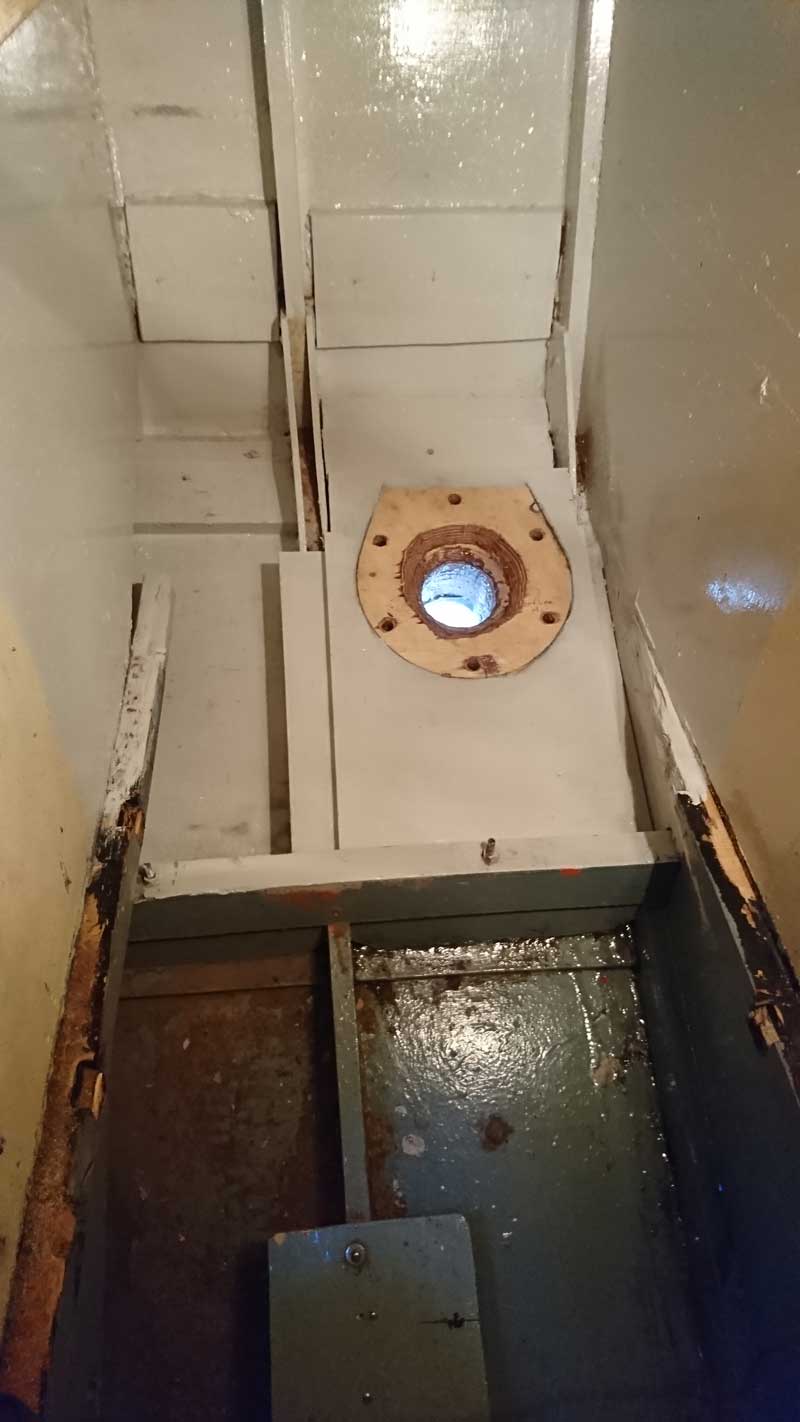
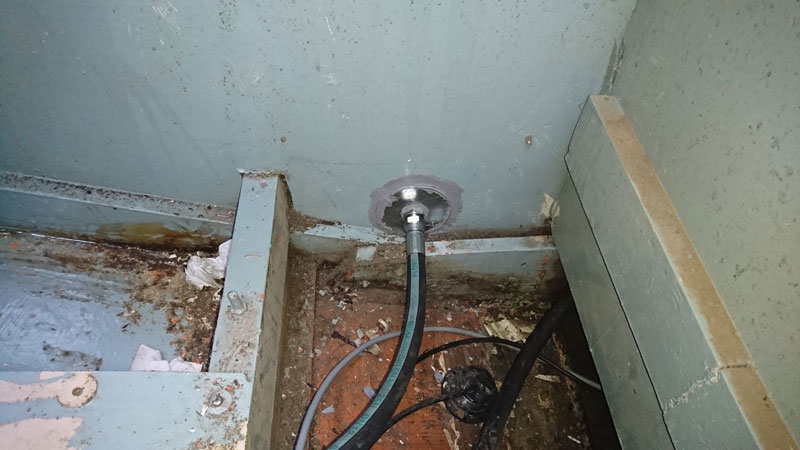
Holes through the bulkhead for the hoses and seawater pipe for cooling the housings also done (OK, got to be sealed later on)

Unfortunately real work and teaching don't let me work as much as I'd like, but getting there:

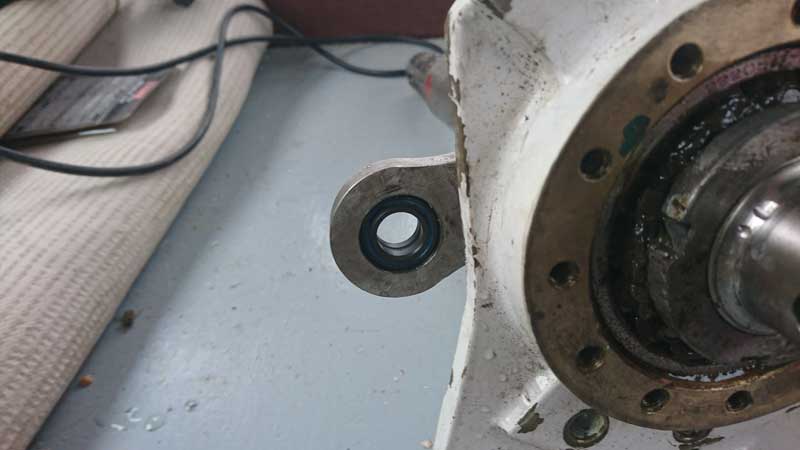
tiller SKF bearings replaced after machined to metric sizes (couldn't find imperial dims one anywhere!):
stabmechanism_28.jpg


housing spray painted (made 2pack matching paint in a spray can, sad I know):
stabmechanism_29.jpg


replaced the top three layers of packing for good measure (probably not needed):
stabmechanism_30.jpg


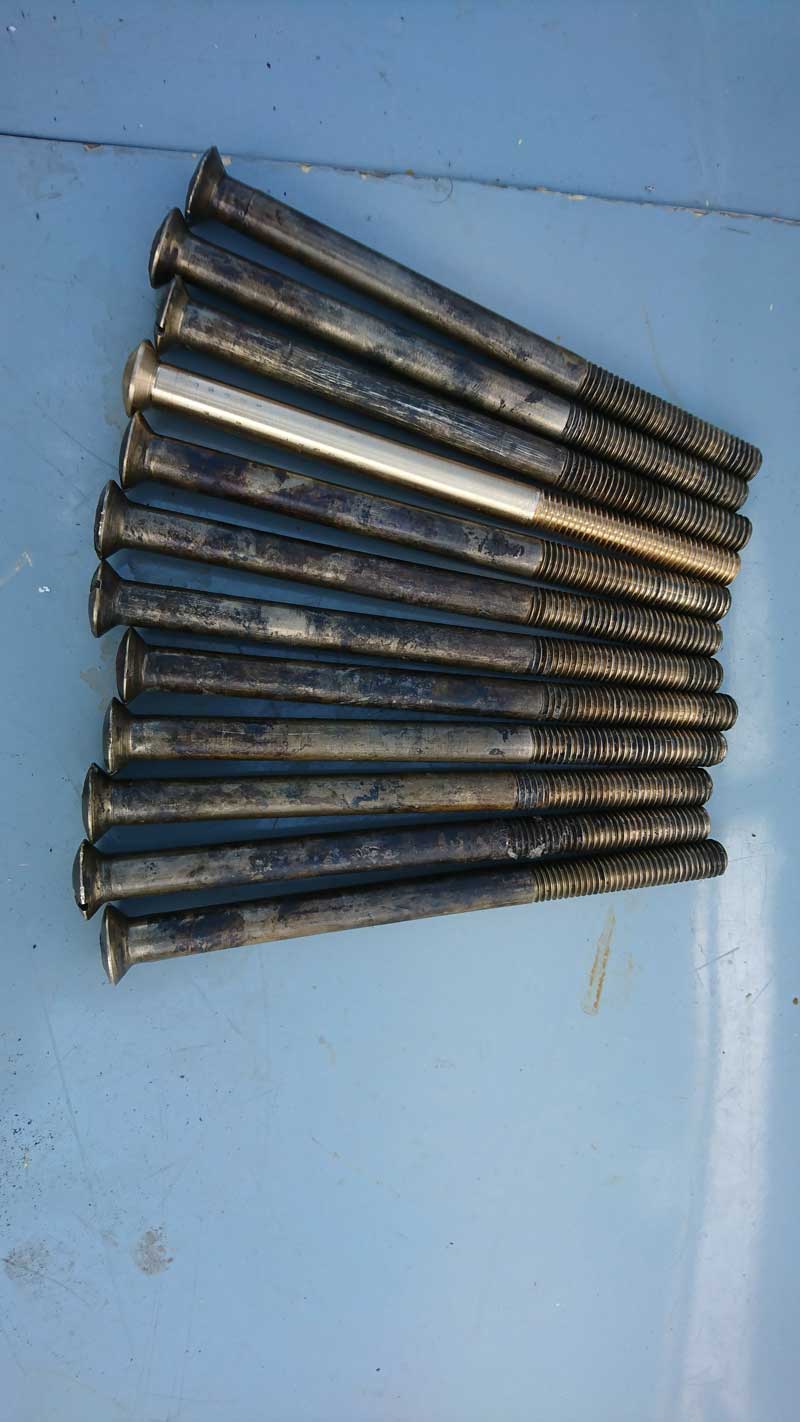
painted the 12 bolts securing the tiller/shaft assembly on the housing (looked carp with flaking paint on them...):
stabmechanism_31.jpg


ready to be fitted:
stabmechanism_32.jpg


spot the odd one out. Pretty sure James shipped all 12 1/2 bolts but I must have misplaced the one, guess I'll find it somewhere when I'm tidying up, anyway Vangelis did a new one:
stabmechanism_34.jpg


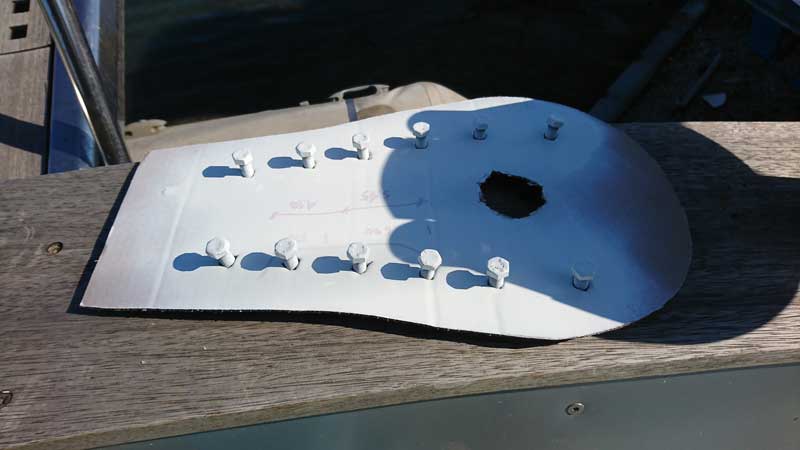
ply (already epoxied) painted for good measure:
stabmechanism_35.jpg


stabmechanism_36.jpg


lots of Sika:
stabmechanism_37.jpg


Big BIG mistake! Decided to assemble the bits on the spot, adding the rams, then the tiller and shaft assembly and THEN try to fit the pins and circlips... Needless to say I couldn't fit the circlips, so once the fin is out, I'll unbolt the small screws securing the shaft onto the housing, lift it a bit, fit the circlips and get it back in place:
stabmechanism_38.jpg


stabmechanism_39.jpg


stabmechanism_40.jpg


Smart approach on stbrd side (Took me 1/5 of the time fitting and I wasn't folded in two as well...) All assembled on the aft deck, slide in and bolt, simple!
stabmechanism_41.jpg


stabmechanism_42.jpg


stabmechanism_43.jpg


finished article, lots of sika around, will be trimmed later. Wonder if there's a primer that will hold on the sika, else I wont be antifouling the screw holes:

stabmechanism_44.jpg


stabmechanism_45.jpg


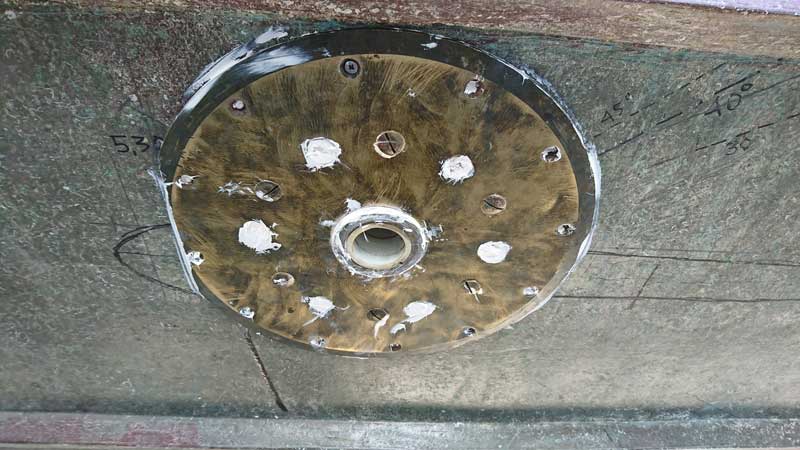
And the fin once more in place, bolted (not v.tightly). Full travel, doesn't need any trimming as it turns out I placed the fins smack where the curvature to aft is at it's maximum (still really small!) and fin looks like it's "looking" down at it's aft end-still only 10-15mm but enough not to foul on the chine or sprayrail. Haven't yet cut the long bolts and haven't yet machined the circa 36mm hole for the washer and twin nuts on the fin, so stack of 92mm hole offcuts souvlakied in there:
stabs_outside_layout21.jpg


stabs_outside_layout22.jpg


stabs_outside_layout23.jpg


Seems that all's going alarmingly smoothly. Bit of head scratching routing high pressure hoses, where to fit the oil cooler and oil filter, but should be able to finish that on Tue.

cheers

V.
 
me again!

relaxing a bit after an extremely interesting boating experience in Gardines flotantes in Xochimilco, Mexico city (should really report that on a different thread tbh) and posting latest work done before leaving Greece last Thu.

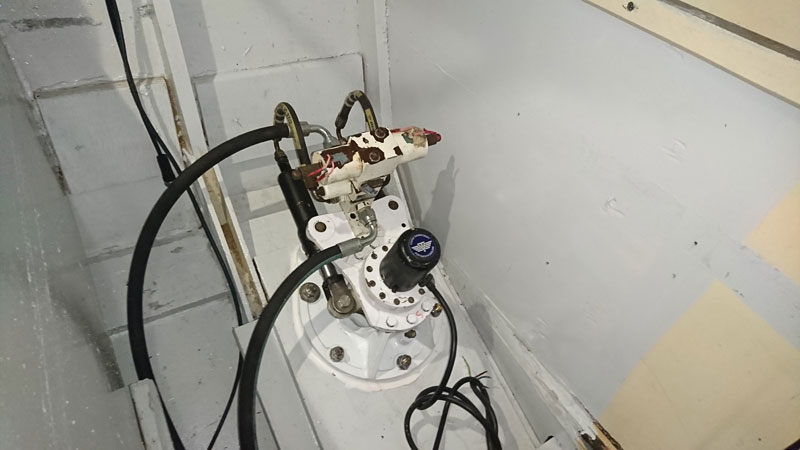
So, all pipework fitted, just missing the final piece of pipe from the heat exchanger to the tank. Wonder if I should start tying these flex hoses on something solid to avoid chaffing, not sure...

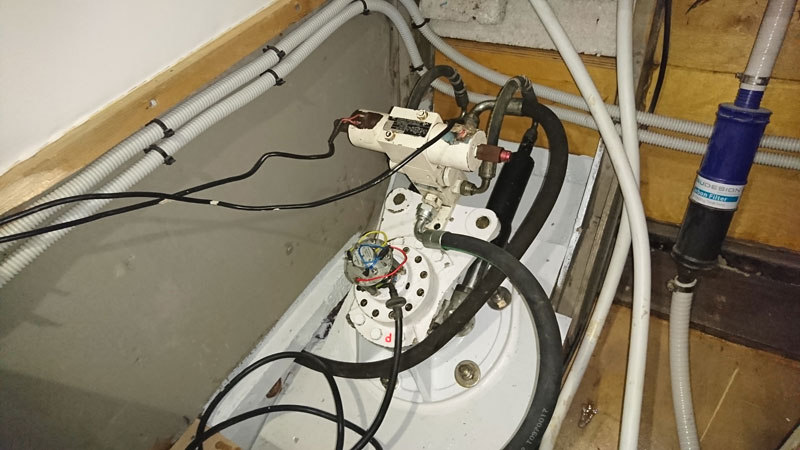
port mechanism with all pipework on (missing water cooling):
stabmechanism_46.jpg

stbrd:
stabmechanism_47.jpg


stbrd side return pipe to filter with proper watertight flange (must do the same on the stbrd inlet side):
stabmechanism_48.jpg


In the e/r I fitted the tank as high as I could and took me an hour filling it up with oil. That was filling a 1lt spare flatish bottle of oil with a funnel, then pouring and repeat (20+ times :eek: ) as I bought oil on a 20lt canister...
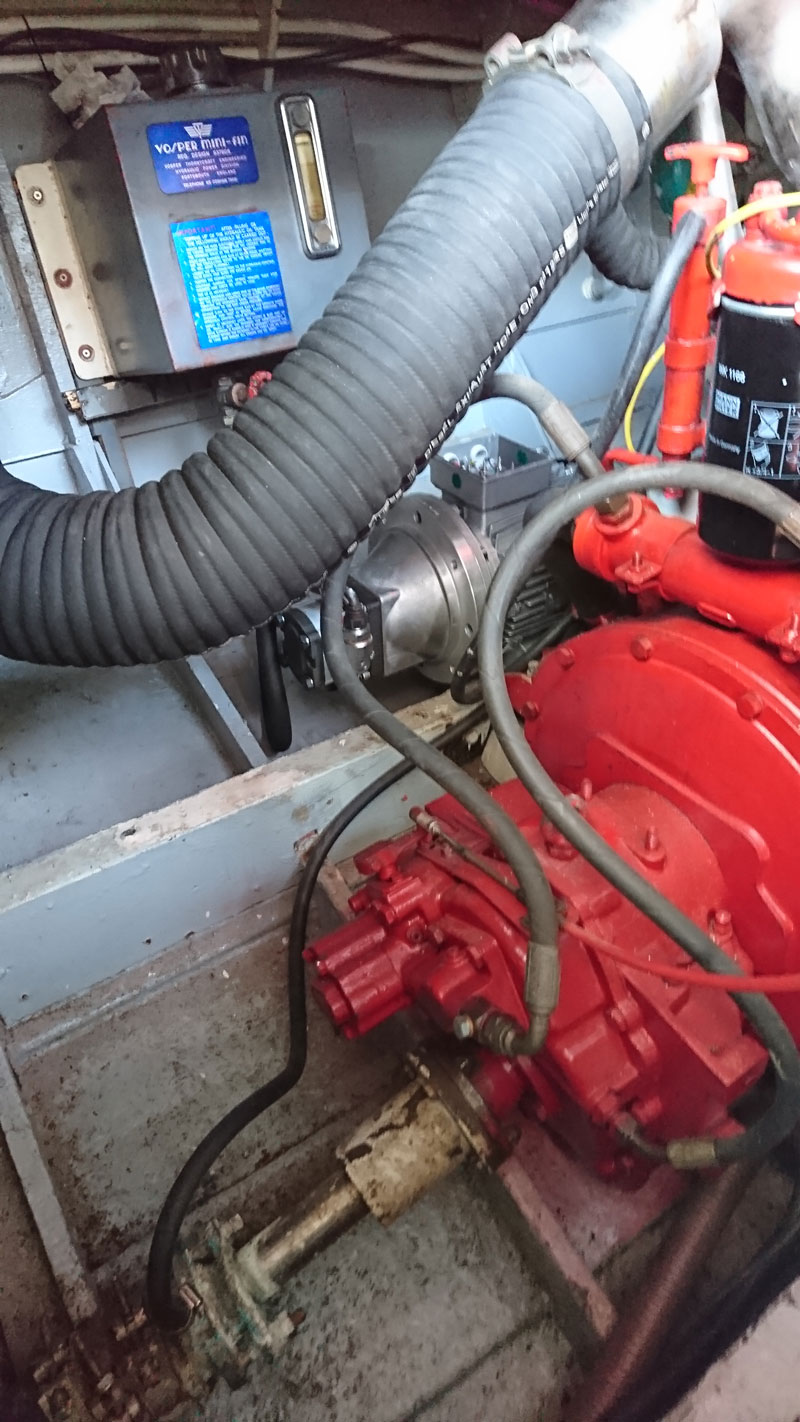
Getting the 5.5kW 3p motor and pump assembly down there was much worse, bleeding motor must be at least 40kg, whole lot close to 50kg. Built a second beam to lay on to the port of the port engine and eventually got it in place alone (not enough space to get a second person helping in there).
On Thu morning got a bagfull of elastic vibration isolators (M6 and M8 similar to these ones) to be used throughout MiToS. The bigger ones will be placed under this motor, smaller will be tested on the freshwaterpump hoping it's going to make it quieter.

That's how the layout looks down there:
stab_pump1.jpg


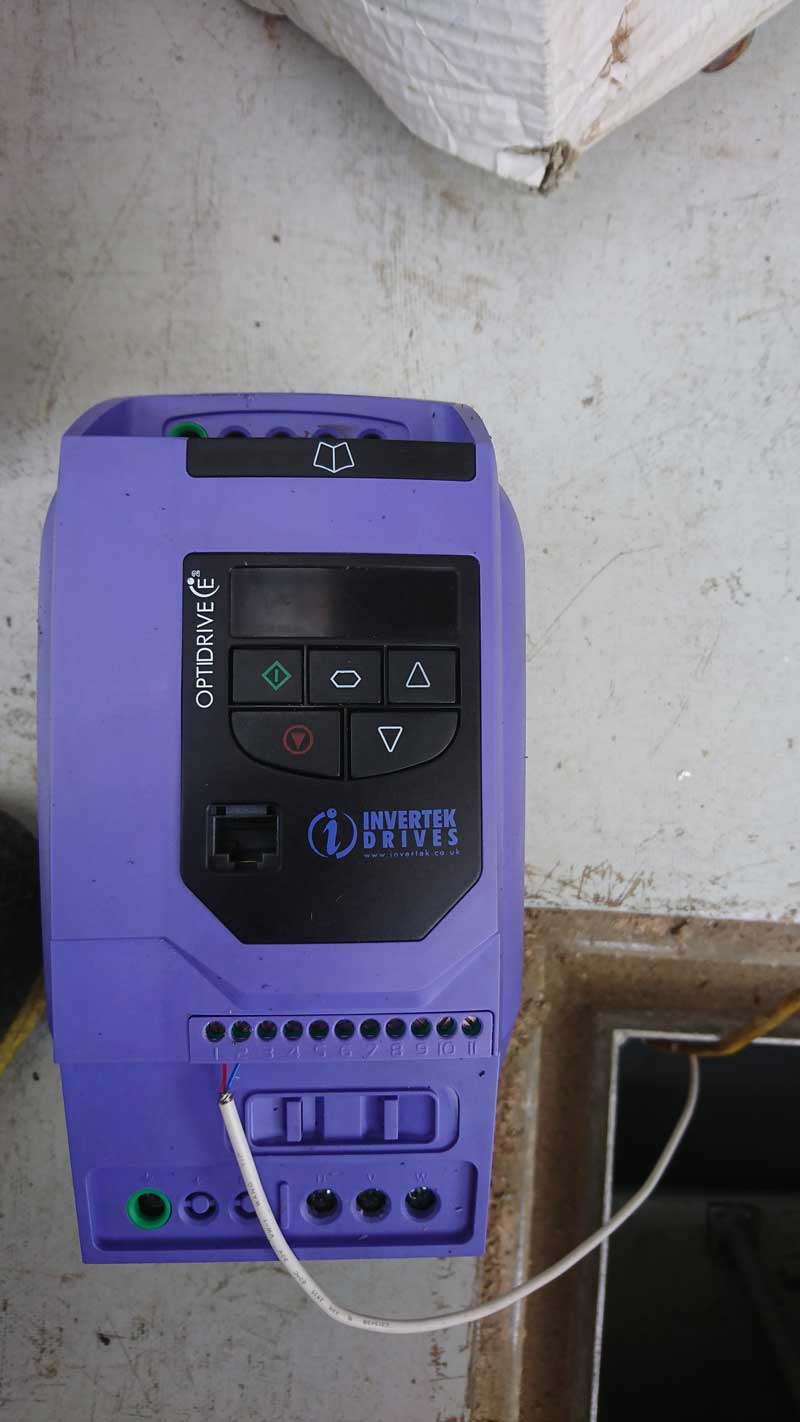
Got to wait for Tue 5th when I'm back to fit the last hose, connect the VFD kindly donated by JFM and test run the system bleeding it and making sure I've got no leaks.

The other job to be done before relaunch is cutting the second fin and fitting them both on.

cheers

V.
 
Fantastic progress Vas.

One question, may be I missed this in an earlier thread, how do you know how much of the fin to cut off or more importantly not cut off? Is there a square metre rule for so many tons of boat for these to work effectively?
 
As my earlier posts on this thread my prediction is it will have difficulty to plane , hold plane and ride stern sinking or bow high - same thing .
It’s the proportion of lifting surfaces the L of the fin takes up in a 14 M lol boat .

Reduce that L % further in a wetted area / lifting L surface and there might just not be enough lift to get it up - planing
The same L fin in in double, treble or quadruple the wetted area and 2x the planing L can cope say a 20M ++
That’s why fins seem not be used as the wetted L decreases.

Displacement speeds there’s no lift so in a D speed small boat say a GB 14 - who cares ? You can bang what ever under the hull where ever .

Max lift or upwards force on planning boat is just behind the point where the hull breaks out of the water .
Lift pressure is not equally distributed, indeed it can be -ve at the stern , hence my prediction seeing as this has not changed and the front max lift area part knackerd by the fins , the boat will sink to the stern as it try’s to plane .
If the “ new “ pre pop out attitude is markerley different than before - ie more draggy as the stern sinks it will never pop out .
Putting more flap down @13-14 knots will drag more .

Huge wake and a lot of black smoke

There’s a reason small planing boats are not Fin stabilised .
 
Last edited:
There’s a reason small planing boats are not Fin stabilised .
So, what?
There's not just one, but several very valid reasons why most of us, if asked our opinion about a project like the one Vas successfully completed with his rebuild, would answer "impossible, period".
Just give him a bit of time, my money is on Vas showing us, yet again, that impossible is nothing. :encouragement:
 
Fantastic progress Vas.

One question, may be I missed this in an earlier thread, how do you know how much of the fin to cut off or more importantly not cut off? Is there a square metre rule for so many tons of boat for these to work effectively?

Nothing seriously discussed in other threads re size/weight/length. Just what you see here in the first few pages of this thread...
In short, the minimal data we have are not enough to produce any scientifically meaningful data. So go by the heart and eye, that's enough atm.

So, what?
There's not just one, but several very valid reasons why most of us, if asked our opinion about a project like the one Vas successfully completed with his rebuild, would answer "impossible, period".
Just give him a bit of time, my money is on Vas showing us, yet again, that impossible is nothing. :encouragement:

thanks P.,

PF, back from Mexico on the 5th, boat should be in the water before the 18th that my wife comes back from Sweden or I have serious problems :rolleyes:

So should be able to report on planning capabilities of MiToS.

cheers

V.
 
11.8 tons is the max Weight I,am coming up with to plane with the info provided earlier.
Beam , L wetted area est calc s aspect ratio deadrise. Hp .
This is assuming no fins knackering the lift .
I ,am using Lindsey Lords tables .
Btw your boats seems to mirror a LL dims so guess the designer has read his book :)— that’s a compliment btw
 
11.8 tons is the max Weight I,am coming up with to plane with the info provided earlier.
Beam , L wetted area est calc s aspect ratio deadrise. Hp .
This is assuming no fins knackering the lift .
I ,am using Lindsey Lords tables .
Btw your boats seems to mirror a LL dims so guess the designer has read his book :)— that’s a compliment btw

thanks PF, let's wait a few weeks and see what I get with my setup!

fwiw, designer was Antonio Maggini.

V.
 
back in the fins thread then...

recovering from the jetlag, put together the rest of the pipework and was ready to fire up the system to check for leaks. That is the first step for testing the system!

So bloody thick 3ph cable vs small watermaker 3ph inverter as the one kindly donated by JFM is still in the post. Thought I'll just wire it up and run it at 10-20Hz just to fill up the pipes and check for leaks. Cannot possibly run a 5.5KW motor of a 2.2KW inverter can I :rolleyes:

Chopped half the strands off the thick cable, tried to fit them to the inverter and I did one of the most stupid things I've ever done:
Tried to undo the rightmost screw further off the end hoping to gain a bit more clearance to fit the thicker cable.
End result, a bolt turning to no end either way doing bugger all and unable to tighten the washer on top :(

So two hours of fun, taking the whole thing apart, desoldering the screwterminals (luckily were in two different triplets and the left one had only the leftmost in use for neutral!) so swapped them over, resolder and refit...

invertek_repair_1.jpg


invertek_repair_2.jpg


sorry crappy pic, mobile decided to focus on the PCB letters on top of the assembly :
invertek_repair_3.jpg


invertek_repair_4.jpg


invertek_repair_5.jpg


Morale of the story, DONT force terminals like that as they may well be like the ones I had which was simple a plastic mould/negative for the free nut which was at the back, forcing simply rounded the bleeding black plastic negative and the nut was just turning at will...
So BE WARNED, make careful moves there!

by the time I was done and had bolted the lot back together was time to leave, so tomorrow morning will do the oil circulating testing for leaks (hopefully wont be any)
My only concern is that the pump should turn clockwise and I've got no clue how it's going to turn according to the three phases I've used off the inverter, so will carefully start at 1HZ :rolleyes: for 2 secs and see how the fan at the back of the 3p motor turns.

Wonder if there's any more scientific way of wiring a 3ph motor and know how it's going to turn!

After that, I'll have to cut the stbrd fin to the size of the port one on Monday afternoon (yes would be nice to have some symmetry :D ) and prepare for antifouling.
Also reposition the aircon unit which is in the middle of the bow cabin and should be almost ready for testing.
Erm, testing as in getting the boat back in the water, testing that:
A. it wont sink
B. it can still plane (and disappoint PF :p - only joking)

Stab operation will be at least a couple of weeks away as I have to setup the arduino and gyro boards that I already have at home but no time to setup as yet.

cheers

V.
 
I was wondering about steerage too ,as well as disruption of the lifting forces .

Just trying to understand why nobody’s finned small planing boats .If there are any logical reasons .

Emphasis on PLANING.

If the fins in operation ( you choose the speed :)) lets say SD 14 knots or even D 8 knots in a short sharp chop .
Enough wave action for the fins to be —— let’s call it very busy .
Thinking the relative light weight under 12 tons , the ratio of fin area to effective rudder ,the short waterline L , ratio of fin area to lifting surface area , and narrow beam in the sense of the proximity to the CL of the fins compare with say a 24 M boat = adding all this up .

Wondering if it’s gonna be a bugger to stay on track - when the fins are “ busy “ ?

Not rolling - sure ,but will it steer on track ?

In other words what’s the effect of rapid fin movement on 12 ton , 14m boat on the rudders ability to keep track at higher speed ranges ?

Any relationship between rudder size area and fin area worth considering?
 
I was wondering about steerage too ,as well as disruption of the lifting forces .

Just trying to understand why nobody’s finned small planing boats .If there are any logical reasons .

Emphasis on PLANING.

If the fins in operation ( you choose the speed :)) lets say SD 14 knots or even D 8 knots in a short sharp chop .
Enough wave action for the fins to be —— let’s call it very busy .
Thinking the relative light weight under 12 tons , the ratio of fin area to effective rudder ,the short waterline L , ratio of fin area to lifting surface area , and narrow beam in the sense of the proximity to the CL of the fins compare with say a 24 M boat = adding all this up .

Wondering if it’s gonna be a bugger to stay on track - when the fins are “ busy “ ?

Not rolling - sure ,but will it steer on track ?

In other words what’s the effect of rapid fin movement on 12 ton , 14m boat on the rudders ability to keep track at higher speed ranges ?

Any relationship between rudder size area and fin area worth considering?

interesting points that I of course cannot answer scientifically PF :D

However, as an architect, I'd tend to think of the sizes, volumes and weights in proportion and generally like to compare things/shapes/forms in general. Hasn't failed me yet, if it does here, it's going to be dirt cheap and an interesting experience nevertheless...

As such I struggle to see what's the difference between a 40ton 24m and 1sqm finned Squadron or SS74 to a 12ton 13m and .35sqm finned Versilcraft. I mean weight is distributed similarly, rudders are similarly at the far end, (I guess JFMs are bigger than mine!), props close to transom, COG is moreorless in the same spot, where's the difference?
Also this shorter waterline issue that worries you, is imho in proportion with the smaller fins, fore-aft placement is moreorless identical in M2, BA and MiToS.
Try not to think of where ppl and fuel and engines are, just get the overall image/perception of a solid(ish) thing on the water.

Not easy to spot any differences tbh.

Yes, forces will be larger, engines bigger, heavier and more powerful, but proportionwise, shouldn't be much in it, no?

Interesting point re rudder size, I can measure mine tomorrow (they are tiny, say 200mm long by 450mm high?), then we can ask JFM and Bart measure up theirs :p

Mind, when underway, you DONT really need LARGE sweeping of the fins to keep the boat stable unless you're into serious swell (and you should be better off anchored in a quiet spot...) typically small (say 10-15degree? instead of the full swing 30deg) turns of the fins should keep the boat level(ish). It's probably the speed of response again and cleverness (as in predictiveness of s/w, clock of gyro h/w, CPU speed, etc) that's going to be important. From my understanding the full swing is mainly used at rest, underway the moving water is your ally upping the force.
Again, don't see the difference between M2 and MiToS proportionwise.

OTOH, what seems to be out of proportion compared to the big boys is the stability and roll period (which I've yet to measure on MiToS). Meaning that I need to have relative LARGER forces and a more responsive (i.e. QUICKER) system to compensate the shorter roll period. On this respect, I've no idea how it's going to perform but as I've mentioned before, I cannot imagine it will do bugger all, it simple cannot (unless I'm exceptionally silly on my coding...)

cheers

V.
 
Flicking through the posts on the forum tonight I'm guessing Porto doesn't like fin stabilization ? :ambivalence:
 
Flicking through the posts on the forum tonight I'm guessing Porto doesn't like fin stabilization ? :ambivalence:

Nah far from it - re read carefully.
There’s a time and place for both stabilise systems ( fin / stab ) think of a spectrum .
What I don,t like is the dogmatic attitude that one system is superior in everything,and the mental in elasticity to accept an alternative view .Not Vas btw -
I judge each system on a balanced scorecard ,it just there’s a lot of boxes on that ( my version ) scorecard to complete .

Back to Vas - thx to coming back sensibly :(

Unfortunately two things now - sincerely sorry .

Yes it’s the shorter waterline L and interference of the lifting area pressures leading to squatting and bigger primary wave and the resistance increasing preventing planing . Thats more the L of the fin not the sq M

Second the effect on steeering ,but only when they are “ busy “ as you say up to 15 degrees max ish .
So in a beam sea and high windage too , crossing a bay with reasonable swell for the WL causing say ( coming from stb) the port fin of .35 M to turn more of less spending most of it time over 10/degree s .
And you are trying or worse still the autopilot pump to steer in say 10-20;degrees to stb ,altercourse to get past a headland approaching some way off .
The rudders are struggling- because of the closeness L wise and disproportionate sqM areas .
The realive light displacement ( compared to M2 and BA - ) at the same speed 14 knots - means your bow / nose when it crosses a wave can more likely drop 10-20:degrees off true direction, either way .
Towards stb that’s a gift- for the port fin - away in the wind Dir to port - then that 10-15 degrees is now not enough and then it has to pull over that say 20-30;the next segment of turn .
So ,s now fins are really taking over steering or interferes enough to make handling tricky .

Only in a chop only not at slow speed only when the bow ( due to light displacement and only 14 lol ) keeps dropping off course to one side or another when it crosses a wave .

Like your point - looks right , looks in proportion etc .

Reason why I,am challenging fins in boats below a certain ( yet to be determined btw ) L is that the maths for all this sometimes has co sines and sq s -
this means when graphs are drawn showing how one thing relates to another they are not linear .
not linear means you can,t just move along and reduce / decrease in PROPORTION.ie miniaturise M2 by eye .

Think of a ski jump slope ( winter Olympics) - over 45 degrees at the start off point,but flat zero at the take off jump point .

how ever mostly between the start point and the last few M the gradient is more less the same , it’s lessening , then at the foot there’s a curve that suddenly flattens .


So so think of a ski jump
24 M for the sake of explanation M2 BA etc
Then you start from 14 M - your flat bit cos of the maths is more or less the same .-

M2 and BA will reach the qualifications distance , in the jump - but Mitos ??
 
The 42 &43' Aquastar has been fitted with stabilisers for a number of years: claimed to be the smallest boat available with this option. The fins look tiny.


Last edited:
nice find rustybarge, makes for an interesting read of their delivery trip:
http://www.aquastar.gg/latest-news (halfway down the page, search for SCAVAIG).
Yep looks like they are .6-.7m long

PF, too tired right now to go through your arguments, will probably do so tonight, although on first (and second) read I"m not particularly sure I get your points. Bear in mind that 14kn is a speed I've never explored and don't really want to, 8-9 or then 16-18 are the two ranges I can accept. Having said that, and having just installed flow meters, I doubt I'll do much of the latter unless diesel prices drop dramatically to under 1euro/lt :p

ah, and to keep it slightly on topic, run the pump and hydraulics for about an hour at 10Hz initially and then up to 33Hz (the 2.2kW inverter wont do any more on the 5.5kW motor...) a couple of slightly loose connectors tightened, rams are fine, no leaks, control overrides work and move the tillers, so all's fine.
Once the larger inverter is here, I'll just connect and run at full rpm and pressure.
Time to start working on the s/w side of things.

BTW, didn't realise that once the system is up and running, fins "lock" to whatever position you give them and even when pump is turned off, fins wont move about.
MM is that how the NAIDs worked? I remember you mentioning that you could swim and move them about when engines were off!
Need to setup a pressure gauge on the system as well...

cheers

V.
 
Top