Vosper Mini Fins Stabilisers retrofit on MiToS

  • Thread starter Thread starter vas
  • Start date Start date
Also got the 3euro v.accurate (not kidding that's the prices of this stuff now...) gyro to work
To all builders of boat stabilizers: please take note.
We are well aware of the cost of components which you are using to build stuff which in a normal industry would sell for one tenth of the 100k Eur or whatever your rip-off prices are... :rolleyes:
 
This is getting quite exciting now. Huge respect Vas :encouragement::encouragement:

Indeed, not just 'quite'! There aren't many good things that are free in life but this thread is definitely one of them.

Before Vas started this project I did think it rather pointless / unnecessary but I'm totally loving it now. Vas, as ever I'm in awe of your skills. And JFM / SD, thanks for taking the effort to salvage the old parts, I'm sure it would have been easier to have destroyed them when removing them.

Vas, a question though. I thought you were going to get them working initially using the old sensors / controls? What happened to that idea?
 
Again a Vas thread I follow with eagle eyes. I am amazed what a (albeit highly competent) guy can do on its own, whereas builders of such stuff have many engineers on their payrolls do to the same!
 
Vas, a question though. I thought you were going to get them working initially using the old sensors / controls? What happened to that idea?

Pete, I tried, but didn't quite work. I spent a lot of time trying to figure out how the thing worked (was simple as a concept, but one side wasn't working as it should and got me worried).
In hindsight, looks like when the fins were dismantled from SD, on the one side they tried to remove the feedback sensor (I guess thinking that that's the way to remove the shaft-which it isn't but I gathered that later by examining both...) so I think it's slightly damaged (as in having a flatspot where it doesn't give the right values)
Now their system obviously expected this flatspotted area to work, they way I'm setting it now, I just shift the feedback sensor to an area that has decent linear output and shift the values in code. Couldn't possibly do it on the old analogue system, i'd have to replace resistors and whatnot and anyway I'm not an electronics man.

Just to give you an idea, up till now I've spent almost equal amounts of time sorting out the kit, wiring and trying to get the old gyro to work as setting up the arduino and programming it. So not a big deal.

To all builders of boat stabilizers: please take note.
We are well aware of the cost of components which you are using to build stuff which in a normal industry would sell for one tenth of the 100k Eur or whatever your rip-off prices are... :rolleyes:

Again a Vas thread I follow with eagle eyes. I am amazed what a (albeit highly competent) guy can do on its own, whereas builders of such stuff have many engineers on their payrolls do to the same!

now, regarding P and V comments, it's not that simple as you can imagine, it's not like they have a dozen of engineers on a payroll on their computers playing online games and spending time on fb. Yes chips cost that much, relays do cost 10euro a pop, but I've no idea what HW they run them on, pretty sure it's not a 20euro arduino board, and they definitely don't have amateurs programming them :D Also I'd expect that if JFM or SD or anyone spends that type of money the system SHOULD work day in day out. If my teensy board fails, I'll just take the box apart and redo it, the others will have to ship engineers down to the boat to debug/replace/fix. Not cheap!

Took me a couple of hours this morning to debug my messy code, get smoothing of values right and have the gyro chip to simply drive the whole system.
So now by shifting the prototype board around I can get the fin to move left and right or stay put if there's no tilting.
Obviously need to consider the gyro effect, not just the acceleration of gravity and decide WHEN to shift the fin to center or to the other side according to rate of change of tilt of the boat.
Cannot do that on the hard though, so will be done on the water.

Looks like I do have the basic functions covered now (probably to a similar level of the original analogue system but definitely LESS NOISY and bulky!) need a few more things to sort out:

  • use speed, wind, rudder angle or whatever else I want from the NMEA2000 bus. I do have the values, not sure what to do with some of them :rolleyes:
  • start the seawater pump when the thing is on (got to measure how many amps this thing uses and act accordingly hopefully with a signal from the board and a 5euro schneider relay)
  • communicate with the inverter to up and drop speed (thus pressure and oil flow) according to needs. Need to learn another serial protocol for that...
  • worse of all: sort out a display to control the thing from, still looking but seems that canbus is the answer (and a lot of googling on how to send commands back and forth and get a decent speed of comms...)

so latest video:


cheers

V.
 
The video of the seat trail could be very amusing as the boat rolls to one side or another with you programming away!

Next I think you need a music to roll function so the boat dances out the beat of your favourite tunes!
 
Vas if you have either gearbox reverse or neutral switches, do wire them to your Arduino so the system centres the fins automatically before going astern. Not much extra code & a dig. Input.

Makes sure that if you have to give the props some power no damage to the stab shafts etc.

Totally brill project, well should be a Raspberry Pi of course ???
 
The video of the seat trail could be very amusing as the boat rolls to one side or another with you programming away!
:p

tbh that's what I did, couldn't be arsed figuring out all the wiring on the relays that drive the solenoids, so just let them be and tried it, ofcourse it was the other way round, so swapped two wires and it's working :D
Next I think you need a music to roll function so the boat dances out the beat of your favourite tunes!


J you say that because you're jealous of JFMs lumishore sound link!
Got a few more important projects before embarking into something like that :D

Vas if you have either gearbox reverse or neutral switches, do wire them to your Arduino so the system centres the fins automatically before going astern. Not much extra code & a dig. Input.

Makes sure that if you have to give the props some power no damage to the stab shafts etc.

Totally brill project, well should be a Raspberry Pi of course ������

correct!
thanks, unfortunately I don't have any switches on the boxes, I'll have to devise something although it's way too exposed and I'm pretty sure I'll damage them at some point.
for starters I could simply do a NMEA2K speed check and stop park the stabs when engine is running and speed is under 2kn or something?

Not v.lucky with raspberries I'm afraid, got one running a webserver interfacing to the BMS at home to be able to do various things remotely, bleeding thing died, wont boot not sure why (not that I spent more than ten mins debugging it tbh... )

cheers

V.
 
:p

correct!
thanks, unfortunately I don't have any switches on the boxes, I'll have to devise something although it's way too exposed and I'm pretty sure I'll damage them at some point.
for starters I could simply do a NMEA2K speed check and stop park the stabs when engine is running and speed is under 2kn or something?

Not v.lucky with raspberries I'm afraid, got one running a webserver interfacing to the BMS at home to be able to do various things remotely, bleeding thing died, wont boot not sure why (not that I spent more than ten mins debugging it tbh... )

cheers

V.

Not serious about the Pi, i reckon the Arduino is more suited as much more resilient to abuse & re-booting etc.

Maybe that would work using the low speed, better than nothing for sure. I kept forgetting to centre mine so found i had the nuetral switches. What about a couple of magnetic microswitches with small magnets either on the boxes or the gear change levers.
 
Hi Vas, terrific progress. Have you had a look at PID control methods. Fairly straight forward to do and would give you 3 parameters to adjust to optimise the behaviour of the stabs, rather than trying to fiddle with code on a moving boat you could add 3 potentiometers into a 3 adcs on the Arduino. Tuning would then be knob tweaking. What ever it's great stuff.
 
Not serious about the Pi, i reckon the Arduino is more suited as much more resilient to abuse & re-booting etc.

Maybe that would work using the low speed, better than nothing for sure. I kept forgetting to centre mine so found i had the nuetral switches. What about a couple of magnetic microswitches with small magnets either on the boxes or the gear change levers.

Will post pics soon so you can see, yes, I could fit magnetic contacts as the ones fitted on doors/windows in home security systems (hell, I'm using one for the winch chain counter!) will have to fabricate mounts for them and stick/glue/tie-wrap the magnet on the moving arm.

Hi Vas, terrific progress. Have you had a look at PID control methods. Fairly straight forward to do and would give you 3 parameters to adjust to optimise the behaviour of the stabs, rather than trying to fiddle with code on a moving boat you could add 3 potentiometers into a 3 adcs on the Arduino. Tuning would then be knob tweaking. What ever it's great stuff.
well plan is to have a 7inch touch display operating this, so no need to mess with more potentionmeters :D
problem is time and learning how to do the communcation between the two arduinos - the one driving the whole setup vs the one getting info -angles,pressure,temps,tilt,etc from the driving one to present on the screen and instruct the driving one on alterations on various settings.

Looking great Vas. You must be getting close to the first sea trial surely?

Is there a way to control the sensitivity to stop them constantly moving (or is that a good thing)?
fingers crossed should be in the water by the end of next week.
well, the idea is that unless it's listing fins are centered, so I hope they'll spent some time looking straight :)
sensitivity is relatively easy to control, hardcoded right now, but setting it up so that I'll have a few variables to alter according to conditions.
Although tilt and rate of tilt (if it's the right expression) will help enormously in getting the system matching the conditions without me having to play with settings.

cheers

V.
 
another update!

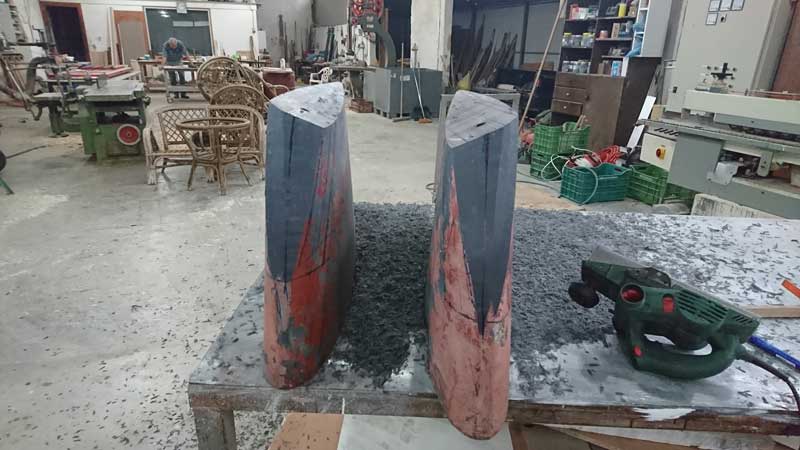
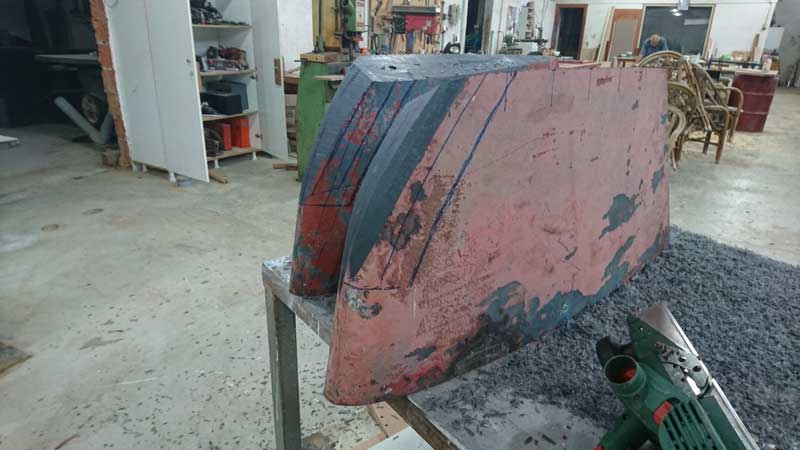
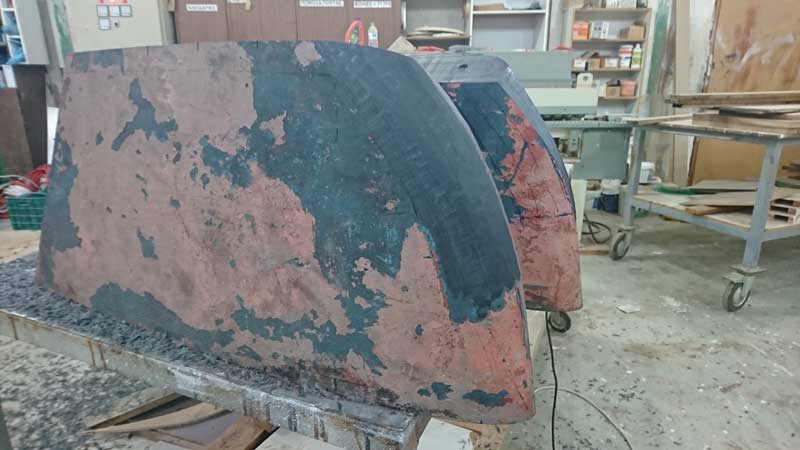
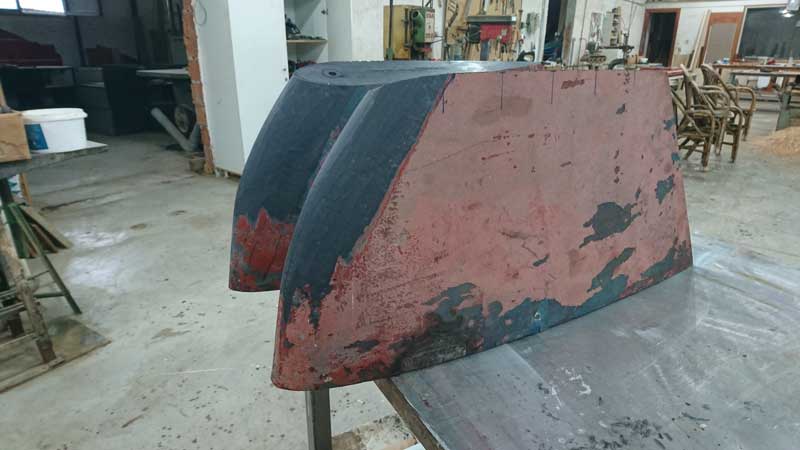
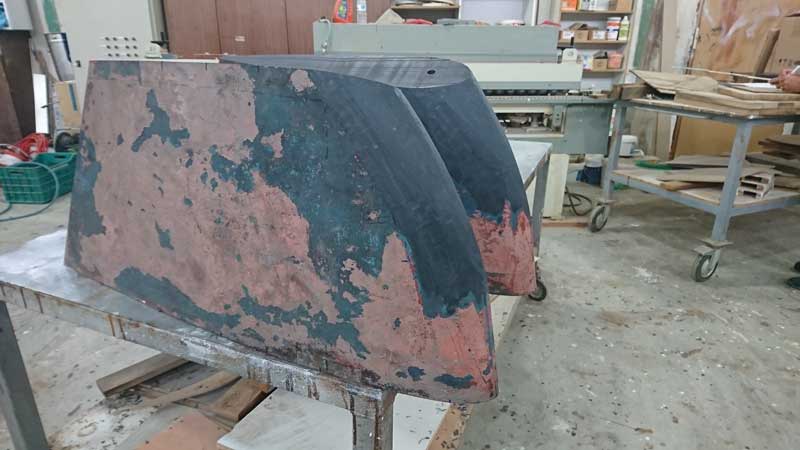
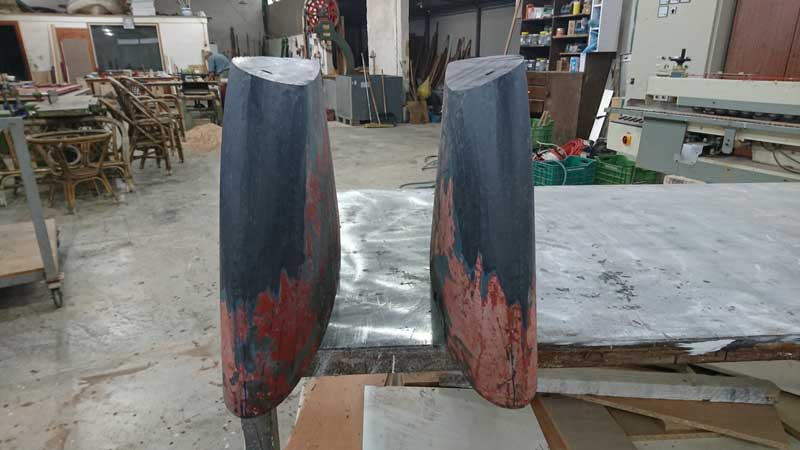
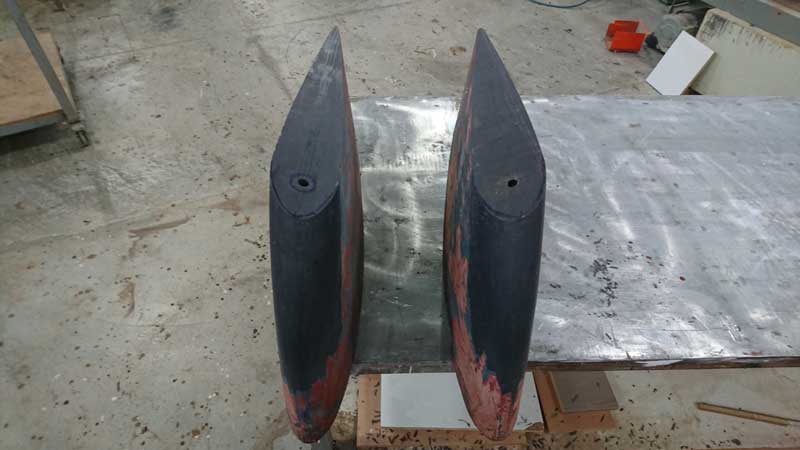
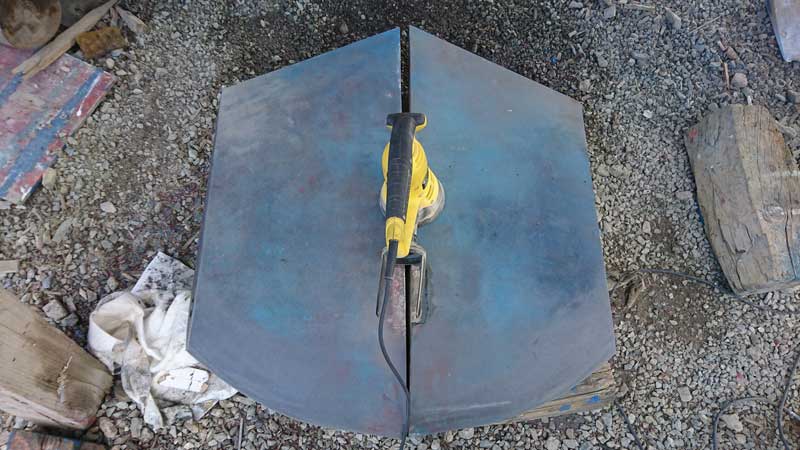
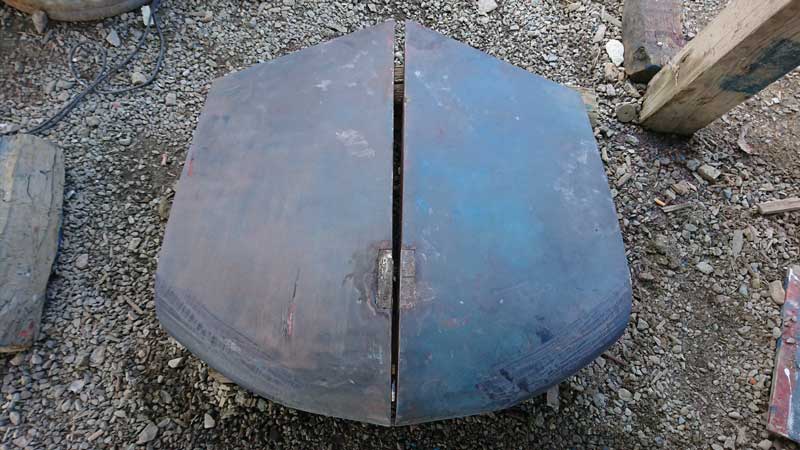
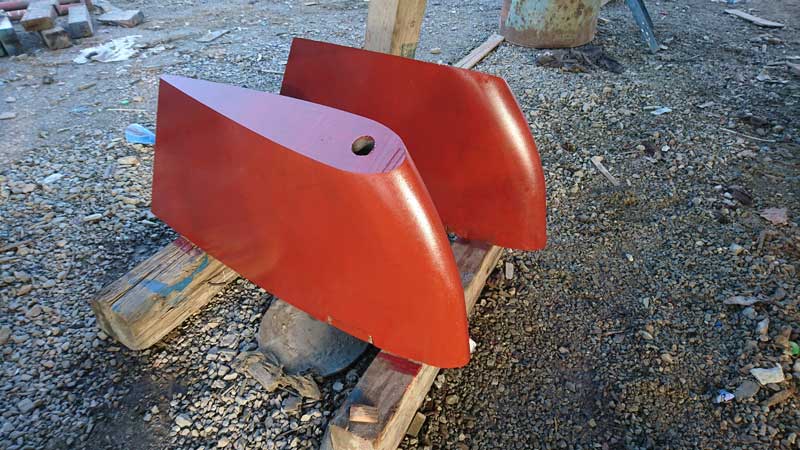
first shaping the fins, remember had to get the curvatures right and symmetrical!

stabfin_design19.jpg


stabfin_design20.jpg


stabfin_design21.jpg


stabfin_design22.jpg


stabfin_design23.jpg


stabfin_design24.jpg


stabfin_design25.jpg


stabfin_design26.jpg


finished at Dimitris workshop, took them to the machinist to open up the through hole at the bottom where the big washer and double nuts fit, and after 2+h hard work managed to open them up.

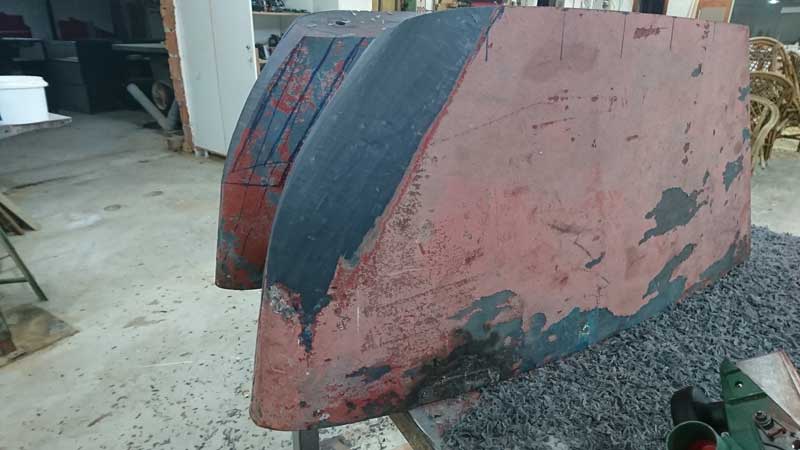
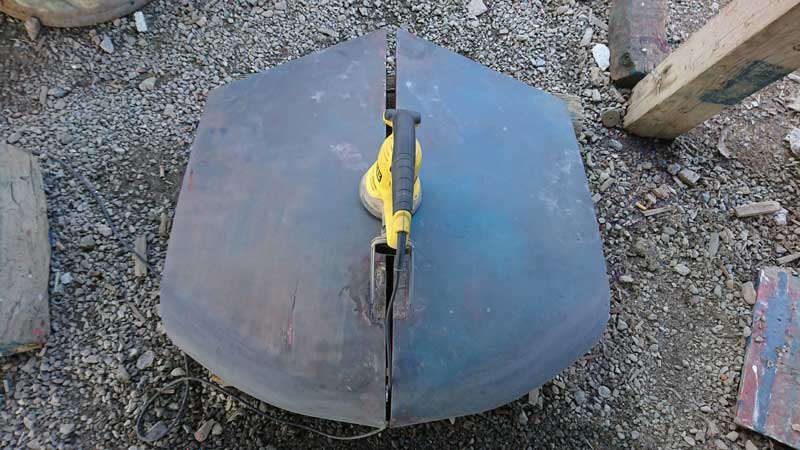
Next step was back at the boatyard, clearing the old a/f and smoothing with the orbital sander and a 40grit disk the curves. The handheld plane had left them a bit rough and once a/f was off, it did show. Half an hour on the sander and they were really smooth:

stabfin_design27.jpg


rough:
stabfin_design28.jpg


smoothed:
stabfin_design29.jpg


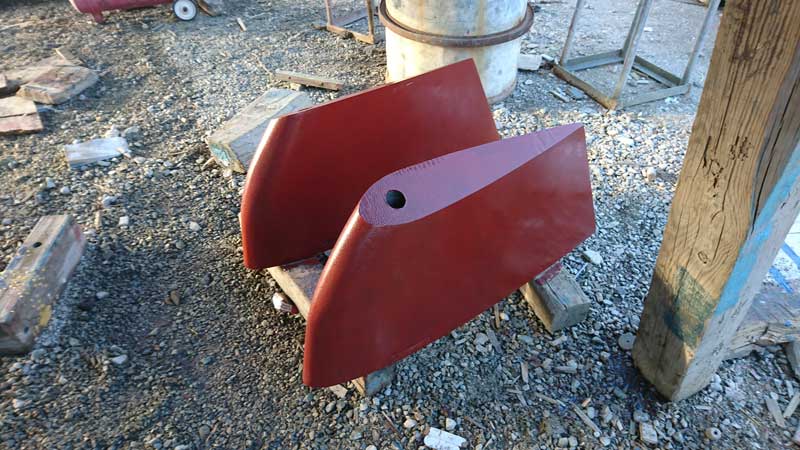
Finished them off with a two pack epoxy primer and will CC one of the next couple of days. They really look nice and smooth, v.happy:
stabfin_design30.jpg


stabfin_design31.jpg


On the actuators front, soldered, fitted and tuned the port feedback sensor and wired it up to the arduino board.
Initial tests were horribly wrong, took me half an hour to realise that I had copied a feedback sensor smoothing subroutine from stbrd to port movement routine, so it was trying to smooth between two sets of values making an awful mess (values were wrong and as a result nothing was working!)
Anyway, sorted it, now both fins work as they should.

JFM, the inverter you donated works :D
I need a MSc in inverters to tune the bleeding thing though :rolleyes: It's even more complicated than the Invertek I have for the watermaker. Good thing that Trevor helped me initially with the Invertek and there are obviously similarities in the settings. Only this Schneider has 4X the settings of the other...
again many thanks J!

Still running at v.low pressure (500psi compared to 1500psi I could run them) no point doing so on the hard, will just up the inverter Hz when back on the water.

Tomorrow should see me a/f with Velox the plates underneath and once fins are a/f, will be bolted on.

cheers

V.
 
Sounds good Vas. Glad the inverter arrived. Sorry so complex= Schneider style! But good quality gear. BTW I have not mailed dsm250 because it is still in my dashboard. Swap out is imminent. Will let you know.

My sleipners sense reverse gear by oil pressure and j1939 but imho not necessary in hands of exp driver. You can just sense gps speed and turn the stabs off at 2 kts as you say.

Sleipners take all their speed data from GPS with option of STW in tidal waters. Dedicated gps mushroom so you can turn off the main n2k bus if you want

Only catch is that you need an “ignore 0kts speed” override mode while in STAR mode, and a method not to leave “ignore” setting active while underway (ie a latching auto ending of the “ignore” function at 3kts)
 
Yes it’s about time I paused about the 3 points raised and wait for the seatrail .
I realise setting up / calibration / control is gonna take time ,and potentially mask full evaluation for while .

Here’s a declassified paper it mentions the fin / prop cavitation issue , in HARD CHINE planing boats .
This ones 65 ft L and has a smaller aspect ratio , buts yours is a lot smaller and the aspect ratio increase, may not be enough for some fin / prop interaction .This ones doing 14 knots so reasonably relevant .
The inference faster boats could get more fin / prop interaction .

There’s just one thing in your very clear. ” proportion/ scale - should be ok “
line of thinking you eloquently put Fwds ^^^ and touched upon it re “custard / water “

the medium ——- that’s sea water density - viscosity etc ——- that’s not scaled down , and it the same for 14m and the 24 M planing hulls .
Additionally another crucial diffenrce i,ll briefly touch upon is the resurgence of water , it the tendency of water to return to its original level .This tendency is an important cause of increase of planing angle in wider aspect ratios or in your case a shorter hull .A short hull has less time over a given spot to benefit from resurgence.
Resurgence takes place entirely according to the distance through which particles ( same as JFM.s:)) of water must return to reach normal levels .
This distance depends on the initial rate of acceleration with which they were forced downwards.
This depends on the shape of the hull at that point .( sorry guys hull shape - I hear you again :))
So short fast bottoms can pass there entire L over a displaced water particle before the water has had time to flow back .
If it does not manage to flow back and “ bounce “ off the hull bottom it can,t exhert a lifting force - hence the inc in planing angle if it planes with drag considerations or AoA as allready mentioned earlier and illustrated with the Aquanaut pic if it can,t manage plane .

So there’s a distinct possibility the fins in a small hard chines planing hull might interfere with resurgence lift .Less so straight , more so the bigger the angle .

That’s why it’s tricky to simply scale down dimensions- water is the constant


Happy reading and I do hope this enlightens people

Been reading around the subject here’s just one example of the calibre

http://www.dtic.mil/dtic/tr/fulltext/u2/a062561.pdf

PAUSEDuntil invited back :encouragement:

PF and all,

just got MiToS back in the water today, totally knackered and interior is still a toolpit...
A quick note to let you know that unsurprisingly she does still plane.

Specs:

50+kg heavier chain (moved from 8mm to 10mm and added 20 odd meters)

200kg heavier dingy (scrapped the 2.7m valiant and got the avon jetrib on the platform)
full water, 1/3 fuel, empty black w/t
300+kg fins, mechanisms, oil, pump, motor, et al
50+kg of soundinsulation for the salon floor
new coppercoat, all metals veloxed (white to be able to see easier all the marinelife they'll attract soon I guess...)

did full revs (which admittedly was the first time I pushed her all the way) and managed 21kn sog without me playing excessively with the flaps.
Last top speed recorded was in the summer with less gear but some fouling 19kn (again sog)
12+ tons, 2X330hp ivecos
amazing how weights built up, isn't it?

Now, need the w/e to physically recover, will bring the board at home and get the chips soldered permanently and get the various sockets in place.
More news next week although I'll probably try a swinging test video on the pontoon soon.

cheers

V.

PS. I'm confident that she's underpropped but not too worried right now. Maybe the DD had different reduction to the twin disk 2:1 ratio, Alf?
 
Good news if you are happy @ full revs for 21 knots with a clean bum / sterngear .

Planing possibly means different things to different people .
I,am using these definitions , based on naval architecture relating to planing boats .


A planing hull is simply one so shaped that a degree of dynamic lift is added to its natural buoyancy during the time when its speed of advance exceeds that rate at which solid water can close in abaft of it.

I think we first need to agree that there is no one binary point of planing. It is not either on or off. It is a transitional regime, and therefore, any attempt to define a point of planing is somewhat nonsensical.
So you can,t use “ 21 knots “ for example .
It all depends on the change of trim angle with regards to speed advance .

What actually defines planing is the fact that if the speed increases the trim angle will decrease.

If you aren't planing, increasing speed in the sub planing regime results in an increase in trim angle, for a planing hull. Again, for a semi-planing hull that might not happen at all, but for a true planing hull, the speed where it attains planing status is the point where the trim angle decreases as the speed increases.
 
Last edited:
Mmm... Porto, do you really think it makes any sense to debate whether Vas boat is on the plane or not at 21kts?
Show me someone who pretends that a monohull boat of this length can cruise at 21kts without being steadily planning, and I'll show you a liar... :ambivalence:

PS: very well done V, congratulations!
Unsurprising as the result is for anyone who followed your efforts, it's still an impressive achievement anyhow! :encouragement:
 
Last edited:
......

PS. I'm confident that she's underpropped but not too worried right now. Maybe the DD had different reduction to the twin disk 2:1 ratio, Alf?

Well done Vas !!

If she was fitted with the std In-Line Six DD, then in all likelyhood whe would have had Alison 2:1 gearboxes and engines rated at 2300 RPM WOT....
Now comes the trick.... the In-line Six DD weighs in at 1490 Kg dry (each), and you now have Iveco's which will be;
a) Lighter
b) Higher rev (guess WOT at 2600)

Then there is the question if you are running with the original Prop's and shaft ? ... The DD's would have been spinning a 2" (5 Cm) shaft and from that era I would also have expected a three bladed prop...
 
Mmm... Porto, do you really think it makes any sense to debate whether Vas boat is on the plane or not at 21kts?
Show me someone who pretends that a monohull boat of this length can cruise at 21kts without being steadily planning, and I'll show you a liar... :ambivalence:

:

Interestingly YES .
Further up we have allready seen a pic of a near enough same L boat , WOT ed @ more / less 21 knots .
Oh with fins thrown in as well .Deja vu ?:encouragement:

Here it is again for convenience.
View attachment 72271

Using the definition s in my post #115 as you can see this illustrates the planing angle part .

View attachment 72272
Above a boat planing could be 21 knots as well - more / less same size as Mitos

Further more as well as the change of running angle here’s a pic of the “ speed of advance exceeds the rate of which solid water can close in abaft “
View attachment 72273

If it went 27 knots from 29 without fins with a pair of 330 Hp then I would have no doubts what so ever the fins have not compromised the ability the plane , accounting the 2 knots loss as parasitic drag .

That gives some headroom to throttle back from WOT (2600 rpm ?) to a more appropriate cruise .
As it is now from the data kindly published thus far if a seasonal fouled boat WOT ed @ 19 knots last year sans fins then the likely hood of setting a cruise to a engine friendly ( in terms of safe EGT s for long periods) say 2200-2300 means we are looking below 15 knots probably between 10-15 ? Vas hopefully will fill in the blanks please :encouragement:

As I said with 330 Hp planing outside WOT is allways gonna be marginal .
Sure pushing water about like the 1 st pic ^^^ buts that’s not true planing using the definition I gave which has two components .

Purely academic as Vas himself has eluded he “90% runs @Dspeed “

This must be in a unique way be the only P hull design runing around with fins below 13/14 M .
And there’s a reason why - that’s all , and this is to quote MapishM “why it makes sense to debate wether it planes or not at 21 knots”
 
Last edited:
Top