Vosper Mini Fins Stabilisers retrofit on MiToS

  • Thread starter Thread starter vas
  • Start date Start date
Sounds good. You obviously limit the pump rpm by the pulley sizes to keep pump max rpm below engine max rpm

Measure roll period with an iPhone app. I use the Sleipner one but there might be others these days. Do it when the ferry goes past with hand brake turn

As regards Porto comments on downsizing the fins, I wouldn't worry about forces/loads. The hydraulics will nicely limit that via pressure relief valve (which you must fit imho), and the force needed to anti roll the boat is a constant regardless of fin size of course. But the big Q is can you succeed with STAR? If you can, then keep them biggish (I like your drawing) because the only reason for big fins on a P boat is STAR. If ultimately you cannot achieve STAR then make the fins half the size because you can always speed up if you need more anti roll torque.

So, the way James and possibly yourself use the pumps is that they are permanently connected, so as soon as you fire the engine, you have oil pressure (well you need it for thrusters and windlass, right?). I don't but that means that as long as the engine is running you might as well have the stabs on!
This way I could easily do it in a permanent setup as well.

Just feel that the el will be less hassle, plenty of space to fit it where as only got 150mm between engine pulleys and tanks so not so easy to play around there... will have a nose around today when I remove the salon floorboards to start working/servicing engines.

I'll report back on inverter 3ph Vas. Before uk leaves the EU :D
ohhh blimey, you're so fast J.! :p

cheers

V.
 
So, the way James and possibly yourself use the pumps is that they are permanently connected, so as soon as you fire the engine, you have oil pressure (well you need it for thrusters and windlass, right?). I don't but that means that as long as the engine is running you might as well have the stabs
yes and no. As soon as you fire the engine the pump spins, but until you demand work from it the swash plate is flat and the thing does no real work. It just spins doing pretty much nothing. This is generally how hydraulic pumps are set up- you don't have a clutch in the drive train.
 
Fwiw, the Naiad pump I had was driven by a double pulley with twin belts, which were always spinning while the engines were running.
But behind that pulley there was an electromagnetic clutch of some sort, so the actual pump was not spinning unless engaged.
'twas a dedicated pump just for the stabs of course - nothing else hydraulic onboard.
 
few more hours yesterday, so couple of things to report.

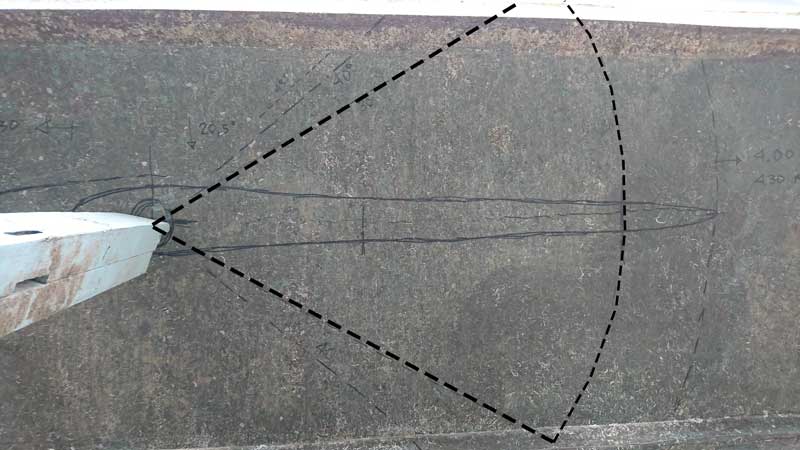
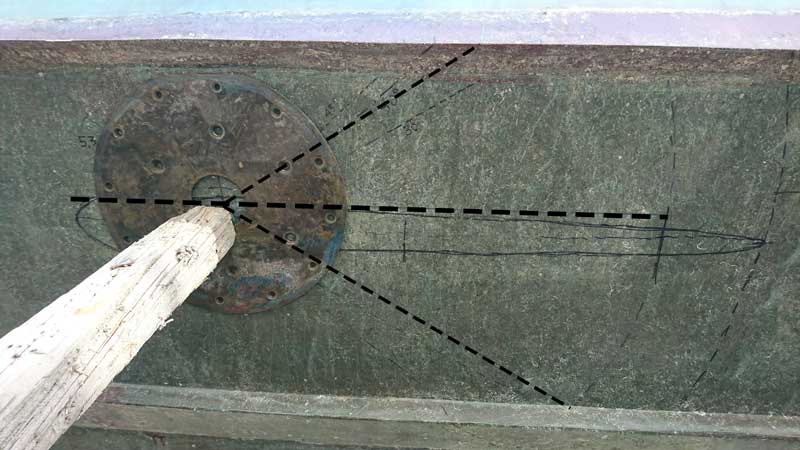
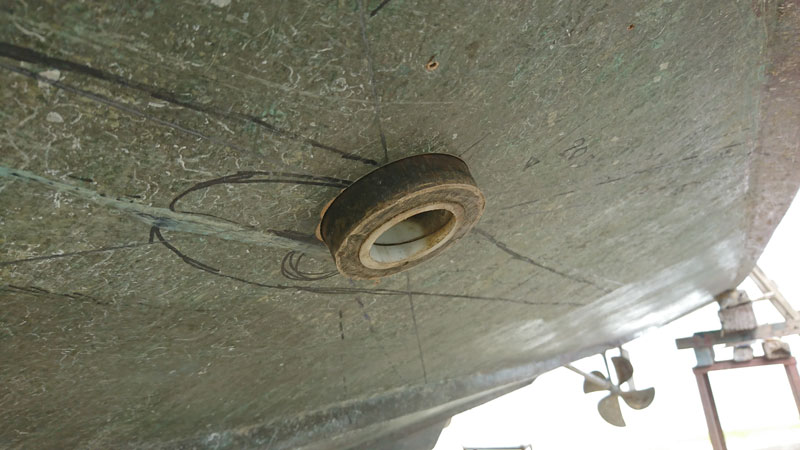
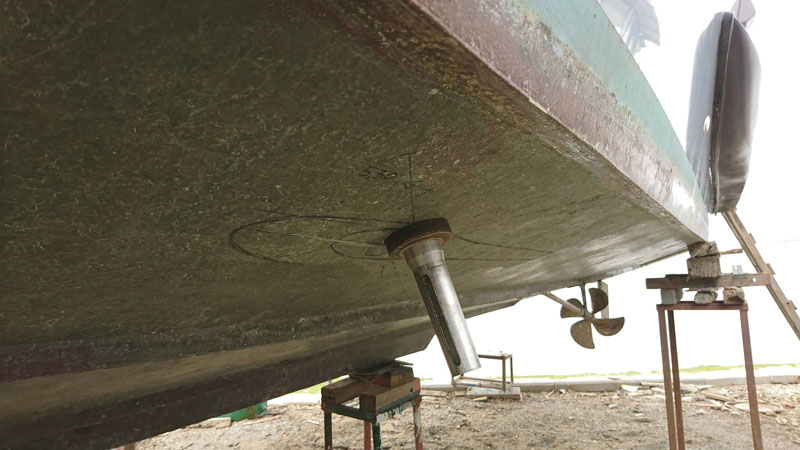
First, having accurately measured the stabs and axle, I re-sketched the footprint of the fin on the hull which now is 140mm towards the bow, and using the 30degrees angle of rotation sketched the sweep, it's much better as the pivot moves back the sway is smaller, moving it outwards to around 210-220mm from the chine means that I wont even have to chop the lift strip (bottom of the pic below), and will only come out of the hull on the full outward motion by say 100mm. Definitely not out of the water territory, so happy about it!

Note the following pic is with the fin at 290mm from the chine, it will move outwards 70mm at least!

stabs_outside_layout5.jpg


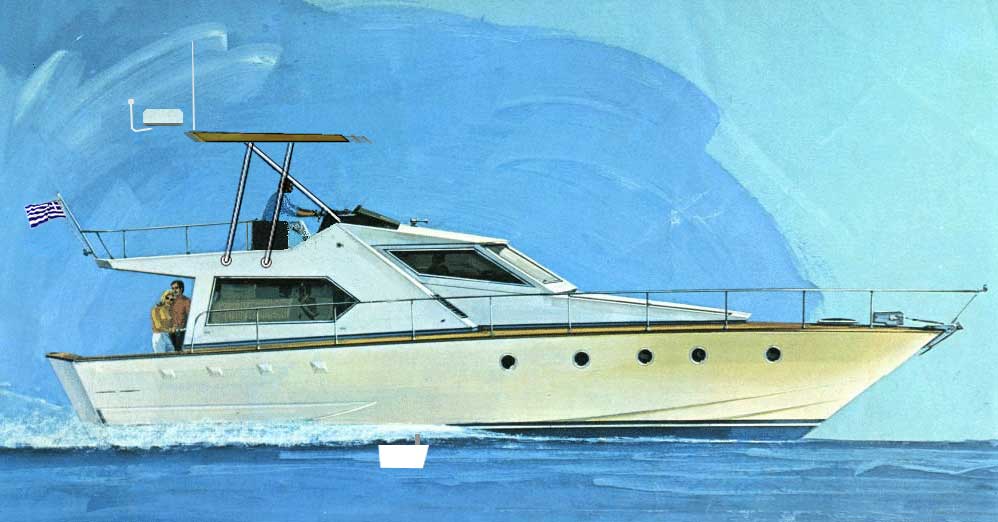
I also updated the side elevation with the fin position, size and shape, I think it looks slightly better now:

side_elevation2_HT17.jpg


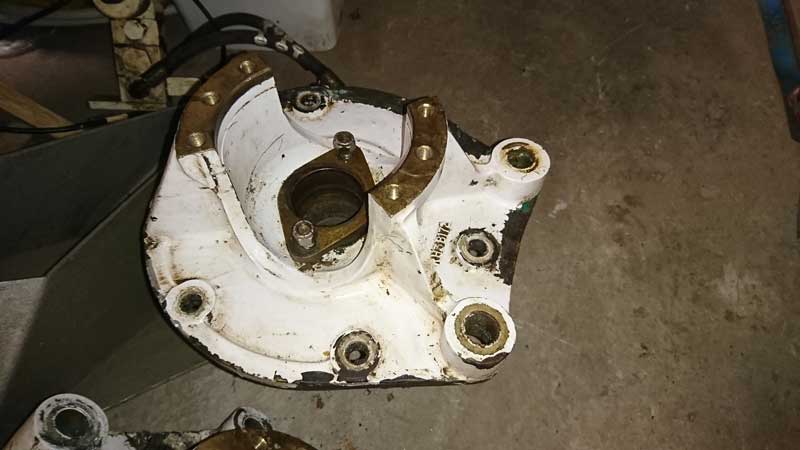
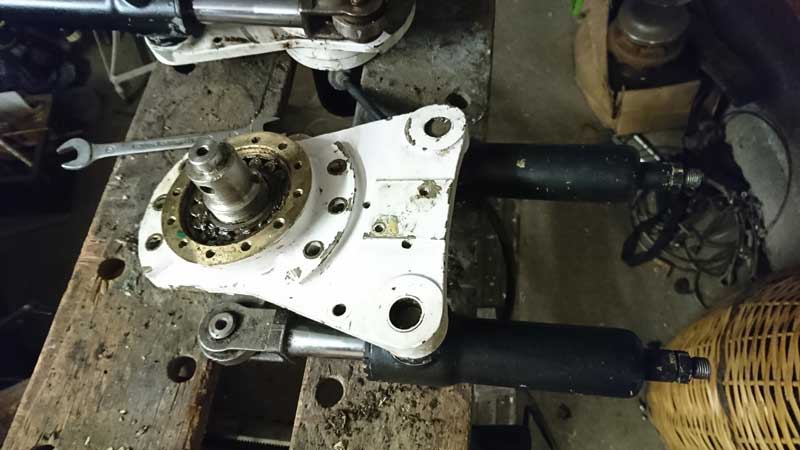
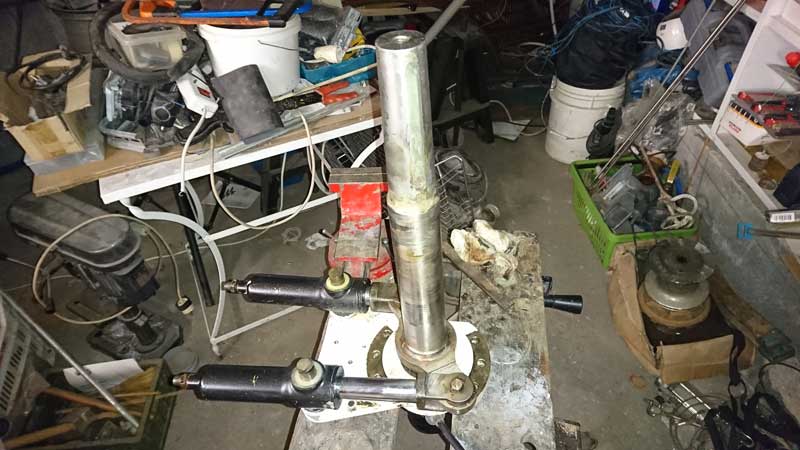
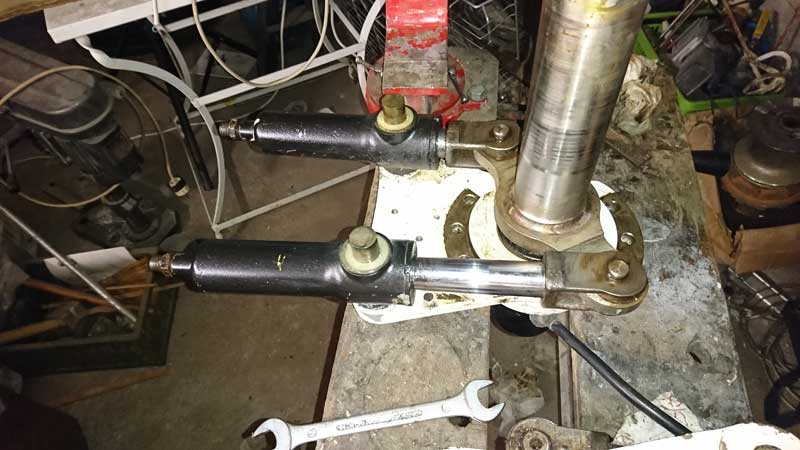
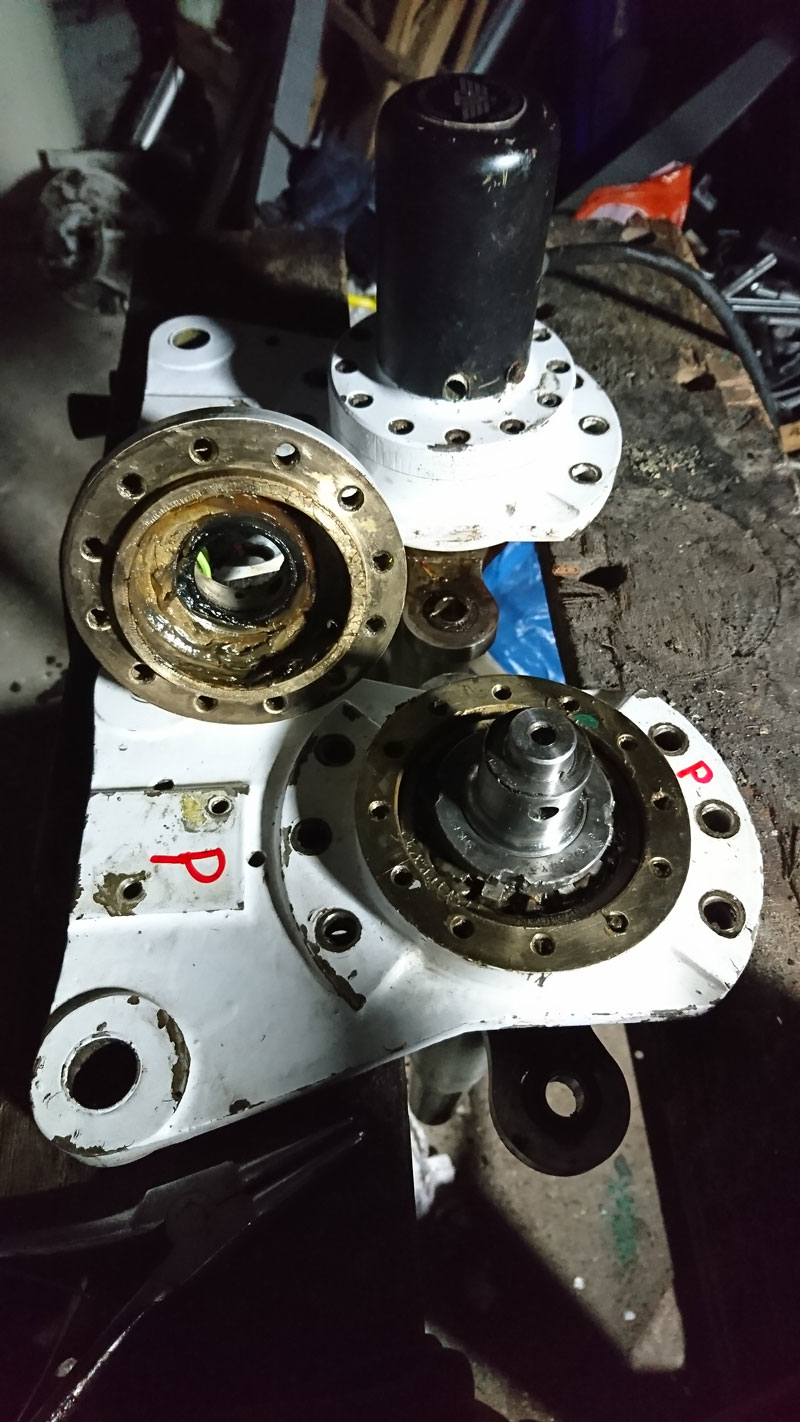
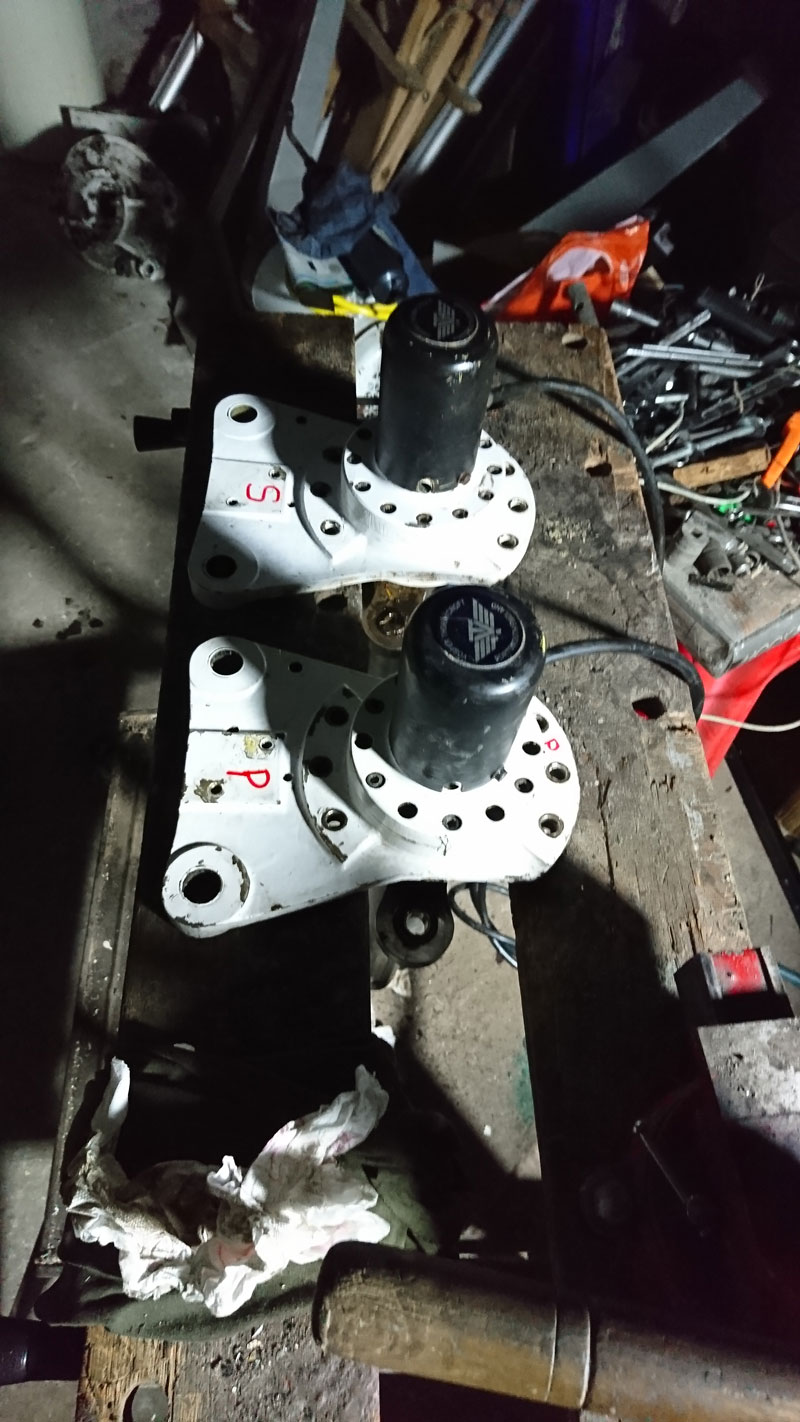
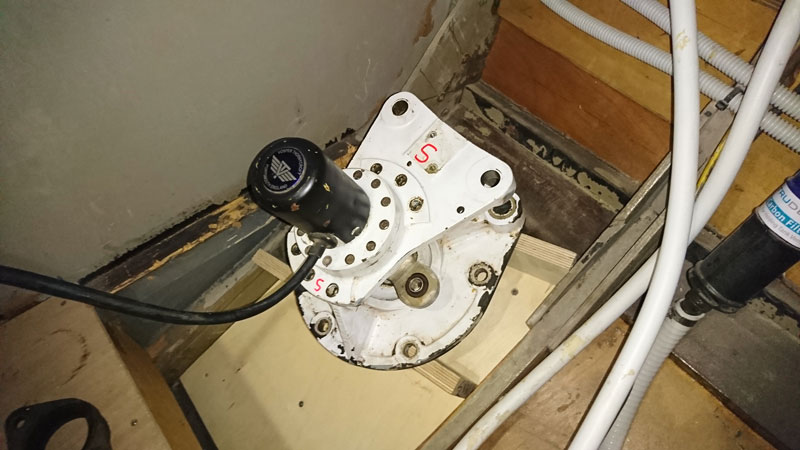
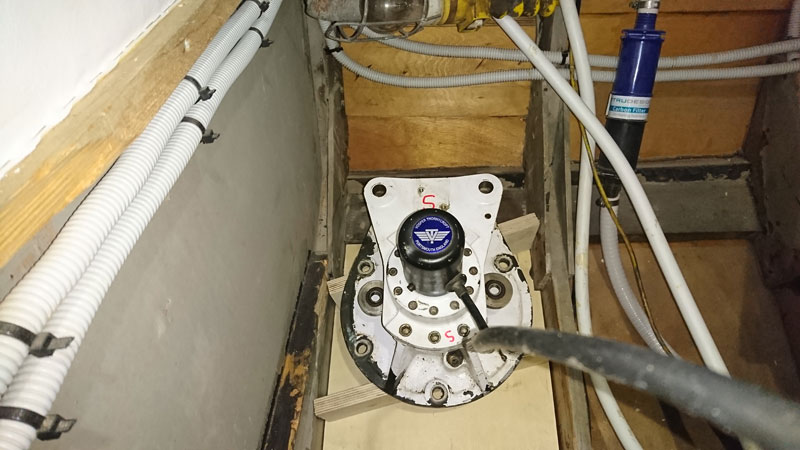
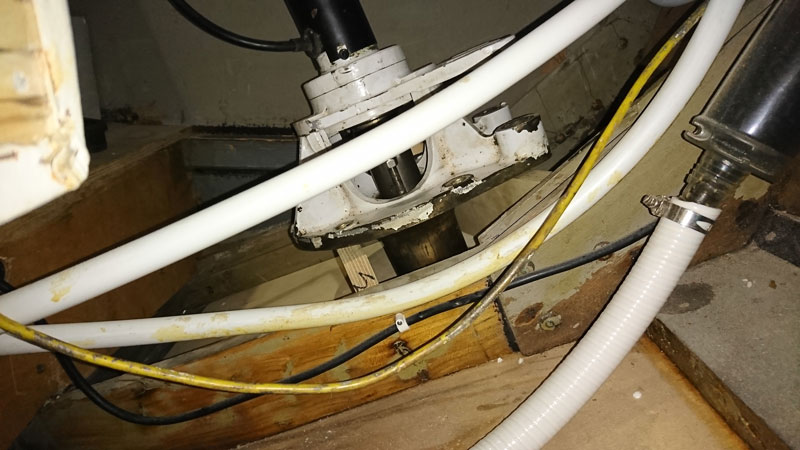
Finally a few pics of the pieces of the stab mechanism semi cleaned and checked. Missing the solenoid assembly which I'd like to take fully apart, clean, renew o-rings, reassemble, paint and make sure I wont have oil leaking down there...

stabmechanism_1.jpg


stabmechanism_2.jpg


stabmechanism_3.jpg


stabmechanism_4.jpg


It's a fairly substantial structure and well engineered (imho)

going to have another look on pumps/el.mechanic clutches/swash plates and will be back with more Qs!

cheers

V.
 
Blimey, and here I was, thinking that what you did so far with your boat was already astonishing... :D
 
Blimey, and here I was, thinking that what you did so far with your boat was already astonishing... :D
Yes indeed. Huge respect to you Vas. And nice to see the vospers photographed like that. I haven't seen them for a few years and they were in dark corners of SDs engine room. They look well engineered.

Intuitively, I like the side elevation pic. Looks perfect. And same proportions as the side elevs I posted above.

Just on the subject of the fins swinging out past the chine- I think this is ok. Both mine and silverdee's aquastar 74 do it. We raft up, and with the topside flare out plus thickness of fenders they don't touch. Sleipner has a feature on the touchscreen display to turn off one fin, e.g. when moooring up to a wall, but I hardly ever use it and some fin beyond the chine is perfectly ok in my books

Love your workshop!
 
Blimey, and here I was, thinking that what you did so far with your boat was already astonishing... :D

Yep, plus lots!!

oh, comeon, haven't done anything extreme up to now, have I? Just restored an old boat, that's all :D

Yes indeed. Huge respect to you Vas. And nice to see the vospers photographed like that. I haven't seen them for a few years and they were in dark corners of SDs engine room. They look well engineered.

Intuitively, I like the side elevation pic. Looks perfect. And same proportions as the side elevs I posted above.

Just on the subject of the fins swinging out past the chine- I think this is ok. Both mine and silverdee's aquastar 74 do it. We raft up, and with the topside flare out plus thickness of fenders they don't touch. Sleipner has a feature on the touchscreen display to turn off one fin, e.g. when moooring up to a wall, but I hardly ever use it and some fin beyond the chine is perfectly ok in my books

Love your workshop!
workshop is a dump, may become a workshop in 5-10yrs, too busy to organise it now...

Reading the manuals, I realised that the MIN/MID/MAX relates to the travel of the fins, so in min fins travel is vastly reduced, not bad when rafting with others (usually my mate with the P45)

However, John, stabs are imho way over-engineered! Reading the manuals, checking the x-ray pic of the whole thing and measuring the main base that bolts on the hull, it turns out that hull thickness where this thing bolts on has to be, hang on, 145mm, or close to 6INCHES for you ex EU members :p !
hull ply is 15mm, iroko frames are 100mm, means I got to add 5 layers of 20mm ply (just cut it tonight at George's workshop, ready to epoxy it tomorrow!) to reach the iroko frames height AND THEN add two layers of 15mm ply on top of the frames, FFS, that's MASSIVE!!!
How was SD layup around the stabs?
Was planning to strengthen the surrounding frame panels, but it seems that I need 3-4 full size sheets of ply to do that!
I'll probably fill the frame panel where the stabs will fit, and extend the two 15mm layers on top of the frames to the surrounding frames to distribute forces a bit.
Was planning to finish with port stab (the easy one) reinforcement, drilling and test fitting by the w/e not too sure now tbh!

BTW, John, what's the gap between stab and hull in your case? must be 10mm or less, right?
I guess it's not an option to have the stabs 20+mm from the hull.
I'm wondering what's best in terms of fouling with slime lines and other carp you can pick up in ports...

Final Q for tonight, do you chop the chine for the part where the fin outer stroke goes outside the hull area, or do they layup matt on the hull outside a la Bart to avoid that?
I was planning to add a couple of layers of mat+epoxy outside, but I've changed my mind now with all the ply I have to cut and epoxy inside...


thanks, I'm an android person, will wait for wife to come back on Sunday and try her ipad/iphone

cheers

V.
 
Last edited:
Vas,
1. Yep massively engineered. In silver dee they were mounted on a thick hardwood block glassed to hull inside. It wasn't a nice installation and the hardwood block wasn't big, just thick. Ugh. Your bigger plywood epoxy sandwich sounds better except I don't think you should fill the "panel" with the full packing thickness. Have 3 layers of "full size" ply but as you go higher with next 2 make the plywood smaller with each successive layer. Wedding cake. Otherwise you're adding pointless weight. With the first 15mm piece that goes atop the frames cut it to a spidery shape that loses weight. Then last piece can be basically a packing disc/washer under the actuator footprint. Btw my sq78 fins are in less than 145mm of grp/woven rovings and they are 1.05m@33kts.

2. Theoretically you want fin top close to hull to stop vortex losses (only relevant in STAR mode) but in reality I think mine are and and SD's were more like 30 -40 mm. Let me look at some pics

3. If fin hits chine curl down, normal solution is chop some aft fin top edge off, triangle shape, to provide clearance. That's how both my 3 sets of s78 fins were all done. I wouldn't chop the chine or do a BartW style Grp layup on outside
Check out 1:40 in this. (Match 2) https://m.youtube.com/watch?v=hTaY6iGIw5Q
And most of this low res job (match 1) https://m.youtube.com/watch?v=1ZEiKc85pwY
And this of silver dee2 ...
stabs%20new%20fin%20close.jpg


2.
 
Last edited:
Vas,
1. Yep massively engineered. In silver dee they were mounted on a thick hardwood block glassed to hull inside. It wasn't a nice installation and the hardwood block wasn't big, just thick. Ugh. Your bigger plywood epoxy sandwich sounds better except I don't think you should fill the "panel" with the full packing thickness. Have 3 layers of "full size" ply but as you go higher with next 2 make the plywood smaller with each successive layer. Wedding cake. Otherwise you're adding pointless weight. With the first 15mm piece that goes atop the frames cut it to a spidery shape that loses weight. Then last piece can be basically a packing disc/washer under the actuator footprint. Btw my sq78 fins are in less than 145mm of grp/woven rovings and they are 1.05m@33kts.

2. Theoretically you want fin top close to hull to stop vortex losses (only relevant in STAR mode) but in reality I think mine are and and SD's were more like 30 -40 mm. Let me look at some pics

3. If fin hits chine curl down, normal solution is chop some aft fin top edge off, triangle shape, to provide clearance. That's how both my 3 sets of s78 fins were all done. I wouldn't chop the chine or do a BartW style Grp layup on outside
Check out 1:40 in this. (Match 2) https://m.youtube.com/watch?v=hTaY6iGIw5Q
And most of this low res job (match 1) https://m.youtube.com/watch?v=1ZEiKc85pwY
And this of silver dee2 ...
stabs%20new%20fin%20close.jpg


2.

Very helpful John thanks!

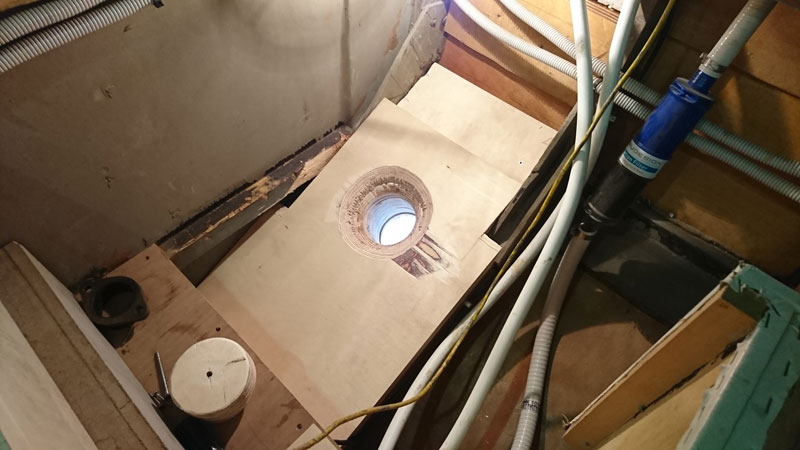
1. too late when I read your post I was just back from George's workshop where we chopped a full size 20mm plywood sheet into 10 pieces 5 for each side, so I'm going to do the 6th smaller :D. Not a big deal as the pieces are 330X500 and then 330X620, so hardly large and heavy. However, it's nice that I have the frames and I'll run along the length of the cabin two stringer like pieces of ply around 250-300mm high by dunno 4-5 frames long say 1200-1500mm. That's going to be great in terms of distributing any bending forces from say hitting something at speed along the hull. TBH, I could skip them as well as on the inner stringer to where the mechanism bolts is a 250mm high 15mm ply vertical section that supports the cabin floor. That alone (epoxied and bolted on the already 120mm stringer (maybe more don't remember now) should be sufficient.
Regarding athwartships forces and bending moments from the fins flaping left and right, 150mm aft of the 92mm hole for the shaft lives a massive bulkhead separating cabins to tanks and e/r. That's enough of a rigidity disk (xlating Greek structures terminology probably not great...) to leave me relaxed about reinforcing any further...
Matched and test fitted all pieces on port side, drilled pilot hole to find the exact fitting position:

stabs_portcabin_mock6.jpg


stabs_portcabin_mock7.jpg


and the following pic shows the existing reinforcing that supports the floor and bed:
stabs_portcabin_mock8.jpg


2. I'll check that but saw in the videos you posted that indeed you're not scrapping the possible growth on the hull with the fins, you are indeed 20+mm away.

3. Chine curl down on MiToS is not more than 30mm, so should be fine, may shave 5-6mm of the top of the fin.


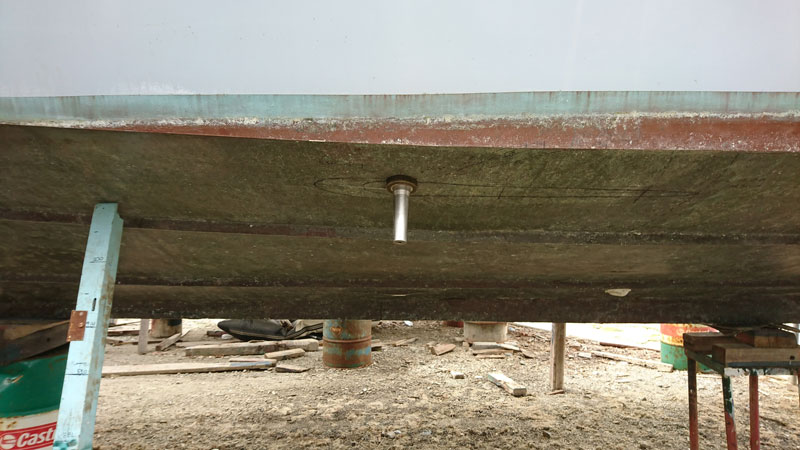
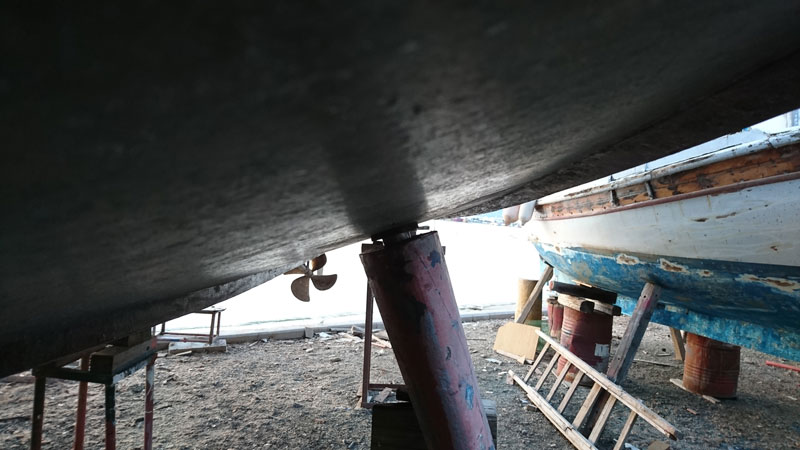
So now outside looks like this, for the record fin axle is 245mm from the tip of the chine, and I'm showing the 30deg full swing limits (so say 200mm of the trailing end of the fin will come outside the hull in the outer limit of the movement:

stabs_outside_layout6.jpg


Two different areas I'm working/thinking/puzzled and I'd appreciate some help/ideas:

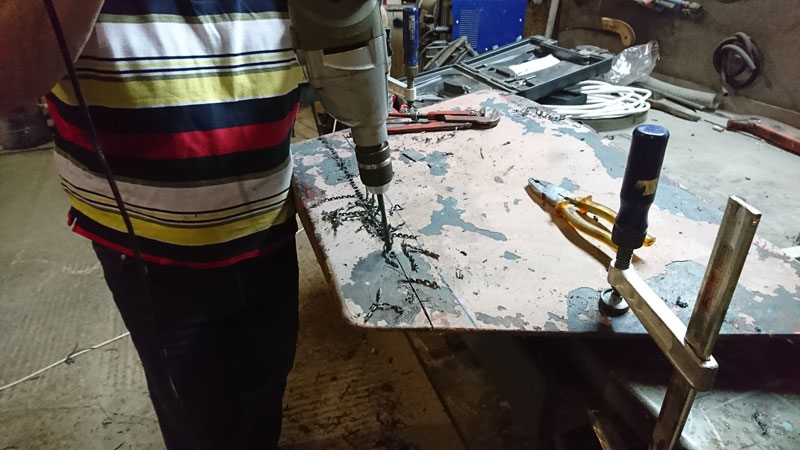
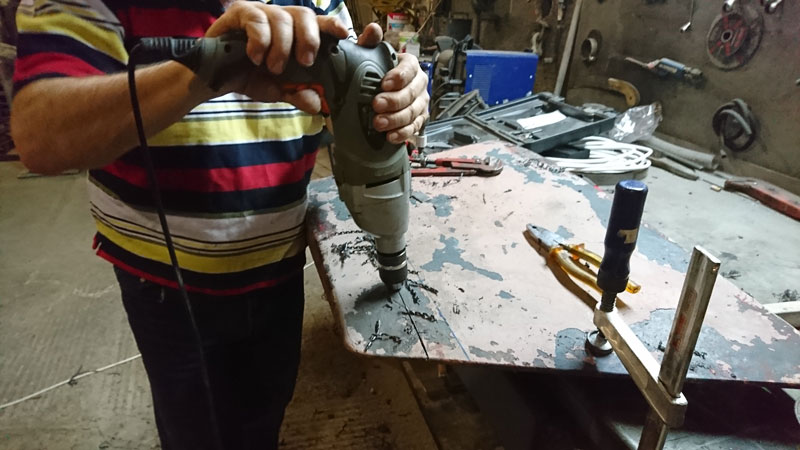
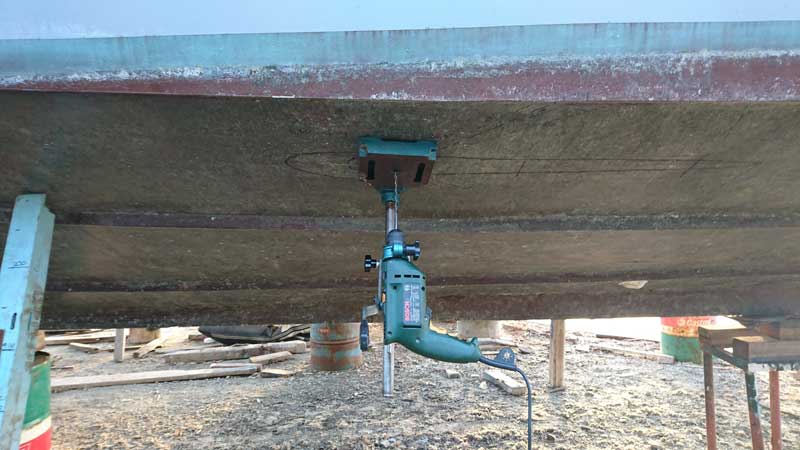
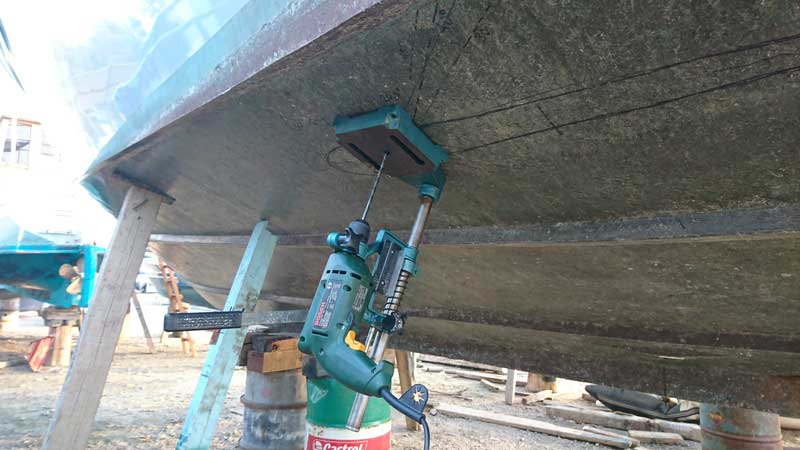
First, this evening I'll drill the 92mm hole for the actuator body on the hull and the five insets. Worried on getting the hole true to the surface, so got a lightweight bench drill base from my friend nextboat (is that term valid as nextdoor I wonder :D ) and I'll temp bolt it on the hull outside to run a 6mm drill properly vertical to the 20deg sloping hull in order to get a pilot hole on all the 5 insets. I'm just going to bolt them down one over the other so that they don't move about then undo remove them and drill them on the bench one by one.
HOWEVER, there's an issue I want to solve before bolting and epoxying them in place.

Fin mechanism obviously has a centre spot. Having the whole thing apart and not connected means I have no real idea where exactly that central spot is. This pauses the following interesting issue:
If I assume the centre is true to the mechanism frame length (seems to be) and I bolt it down properly, can I do small/minute alternations or I may end up with the fins "parking" position being 2 or 3 deg off creating a toe in or out or shifting both on one side (even worse!) and boat ends up either being unstable, or burning too much fuel or simply moving sideways (crab like...)
EDIT: trying to pickup the bits I want to bring to the boat, I realised that the centering pin could be slightly off if you mess with the placement, but on the electronics (ok analogue ones...) it's possible to wind a tiny potentiometer and sort out rest position, so halfway there. I guess and I hope I wont have to lock them in place and if I do, a couple of degrees off wont be my main concern!

From my understanding when the system is functioning, "parking" the fins means that they rest in the middle spot. I wonder how strict they are on that, and to what extend heavy weather or a constant pressure due to being slightly off centre would allow them to move a bit and rest "properly" where they should.

The reason for worrying now on that issue is that I have to get the whole mechanism onboard and use it to mark the placement of the 6 M12 through bolts that clamp the whole thing together. Further to that, seems that whoever installed the fins on SD did the drilling for these 6 through bolts from inside but in a rough and approximate manner meaning that the two back plates (the 400dia disks) holes DONT match :( and I may have to redrill them or whatever, we'll see.
So, don't want to start drilling and later realise that I have to rotate the whole asembly by 2 or 3 degrees. I'd expect they have a way to alter the electronics and recenter the fin on the spot, I just haven't come across that in the (very detailed I must admit!) manuals as yet.

Second I'm in the process of figuring out the hydraulics and the pump/motor combo as I said I prefer to get them via el. motors and skip all the pulleys/couplers/brackets palaver.

So I have two 7lpm pumps each one feeding the respective fin actuator.
Max working pressure is 103bar (1500psi)
John, there are relief valves @1500psi but can be altered up to 1650-1700psi which I may have to do to compensate for the short roll period of MiToS.

I can get a 14lpm pump or a larger 16lpm one (price doesn't change, they are surprisingly cheap at 120euro)
I should get a 7hp 3p el.motor to run the 16lpm pump up to 120bar, but I can use a smaller 5.5hp motor and use it to 105bar or so.

Considering one motor directly coupled to a 3p el. motor q for 3points should I get:
  1. the 14lpm and run it up to 120bar
  2. the 16lpm and run it at 100bar

in other words, what seems to be more important to quickly move fins about, volume or pressure? Or no difference what so ever? The product (force) is the same, what I've no experience on what would make them more "nervous" so to speak, the extra flow or extra pressure?

For the record, wont go 16lpm and 120bar as that needs a 6.5hp 3p motor (which doesn't exist so you move up to 7.5hp) that I can only get some chinese 1p -> 3p inverters to run it from. The Invertek UK built one I got to soft start my watermaker is really a quality product but will only go up to 4KW (5.5hp) 1p ->3p so I think that means a lot. Higher output assume you start with a 3p supply which I obviously don't have.

so that's my Qs for now, more tomorrow as I doubt I'll be able to post when I come back at night.

cheers

V.
 
Last edited:
Not sure I have grasped the whole of your post, but the "zero-position" or "centre" position will depend on the orientation of the flow at the fin position - and that might move about a bit, particularly from displacement to planing.

This would be entirely normal and anticipated by the system's designer. I would anticipate that the fins' control system has some means of detecting a zero-torque position, and working from that to take account of it automatically. in operation. This departure from your nominal centre will probably be relatively small, so not significant in terms of the structural attachment to the hull
 
Not sure I have grasped the whole of your post, but the "zero-position" or "centre" position will depend on the orientation of the flow at the fin position - and that might move about a bit, particularly from displacement to planing.

This would be entirely normal and anticipated by the system's designer. I would anticipate that the fins' control system has some means of detecting a zero-torque position, and working from that to take account of it automatically. in operation. This departure from your nominal centre will probably be relatively small, so not significant in terms of the structural attachment to the hull

Well, I haven't yet grasped these Vospers and stabilisation h/w in general fully, so you're definitely excused :D

Yes, I'd expect small deviation between D and P speeds. How much, dunno!

What you state is absolutely reasonable, but bear in mind we're talking 20yo stabs (or thereabouts), so zero-torque sensing they definitely don't do! I hope JFMs ones do
They will (I assume) work at self detecting zero torque position passively by letting them float as the craft moves.

My main concern (and the reason for the last post) is that mounting the actuator assembly slightly off, the pinned position maybe a bit off as well. Hopefully though this will only affect the case where the system fails and you pin it locked in central position.
Mind it's extremely difficult to say, I'll test fit the fin (50 odd kg 95cm long thing atm) to make sure I get the trailing tip of the fin exactly on the marks I've sketched on the hull, ie. parallel to the lift strip next to it.
Mocking something light for these tests will probably take an awful lot of time and wont be accurate...

Anyway, I'll probably just put them where it seems to be level and absolutely symmetrical prt stbrd assuming I don't need any toe-in (in car speak)


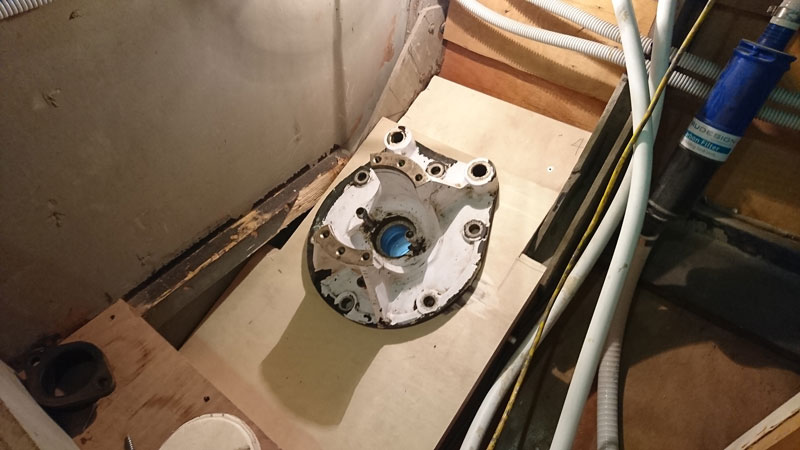
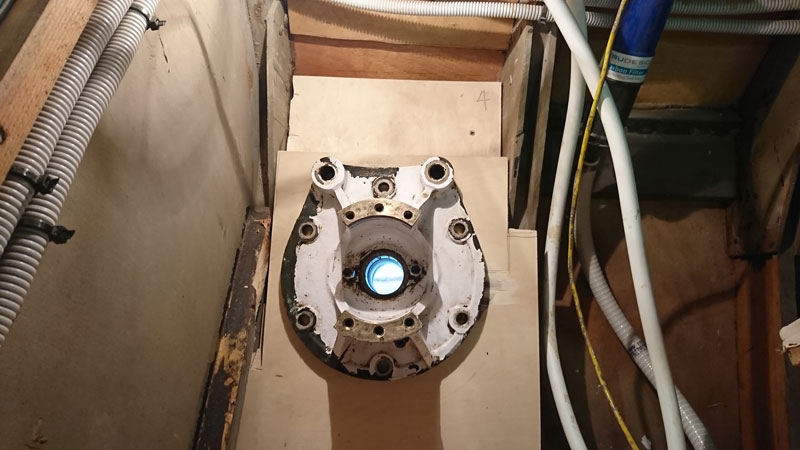
Did the 6mm pilot hole through 1X15mm + 5X20mm ply sheets, got to do the individual drilling to 92-93mm tomorrow. Next pics show the right angle hole contraption (TM Dimitris) on the job :D

stabs_outside_layout7.jpg


stabs_outside_layout8.jpg


cheers

V.
 
Yes, I'd expect small deviation between D and P speeds. How much, dunno!
I believe that the difference can only be identified empirically for each installation.
By leaving the fins free to rotate while testing the boat in flat water, they can self-find the ideal/neutral position at every speed.
IIRC, this is also how the commissioning procedure works, normally.
Just be aware that the dynamic fins center is a relatively recent feature, connected to the introduction of computerized controls.
My old Naiads were mechanically driven only by a gyroscope, which at any given moment moved the fins as fast and as much as necessary to straighten the boat, being totally unaware of the boat speed. In other words, while operating, the fins didn't use any kind of preset center position.
When manually centered (typically for maneuvering), then yes, the system kept them straight - and I suppose that THIS position could be modified upon installation, but at very low speed a few degrees more or less are bound to be meaningless...
Not sure about how the control unit of your equipment works, though.
 
Looks like the two rams each side are single acting, so zero-torque position & centring are all down to how the hydraulics are actually controlled. Your exploded diagram doesn't seem to show a position feedback, so the fins may not actually know where they are other than by looking at the hydraulic pressures on each ram.

Wrong! There is a feedback unit there, missed it! Depends on whether they do anything clever with the hydraulic pressures to play with the signal from the position feedback.
 
Last edited:
I believe that the difference can only be identified empirically for each installation.
By leaving the fins free to rotate while testing the boat in flat water, they can self-find the ideal/neutral position at every speed.
IIRC, this is also how the commissioning procedure works, normally.
Just be aware that the dynamic fins center is a relatively recent feature, connected to the introduction of computerized controls.
My old Naiads were mechanically driven only by a gyroscope, which at any given moment moved the fins as fast and as much as necessary to straighten the boat, being totally unaware of the boat speed. In other words, while operating, the fins didn't use any kind of preset center position.
When manually centered (typically for maneuvering), then yes, the system kept them straight - and I suppose that THIS position could be modified upon installation, but at very low speed a few degrees more or less are bound to be meaningless...
Not sure about how the control unit of your equipment works, though.

ATM, seems that it works similarly to your NAIADs P.
The straight position can indeed be configured on s/w (or something like a pot moving about sort of thing), haven't delved into the electric part of the installation yet, hoping next couple of days to start studying (aka taking the control box apart and start measuring and figuring out what does what and how the thing should be wired).

Looks like the two rams each side are single acting, so zero-torque position & centring are all down to how the hydraulics are actually controlled. Your exploded diagram doesn't seem to show a position feedback, so the fins may not actually know where they are other than by looking at the hydraulic pressures on each ram.

Wrong! There is a feedback unit there, missed it! Depends on whether they do anything clever with the hydraulic pressures to play with the signal from the position feedback.

Well, there are a few things there, didn't spot a feedback unit, EDIT: DOH yes you mean the el. feedback unit on top of the fin assembly, of course there is one, got it on my desk figuring out how and where it hooks up to the control box!, there are solenoids, relief/bypass valves (a few!) and lots of other things to take apart, check and refit, hopefully during this week.
However, it will be easy to install two pressure sensors one on each ram and monitor pressures to find the 0 diff point, once I start writing my own s/w for controlling them (don't hold your breath though, that's next winter's project)

Anyway I spent a few (not as many as I wished) hours in the garage and the boat and I seem to have cleaned up all of the mech bits for both actuators. Plan is to clean, check, refurbish what needs to and fit them sure that it wont start leaking or coming up with wear issues from day one.

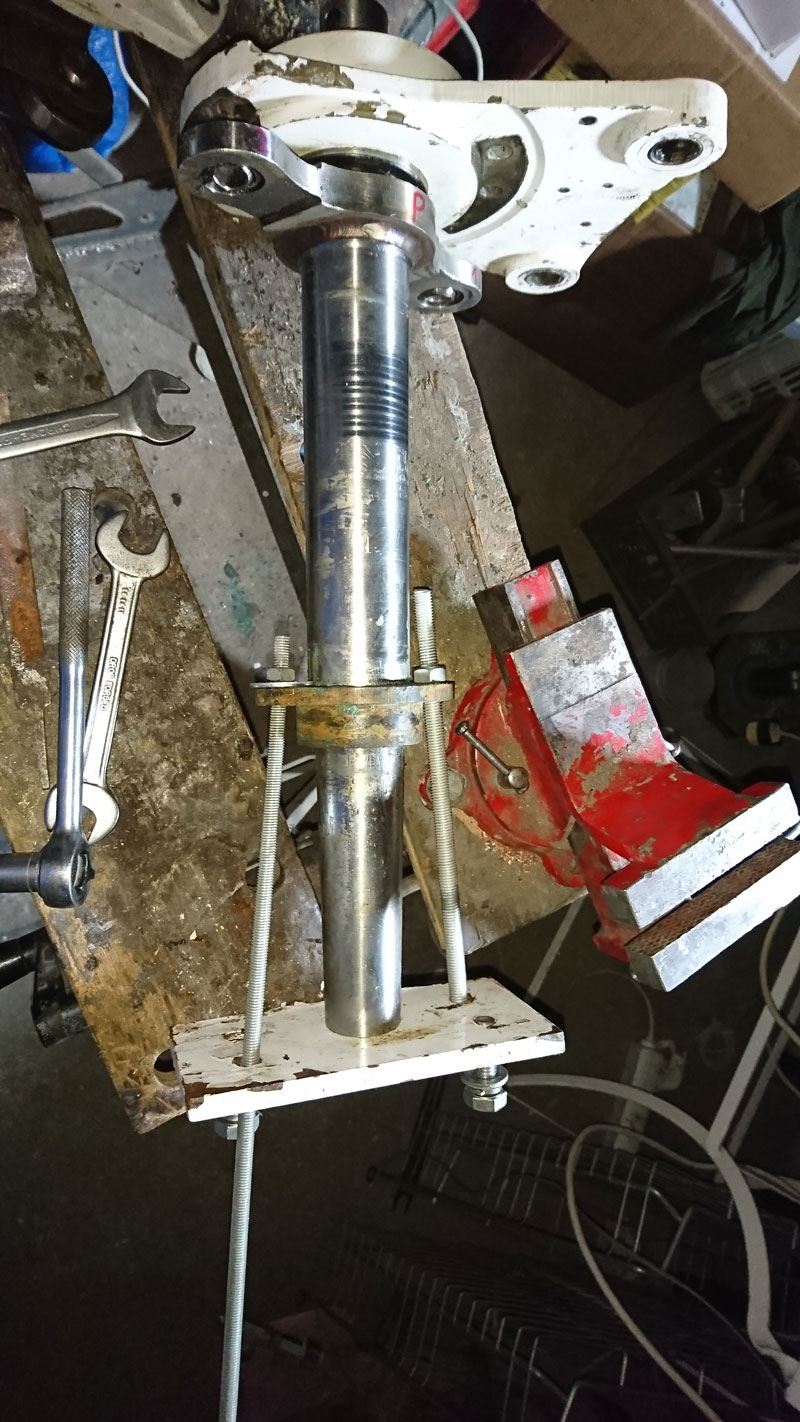
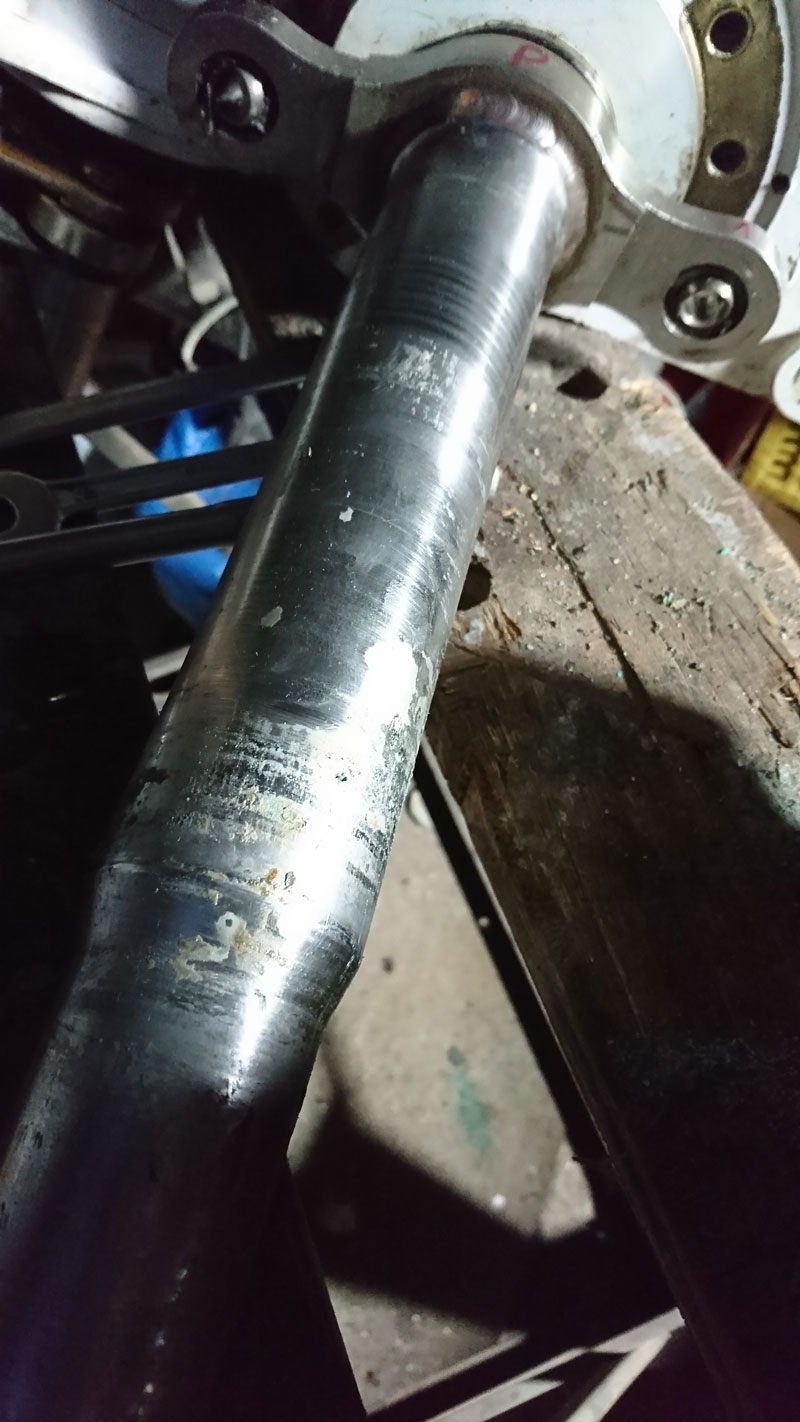
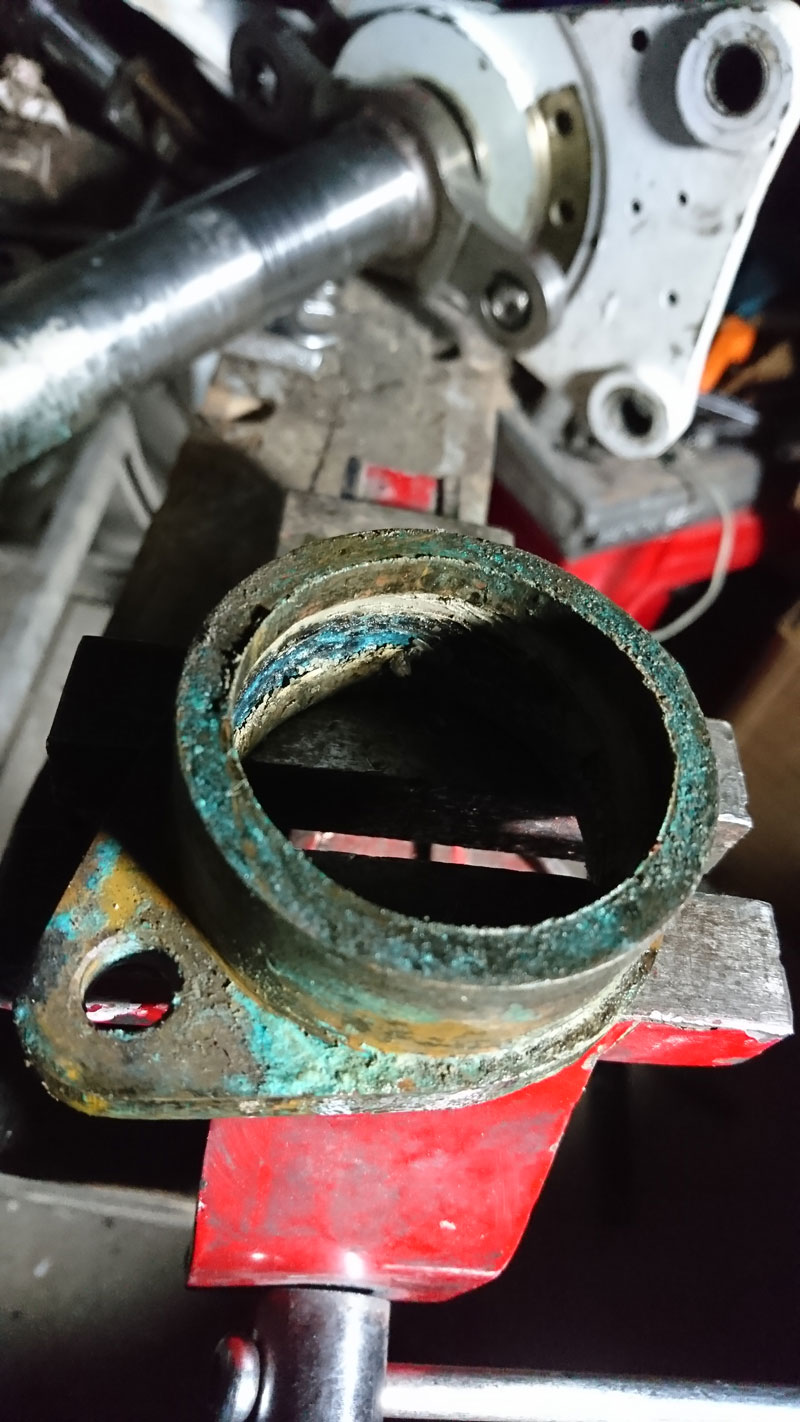
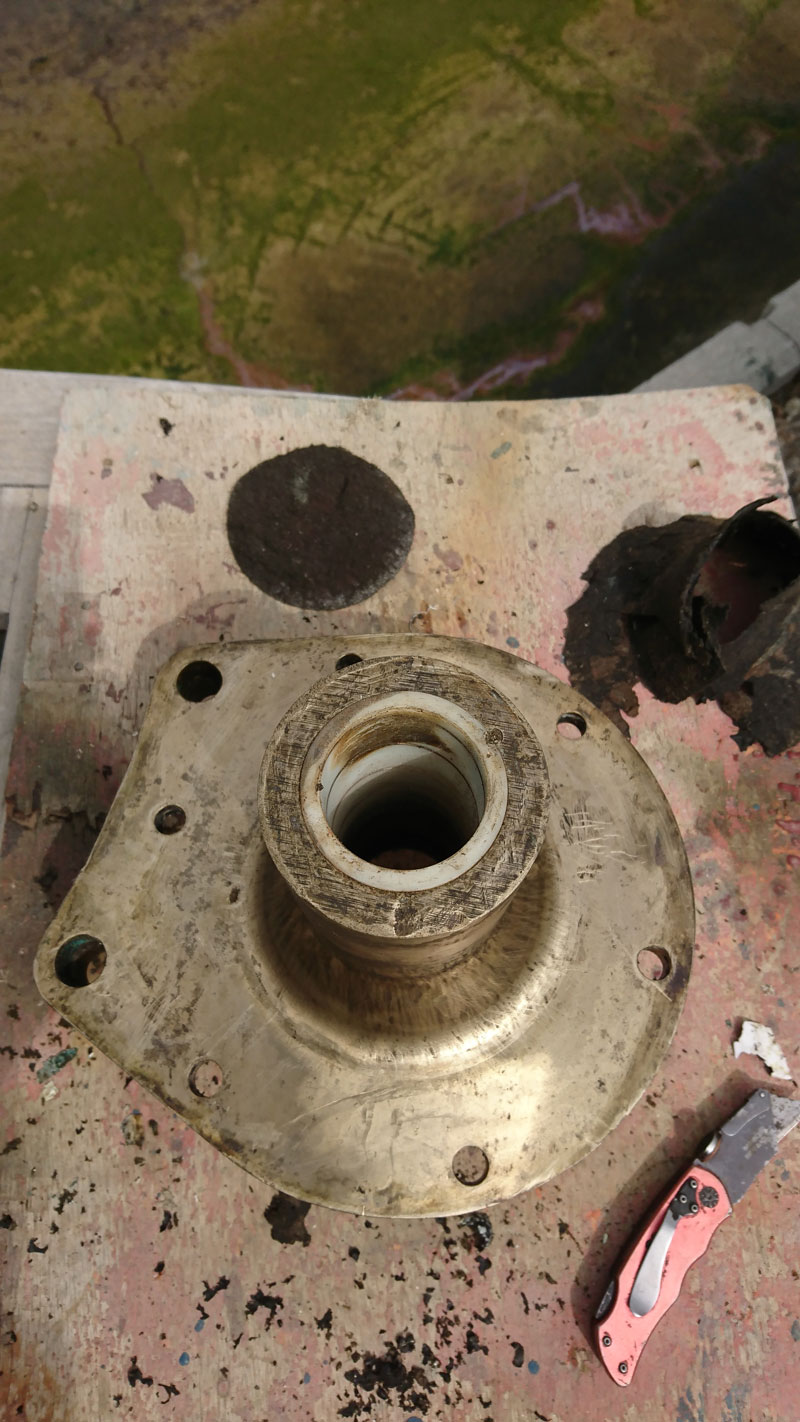
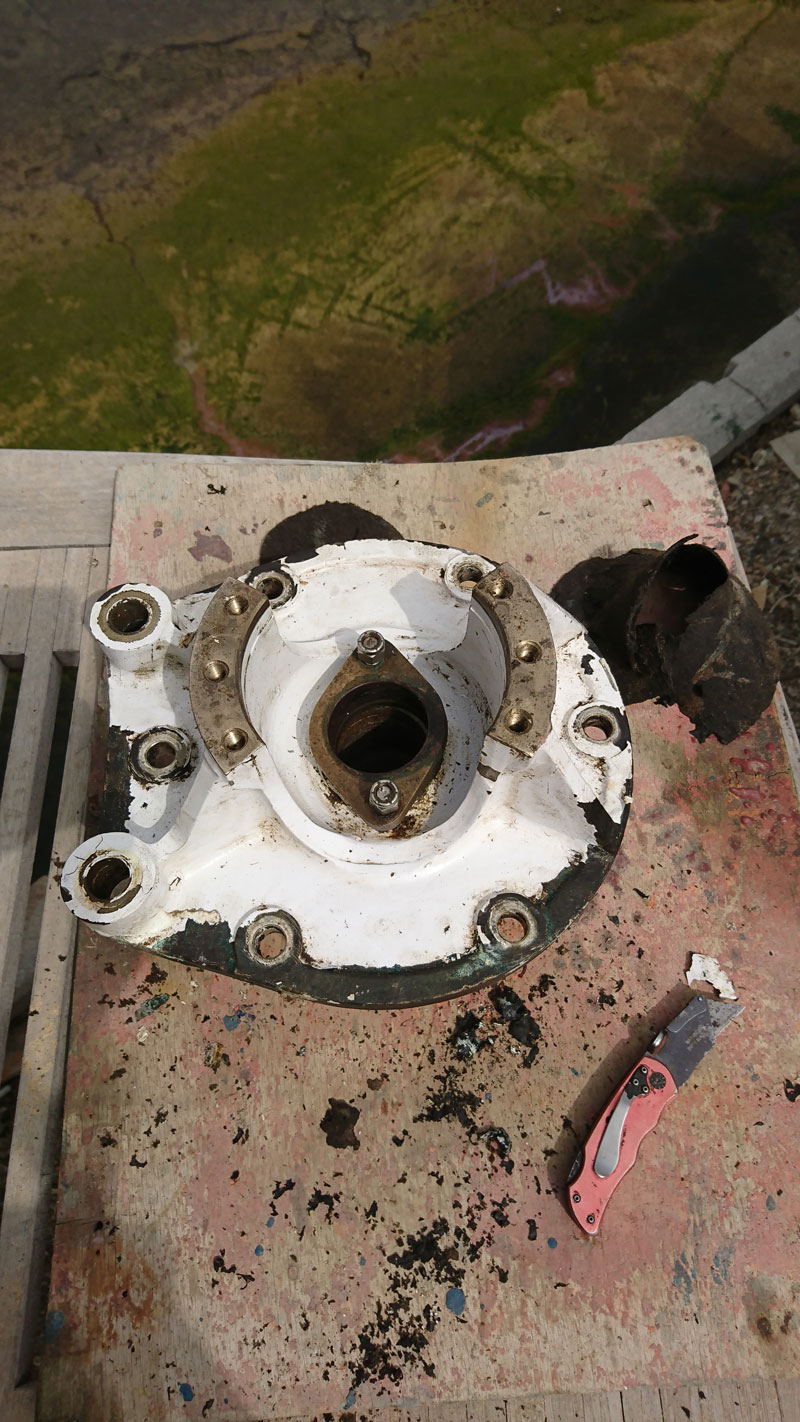
Removed rams (not that easy as tiller pins where a bit too tight and needed a fair amount of hammering), and the gland packing brass (whatever cast) ring on the one that was stuck on. That was good fun, devised a pulley out of different size bolts I had around (an M10 and a v.looong M8 that was a pain to work with but couldn't be bothered to cut short...), nuts and an 8mm steel plate. Too much calcium deposits there plus a bit of hammering damage when trying to dismantle it (I assume) Had to file a couple of deeper kinks, 600grit to smooth it and polish with a v.soft scotchbrite type of thing:

stabmechanism_5.jpg


lots of deposits, looked awful, but not damaged:
stabmechanism_6.jpg


stabmechanism_7.jpg


Nothing a couple of hours of cleaning and hand polishing wont fix:

stabmechanism_8.jpg


yes, that's a MASSIVE key for the fin:
stabmechanism_9.jpg


Then I turned into the top bearing and reassembled them. That's where the position sensor lives:
stabmechanism_10.jpg


Finished, cleaned and ready to be test fitted:
stabmechanism_11.jpg


Today at the boat I cleaned the housing from the old sealant, (wonder what sealant I should use!) Notice the pile of black thing on the side, that's the old stuff I managed to remove in one piece :D

stabmechanism_12.jpg


will need a new coat of paint once it's ready to be fitted:
stabmechanism_13.jpg


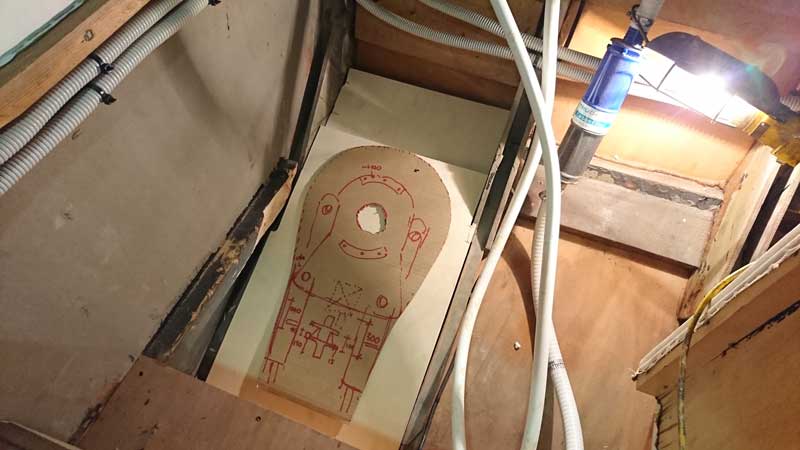
And the housing with the shaft and tiller temp in place. Only got one of the 6 layers of 20mm ply drilled in place and actually it's sitting a bit low on the hull atm (on top of some offcuts I had around). I had a problem with the tools I used for cutting this 90mm hole, one was v.tight (had to use a rasp to get it through) the other leaves a 2mm gap all around which may not be a bad idea if I want to fill the place with sealant, we shall see. One interesting problem is that I was planning to have the rams on the inside (keel side so to speak) as in the carton template I used previously, but as the 120mm builtup plus the height of the housing proves, there's no way they'll fit down there. So rotate 180degrees and rams are outwards, making them easier to check and disassemble on the spot with the boat in the water if it's needed:
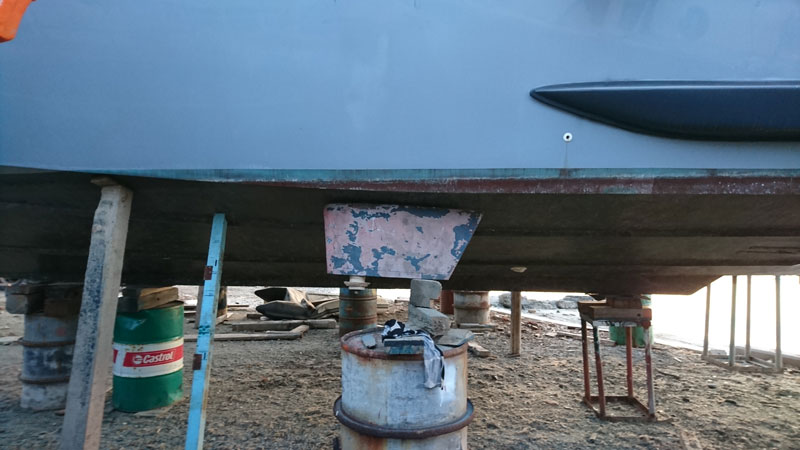
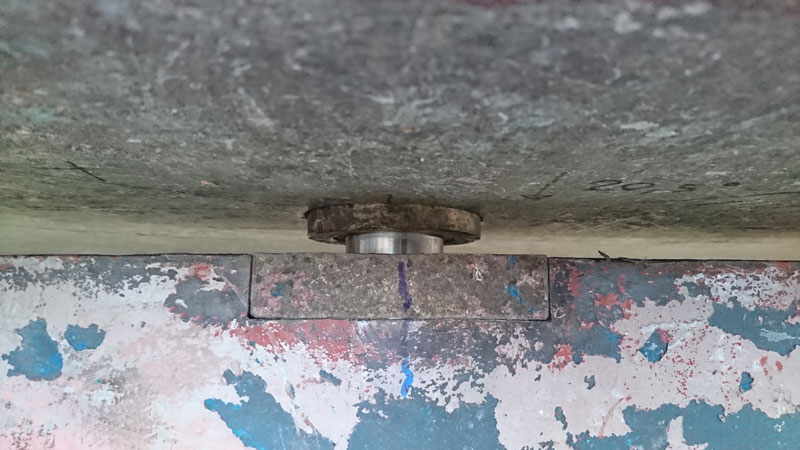
stabmechanism_14.jpg


stabmechanism_15.jpg


stabmechanism_16.jpg


Regarding my previous comment/question re hard lock alignment, I have now two options to align the housing (through the two main ram pivots - the big holes!):
  1. Vertical to the e/r bulkhead, aka parallel to the keel
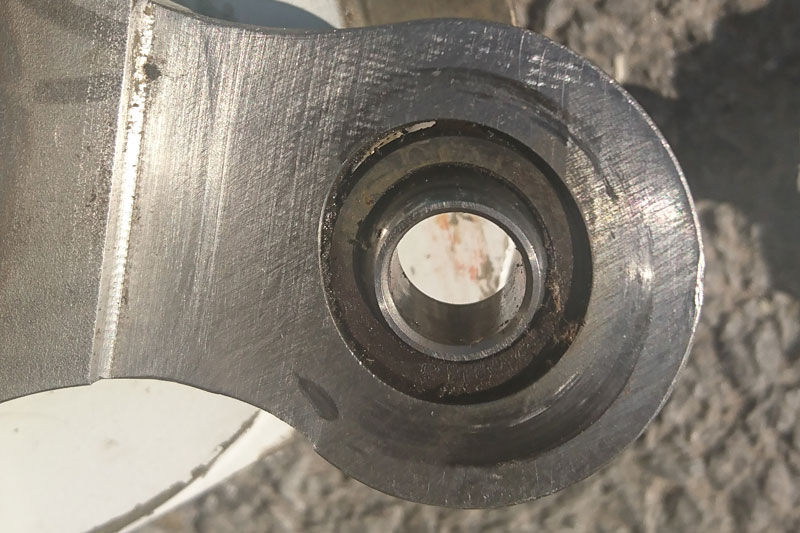
  2. Parallel to the chine using the hull/chine reinforcement iroko beam as a lead

What would the panel prefer, I'm leaning towards option 2.

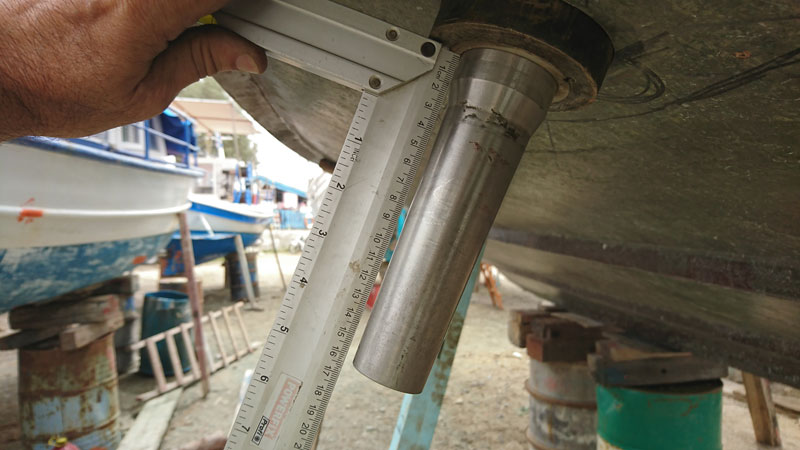
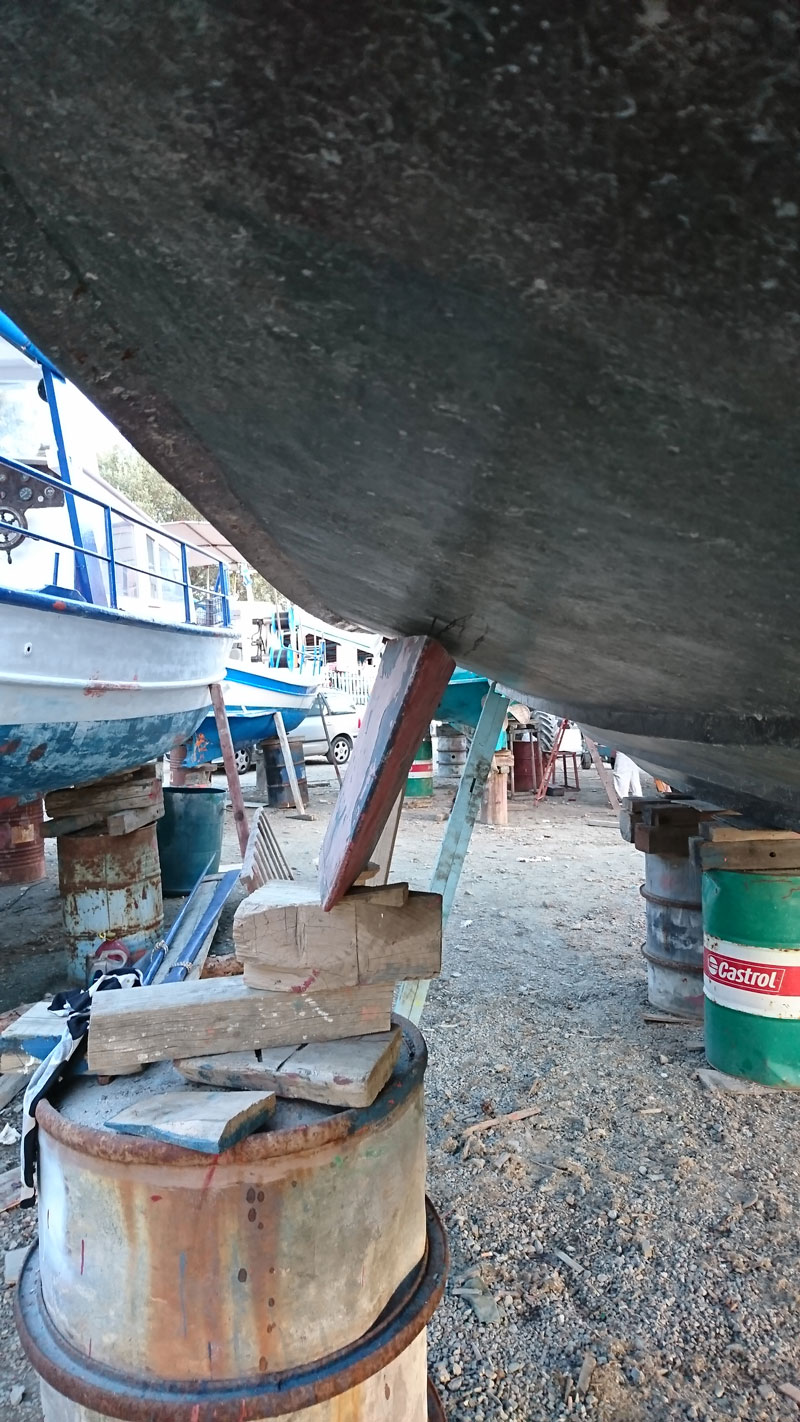
Now, outside this looks fine (in terms of being true and everything), just need to check how deep does the fin go into the shaft to decide how much the protrusion of the housing will be so that I don't get the fins too tight to the hull (wonder if they'll be efficient as barnacle removers :D and have to cut lots off the top of the fin to clear the chine) or too far off it and have lots of vortexes about. As it stands now, it's way too low (I think at least) and I expect I have to lift it up by 10mm or so. Don't forget there's a 5-6mm bronze plate 400mm dia to be fitted outside down there. Interesting to note that most of the installations I've seen google searching are of round hulls with no hard chines and ALL of them introduced reinforcement (or straightening ) of the hull to bolt the fin inevitably ending with 40-50mm or more distance to the hull at straight position (they're miles away from the hull at both ends of their travel)


stabs_outside_layout9.jpg


Before anyone mentions, key goes back, but couldn't be bothered to go up once more, lift the shaft 50mm, rotate 180 and drop it again...

stabs_outside_layout10.jpg


stabs_outside_layout11.jpg


stabs_outside_layout12.jpg


stabs_outside_layout13.jpg


Real work to do tonight and tomorrow, so more news on Tue.

cheers

V.
 
Last edited:
long time...

so, new 92mm drill bit (you don't call them drill bits but you get the point) we call them cup drills...
All holes done, the 6th 20mm ply layer was cut and prepared.
Actually by drilling them one realises that the seemingly perfect fit of each one wasn't that perfect after all. Took me a couple of hours to sand and fit them in a way that a sheet of paper will jam between the two pieces of ply.
Temp bolted them down again after making the v. tapered hole on the top piece. Will need to trim it the top piece a bit better, but the point is that now the housing assembly fits perfectly on the hull.
stabmechanism_17.jpg


stabmechanism_18.jpg


stabmechanism_19.jpg


stabmechanism_20.jpg


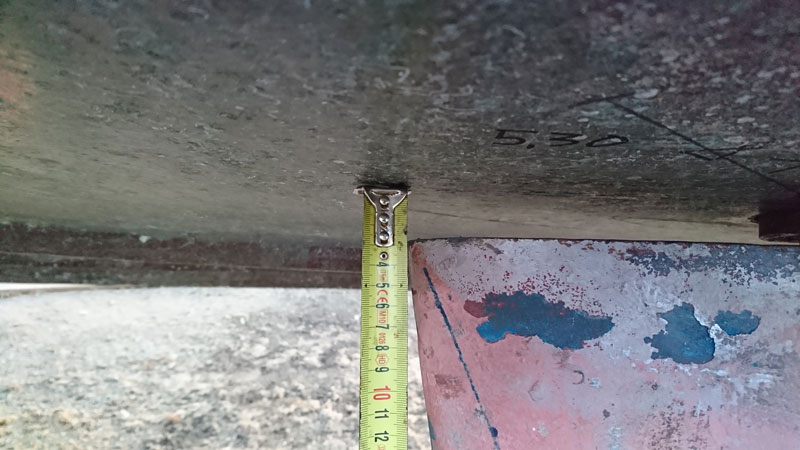
The protrusion under the hull is fine means the fin will be 15mm from the hull and I'll probably have to chop a bit as JFM has done.
BTW, John, the gap you leave between fin and chine is approx 20-25mil (if not more!) is that a security issue as well in terms of not slicing fingers off kids or others that think it's a good idea to hold onto the protruding fin?

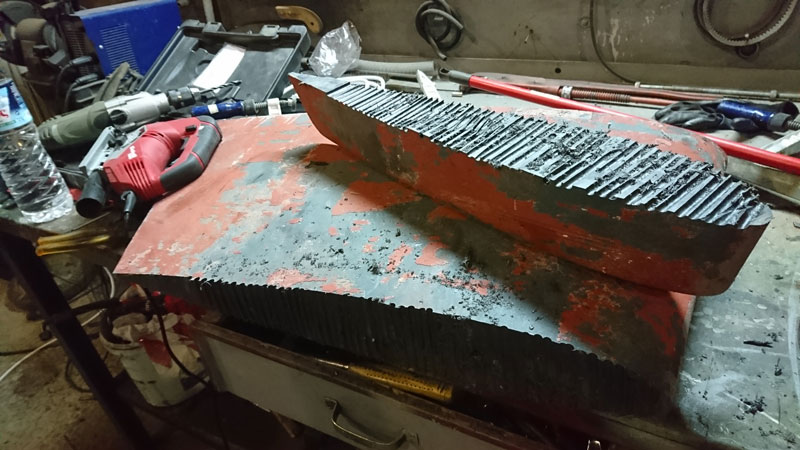
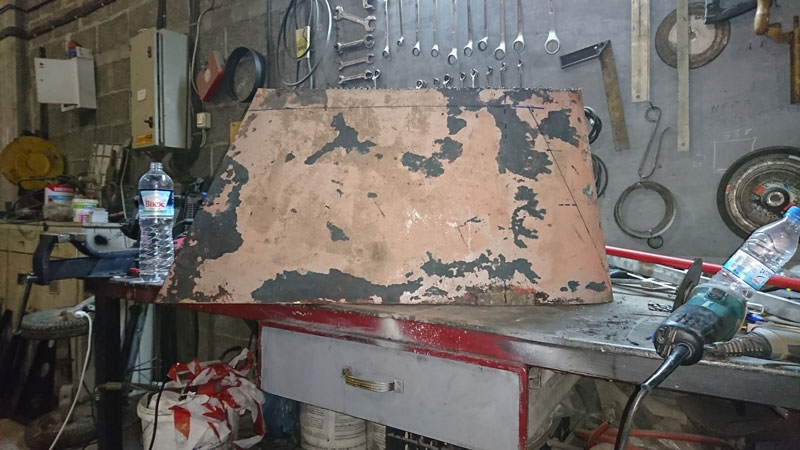
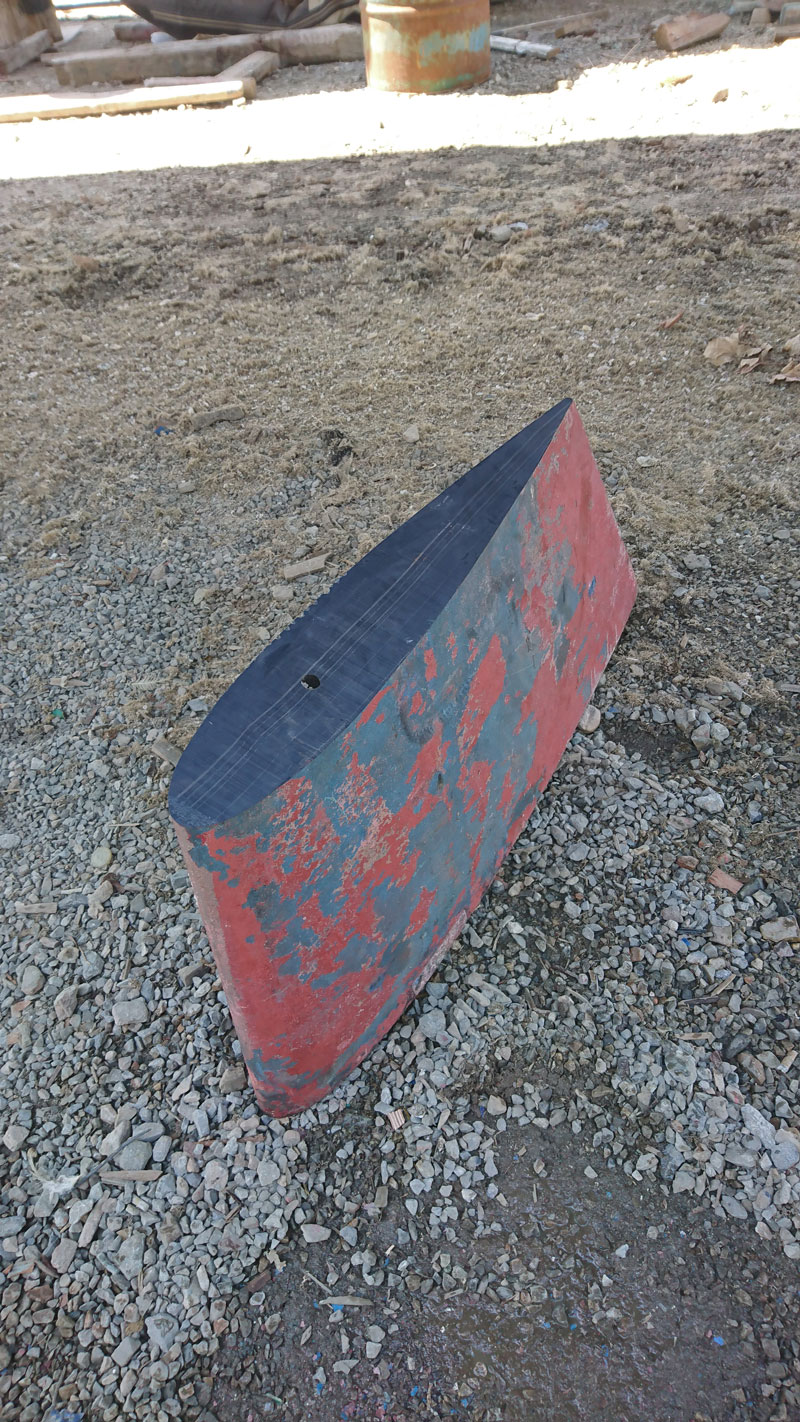
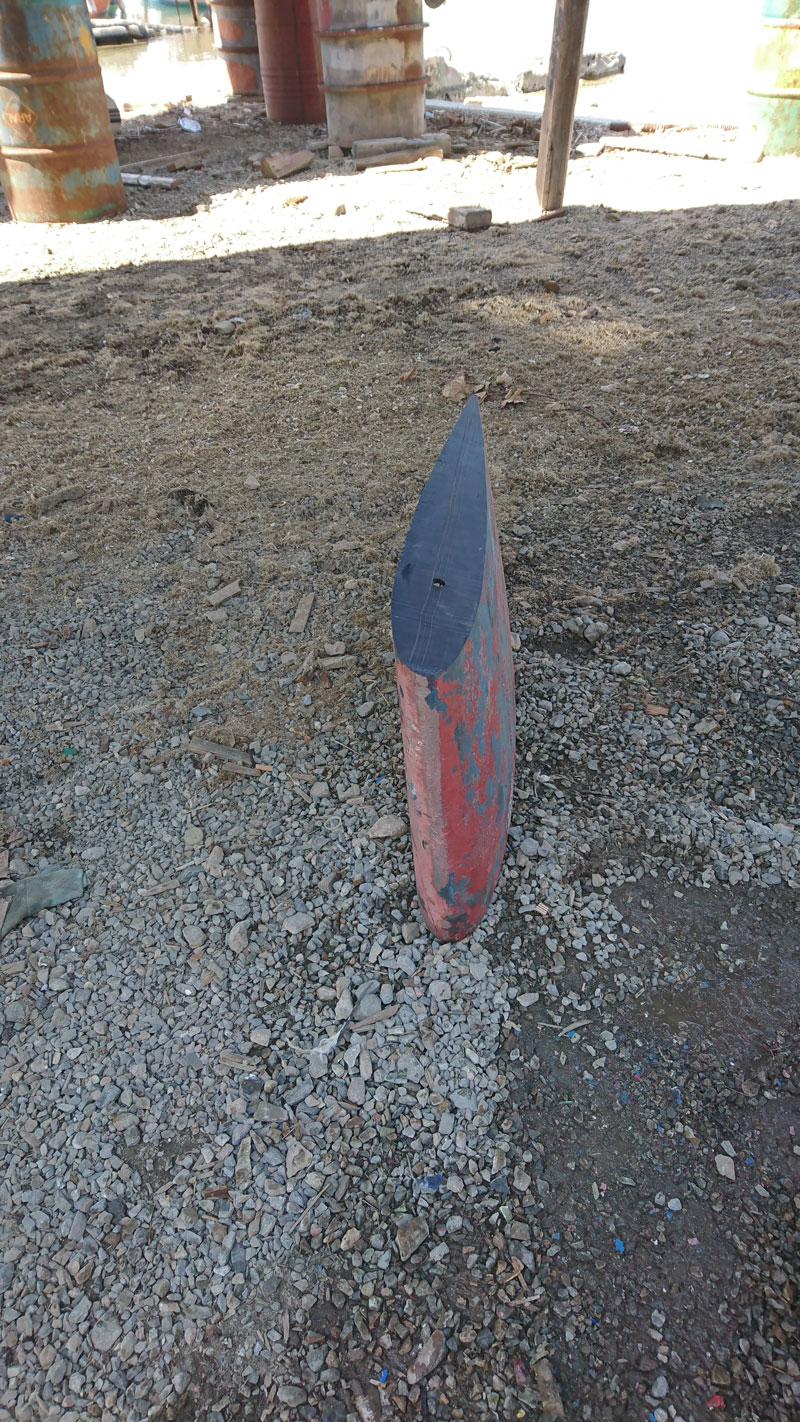
Yesterday spent the evening at Dimitris workshop trying to chop a 100mm slice off the fin. Started with a proper (but small) el. jigsaw, once the going went v.tough (and unfortunately v.soon!), we tried a small angle grinder that simply melted the material so we dropped the idea and turned to a 4 and 5mm drill, holes done every 10mm approx. took some time and a few drills to complete the perforation.
Then the jigsaw just run through the cut and we eventually removed the piece. On Sat we'll set a jig for the 20degrees slope I want and get this cut slanted before taking it down to the boat for test fitting.
Got the spare piece that I want to try and use the angle grinder with a 24grit sandpaper and see if I can get any work done or it fills up after the first few secs!

stabfin_design2.jpg


stabfin_design3.jpg


stabfin_design4.jpg


note the line is at the 400mm and the cut at approx 430mm. Slanting the cut means the "long" side (which will be the outer) will be around 420mm and inner 400mm.
stabfin_design5.jpg


cheers

V.
 
Ref. the optimal gap for safety, I'm afraid that zero speed fin stabs demand some discipline and clear instructions to whoever is swimming around the boat regardless of the fin/hull gap.
I mean, hydraulic actuators are surely strong enough to crush even a whole arm, if anyone should put it above the fin while it's sticking out of the hull chine... :(
Never had such concern myself, since my stabs weren't zero speed, but I would have rather turned them off whenever I had folks swimming around the boat - particularly small kids.

Impressive adaptation job indeed, but I'm completely at a loss in understanding why Vosper used to build such super solid fins.
Even for the worst case of grounding, it makes more sense to use some sacrificial material, rather than have fins capable to survive the impact but possibly pushed up inside the hull, with the final result of sinking the boat... :confused:
 
Last edited:
Vas

The Jobs you undertake never cease to amaze me.

We are off on holiday again this year to Skiathos (our favourite place on the planet). I always keep an eye out to see if you are on the water

Dennis
 
Ref. the optimal gap for safety, I'm afraid that zero speed fin stabs demand some discipline and clear instructions to whoever is swimming around the boat regardless of the fin/hull gap.
I mean, hydraulic actuators are surely strong enough to crush even a whole arm, if anyone should put it above the fin while it's sticking out of the hull chine... :(
Never had such concern myself, since my stabs weren't zero speed, but I would have rather turned them off whenever I had folks swimming around the boat - particularly small kids.

Impressive adaptation job indeed, but I'm completely at a loss in understanding why Vosper used to build such super solid fins.
Even for the worst case of grounding, it makes more sense to use some sacrificial material, rather than have fins capable to survive the impact but possibly pushed up inside the hull, with the final result of sinking the boat... :confused:

Agree P. assuming it does work at rest, I'll probably only use it with adults on the water and at a fair distance, or when all are back onboard and having lunch on one of these nice but v.busy anchorages.

Re solidity of the fins, I think it's down to the general overengineering by Vosper. Early in the process, not quite sure, so overdid it.
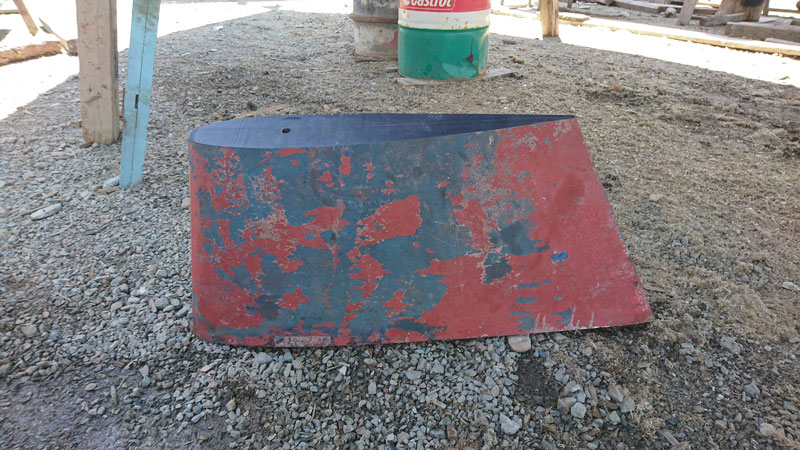
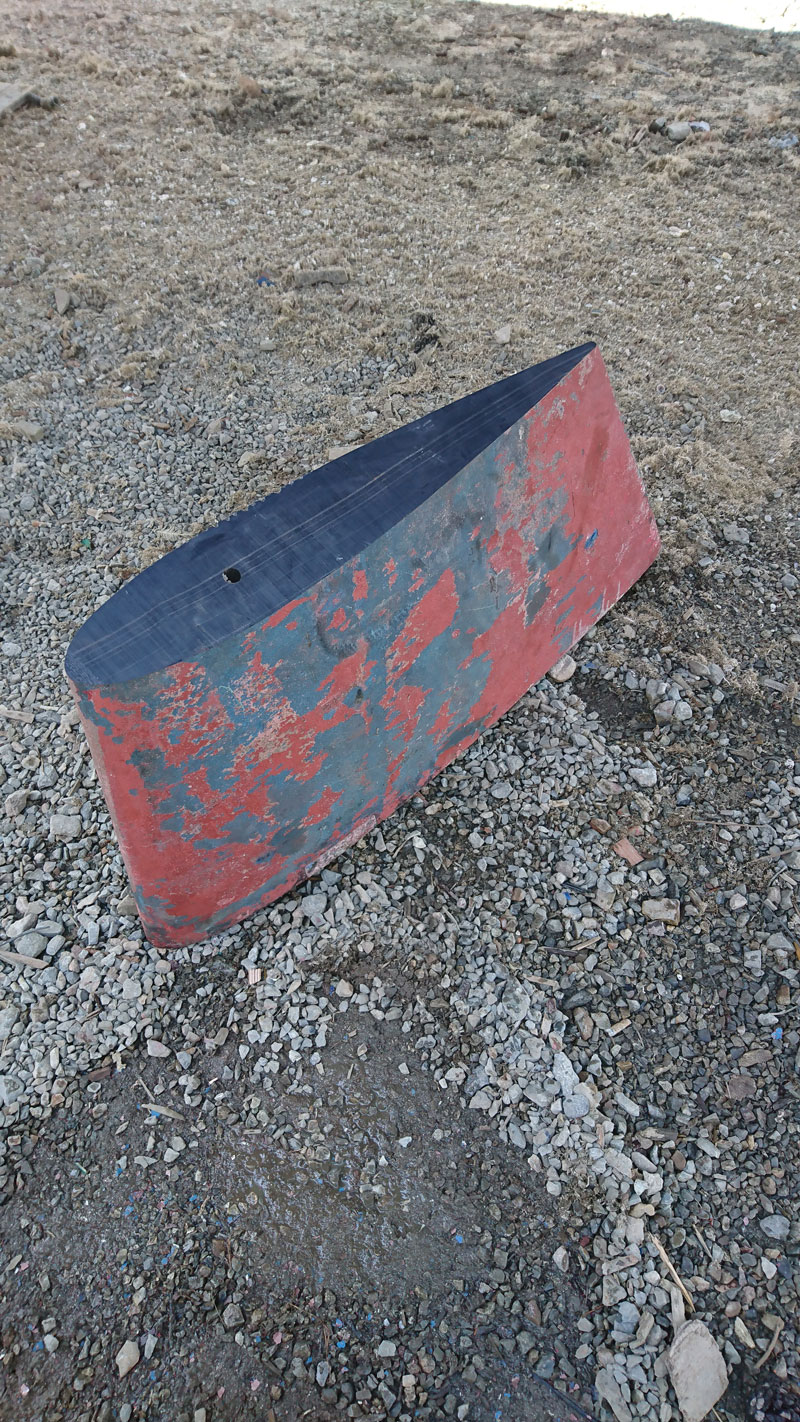
I already chopped 110mm or so weight is almost manageable by one (say 30-35kg each now?) and will probably do a bigger operation next winter once I get some data out of the system as is. Plan is to bring it down to 200-220mm high and built the rest out of composites. This way I can bolt/secure it on the remaining part and have both a sacrificial part, plus a much ligher (hence responsive) solution

Vas

The Jobs you undertake never cease to amaze me.

We are off on holiday again this year to Skiathos (our favourite place on the planet). I always keep an eye out to see if you are on the water

Dennis

aim to please :D
do let me know when you'll be there, mostlikely this summer we'll be around more and Skiathos is the first place we check/stop when leaving the big bay.


Now, some updates:

The fin we chopped was shaped and sorted. Had a go at grinding (the chopped part for a test) and progress was really pathetic. Even with a new 24grit on a small but powerful angle grinder I had really hard time smoothing the jagged cut from the successive drilling and consequent jigsaw cutting.
As a result, I'm NOT going to shape the front of the fin to smooth it (will probably take me a couple of days....) unless I find a more effective solution.
The method we used at Dimitris workshop was to use his old (60s) timber plane and using a 20deg sloping piece of timber for model finished the job really quickly.
Compared to the mess of drilling one zillion holes, I'm considering cutting the area around the hole on the other (there's a steel inset there!) and cut all 110 or so mm down on Dimitris plane :D
That's how the fin looks now. Note there's a 20deg slope matching the deadrise of the hull and effectively making the "bottom" of the stab parallel to the sea. Means it's easier to fabricate winglets and bolt them on underneath. Toying with the idea of preparing a dozen or so M6 and M8 combo holes, complete with threads and blanking them for now with selftapers. If I make something up, I can bolt it underneath in an hour or so while swimming (and fins not operating of course :D )

stabfin_design6.jpg


stabfin_design7.jpg


stabfin_design8.jpg


stabfin_design9.jpg


Worried that it was going to be a pig of a job temp fitting the fin, I prepared the 92mm hole offcuts as support on the bronze approx 300mm threaded (at the ends only) rod that was meant to clamp the fin on the ss shaft. Went in rather too easy, not complaining!

stabs_outside_layout15.jpg


stabs_outside_layout16.jpg


stabs_outside_layout17.jpg


without tightening it fully I'm at 28mm from the hull, I recon it will be close to 20mm when properly placed and tightened. Means I have to mark and chop a bit from the top of the fin to avoid fouling the chine.

stabs_outside_layout18.jpg


stabs_outside_layout19.jpg


stabs_outside_layout20.jpg


note the backplate is missing on the pics above, will be drilled tomorrow. Apparently it wasn't drilled when new, so each time you mark and drill (from the inside where the assembly is placed) holes on the other side can be a bit off. Well actually my drilling is fairly careful and true but seems the guys that did the previous installation on SD weren't that fussy! Had a look at filling the 6 massive tappered holes, but the machinist that does that sort of job refused to do it. Recons that a large 6mm thick and 400mm dia plate like that, will v.easily warp when heat is applied. So plan tomorrow is to mount this backing plate 90degrees to the previously installed setup so that I can mark and drill proper holes for my installation. The old holes will be epoxied on the spot when finally fitted, job done (cheaply as well...)

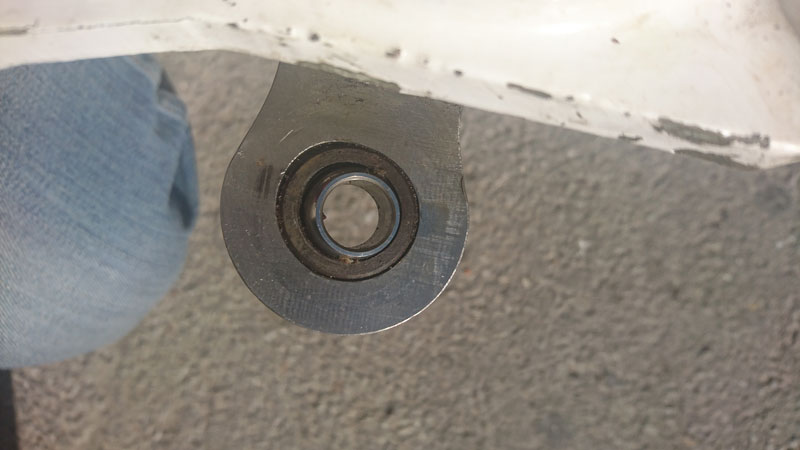
Finally as part of my "service" of the whole setup, I've taken all apart and noticed that on the actuators, the GE simple bearings that gets all the hammering from the actuators had extensive play. Further in the next two pics it's obvious that the hole has turned into an oval! Replacing these bearings turned v. tricky with 1inch outside dia and .5inch inside, so got the one actuator to the machinist with a typical and easy to source metric GE 15 ES replacement to machine (and restore) the outer hole to 26mm dia and fabricate new ss kingpins as the inner dia goes up from .5inch to 15mm iirc. Should have them ready early next week which means I could actually bed the actuators in and refit the port side h/w.


stabmechanism_21.jpg


stabmechanism_22.jpg


stabmechanism_23.jpg


Prepared the 6 20mm ply pieces with thinned epoxy in the evening and tomorrow I'll get a 14mm drill for the just under 13mm studs that bolt the lot together and unless anything stupid happens I should have the 6 layers of ply permanently fitted.

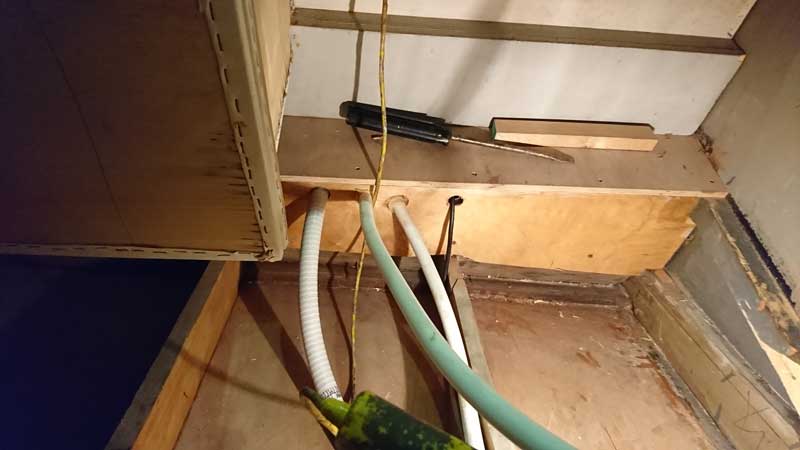
Next job on the list is find how to route the two oil pipes from the e/r and around the diesel tanks avoiding the easy route of going under the tanks at the keel.

Before the w/e I'd like to have the aircon unit removed (or lifted) so that I can prepare the installation for the stbrd side as well.

couple of Qs but too tired now, will do that tomorrow

cheers

V.
 
Top