Why are lead acid battery terminal posts

Three possible reasons:

It makes it possible to identify + from - easier by eye, and

Any corrosion is easier to break, and

If the cables are applied when there is load on there's less risk of sparks welding the lug and terminal together at a low contact point.
 
Our batteries have bolt type terminals along with the more traditional posts.

the bolt type connections seem far more secure and generally better than the posts we used before.
My domestic batteries are like that but the starter battery just has the posts. I need a low profile connection under the floor boards and am making long compression type connections to allow the cable attachment to be underneath. Tapering the holes is a pain.
 
The downside of the taper is that vibration can shake them loose with the positive feedback effect.

I can see where you're coming from, but has that ever happened in practice? I can't recall ever seeing or hearing of it happening.

Our batteries have bolt type terminals along with the more traditional posts.

the bolt type connections seem far more secure and generally better than the posts we used before.

Until the female threaded part starts turning in the battery when you're tightening the bolt! (As happened with one very expensive specialist battery I had.)

The tapered posts also give a greater contact area, which seems a good thing.
 
The tapered posts also give a greater contact area, which seems a good thing.

Don't see that. Arguably, the contact area is greater with a non tapered diameter.
I recall on one car I had, the remedy for reluctant starting was a clout on the battery connection with a hammer. Presumably, the connector slid down a little resulting in tightening.
 
I think the tapered posts are a throw back to the to the early days of motor cars. Being two different diameters it is difficult to fit the battery cables onto the wrong terminals, Tapered ones have a much bigger surface area which allows more current pass and in the days of old cars a poorish connection still enabled the starter motor to work. The damp wet conditions that old motor car batteries had to endure were not ideal for good connections. Tapered pins are easy to make and as others have said tightening the terminal fittings puts no strain on the terminal unlike the screwed post terminal, undoing a well corroded screwed post terminal can easily ruin a battery.

David MH
 
My domestic batteries are like that but the starter battery just has the posts. I need a low profile connection under the floor boards and am making long compression type connections to allow the cable attachment to be underneath. Tapering the holes is a pain.
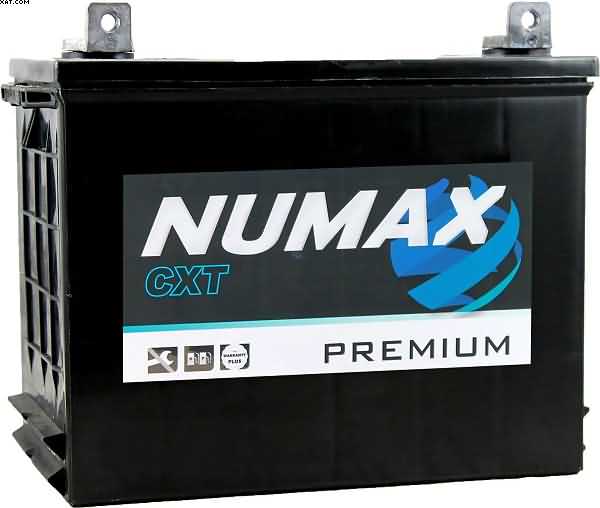
Ccut the post off, drill and tap it and fit it with a stud.

Or you could cut it square, drill a hole through it and bolt on a normal, crimped on lug ?


numax-037-battery.jpg
 
Don't see that. Arguably, the contact area is greater with a non tapered diameter.

Nope, a tapered post has a great surface area.

That said, it's irrelevant, as the bolt down studs have a much smaller surface area than a post, but it's more than enough to do the job.

I recall on one car I had, the remedy for reluctant starting was a clout on the battery connection with a hammer. Presumably, the connector slid down a little resulting in tightening.

Or, you could have removed the connector, cleaned both surfaces and correctly re-fitted the terminal, making sure it was tight. A permanent cure. ;)
 
I'll let the maths whizz kids argue that one! It seems, innocently, to me that if the diameter is constant, the circumference will be constant, whereas, otherwise the circumference depends on the mean of both diameters. (Of course, if the diameter is constant and equal to the small end, the converse will apply).
 
Last edited:
In my view the traditional tapered battery post only just works, because of the materials used (soft lead, fairly rough surfaces), creating enough friction to stop the clamp from rising on the post when compressed.
Some newer batteries with threaded hole type of terminals come with adapters like these
M6 Female to Brass Post Battery Terminal Adapter Kit - Pegasus Auto Racing Supplies
in order to make it possible the use traditional clamps.
These adapters are sometimes knurdled (for a very good reason), but because they are brass (harder) instead of lead it becomes fairly obvious that a tapered compression fitting is not at very sound idea. IMHO.
 
I'll let the maths whizz kids argue that one! It seems, innocently, to me that if the diameter is constant, the circumference will be constant, whereas, otherwise the circumference depends on the mean of both diameters. (Of course, if the diameter is constant and equal to the small end, the converse will apply).


You can calculate it here...

Truncated Cone Calculator

Lateral surface area is the area of the sides excluding the top and the bottom which is the value we are interested in. It appears that you are correct. Even though value s gets greater as the top radius reduces, the reducing r has a greater effect so that lateral surface area reduces.
 
In my view the traditional tapered battery post only just works, because of the materials used (soft lead, fairly rough surfaces), creating enough friction to stop the clamp from rising on the post when compressed.
Some newer batteries with threaded hole type of terminals come with adapters like these
M6 Female to Brass Post Battery Terminal Adapter Kit - Pegasus Auto Racing Supplies
in order to make it possible the use traditional clamps.
These adapters are sometimes knurdled (for a very good reason), but because they are brass (harder) instead of lead it becomes fairly obvious that a tapered compression fitting is not at very sound idea. IMHO.
There are various different types this tayna.co.uk/battery-leads-terminals/terminals/fullriver-m8/ is the type used on my Morgan for the Red Flash to SAE clamp type posts.
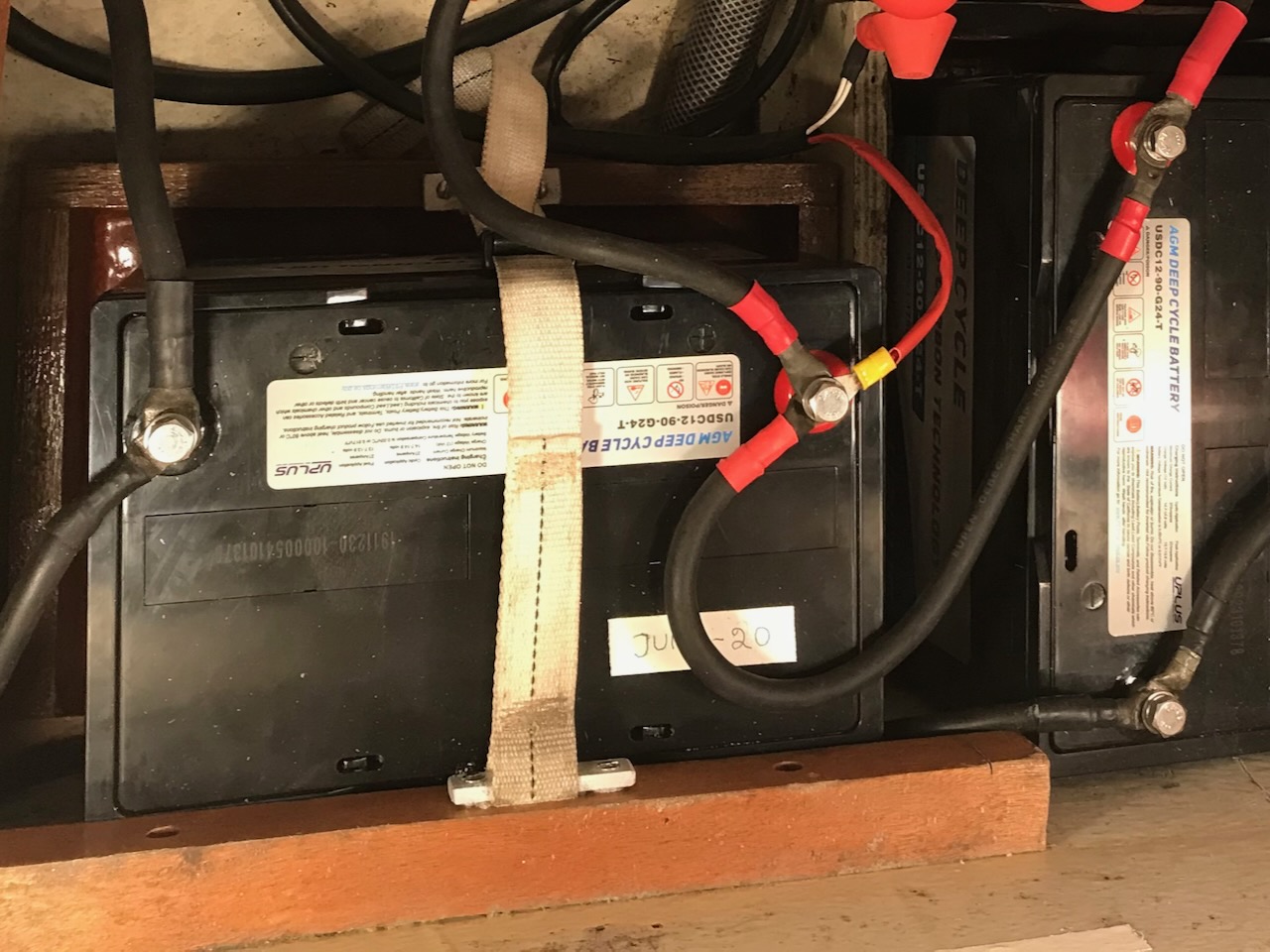
 
Stainless steel is a poor conductor... When the lugs are stacked, the majority of the current passes from stud to lug to lug etc but there is little contribution from the stud and the stainless washer below its head. Brass and copper are better but subject corrosion.
 
Top
