What lessons for this week

All windows removed, area cleaned, old sealant removed, holes and any damaged areas re-glassed and gelled.
Apertures re-cut to make the windows 30mm higher and slightly longer as she's a bit gloomy down below.
The actual holes were pretty badly cut out in fact, probably due to original self build and in places just a mm or so of grp beyond the fixings.
Plywood templates made of new apertures with amount of curvature needed in frames and sent to our previous window maker.
Headlining removed and new fitted with better insulation and led lights.
New windows fitted with new internal trims.
Big fail on the aft two windows however (hence previous window maker).
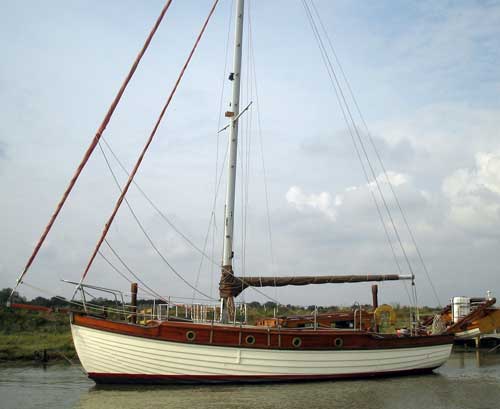
Its a center cockpit countess 33 and the aft two windows have quite a lot of radius given their length and simply, they didn't fit.
Our fault as when I checked the frame curvature that our (shall be nameless) employee sent it was 20mm too much.
Not a happy bunny.
I decided to make a grp template of the window area so they had a stiff, accurate reproduction to work with but their quote was frankly astronomical and they still said that it wouldn't be exact.
Sorry not good enough.
Hate it when a rep say's he can match all radii and then prove they can't.
Anyway after quite a lot of to-ing and fro-ing I've decided to give another manufacturer have a go at less than half the cost and am awaiting their solution, the down side is these new ones will use inter-screws, which I hate with a passion but if they fit for less than half the cost I can't argue.

Also fitted new cutlass bearing and re-aligned the engine.
New VHF and AIS transponder.
New standing rigging and 2:1 main halyard and Harken top sheave as owner's shoulders are not as strong as they were, plus various running rigging changes.
Stack pack and simpler reefing system.
Better quality mainsheet traveler as the old one was horrible.
New sprayhood and associated cockpit cover.
 
Last edited:
keep meaning to take some photo's but generally get distracted and by the time I remember its too dark or the boat has gone.
We did a mix on the headlining of 5mm plywood with light cream, textured, satin faced panels in the roof and 10mm foam and off white lining on the walls.
This ply is pretty good quality and at around £20 for 8'4' sheet to us, very good value.
I've got a couple of sheets of plain white satin finished ply sitting here so I can do my own boat later this year.

The soft headlining is a real art and Paul, our furnishings guru, is a marvel.
As long as we batten up correctly he dives in with his air powered staple gun, firing s/s staples like mad.
Its one of those professions that is full of little "cheats" to get the finished section looking just right.
 
In answer to Grahams request here's a bunch of photos I took today.
I was mainly working on Ventura, a 3/4 tonner from the 80's with an amazing shape.
We reckon designed by two designers. one with a ruler and the other with only French curves.
vent_1

Fab looking interior and very well built.
vent_3

The plan is to strip the deck of all fittings and the old cork deck tiles which like the rest of the boat is made from ply.
Sand down and fill any iffy bits with epoxy / micro balloon, then sand and key before sheaving the deck with 602 biaxial cloth.
vent_2

Going to be quite hard just moving about on her, especially as she draws over 6' and has very high freeboard for her size.
One of the issues was to remove the rudder tube which was leaking, which after chipping away at the lower joint and then some "gentle nurturing" popped out.
vent_4

vent_5

vent_6

Also in shed 2 they were steaming in some new planks aft on Revel.
revel


In shed 3 we're carrying out a full refit of Lady of Hamford including a new wooden mast, sails etc.
loh_1

loh_2

loh_3

An interesting addition is lifting cockpit hatches where before there were just fixed seating.
loh_4

loh_5

In shed one restoration work on the three 40 odd foot classic motor yachts continues.
shed1_21_1_16


Outside, once it warmed up a little we've been finishing off the Fisher 25.
dorvic_1

She's had a repaint, varnish, blasted and epoxied.
Mast stripped repainted with new standing and running rigging.
New cherry/teak floor, new headlining and upholstery.
Reconditioned the engine, exhaust and sound proofing.
Also designed and fitted an extendable ss bowsprit for a staysail or cruising chute.
dorvic_3

and two teak slatted deck seats.
(must remember to sort the tread master out round the air vent, it looks horrible)
dorvic_2
 
Lady of Hamford brings back memories racing against her on the EAORA circuit in the early 1970's. It is good to see her in pretty good condition. Look after her.

Javelin do keep posting as many people never see inside building/repair sheds.
 
Today has been frustrating.
We're re fitting Lady of Hamford (photo in above post) and Tuppence (photo below) with new wooden spars.
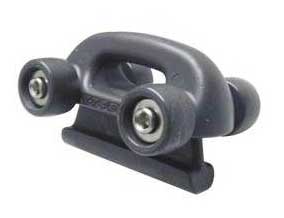
The issue is finding external mainsail track and cars that are "in keeping" but at the same time work.

Yes we could throw on a Harken or Ronstan track and car system but they just wouldn't look right.
Other options would be to get un-anodised alloy track and then get it anodised in gold and then we're stuck with plastic slides as again the low friction cars with reciprocating balls are big, bold and bloody expensive.
Qr we could buy brass or bronze track with the issue of potentially high friction slides unless looked after frequently.
There's stainless track in the states but a pain to get hold of and a low friction system using stainless mini cars but they only do the track in black.
The halfway house is a slide like the Rutgerson one below, however these won't work on an external track.
slide.jpg

I'll be fitting these on my modern selden mast in place of the plastic slides.

We'll probably end up on the heavy brass track solution and see how it goes. :nonchalance:
thrupp.jpg
 
Last edited:
Spent a fair amount of time this week trying to get decent comparable quotes for sails.
I currently need sails for a fisher 25, Oyster 345, Vashti 38, 3/4 tonner (mine), YW 5 tonner, S class 6 tonner, Sunfast 37 and a steadying sail on a 1938 motor yacht.

In the past we've just picked up the phone to North and said "sort it".
However I decided to put them out this time and check the market.
I selected 10 sail makers that I rate and sent out the list and after 24 hours or so I got some answers which is where the trouble starts.

The variation in total price after accounting for reefs, UV strip, foam luffs, sail numbers and the like was remarkable.
Some of this was down to which cloth weight and manufacturer the sail maker selected even though I had narrowed this down by stating all sails will be polyester or dacron.
So I spent a fair amount of time on each boat quote trying to get the cloth weight, cut, configuration and quality broadly similar and got re-quotes on that basis so I had something real to compare.
The lesson here is you need to quite prescriptive about exactly what you want.
If you leave it to the sailmaker you will have to filter through a lot of BS to nail down something suitable for sensible comparison.

I have the figures at work and won't repeat them on here however the difference between the most expensive and the cheapest on the Oyster 435 was £2400 or 42%.
So I worked out the percentage difference between each price for every boat and give or take this percentage stayed constant between the different companies.

So given the all these companies are successful and have a good name in the industry, they are using largely the same materials and config, what makes one sail 40% more expensive than another.

I've made a decision on the Fisher, Vashti and on mine but the others need more work though I have to say my list of ten is now down to four.

My tip for anyone wanting sails is do your homework before you contact the sail maker and work out exactly what you want in terms of material, material weight, number of reefs etc.

Made some more progress on the Plywood fantastic 3/4 tonner deck this week.
She's been epoxy filled and sanded and filled and sanded and filled and.................
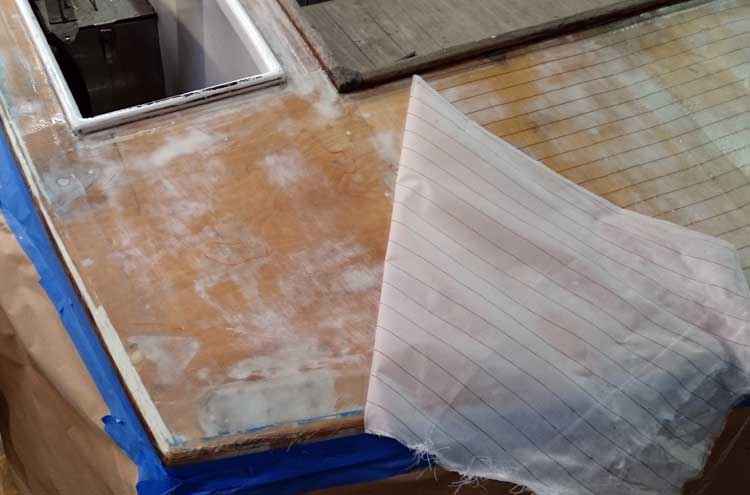
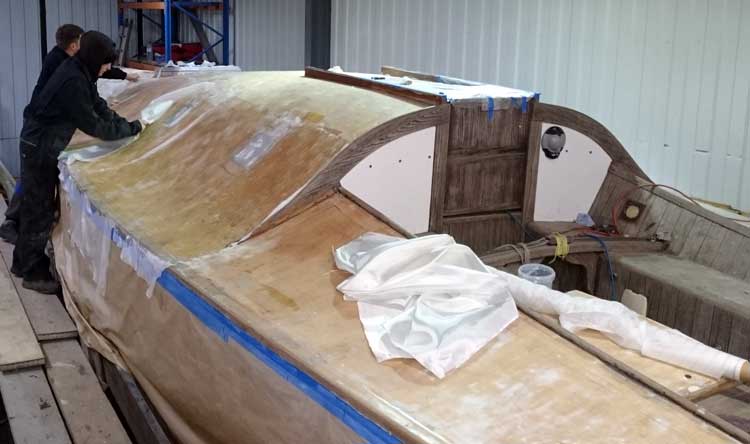
Next on the list after a good blow down and clean was to sheave the deck with epoxy glass.
The issue is that on this boat there is no toe rail to hide a glass edge.
Good practice requires the glass cloth to go round onto the hull but the owner does not at this stage want to repaint the hull, so we need a very crisp edge on the glass.
The deck paint will then come down to this point.
We could knife it with the cloth in a green state but its very easy to cut too deep into the ply.
So I decided to use glass fibre tape round all the edges which is a lot more controllable.
The downside is its not practicable to use peel ply (gives a finish ready for further work without much prep) which in turn means we'll have to wash down the blush and key before sheaving the rest of the deck.

vent_7


vent_8
 
Still one of the best threads on this forum. Thanks

Edit
Don't let PBO talk you into an regular magazine article. This is a bit more real, if you know what I mean?
 
Last edited:
Thought I'd keep following this project through on here.
The sheaving of the deck is almost complete.
We used a 200gm/m twill weave fabric and west epoxy resin with the slow hardener.
I warm up the resin before adding the hardener as it wets out the fabric faster and is generally easier to work with.
Don't get tempted to mix up too much at a time as you run the risk of the resin exotherming (going off too fast)
So I mix up about half a litre each time.
If you lay the fabric down on the deck you can just pour a little of the resin on the cloth and use a plastic squeegee to spread the resin around.
Takes a bit of practice but its fast and with the right technique makes the resin go a long way. (as long as its warmed so its a thin viscosity)
I changed my mind on the peel ply and decided to give it ago despite the awkward shape of the deck.
I'm glad I did because it saves a huge amount of time afterwards in preparation time before applying the Epoxy high build primer.
You apply it by laying it on top of the glass cloth and squeegee it down using a little resin here and there so you don't get any dry patches.
Essentially the waxy blush that comes to the surface of the resin when it cures gets pulled away with the peel ply leaving a clean wax free surface.
Below is the deck sheaved with the peel ply (fabric with the red tracer lines in it)
vent_9.jpg


Once the resin has gone off, (the next day) you just literally peel off the peel ply and it leaves a superb workable finish below.
vent_10.jpg


Next we'll be on high build epoxy primer > epoxy filler > sanding > primer > top coats > fittings back on > then the fun bit, Kiwi Grip, best invention since the winch handle.
 
Last edited:
Three more photos's on progress.
The first really is one for the last post and is off a couple of our apprentices removing the peel ply after sheaving the port deck.
vent_11.jpg

The next job was to key using 100 grit, attack and flatten the odd bit that the peel ply didn't flatten out especially on the overlaps between cloth panels.

A single coat of high build epoxy primer was then rolled on as a seal and key.
We are using the very good primer and fillers from Nautix.
Once the primer has set we lightly key again and fair in any low areas with Nautix epoxy light filler.
This filler is pretty expensive however it really is the business.
So easy to spread even in the smallest of holes and because its so easy to spread it requires minimal sanding.
You can see the filler as the darker / shinier patches.
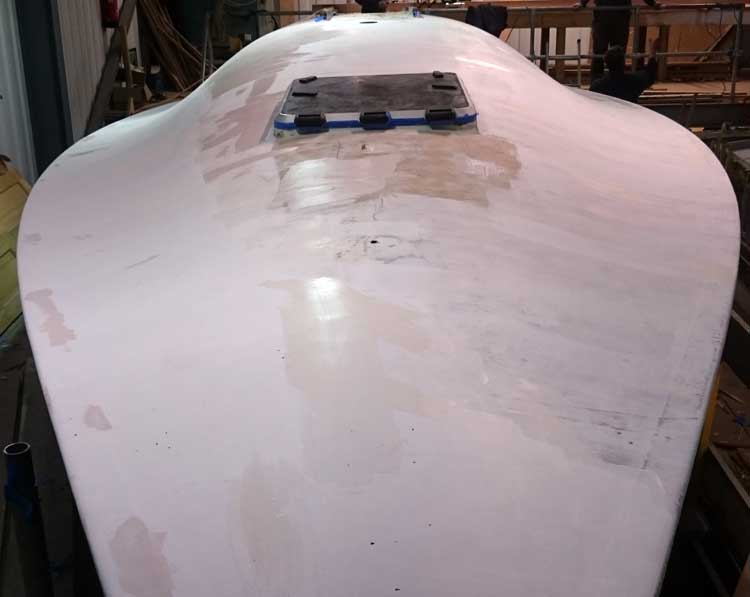
vent_12.jpg

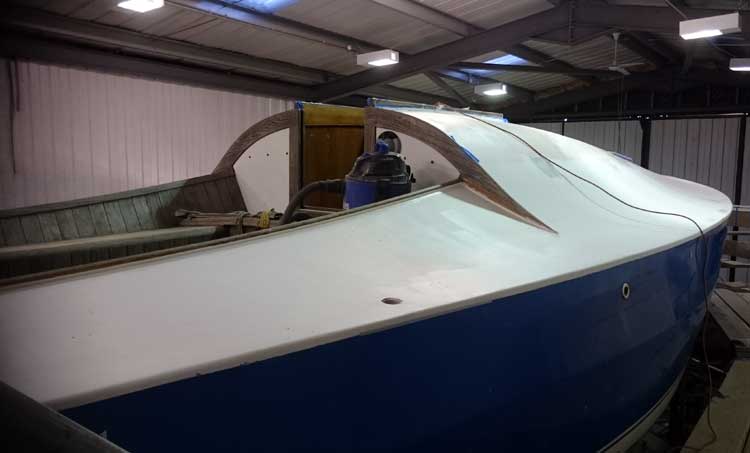
We removed the masking skirt round the hull to check the hull / sheaving join and it looks to be pretty good and straight.
We need to make a decision of exactly how we'll finish this transition but its likely we'll use a vinyl stripe.
You can see a two foot trial example just under the water inlet hole on the deck.
It cant be seen very clearly but the transition from deck to the teak combing and trim has had a 12mm epoxy fillet added.
vent_13.jpg
 
Top