
Chiara’s slave
Well-Known Member
Quite the contrary, I think. And likewise, our boat is well used, 2-3 days sailing per week in season. We broke nothing last year. She is 23 years old.Is there actually any evidence that they are not in fact safe?

Quite the contrary, I think. And likewise, our boat is well used, 2-3 days sailing per week in season. We broke nothing last year. She is 23 years old.Is there actually any evidence that they are not in fact safe?

Meanwhile yards building modern Ocean cruisers that have gone the other way - light, capable of planing, twin rudders etc.... The likes of Pogo, JPK, Pegasus.... They have multi year waiting lists.

In the usual usage of light winds and coastal waters then the RCD has assisted with the design and construction of boats, but it does not guarantee a boat is 100% safe in all weathers. As I mentioned before the boat only needs to comply at the point of first sale and is irrelevant the day after that. Changes in yacht design precede any changes in the regulations. Yes there have been changes to update RCD regulations on hull windows - but do they go far enough? Aging of the fixing material is not a consideration for RCD regulations but relies on the boat and sealant manufacturers advice that it is safe. However in the real world there are failures with hull windows that are leaking shortly after manufacture.Is there actually any evidence that they are not in fact safe?
Strange you mention my name. I should point out I am not against evolution of yacht design. When I was a lot younger I bought the first production race boat (22ft Hunter Formula 1) with a kevlar layup in the hull. It was an extreme design at the time and was easy to get on the plane. As to Dragonfly multihulls, I would certainly consider the 28 or 32 for their ability to arrive sail fast, but their accommodation is their limiting factor, not to mention their cost. I found the Mystery 35 an interesting boat but I dislikes the very long tiller in the cockpit. Stephen Jones designed a very slippery hull and it was a shame it cost so much that few were built.I received an email from Dragonfly UK earlier this week. It went along the lines of 'Want a new Dragonfly? Tough. You can't have one. Not for years anyway'. So even the most abhorrent boat to traditionalists, that is as anti-Concerto as it's possible to get, and costs silly money to boot, is in high demand. I don't think the Hunter Mystery 35 type boat is ever coming back. No mystery as to why.
I had the same email. But, as my 23 yr old Dragonfly is as solid as a rock, I don’t actually need a new boat. Nice to see them doing well, and long live the waiting list. It keeps the price of second hand boats up.I received an email from Dragonfly UK earlier this week. It went along the lines of 'Want a new Dragonfly? Tough. You can't have one. Not for years anyway'. So even the most abhorrent boat to traditionalists, that is as anti-Concerto as it's possible to get, and costs silly money to boot, is in high demand. I don't think the Hunter Mystery 35 type boat is ever coming back. No mystery as to why.

 .
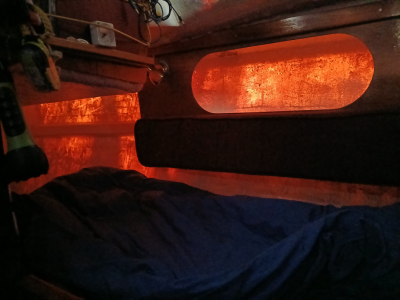
.

The ARC and other rallies probably provide the best analysis of the risks. You can look at the number of boats abandoned and the fatalities (unfortunately there is not much information on injuries). There have even been some reports in yachting magazines analysing damage and equipment breakdowns. This provides some basis for assessing the risk of a relatively easy ocean crossing.Is there actually any evidence that they are not in fact safe?

it shouldn’t be a surprise that glass is transparentI was somewhat surprised.......

It does not guarantee a boat is 100% safe in all weathers. As I mentioned before the boat only needs to comply at the point of first sale and is irrelevant the day after that.

To new yacht owners who have little sailing experience, the RCD A rating appears more of a guarantee that their boat can can go anywhere including crossing oceans. They buy the boat after seeing one at a boat show or in a marina. Most buyers spend much more time below than looking at the sailing equipment. I can remember at a London Boat show about 12 years ago, I was told off for walking on the foredeck of a Bavaria. I have watched at boat shows that few potential customers even sit in the cockpit. These buyers think the RCD ensures the boat is safe, when in fact they are more interested in buying a floating caravan. People who have sailed, or better still raced, yachts for decades have a better understanding of what they like and dislike in a yacht. They understand the compromises they have to accept as no boat is ever perfect, new or secondhand.
This thread is about the RCD applying to bonded in windows. It only applies to new boats for the first sale. RCD does not look beyond that date otherwise brass skin fittings would not be allowed. RCD does not require any continuing certification that a boat continues to meet the RCD standard it was built to, unlike aircraft and cars. As I have already said in a previous post, RCD does not allow for easy entry for new builders, but acts as a protection for existing builders by allowing them to build to the minimum possible standard. Now add inexperienced buyers to the mix who want space below for lots of mod cons, cockpit and deck ares to sunbath, and lacking basic maintenance skills, I am surprised they are not more fatalities - perhaps because they never sail anywhere if there is any wind.

The ARC provides a readily available data set, but I don't think it's representative. Likewise the yachting press is general seems to be geared towards short term cruisers dashing around the Atlantic in a season, and fixing everything when they get home again.The ARC and other rallies probably provide the best analysis of the risks. You can look at the number of boats abandoned and the fatalities (unfortunately there is not much information on injuries). There have even been some reports in yachting magazines analysing damage and equipment breakdowns. This provides some basis for assessing the risk of a relatively easy ocean crossing.
The ARC boats are generally quite new, undergo extensive safety checks, and are required to carry significant amounts of safety equipment. On the other hand, the skippers and crew are typically less experienced.
I'll take that, buy a Boreal 56, problem solved .... the base price is €1.45m ex VAT (with circa €220,000 extras).What we (or at least I) really want is the best of all worlds.
Modern CAD, resins, vacuum infusion, and properly engineered details.
But used to build a conservative cruising boat with a strong skeg, practical layout (storage, not open space), and rigged for cruising rather than racing.
No doubt somebody will be along in a moment to tell me what to buy.

Ah but I didn't say aluminium.I'll take that, buy a Boreal 56, problem solved .... the base price is €1.45m ex VAT (with circa €220,000 extras).

I think the problem is that other than emission specs no RCD or ISO standards include service life. They describe requirements as the boat comes out of the yard. It's insurance that set lifespan requirements not design specs.I started this thread in good faith as an observation that the latest monohulls were getting very large glued in hull windows, akin to catamaran windows you seen in Lagoons,, etc. This was an observation first hand as we were anchored next to such a boat.
The concern being that monohulls lean over and the risk of sinking or taking on a serious amount of water is real. Having seen bond failures here in the Caribbean as a result of UV damage and heat, it seemed like a poor design choice. RCD allows it. Lloyds Register doesn't.
Lloyds register allows bonded windows in the coachroof but not the hull.
This thread has grown legs and done the normal thing here and become an old vs new thing, but that wasn't my intention. It was a dig at RCD setting a low standard that in my opinion, was too low for boats that the innocent may take into bad weather a few years after the boat was made and find that the bond fails.
There are lots of things I like about modern boats. Vacuum infusion, carbon stiffening and epoxy construction and the increased use of foam core in hulls for stiffness and lightness. All great developments that were not commonplace 25 years ago.
I do think it's ridiculous that the highest RCD rating says large glued in hull windows are fine. Fine at day one but not fine once the bond has failed with obvious consequences. These Cat A boats are the only ones available from production manufacturers. There is no higher RCD standard. The sales blurb says ocean ready, bluewater and I am sure they will be fine on the ARC for the new owner. Down the line, these big window boats have increased risk. The RCD should have broad enough shoulder to say not acceptable. They would only need to add mechanically fixed to vastly improve the safety of such boats. A leak is a leak, but a large hole in the side is a sinker.
In all walks of life, standards are set to protect consumers. The RCD should be no different.I think the problem is that other than emission specs no RCD or ISO standards include service life. They describe requirements as the boat comes out of the yard. It's insurance that set lifespan requirements not design specs.
Your grumble should be against insurance companies and/or boat owners.
Is this what’s holding you back from buying a new production boat? If so, have you asked the manufacturers to fit “proper” windows? If not, I’m afraid you don’t get a vote.The RCD should have broad enough shoulder to say not acceptable
Its interesting that those that can't comprehend what I am trying say probably haven't seen what 50kts and the seas to go with it look like.Is this what’s holding you back from buying a new production boat? If so, have you asked the manufacturers to fit “proper” windows? If not, I’m afraid you don’t get a vote.Childish comment
Ah, you might think that. Of course legislation for standards is subject to the usual lobbying, deception by self interest groups, and ‘oversight’ by people who haven’t got the faintest clue about technical matters. So you end up with the RCD.In all walks of life, standards are set to protect consumers. The RCD should be no different.
I certainly have been out in those conditions on a delivery trip. I wouldn’t be overly concerned.Its interesting that those that can't comprehend what I am trying say probably haven't seen what 50kts and the seas to go with it look like.
At no point in those conditions would you be thinking " i wish I had big windows glued in to the hull "

