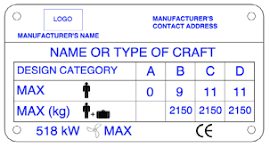
Cat A ocean standard need full revision

Perhaps there is indeed a lesson here?

From the YouTube channel of SV Cuba ...

Sailing SV CUBA​


Description

We are Enrique and Sarah, an ocean-loving couple who set out to sail around the world in our blue water cruiser CUBA.

After many years pushing overtime in office jobs and crunching numbers we finally reached our dream of buying a sailboat to become our tiny home on the ocean. ⛵

We started with next to 0 sailing experience, and just threw ourselves into the liveaboard lifestyle.

Each week we are sharing our raw and real sailing life with you - come sunshine or rain. Join us every week, leave us a comment - please like, subscribe and press the bell button if you want to see our silly faces pop up more often on your screen!😜

Love and sunny saludos from SV CUBA!

Maybe as they admit they had zero experience, an RCD certified new boat might have been a better bet for them?


I'd buy it......

I think they meant hull windows!
Yes they meant hull windows. The problem is that anyone in the market for that boat will be disappointed to find one without the major feature. I’ve turned down several boats because they were low spec versions of great boats.
 
You’re unconvinced by their description of the construction, or you just prefer it dark?
Having seen a Sirius 35 up close I think they are fantastic boats, well made and with much thought in the design. Buying new I would not worry, nor would I worry for coastal passage making. But buying at 20+ years or if going towards the Arctic Circle I would hesitate, partly because there are other design features I might want (hull material, small windows etc).

I would not put sleeping cabin windows at the top of my wishlist!

If I did buy one secondhand then I would expect to get sensible advice from Sirius regarding window replacement.

The analogy with aeroplane windows is a reassurance.
 
Having seen a Sirius 35 up close I think they are fantastic boats, well made and with much thought in the design. Buying new I would not worry, nor would I worry for coastal passage making. But buying at 20+ years or if going towards the Arctic Circle I would hesitate, partly because there are other design features I might want (hull material, small windows etc).

I would not put sleeping cabin windows at the top of my wishlist!

If I did buy one secondhand then I would expect to get sensible advice from Sirius regarding window replacement.

The analogy with aeroplane windows is a reassurance.
I think we should start a campaign to highlight the risk that all these naive Sirius buyers took 10+ yrs ago and see if we can devalue used ones to something I can afford!
 
I have tried reading the specification for the Oceanis 40.1 and 5 reviews by major yachting magazines. No where are the hull windows mentioned other than letting in more light. No mention as to the materials or bonding method for hull windows. Are they such a big secret?

To be fair most most things concerning technical specification of new cheaper boats are a big secret, starting with stability information.
 
I thought a stability book for the boat was part of the required documentation for a RCD certified boat.
I certainly had one.
It is, and I’m sure any serious buyer can avail themselves of it pre-purchase. I assume Doug’s grumble is he can’t find the information online to critique!
 
I had a quick look at the text of the RCD, and realised what a crock of sh…. it is, for boatbuilders, all for something of questionable value to end users. Having some sort of standard prevents utter cowboys, I accept. Finding what you want in the morass of legal definitions and appendices is a nightmare. I have absolutely no more idea of what stability tests are done and what is required. We are Cat B, very possibly because Quorning didn't wish to go through the hassle and expense of Cat A as much as any deficiencies. We've been out in more than F8. It was horrible, and not something either of us would wish to repeat, but the boat was fine.
 
It is, and I’m sure any serious buyer can avail themselves of it pre-purchase. I assume Doug’s grumble is he can’t find the information online to critique!
To be fair most most things concerning technical specification of new cheaper boats are a big secret, starting with stability information.
I had a quick look at the text of the RCD, and realised what a crock of sh…. it is, for boatbuilders, all for something of questionable value to end users. Having some sort of standard prevents utter cowboys, I accept. Finding what you want in the morass of legal definitions and appendices is a nightmare. I have absolutely no more idea of what stability tests are done and what is required. We are Cat B, very possibly because Quorning didn't wish to go through the hassle and expense of Cat A as much as any deficiencies. We've been out in more than F8. It was horrible, and not something either of us would wish to repeat, but the boat was fine.

Get yourselves a copy of Maxsurf Stability Enterprise

... then go to the venerable YouTube and search ... basically the CAD model of the boat is fed into stability modelling software like Maxsurf and it can generate the compliance calculations for ISO 12217-2 required for RCD certification.


For sailboats, here's a reasonable overview of how stability etc. is calculated .... the calculations go into way more detail than one might expect, but that's enabled by modern computer aided design. The computing power in the 60s/70s/80s was not cheap enough, or capable enough to provide this level of detail ... so we got what humans could manage, rather than what creates a reliable, detailed virtual model before creating anything physical and testing it. (I can verify that cars are the same... it's due to computer simulated crash tests that every manufacturer ended up being able to produce 5 star crash ratings, forcing Euro NCAP to focus on assist systems to remain relevant.)


Is it really a surprise that this level of detail is kept secret ... it's a manufacturers intellectual property at the end of the day, and just as you can find out what's in development by tracking patent applications, you could find out intellectual property of sailboat manufacturers if you had access to the detailed models, or the calculations derived from them.

The software obviously is capable of spitting out the calcs for ISO 12217-2 without revealing too much detail - but I wouldn't want to gift to much to my competitors.

One could take the view that this is a conspiracy, and we are being denied important information about our boats, but in reality, in this day and age, it just takes one dimwit with an axe to grind to latch onto something they don't agree with, publish it on social media, and manufacturers and designers have a PR nightmare on their hands fighting other dimwits who believe but are not in a position to comprehend ... aka flat earth, chem trails etc.etc.etc.....

EDIT: If people need it explained in laymans terms, then this is the realm of LLMs as long as we know how to formulate the questions we ask, and how to pre-configure the AI to understand the role we want it to take. (i.e. base its replies on academic papers and standards, rather than Facebook and Twitter content).
 
Not the first time this has happened ;) Can you get replacement hull windows for a Beneteau Oceanis 331 from anyone except Beneteau dealers? which would indicate that the factory fitted windows need to be re-bedded at around 10-15 years.

Would be interesting to see the channel and if the UV cover was missing ..... or if the window has been replaced at some point with a cheap piece of acrylic and no UV protection for the adhesive (assuming the correct adhesive was used and the surfaces were properly prepared).

Either way, one would hope that these failures have filtered back into the specifications in the relevant ISO standards .... but I think it just reinforces the fact that windows are serviceable items ... even bolted in windows need removing, fastenings inspected, and re-sealing after 20 years in service.
A glued and framed/mechanically fixed window can leak. A glued only window can fall out. Its a simple difference but a very important one.
As hull window sizes get larger, it will be interesting to see how many fall out and what the implications are for RCD updates and the ISO standards. As I said earlier, Lloyds don't allow them in the hull. Thy are at odds with the RCD. I wonder who has got it wrong?
 
A glued and framed/mechanically fixed window can leak. A glued only window can fall out. Its a simple difference but a very important one.
As hull window sizes get larger, it will be interesting to see how many fall out and what the implications are for RCD updates and the ISO standards. As I said earlier, Lloyds don't allow them in the hull. Thy are at odds with the RCD. I wonder who has got it wrong?
Yes they do ... this is from 2021.

The future of glass on superyachts | LR

Bold approaches offer a glimpse of the future​

One way in which superyacht designers are tackling the issue of glass is by disconnecting the glass carrying structure from the rest of the vessel and using the glass as an essential structural element. This bold move requires using “exotic” materials like carbon fibre reinforced composites and novel production methods like adhesive bonding.

A typical example would be a carbon fibre subframe, using laminated structural glass as part of the structure. This glass-carbon fibre subframe is then bonded to the ship structure using a suitable high-tech adhesive. However, these large structural voids in the hull create stiffness and strength challenges for the ship itself and require designers and builders to maintain a careful balancing act between the LR rules, risk assessment, strength, stiffness and safety requirements.

Another potential option for increasing the amount of glass used in the design is to add larger portlights to the buoyant areas of the hull. Any portlight, of course, requires an accompanying deadlight, and regulations state that a deadlight must be able to be fitted by a single person. With a deadlight of anything above 1m likely to weigh in excess of 150kg, this puts them well beyond the safe limit for installation.

One solution to this that LR has helped to safety test in recent times involves the use of what is essentially a glass deadlight. EN356-tested glass, capable of remaining functional after taking the impact of three 4kg steel balls dropped from a 9m height, is fitted in place of a ductile deadlight. Nitrogen is then injected between the port- and deadlights in order to avoid condensation.

Clear as crystal: defining yacht glass standards with Tilse

The sheets of glass are made at the glass mill using the float method by which the molten ingredients are ‘floated’ over a layer of liquid tin to create perfectly flat glass. But all the subsequent processing is done in-house by Tilse, from the initial 3D measurements on board the yacht and subsequent design of the glass elements, to the bending, toughening, lamination and final installation. Its Formglas Spezial®, developed specifically for marine use, has type approval from Lloyds Register.

“Our turnkey approach to projects is what differentiates us from other suppliers in the market,” says von der Thusen. “That means the client comes to us with a series of openings in the hull and superstructure of his yacht and by time we’ve finished we’ve filled those holes with glass. It’s a one-stop shop and we take responsibility for the entire process from start to finish.”


... didn't you wonder why practically all up-market motor yachts and sailing yachts have frameless windows in the hull and superstructure to create sleek and elegant designs? .... If the yacht designers are are all doing it at the request of their clients, and Lloyds Register is actively opposing glass in hulls, rather than enabling it, then Lloyds will risk becoming outdated and irrelevant.
 
Last edited:
Yes they do ... this is from 2021.

The future of glass on superyachts | LR
And have you seen this construction method on a Jeanneau, Bavaria or Beneteau?
The LR starts with the premise that all hull windows shall be mechanically fixed. They then say that if you want to do it another way, we will work with you so design a safe alternative. This is what they did here. Its high tech and expensive
 
Why? As far as I'm concerned let people make their own choices unless and until there is a proven issue affecting safety. That's not what this is though, the windows are quite adequate for the job and have been proven over a couple of decades in tens of thousands of boats worldwide.
To put some perspective on this, there were more dismastings just due to chainplate corrosion that happened mid ocean last year than there were failed windows worldwide. I'm not seeing a thread attacking stainless chainplates though...
We are only now seeing large bonded hull windows quite close to the waterline on monohulls. Small bonded windows have been around for a while.
Only time will tell if this is a good idea or not.
I can imagine in a storm a thousand miles from land that it might be possible to stop water flooding your boat, given a small aperture. You can carry storm boards made for the job. I can't imagine how you would do the same on a large opening close to the water in 4 or 5m metre seas
 
And have you seen this construction method on a Jeanneau, Bavaria or Beneteau?
The LR starts with the premise that all hull windows shall be mechanically fixed. They then say that if you want to do it another way, we will work with you so design a safe alternative. This is what they did here. Its high tech and expensive

My point was simple, your original statement earlier was false "As I said earlier, Lloyds don't allow them in the hull." ... you have now modified your original statement with an exception, "if you want to do it another way, we will work with you so (SIC) design a safe alternative." ... so we now have the truth about Lloyds position on bonded windows, they do allow them in the hull, and as with through bolted, framed, windows - there is now an approved process and design.

Once a method and the materials are defined, which they are, it can be used on any future boat that wants to use it, with Lloyds approval.

There are also ISO Standards available for boats over 24m - ISO 11336-1, ISO 11336-2 ... but without talking to the AWB designers I have no idea how the production methods in Jeanneau, Bavaria or Beneteau are specified or what design assistance or approval they have obtained, and other than your dogged belief that bolted windows are better, I bet you don't either.

I do know from my own experience in automotive design that "winging it" is a product liability suicide mission for any company (and in Germany you are individually criminally liable, even if working as an employee) ... that doesn't mean that someone somewhere might stick their port windows in with B&Q bathroom sealant, but I seriously doubt any of these companies would take that risk.
 
We are only now seeing large bonded hull windows quite close to the waterline on monohulls. Small bonded windows have been around for a while.
Only time will tell if this is a good idea or not.
I can imagine in a storm a thousand miles from land that it might be possible to stop water flooding your boat, given a small aperture. You can carry storm boards made for the job. I can't imagine how you would do the same on a large opening close to the water in 4 or 5m metre seas

Chuck Paine has a very practical approach and a reason why hull windows are not going away. The industry has to deliver the technical solutions to enable both the structural integrity and the aesthetic required by the customers .... are we there yet? I don't think we were 20 years ago, are we now with another 2 decades of experience? As you say, only time will tell, because out of the factory, RCD certified, they meet the standards that have been set and aren't failing in statistically significant numbers.

1767877527211.png
 
Top