An eventful journey from Southampton to Chatham

We all have differing opinions and I am happy this has turned into a proper discussion and may make someone think through their options before calling for outside help just because they ran out of fuel.

If you are in the same situation again, and you really can't make it to a bit of not completely unsheltered coastline or bay to rest at anchor, I'd rather you called for outside help. I am gobsmacked that you think sailing for 5 hours in coastal water while asleep, even slowly, is a remotely safe, seamanlike or sensible thing to do. To then crow about how this broke your longest single handed record is icing on the cake.
 
Last edited:
I applaud Concerto for his frank and detailed accounts of his exploits. His courage to admit his mistakes is most welcome and should be inspiration to others, not just to go sailing but to share experiences, good, bad and ugly.

There is much judgement going on, with little humility. Each of us as skippers have to make our own risk assessments, should learn skills and tools to reduce our exposure to hazards and of course keep a plan b and c up the sleeve. What one skipper is content with might frighten the willies of another. It is a big sea out there and the chances of collision tiny in the big scheme of things. I’m not saying it can’t happen or indeed doesn’t happen but when was the last time a yacht was mown down by a trawler? Weaponising the MAIB and the IRPCS comes across as quite pompous. By all means express opinions but to point fingers is plain rude IMO.
 
If you are in the same situation again, and you really can't make it to a bit of not completely unsheltered coastline or bay to rest at anchor, I'd rather you called for outside help. I am absolutely gobsmacked that you think sailing for 5 hours in coastal water while asleep, even slowly, is a remotely safe, seamanlike or sensible thing to do. To then crow about how this broke your longest single handed record is icing on the cake.
Why would he call for outside help? Was he in danger or a danger to others? Why waste resources?
 
Does anyone still hove to when needs arise? I used this manoeuvre extensively on passage single handed when a kip was needed or some scran needed cooking or the weather turned bad.
Yes. I have used this to calm down the Navigator in bad weather. We stop, cook and eat with greater ease, decide on sail suitability and reef as required then off we go again. We did discover that hoving to in sheltered waters can be odd as slow circulating currents can bring one near hazard in an hour, but it still beats trying to anchor in 30m, when we only carry 50m of chain
 
So what exact danger does a properly lit 32’ yacht (perhaps with the exception of not under command reds) pose to others?
Some fishing vessels, in particular, also have a bit of a reputation for often being too pre-occupied to keep a good enough watch. For example the one off Brighton not so long ago. Of course, if you are encouraging other single handers to take the odd couple of hours off watch, you may well meet one coming the other way when you are asleep. Even other crewed yachts don't see some other hazards especially at night for various reasons.

There were two other options open to the OP - stop and sleep, or 10 minute catnap (in itself not without risk, but far less than hours, and surprisingly effective). Which would you pick to stay safe?
 
When my brain is working properly - that is just not the case. A Beta 28 which is what concerto has will average just under 2l an hour when cruising at 2400rpm when it produces around 18hp. Your Beta 14 will use half that - under 1l hour.

I have good records for my Volvo 2030 over several hundred hours of "normal" mixed use of under 2l and similar for my Nanni 14 (same engine as yours) in another boat at under 1l hour.

Sure your Beta will burn more if you run at over 3000rpm constant, but not at 2400.
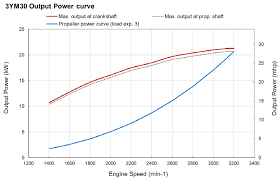
A diesel engine can produce up to a certain power at a given RPM.
1696151508236.png
That's a Yanmar, but the principle is the same.
At 2200 RPM it can produce up to about 17kW.
As the blue line shows, it will typically be fitted to a prop that takes about 7kW in neutral conditions at that RPM.
But on a sailing boat, the load on the prop can vary hugely.
One day you might be motoring in near-zero apparent wind and a flat sea using only 1kW, the next trip you might be motoring into a choppy sea using 10kW.
A diesel engine's governor adjusts the fuel supplied every stroke to keep the RPM set.

A few weeks ago I motored most of the way to Falmouth probably 8 hours motoring using about 5 litres of fuel.
A few weeks previous to that, I used more fuel in half the time, at very similar RPM, because we were pushing into waves and a breeze which was almost enough to make sailing worthwhile.

A typical figure seems to be 0.21 litres per hour, for every HP of actual load on the engine, for a typical non-turbo diesel. allow maybe 1HP for the engine itself, alternator etc.


It's a dangerous mistake to think 'my engine uses 0.5 litres per hour at 2000RPM' based on having measured it under benign conditions. Under different conditions you might use 3x as much.


Personally, I carry at least a 5 litre can, so I can put that in the tank before entering harbour, having no fuel and needing to sail a passage wouldn't bother me much, but losing the engine at a key moment in confined/busy waters is an unnecessary risk.
 
Some fishing vessels, in particular, also have a bit of a reputation for often being too pre-occupied to keep a good enough watch. For example the one off Brighton not so long ago. Of course, if you are encouraging other single handers to take the odd couple of hours off watch, you may well meet one coming the other way when you are asleep. Even other crewed yachts don't see some other hazards especially at night for various reasons.

There were two other options open to the OP - stop and sleep, or 10 minute catnap (in itself not without risk, but far less than hours, and surprisingly effective). Which would you pick to stay safe?
There's also the option of taking a crew.
 
In reply to the insurance question, my policy allows for up to 24 hours singlehanded sailing. A couple of years ago I spoke with them to clarify the exact wording. The 24 hours was for the expected/planned journey time, but I would still be covered if something affected this like bad weather, no wind, mechanical breakdown, etc. The waters where I rested do not have fishing pots, there are no buoys, and have very few boats passing by. At night the number of boats, except fishing boats close to Dungerness, is usually none.
I hope you reflect on this before deciding to publish this voyage in any sailing magazines.
It is increasingly difficult to get insurance for responsible single handed sailing. Yacht insurers may (ie are likely to) have a different risk appetite from yours. It would be a shame if these sort of stories result in further restrictions on single handed sailing. It must be a concern hearing of people treating their policy time constraints with such complacency.

Yes I am aware that most insurers (currently - ie if we don’t abuse this) allow some flexibility in the 12 / 18 / 24 hour restriction. But earlier you reported this was a 174 mile trip. No passage plan could make that into a reasonable 24 hour voyage for a cruising boat with circa 28ft waterline. 120 miles might be considered a sensible limit to allow a safety margin (unless a racing scow).

We all make silly mistakes and errors of judgement - I make lots. Particularly when tired. Fortunately we get away with them at least 99% of the time. But it is important to admit, even to oneself, that these were errors of judgement and make sure to learn and don’t repeat.

From the insurers perspective failing to check fuel for a 100 mile plus passage would raise a few eyebrows, but most likely be accepted as an oversight (though probably would have been a less than 5 minute task, even taking the few seconds to lift the teak cockpit grating).
But failing to stop after 24 hours at any of the many harbours, or better anchoring for rest (even in fairly deep waters, kedging for a few hours with anchor light and anchor drift alarm on would surely have been possible) when admitting to be very tired, but then going on to do 174 miles might be justifiably considered as simply abusing their offer of some flexibility on the 24 hour limit.

And when going to sleep when underway, the boats that might be close to you in 2 hours time could easily be 30-40 miles away when you last checked before going to sleep. They may not even have left harbour at that time.

I fear stories like this could result in some insurers reducing the single handed time limits and/or removing the flexibility currently offered, to the detriment of the many others who need insurance for singlehanding.
 
I dunno why Concerto bothered posting his, for me, interesting story. It has simply allowed the know it alls a stick to band an empty fuel tank with.

I posted once about a battery failure at sea and one particular plonker went on and on about testing things for like three years or something daft before going to sea.....

The point for me is that something happened and it was overcome. That's a well done in my view.
 
I dunno why Concerto bothered posting his, for me, interesting story. It has simply allowed the know it alls a stick to band an empty fuel tank with.

I posted once about a battery failure at sea and one particular plonker went on and on about testing things for like three years or something daft before going to sea.....

The point for me is that something happened and it was overcome. That's a well done in my view.

It's not about the lack of fuel. That's an easy to understand mistake - not intended, not deliberate. I've done it. There, but for the grace of God, sail I.

It's the navigating while asleep for 5 hours in coastal waters. That was a conscious decision when there were alternatives. Call me pompous, know it all, or whatever you fancy. I don't care. It won't change my opinion that it was a bizarre thing to do that no sensible captain would countenance.
 
Last edited:
I dunno why Concerto bothered posting his, for me, interesting story. It has simply allowed the know it alls a stick to band an empty fuel tank with.

I posted once about a battery failure at sea and one particular plonker went on and on about testing things for like three years or something daft before going to sea.....

The point for me is that something happened and it was overcome. That's a well done in my view.
Battery failure or many other electrical items which could go wrong is an interesting point if a singlehander is relying on electronics while asleep. It's not just the diesel tank which might have less in it than you expect.
 
Battery failure or many other electrical items which could go wrong is an interesting point if a singlehander is relying on electronics while asleep. It's not just the diesel tank which might have less in it than you expect.
I could write you a long list of things that go wrong at sea.....including some people!
 
I could write you a long list of things that go wrong at sea.....including some people!
I'm sure you could.
Had the boat ended up on the rocks like one or two other singlehanders, it would ultimately have been 'pilot error'.
I'm not against singlehanded long distance as such, but personally I wouldn't choose that end of the Channel for it.
Go West from Falmouth and there is much less chance of hitting something, particularly it's easier to have at least two hours of sea room.
There is a risk of hitting other vessels, but hitting the land is probably a bigger risk as personally I wouldn't trust the average boat's electrics/electronics that much.

Yes people can go wrong too, but most can manage 'wake me up if you think we're going to crash'.

Then again, I probably wouldn't choose to go East of LA anyway.
Not really a nice part of the world with many decent bays to anchor in.

My original comment was more about setting off while already tired, not having a clue about the fuel situation and the lack of passage planning.
 
Top