Use of "tinned" electrical cable?


It's used pretty much exclusively on ships and offshore installations for the simple reason that it's longer lasting and more reliable. Untinned will work, as shown by the many production boats that use it, but if I was putting in the huge amount of effort required by a self-build boat I would not scrimp on £20 for a less good option. Most commercial boat builders don't give a damn what happens to their product 15 years down the line, which is why they save the extra cost, tiny that it is. But it's your boat, your money, your choice.
 
Last edited:
2.5mm square cable is suitable for ring circuits.

3 core 2.5mm square cable domestic use untinned cable is £2.00 per metre in B&Q in the UK when bought in small quantities.

The tinned marine use 3 core cable of the same size is £3.00 per metre from the link I gave.

A 35' boat with a small mains circuit of a few outlets, a low power immersion heater and a battery charger is unlikely to require more than 20m of cable. That's a cost difference of £20. That is peanuts.

Twenty meters wouldn't handle my three bilge pumps!

What about bilge blower, macerator, oscillating fans, instrumentation, solar panels, inverter, galley pump, anchor winch, HWS, navigation lights, lightning protection......?:rolleyes:
 
Last edited:
It's used pretty much exclusively on ships and offshore installations for the simple reason that it's longer lasting and more reliable. Untinned will work, as shown by the many production boats that use it, but if I was putting in the huge amount of effort required by a self-build boat I would not scrimp on £20 for a less good option. Most commercial boat builders don't give a damn what happens to their product 15 years down the line, which is why they save the extra cost, tiny that it is. But it's your boat, your money, your choice.

You can't be serious?😂

If you think you will only save $20 by not using tinned cable when building a boat don't ever try to building a boat!:rolleyes:
 
Last edited:
You can't be serious?😂

If you think you will only save $20 by not using tinned cable when building a boat don't ever try to building a boat!:rolleyes:

Well you obviously didn't read my posts. My calculation was for mains AC cabling only, which was what your original post was about, remember? (The clues were in my Superlec link, that I gave the price for 2.5mm square 27A 1000V doubly insulated cable, I listed only mains devices, I mentioned ring circuits and used the term 'mains'). As you seem to be happy having your mains connections supplied by dangling domestic extension leads flapping around with only cable ties for support your standards are low, so I guess you're right - a better standard of cable is a waste of time. The cheapest domestic stuff will be fine for another decade of navigating your lawn.
 
Last edited:
Well you obviously didn't read my posts. My calculation was for mains AC cabling only, which was what your original post was about, remember? (The clues were in my Superlec link, that I gave the price for 2.5mm square 27A 1000V doubly insulated cable, I listed only mains devices, I mentioned ring circuits and used the term 'mains'). As you seem to be happy having your mains connections supplied by dangling domestic extension leads flapping around with only cable ties for support your standards are low, so I guess you're right - a better standard of cable is a waste of time. The cheapest domestic stuff will be fine for another decade of navigating your lawn.

OK There has been a misunderstanding.

But my comment #1 was in respect to advice for installing an inverter which entails DC input and AC output. My intention was the thread relate to AC and DC circuits

You say the " domestic extension leads flapping around with only cable ties for support?" Why would they flap around?

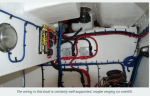
Screenshot 2023-03-04 at 13-08-33 Is the Wiring Support in My Boat Overdone - boats.com.png
 
I think most "quality" boats now do so.

Both of our Island Packets were built with tinned cable, both DC and AC. The AC cable is, of course, very large, being meant for 110V supply. For European boats Island Packet fit a transformer. The 110V calorifier, microwave, battery charger and any other 110V factory fitted kit is supplied from the transformer. 240V sockets are fitted by the European dealer on a separate ring main. All areas are pre wired for extras-no faffing about fitting extra wires, the builder put them in during construction.

As you say, most 'quality' builders will be doing similar.
 
Both of our Island Packets were built with tinned cable, both DC and AC. The AC cable is, of course, very large, being meant for 110V supply. For European boats Island Packet fit a transformer. The 110V calorifier, microwave, battery charger and any other 110V factory fitted kit is supplied from the transformer. 240V sockets are fitted by the European dealer on a separate ring main. All areas are pre wired for extras-no faffing about fitting extra wires, the builder put them in during construction.

As you say, most 'quality' builders will be doing similar.

Well I'm not at all surprised .

As far as I'm concerned an Island Packet is the best cruising yacht on the water.:)
"Exclusive design features, proprietary materials, and award winning models have combined to make Island Packet the benchmark for cruising yachts since 1979. "
 
Last edited:
Just for the sake of interest the shore power circuit on my boat is a radial running from a 16A fuse. The cable is 2.5mm rubber sheathed 3 core with conventional colours on each conductor. It’s the type you’d have found on your grandfather’s household extension lead 40 years or so ago.

Edit: Oops, forgot to say it is tinned.
 
Last edited:
Just for the sake of interest the shore power circuit on my boat is a radial running from a 16A fuse. The cable is 2.5mm rubber sheathed 3 core with conventional colours on each conductor. It’s the type you’d have found on your grandfather’s household extension lead 40 years or so ago.

But the M/F plugs would not have been so well sealed as they are today.

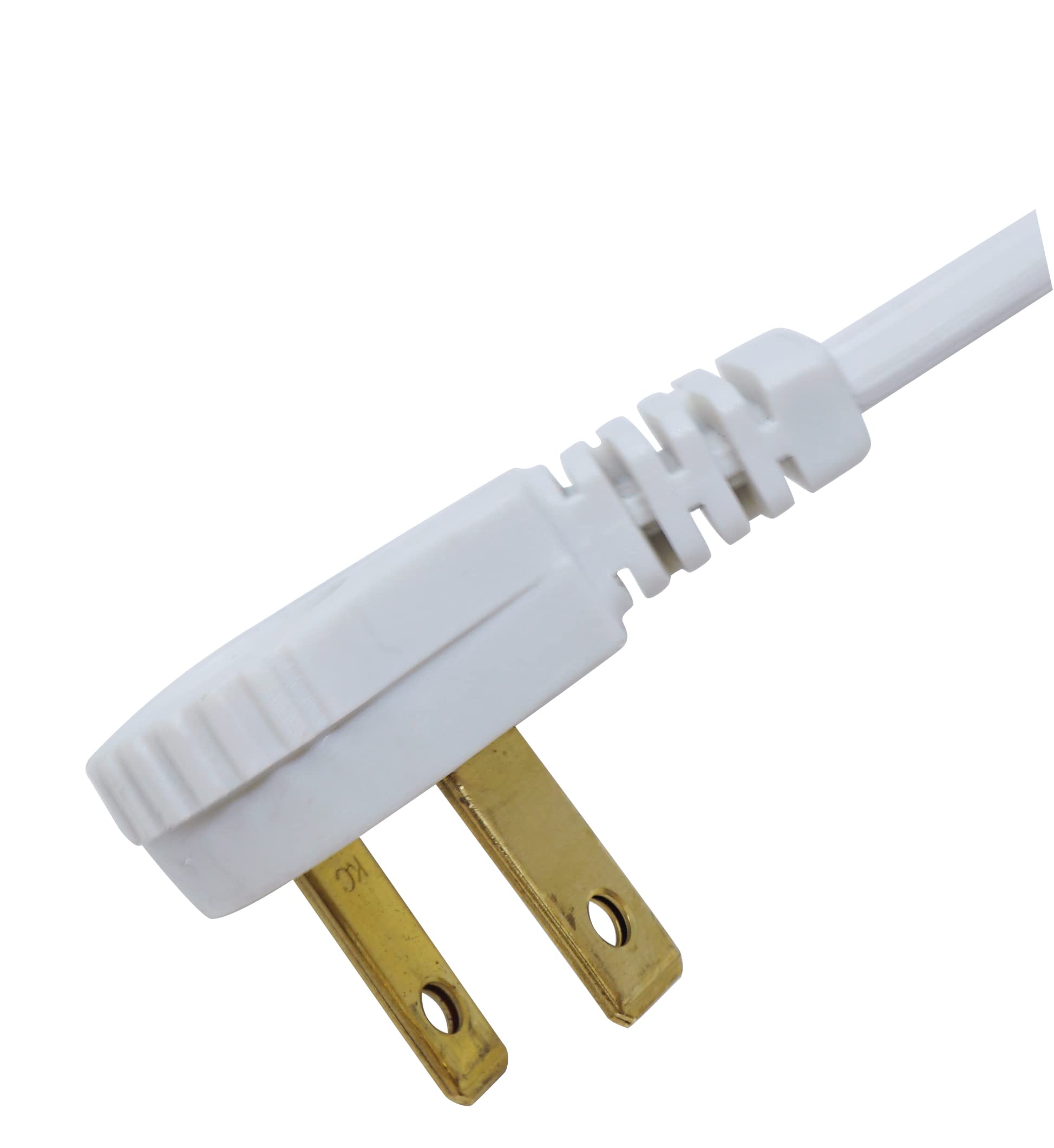
Can you imagine this un-tinned cable rusting?

51eKe47s9OL.jpg
 
"To determine if your wiring has been affected by moisture, cut off the terminal on a suspicious wire and strip back about a half-inch of insulation. If the wire is black, and not shiny pink, then corrosion has begun to migrate along the conductor. You’ll need to strip back the wiring until you find clean, pink copper. Usually this requires stripping back no more than an inch or so of insulation. Snip off the corroded wire and install a new terminal as described above."

On the occasions I've had to deal with blackened wire on boats around 40 years old, I've given up at around a foot and replaced the whole length
 
But the M/F plugs would not have been so well sealed as they are today.

Can you imagine this un-tinned cable rusting?

51eKe47s9OL.jpg
Well that end of the cable might be fine. But anyway aren’t we talking about fixed wiring with each end connected in an unsealed manner in a JB or the back of an outlet?
Please also note my edit that the radial in my boat is tinned.
 
Trying going to sea.

Thank you, useful advice :rolleyes:

If the weather is bad enough you will get water in your bilge. Green water has a habit of making its way past hatch seals

You missed the point, that rain or sea water can get into a boat. However, if you limit the opportunities by keeping on top of leaks then should it still happen, remove it. The RH inside the yacht will be lower and all the interior will the better for it, not just the wiring. Having gallons of oily bilge water sloshing around isn't good for any boat.
 
"9 Sept 2019 — For corrosion resistance, any metal component exposed to seawater should be either brass, bronze, 316 stainless (also known as A4 stainless) ..." (y)

Choosing Materials for Use in the Ocean
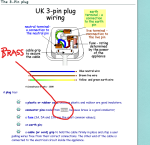
Have you seen the state of the electrical pins on deck sockets after a while? They are a never ending source of bad connections. We don't have any on our current boat but instead use a swan neck through the deck with a water proof connector inside the boat. Brass connection on the inside my Raymarine instruments have had to be cleaned due to corrosion. I use electraspray regularly to deal with poor electrical connections on brass electrical connections.
Brass is fine for the ships bell but don't assume it will give you trouble free electrical circuits
 
Thank you, useful advice :rolleyes:


You missed the point, that rain or sea water can get into a boat. However, if you limit the opportunities by keeping on top of leaks then should it still happen, remove it. The RH inside the yacht will be lower and all the interior will the better for it, not just the wiring. Having gallons of oily bilge water sloshing around isn't good for any boat.
We don't have any water sloshing around in our bilges. You miss the point. It only takes one leaking hatch and you have sea water in the boat. If you are crossing Biscay when you discover a leak you are likely not going to be able to fix it until you arrive. You might minimise the impact but the benefits of a cable system that can deal with this kind of issue is obvious.
 
"9 Sept 2019 — For corrosion resistance, any metal component exposed to seawater should be either brass, bronze, 316 stainless (also known as A4 stainless) ..." (y)

Choosing Materials for Use in the Ocean

Here's an idea... base your decisions on reputable sources of information, not random dross you've dug up on the internet that just happen to fit your pre-conceived ideas and opinions. That articles, like a lot of the drivel you post links to, is so simplistic that it is nothing more than dangerous misleading shyte. There are many types of brasses, bronzes, brasses called bronzes and other vague inaccurate misnomers that the terms 'brass' and 'bronze' are useless when deciding if a material is suitable for marine use. If you wire your boat with cheap domestic fittings that are made of some unspecified brass because you believed some article you found on the internet that agreed with your opinion, then the worst likely outcome is you have unreliable wiring and will have to replace it after a few years. Make the same mistake with your seacocks and valves - and your boat will only be safe if it remains on your lawn.

Here is a reputable source of information on why not to use something labelled as just 'brass' in a marine application...

Flooding of charter fishing vessel Random Harvest

While there are many cases where 'marine' often means that an unjustified price hike is applied to a product, there are many others where the extra cost is justified. The grade of metal or alloy used in a marine product is one of them, and in the case of marine grade tinned cable, the extra cost as a proportion of the total boat cost is small.
 
Last edited:
Here's an idea... base your decisions on reputable sources of information, not random dross you've dug up on the internet that just happen to fit your pre-conceived ideas and opinions. That articles, like a lot of the drivel you post links to, is so simplistic that it is nothing more than dangerous misleading shyte.

This is exactly why i have chosen to stay out of this thread. No matter what good advice you post, it will be replied to with random internet search garbage to support what Coopec wanted to hear.

Dead horses and flogging spring to mind.

His self build is sadly built with the cheapest of components in far too many cases, which is a shame, because much of the actual work he has done looks decent.

I once started working on a customers boat, who wanted to supply his own parts. Everything he bought was the cheapest and nastiest quality you could imagine. I told him "if you build something with pieces of $h1t, all you end up with is a pile of $h1t" then i left him to it.
 
Top