Fletcher Arrowbolt 21 - Project (70's/80's?)

Robin,

sorry I'm late in replying but struggling with a v.heavy workload atm :(
first thanks for the update, I think you should aim for an update post per month (even to get yourself going...)

Confused as in the need for these 4.2m long iroko beams/planks. From the last couple of years of experience with iroko and all these water resistant timbers I can honestly say they are not that good at anything other than withstanding salt water. They are not strong, they tend to split if forced not along the "normal" directions, they warp, etc.
IOW, you probably much better off with shorter lengths and scarfing them together (but since I don't know where you're going to use them, I cannot really say if that's applicable!)


I agree with Rob, this garage of yours is a real mess ("a bit constrained" is close enough to the definition of euphemism), much worse than mine and I thought I was bad :p

Emigrating to Volos, is easy, tools/materials prices are ok, finding a job here to make the project sustainable will be a problem, there's a price for the sun I guess :)

good luck and start working!

cheers

V.
 
:D The garage has been a dumping ground where Cheryl's Mum's, My Mum's and our own house contents have 'merged' over the last 10 years! That and it was an IT workshop for a number of years plus usual 'shed' stuff - cars, DIY, garden etc! I keep saying I'll get a shed for the DIY/garden stuff and have a clear out, but never seems to happen...
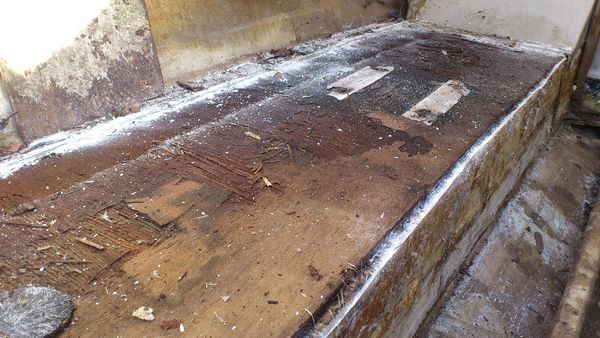
Vas, the Iroko is for the stringers and I did consider scarfing a couple of layers of ply, but after loads of reading the hardwood seems to be the 'accepted' method! They run fore-aft (on their side) and support the floor - the picture below shows part of the originals:

port_floor.jpg


The wider 230mm 'board' is the exposed (vertical) edge and the 150mm runs down the centre of that raised floor section. As I understand it, they're integral to hull strength when punching through the chop and help distribute the impact force when the hull slams into the water? The rib sections were plywood and I was intending to repeat this method too. I'll need a couple more yet to do the ones under the lower floor section, but will worry about those in a few weeks as they're shorter and not so hard to find.

I don't think the warping will be a problem as they'll be encapsulated in GRP, supported with ribs and the voids will with buoyancy foam!

On a plus note, I managed 5 hours today cleaning up edges of the GRP where the old transom etc was removed ready to start on reassembly - could take a while! Iroko should ship this coming week, so all being well, I can start fit-out next weekend :D (And if it rains, perhaps I'll start tidying up the garage :p)
 
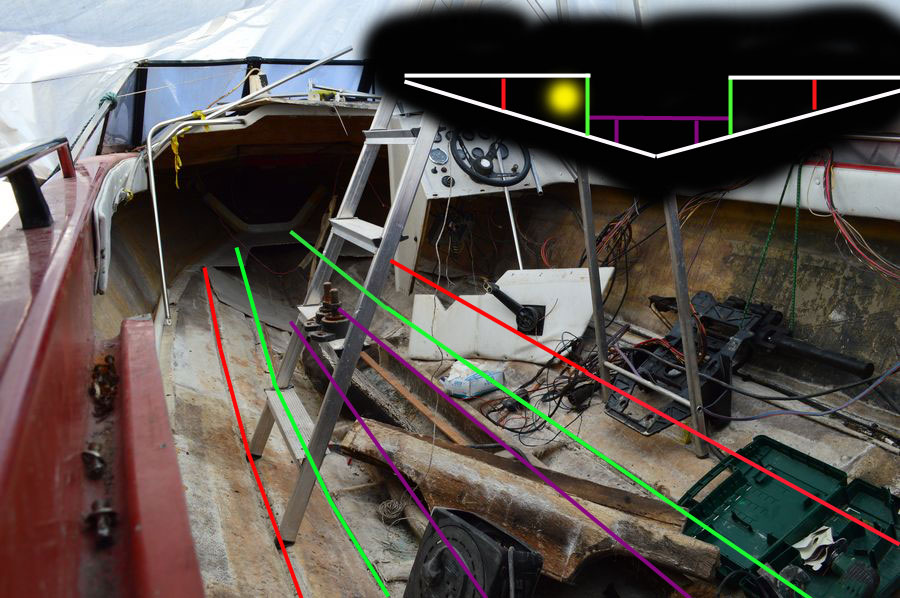
Ok, just a quick scribble with Photoshop to better illustrate the stringers:

The red lines represent the base of the 150mm stringers, the green are the 230mm (4.8M long) ones and the purple the one's I've not ordered up yet. The yellow circle in the cross-section diagram illustrates where I plan to duct the heating!

sept13fwd-edited.jpg
 
Glad to see you are making progress, would you believe I got a text asking if it was still for sale a few days ago!

Hi Gordon, Yes, it's been much slower than I expected but still progressing - bit by bit. Probably no more time than I figured, but I just overestimated what time I'd have available and when... The web's a bit slow where adverts etc are concerned and takes a while for content to expire. A few of similar age have come up on eBay since but nothing seems to be selling for much at the moment. There's a few around that look pretty good, but I suspect they're all similar condition where you can't see/get access?

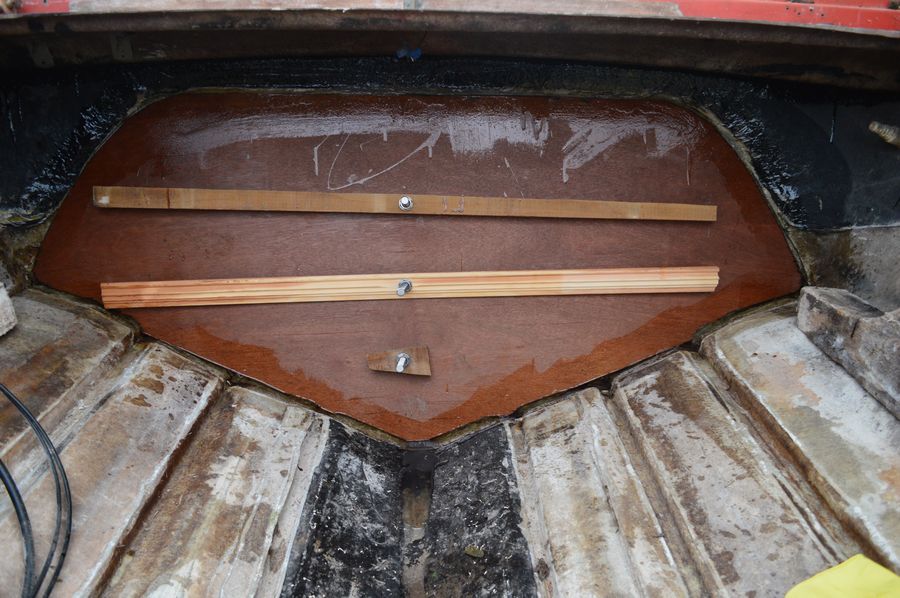
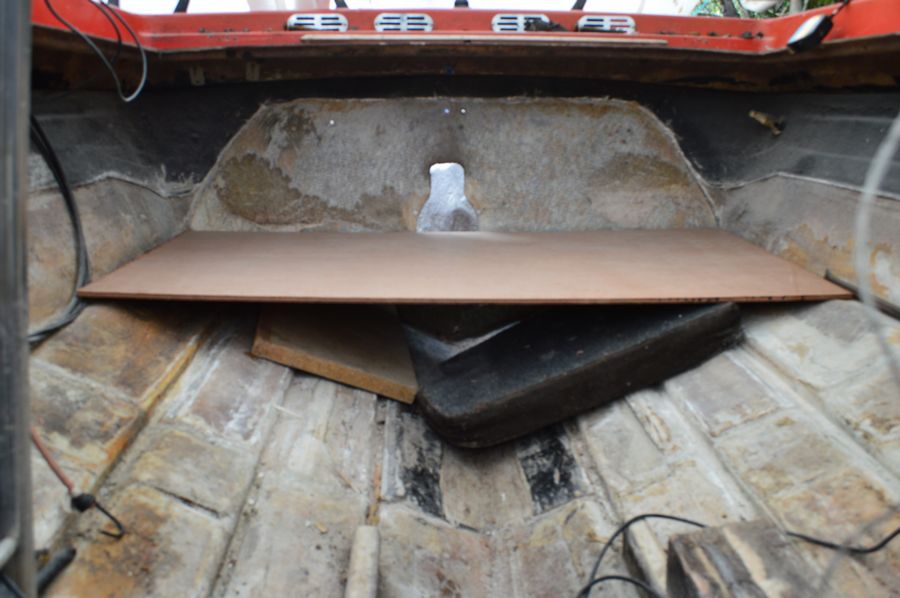
Well, I cut the first sections of ply yesterday - the aim was to make a transom template, but it worked better than expected so it will become one of the layers! I've cut three now, so will do one more today and that will give me the 50mm required. The first three are in the house where I intend to leave for a week so that they dry fully before I coat with CPES - a good reason to turn the central heating on. :D

I had planned to treat and bond them together and then install, but seeing how the ply flexes and how much better I am likely to be able to bond a single layer to the hull skin, I'm thinking that it may be better to build up layer by layer? Not likely to start before next weekend, so time to consider and research a little plus pick up some chopped strands or similar for forming some resin putty...

Iroko for forming main stringers is being delivered tomorrow. Once cut and shaped, just the small issue of maintaining 15C long enough to cure when I install. The probability of a late autumn heatwave seems remote. :rolleyes:

transom_template1.jpg


transom_template2.jpg
 
That's a pretty good cut Robin, you must have been quite pleased when it fitted into place :)
Today has turned out to be quite a gem weather wise so I imagine you'll be busy doing some more cutting?

Was out this first thing checking on BM and the river was quite glorious, wonderful boating weather really. Managed to get back for the 2 min silence too.
 
That's a pretty good cut Robin, you must have been quite pleased when it fitted into place :)
Today has turned out to be quite a gem weather wise so I imagine you'll be busy doing some more cutting?

Was out this first thing checking on BM and the river was quite glorious, wonderful boating weather really. Managed to get back for the 2 min silence too.

Yes indeed - looks like a good day out there! A friend is out in his kayak today - bit too nippy for that I fear, but did consider going for a blast in Charlie... :D Long list of chores need doing however so mostly an indoor day.
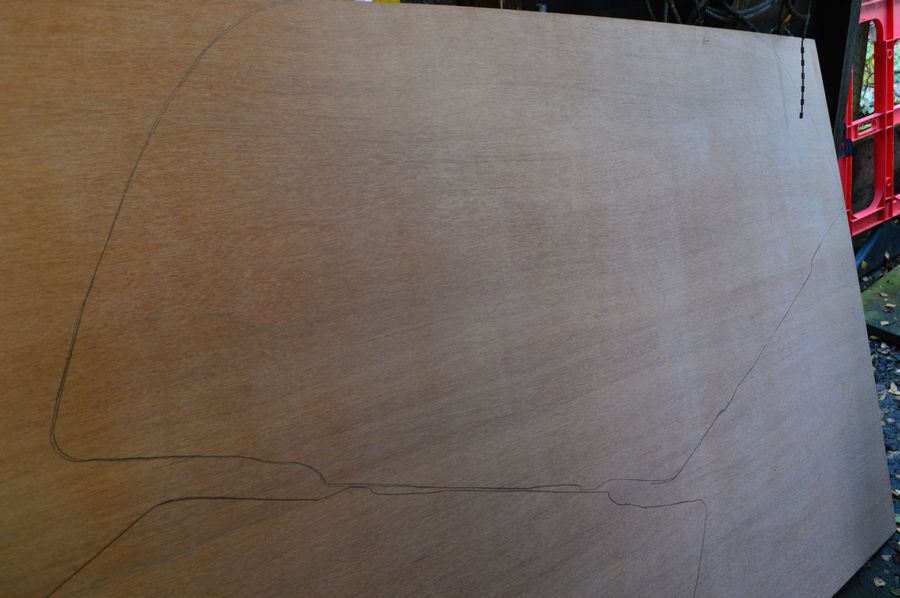
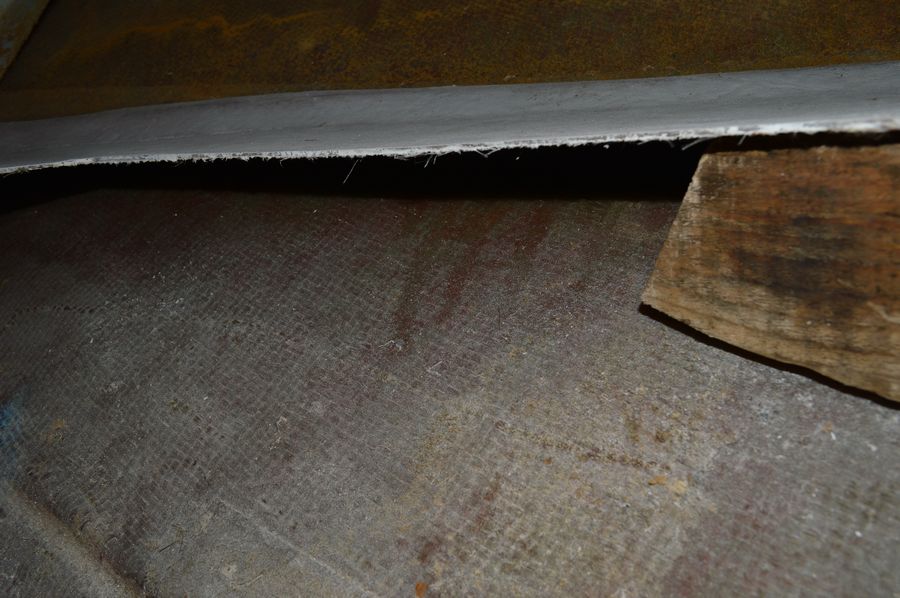
That 'cut' was actually intended as a template! I considered cardboard, but didn't have a decent sized bit to hand so thought I'd use a sheet of ply and at least it could still be used for ribs etc. As I trimmed it down however it worked out much better than expected so will use as one of the transom layers. I think I need one more as the original transom was around 42mm and I have 3 x 12mm thus far - plus a bit of matting. Better too thick than not enough - although I've decided that I'll leave cutting sheet 4 until the others are installed (will draw around last one as template before I use it!)

You'll laugh at this, but I also managed to get two 'transoms' out of one sheet of 8' x 4' - just... There was a 5mm gap between the two! :p

transomcut.jpg
 
Minor update...

Eventually tracked down some suitable Iroko (big thanks to Robbins Timber in Bristol whom specialise in marine timber BTW), which arrived bright and early at 8am on Monday (saving the need for a day off work.)

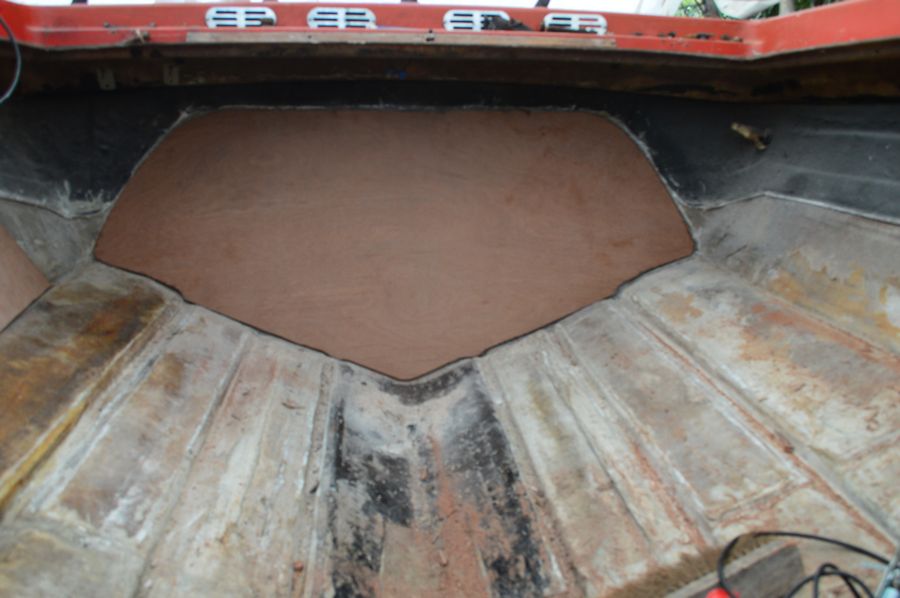
I sealed the 3 transom sheets and cut the larger of the stringers to shape yesterday - allowing for a cut against the transom on each. I did a test fit into the hull today and all-in-all a good fit. I need to determine if I need a 4th ply layer on the transom, but will glass in the current 3 first. I also need to clean up most of the hull along the line where the larger stringers will sit and either buy or make up some epoxy 'putty' to bed them in prior to tabbing and fibreglass capping. Although a little concerned of my ability to glass in quickly enough, the low temperature and a bit of practice on the transom should work in my favour! :)

Temperature and damp are already showing signs of becoming an issue as condensation over the last week has left around 2L of water in the bilge! I've put an oil filled radiator on minimal setting in the hull now and spaced off the cover so that air can circulate better. I will monitor over next few days and have half a dozen old tube heaters that I can press into service if required... I've nowhere inside to put the boat, so I need to find a solution if I'm to avoid a 6M delay...

I hope to treat the stringers one day during the week and possibly glass in the transom next weekend - depending on weather and temperature. Next weekend will be my last free weekend until after the mobile disco 'silly season' so apart from perhaps bank holidays, probably only one more update between now and New Year.

A few more pics...

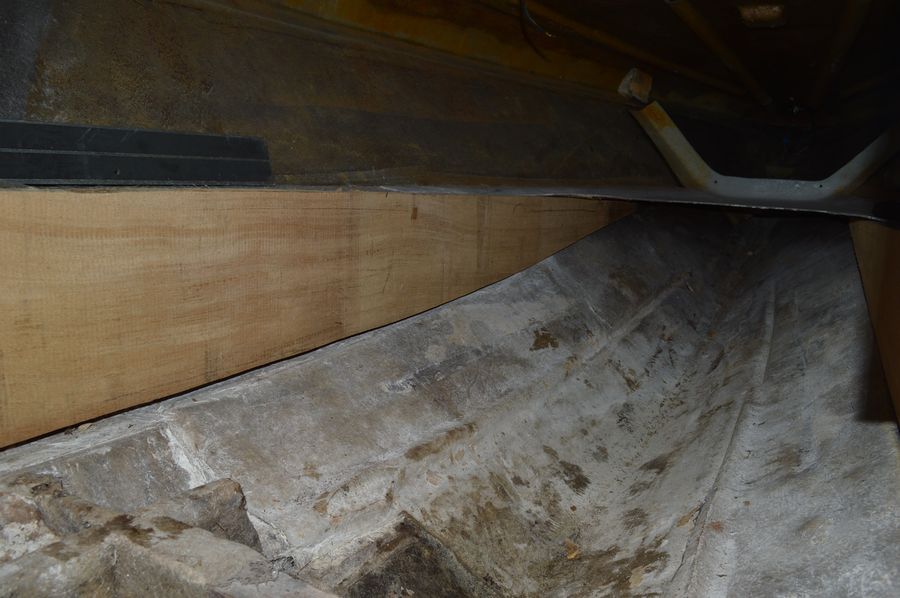
Old stringer was shorter than I think it should have been - much of the front cuddy floor supported by grp thickness and the expanded foam below. I aim to use a ply floor with grp/flowcoat. Lots of changes planned for cuddy area - more on that later! (NB: blow pic shows 'cleaned up' stringer re-sited after foam was removed to illustrate only)
old_stringer_front.jpg


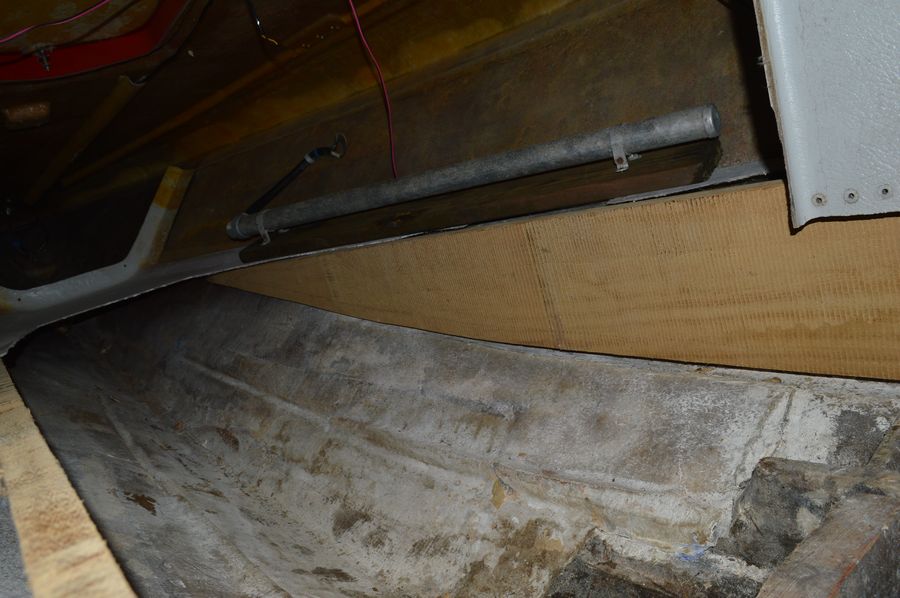
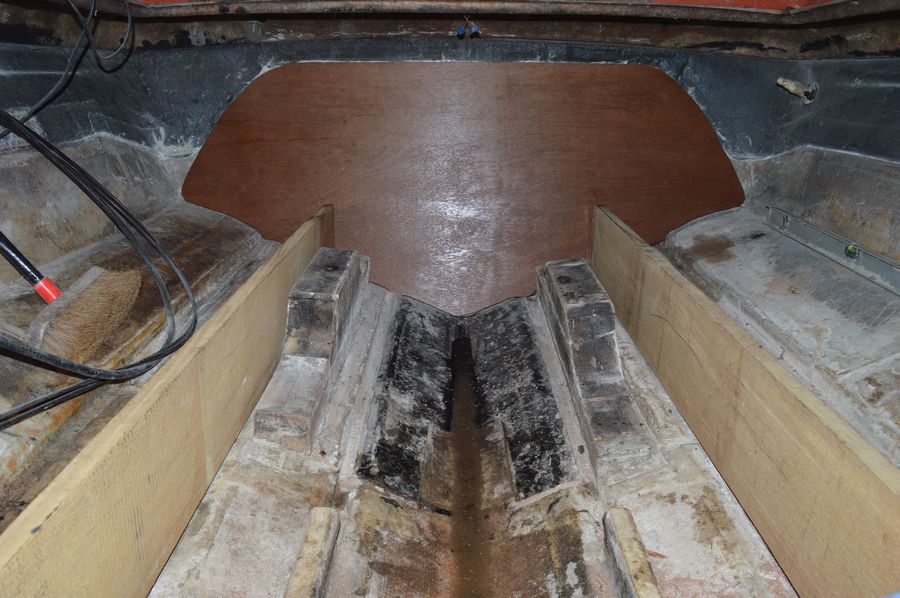
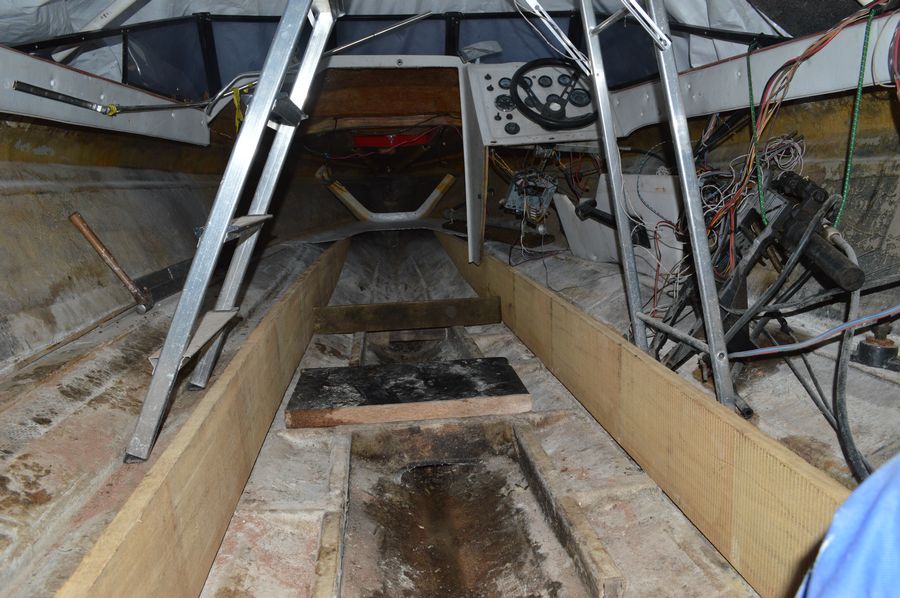
New stringers cut to size (not yet treated)
new_stringer_overview.jpg


The curve can clearly be seen here...
new_stringer_curve.jpg


Front port side (some fine trimming required on the curves - both sides...)
new_stringer_front_p.jpg


Front starboard (remains of cuddy floor yet to be removed as is bulkhead which will move forward to form rear wall of a new anchor locker)
new_stringer_front_s.jpg


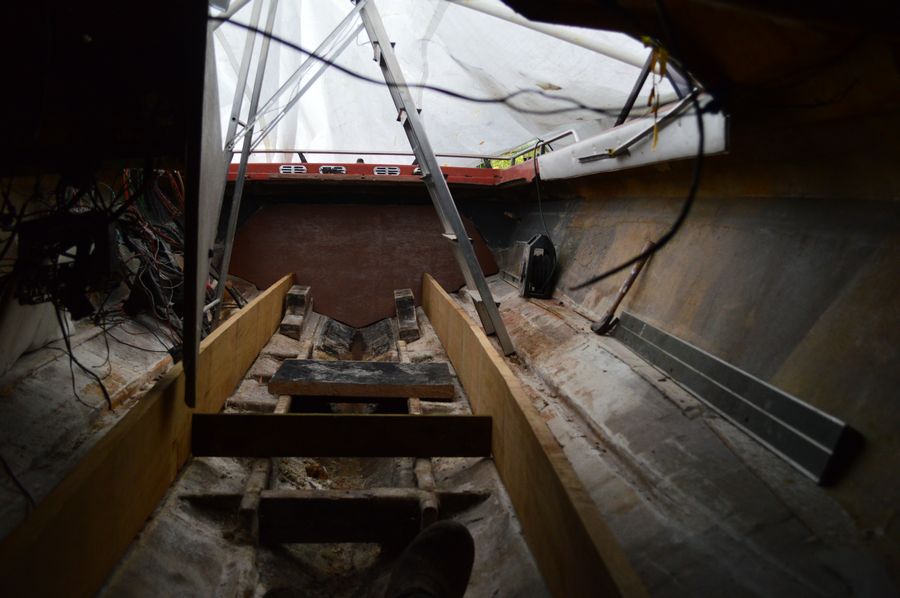
View to stern (NB old engine bearers sited for measurement only - not fixed :cool:)
new_stringer_stern1.jpg


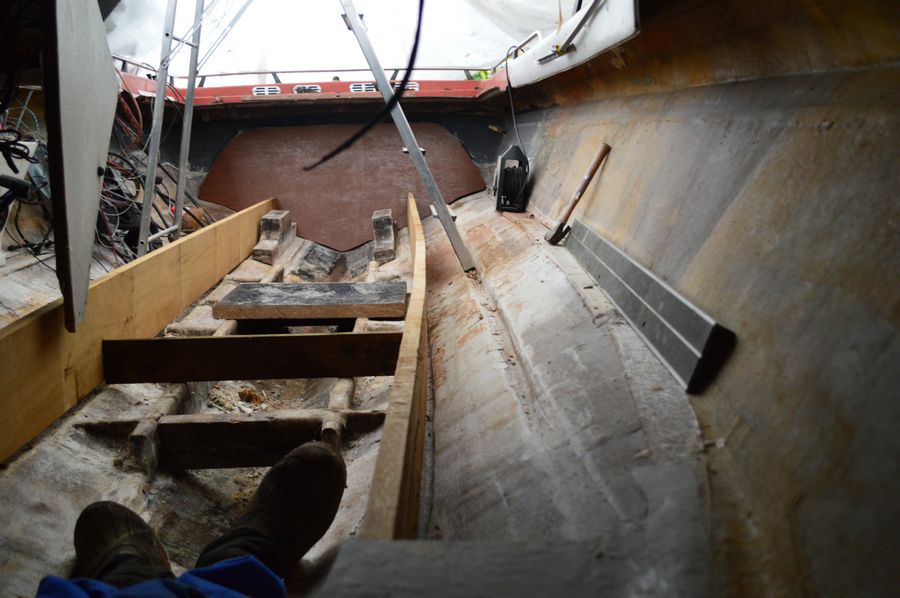
View to bow
new_stringer_bow.jpg


Yet to trim transom facing end
new_stringer_to_transom.jpg
 
Well, last weekend where I'm likely to make much headway until after New Year due to work etc, so had high hopes and even took a days holiday on Friday.

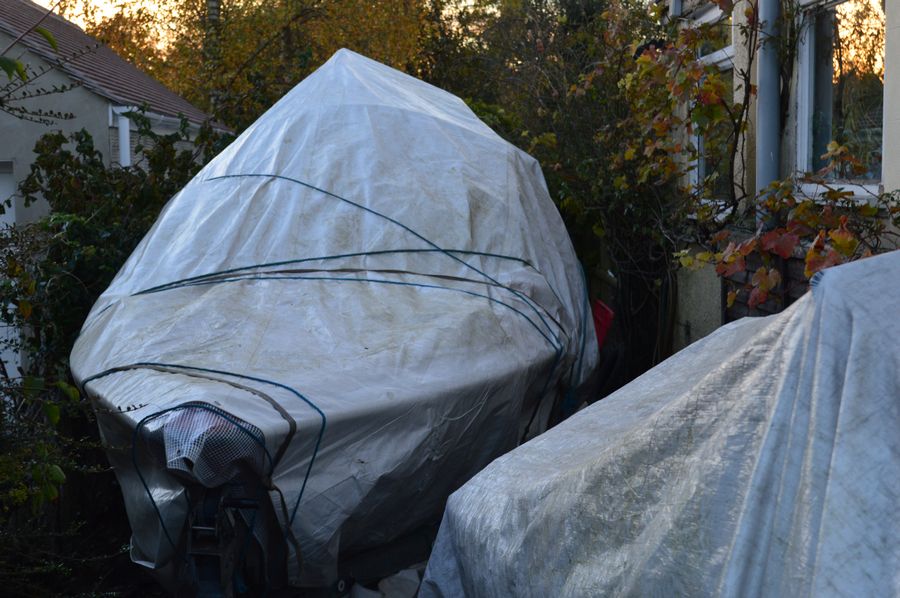
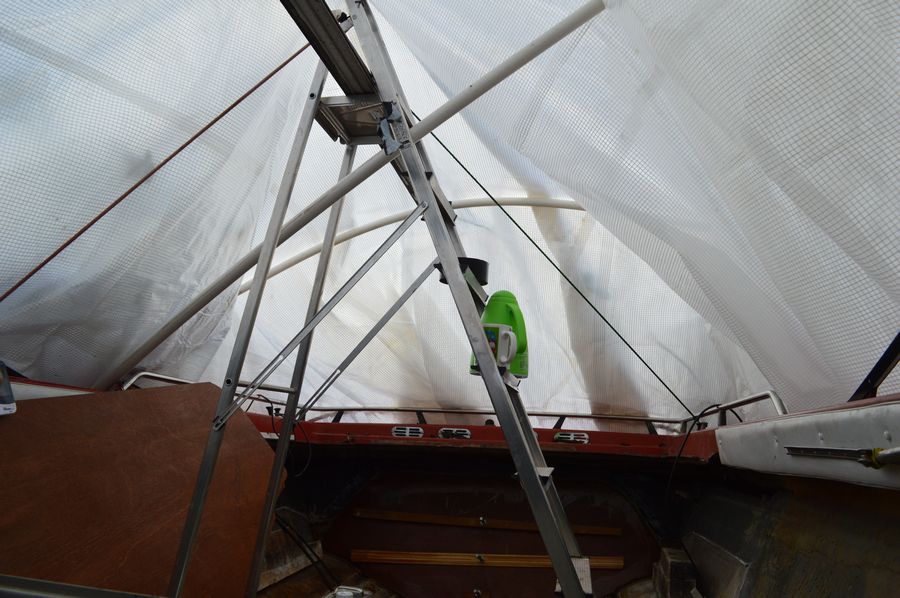
Ordered a new tarp, bubble wrap and some 16mm threaded bolts to clamp transom earlier in the week - timed to arrive for Friday, which of course they didn't! Thankfully the tarp did, so removed the existing and fitted new one underneath and omitted the bubble wrap as light started to fade yesterday. I planned to tape a layer of bubble wrap to the new tarp first and create an insulation layer between the two - perhaps next weekend... as it happens, just the two layers of tarp has helped and widened the 3deg difference in temp between outside and inside to around 7deg. This will hopefully enable grp work to progress in the 'tent' and I'm hoping that with the covers tied down, when not working, that the difference in temperature will widen...

Outside.
outsidecover.jpg


Inside.
insidecover.jpg


So, today went and picked up some fresh polyester resin - a moment of panic when they said DO NOT coat the timber with CPES first because polyester won't stick to Epoxy only t'other way around... Checked on the tin when I got back however and the G4 Primer I used isn't actually CPES, but a non-epoxy alternative - phew! I had researched this beforehand, and double checked, but sometimes you just doubt yourself!

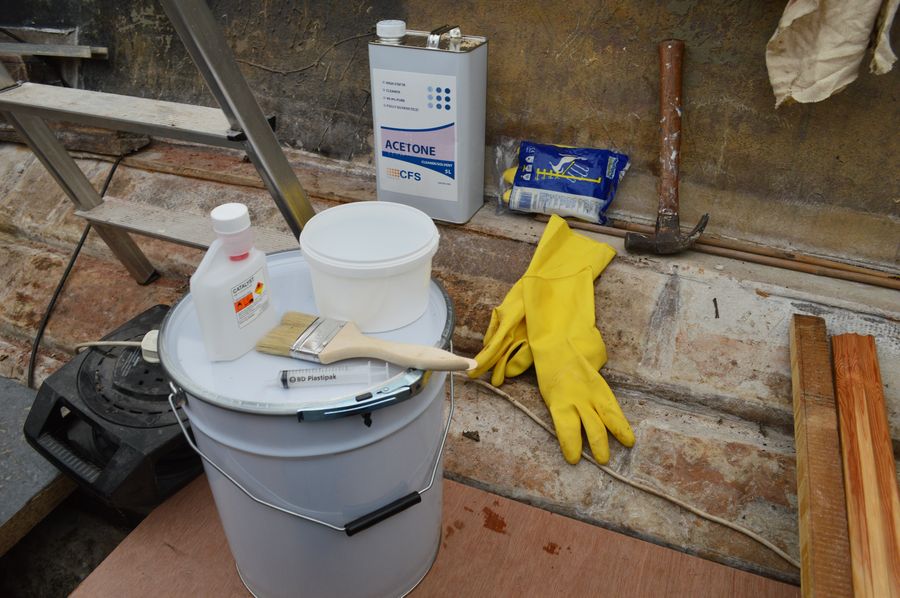
So, today - materials at the ready...
materials3.jpg


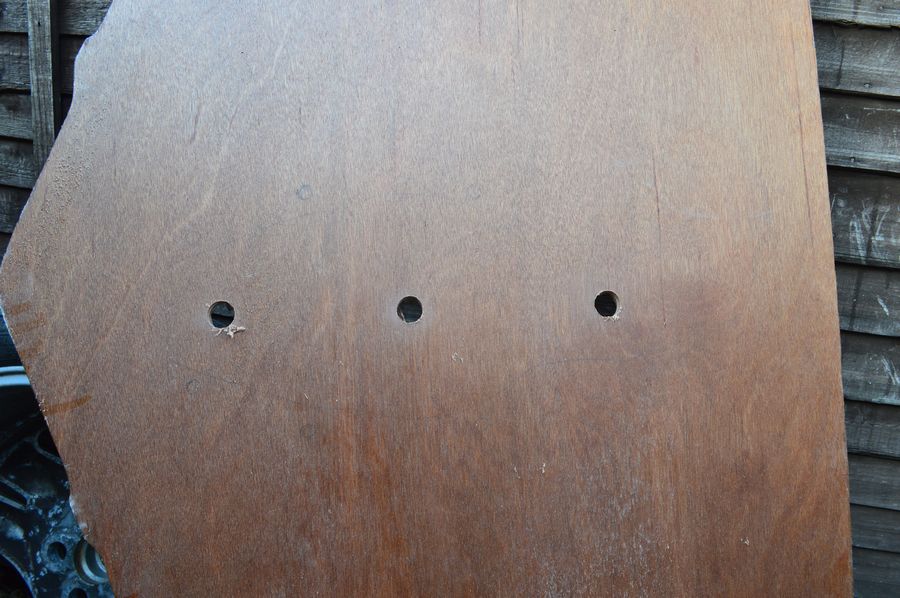
Holes drilled ready for bolts...
holes.jpg


Temperature close to 'Window', so heater on...
temp.jpg


And thus high on fumes in my improvesed tent, in went layer 1...
transomlayer1.jpg


When I wrapped her up for the night, the inside was starting to gel, but the few dripples that escaped outside were not, so I hope it hardens before the frost! I turned up the radiator to 50% before I wrapped up, so hope temperature will be enough. If the police helo goes over with thermal imaging, they'll probably think it's a weed farm!

Hopefully tab around this one tomorrow and add layer 2...

Almost gave in to temptation this morning and went for a run in the 14', but resisted... Perhaps next Sunday if it's like this!
teign.jpg
 
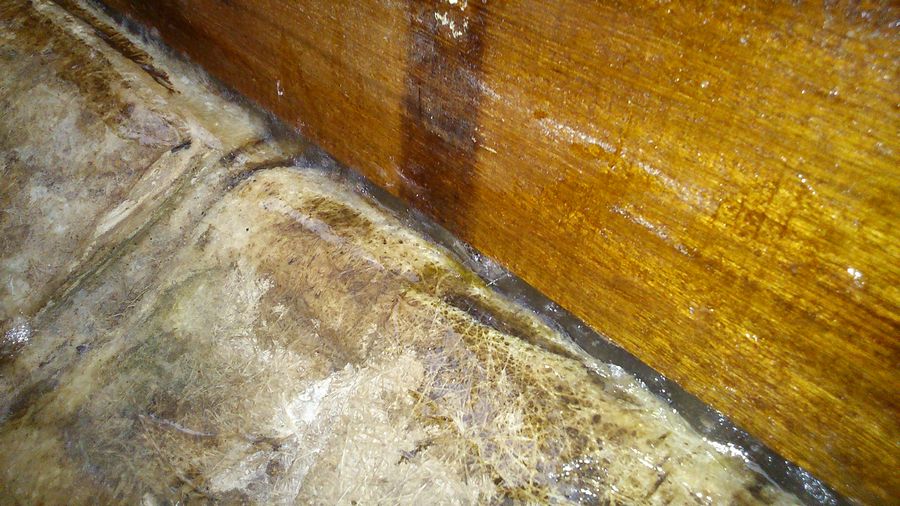
Pleased to report that all is well and appears stuck fast! Some of the drips on the outside are still sticky, but inside is solid. :cool: I had even left a few dribbles on the face of the transom so I could test adhesion and will have to grind/sand them off! Likewise on the original fibreglass around the contact area - so much for the myth that polyester resin won't stick to old polyester... I did incidentally try this last year by sticking some of the old encapsulation pieces that were cut out together, so did expect a good bond - cleaning with copious quantities of Acetone is the key I think.
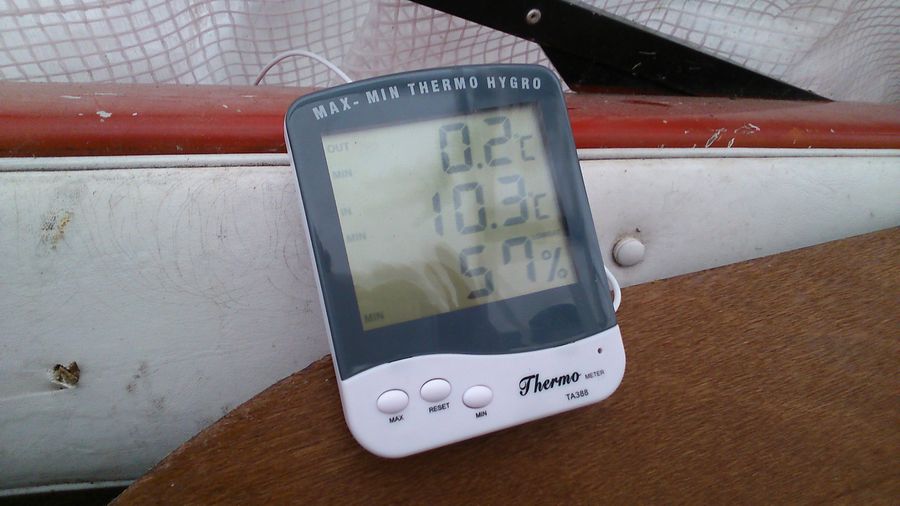
The fumes inside the 'tent' are immense this morning and doubt I'll be working in there today as to vent will release all the heat. I'm going to move the radiator up against the transom shortly and leave longer to cure. Not quite where I hoped to be after this weekend, but I have proved that I can raise temperature enough for resin to cure and that adhesion between the various surfaces isn't a problem. Although coming weekends are mostly work, I should be able to inch things forward now and perhaps still get the stringers and floor in by the end of the year or soon after.

Outside temperature fell to 0.2C overnight, but inside no lower than 10.3C - so two membrane cover seems to have worked as planned!

Minimum since 12pm yesterday:

temp-min.jpg


Temperature at 11am today:

temp-now.jpg
 
Robin,

it's an everending quest for time to work and get some progress (I'm quite familiar with that as you can imagine!)
it's good that you now have done your tests and know what works and how.
So, keep it going at a slower pace and get some work done during the winter (says after not working a single hour on MiToS last week!)

Curious on the curing times and on anyone explaining what's going to happen if the temp is 12C throughout. Obviously takes more time, but any side effects?
also I'd have thought that lower temps would be best for curing stronger composites (no, haven't read any papers on that, just gut feeling)
any ideas?

cheers

V.
 
I guess the proof in the pudding will be when you cut out the transom hole? I hope it's well compacted and no obvious air gaps. You've obviously done well to keep the heat in there - probably warmer than my garage!
And I suspect it's quite a psychological milestone to get than done, you must feel good.....
:)
 
Robin,

it's an everending quest for time to work and get some progress (I'm quite familiar with that as you can imagine!)
it's good that you now have done your tests and know what works and how.
So, keep it going at a slower pace and get some work done during the winter (says after not working a single hour on MiToS last week!)

Curious on the curing times and on anyone explaining what's going to happen if the temp is 12C throughout. Obviously takes more time, but any side effects?
also I'd have thought that lower temps would be best for curing stronger composites (no, haven't read any papers on that, just gut feeling)
any ideas?

cheers

V.
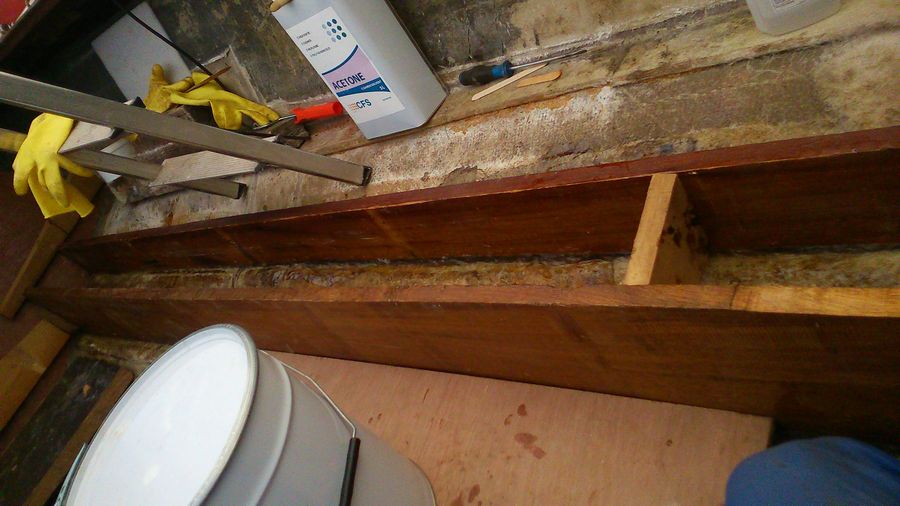
Hi Vas,

Yes, I believe lower starting temperatures = stronger bonds. From what I've read and talking to the guys who supplied the resin, the initial temperature shouldn't be too warm, but it is possible to post-cure at higher temperatures. Thus you wait for the resin to gel and then raise the temperature. (I tried to replicate this by closing up the 'tent' once in place and clamped - max temperature reached 17.8C, but probably dropped off quite quickly) Too much heat causes a rapid cure and much like adding too much catalyst, can make the chemical bonds weaker leading to cracking. The guys who supplied do this themselves all the time and also do fibreglass roofing where temperatures are often outside of their control. I did also chat about the old resin I optimistically stocked up on 20 months ago... I asked if they recycled or if I could use it on the non-structural areas like matting the floors. They were confident that if I leave until last when my glassing skills have 'tuned' a bit and I'm able to work at a quicker pace, I could increase the catalyst to as much as 4% and it would cure without an issue! It's obviously in their interest to say bin-it as they'll sell more so I can't see them saying that if they weren't confident. They offered any help I needed F.O.C. and are more than happy to pick up the phone out-of-hours if I get into a dilemma which I found quite reassuring too. Despite the cold, I resisted the temptation to increase the catalyst and went at 1.5% (Usually between 1-2%)

I've realised I need some loose chopped strands now to make some 'filler' before I do the next layer, so will leave now until next weekend. The radiator is now about 10" from the transom, so more direct heat. I'll turn this off (or right down low) midweek when I know the bonds have ample time internally.

If I can keep the temperature 10C higher than outside, then I can indeed plod on slowly through the winter. I'll still avoid working in evenings as we are low-lying and very prone to frost/sub-zero temps, but I think provided outside temp is 5C+ then I can work between 11am and 3pm and cure enough to then leave overnight. Fumes will be the worst problem as it's obviously quite confined and if I open up to ventilate, I loose 8-10C! I'll just have to make sure I'm organised, no more than 1kg per session and maximise exposure in the tent to 1 hour for resin work.

John,

Yes there is a bit of 'feelgood' factor - it's taken a while! Hopefully on a roll now and will keep momentum - well until cash-flow dries up... Fairly confident of the tight bond - there was around 100ml of resin squeezed out during the tightening process and those bars you can see are 'sprung' - i.e. packed at the ends and midway to ensure continual pressure on as much of the area as possible - working from centre outwards. The ply is also primed so IF there are any voids and moisture finds a way in, it shouldn't rot anyway.

I'll try and do another layer of ply next week... :encouragement:

Cheers,

Robin
 
Just a quick update as not much progress due to work - probably last of 2013. One more gig left this year and then I hope to make full use of weekends for Jan/Feb!

This morning I cleaned up the hull where the port-side stringers are positioned and washed down with quantities of acetone. I then braced and bedded in the innermost stringer and used this to brace the outer one as both are curved.

I've left braced and 'tent' heated overnight whilst the polyester cures. Hopefully I can do the tabbing on New Years Day, fit ribs and then add matting to the framework next weekend and start on the starboard-side... Would have done more today but fumes were quite significant with only a small gap in the cover to get in and out - outside temperature was 8c so needed to retain covers. :)

newportstringers1.jpg


newportstringers2.jpg


newportstringers3.jpg


P.S. All 3 layers of ply on transom now done too - omitted to update :o
 
Curious that you are using polyester as that is notoriously poor at adhesion to already cured fibreglass. Any reason why you are doing that for these structural bits?
 
Curious that you are using polyester as that is notoriously poor at adhesion to already cured fibreglass. Any reason why you are doing that for these structural bits?

Fair point and not a decision I took lightly as I had heard all the same rumours - but cost and flexibility of working temperature are the simple answers! I estimated that I'll need between 60-80kgs of resin (perhaps more) and the cost of epoxy is prohibitive. The hull is also made from polyester and talking to a number of people who have worked in boat building, I was reassured that preparation was key not the resin. There are a couple of no-go's like trying to stick polyester to epoxy where the chemicals present inhibit curing and trying to stick to worn (dirty) surfaces, but I have keyed/cut away the old encapsulation thereby exposing clean fibreglass and I also did my own tests before committing to the polyester. Using some of the old 'off-cut' encapsulation, I cut a couple of 4" square sections and abraded the surfaces using a rotary wire brush attachment on the drill. I then sandwiched two lengths of bailer twine between with new polyester resin and clamped for 24 hours. Once cured, I tied one length over a beam in the garage and hung 22kg from the other using an old bucket and various junk! :rolleyes: 6 months later the bucket of junk was still hanging and I figured that the area concerned in the boat was going to be significantly more than 8 square inches... :cool: I eventually broke it by swinging on it, but one of the layers split before the bond failed. So far this crude test has been borne out by the resin that was squeezed from the transom during clamping and puddled in the bilge - I couldn't chisel off the bilge and had to cut away with the multi tool! I hadn't properly cleaned the bilge either, but all the areas I am preparing are being scoured first and then washed liberally with acetone. Thus I as confident as I can be that the bonding will be ok! I am also treating all the timber with Bonda Marine G4 Primer which is a polyester compatible equivalent to CPES and soaks into the timber in the same way.

P.S. should add that I did consider doing structural work with epoxy and then encapsulating in polyester, but advised by suppliers that this is a very bad idea as the epoxy will stop the polyester from curing. I.E. once you start using epoxy, you'd need to continue with it!
 
Last edited:
Top