Fletcher Arrowbolt 21 - Project (70's/80's?)

Sounds like you have been thorough in your planning, testing etc. The main weakness with polyester is usually shown up with flexing, when the resin succumbs to micro-cracks. Your stringers etc look beefy enough to stop most flexing, so on the whole it seems this should all work. You can always add an extra bit of epoxy filleting and tape over the critical joints if in doubt.
 
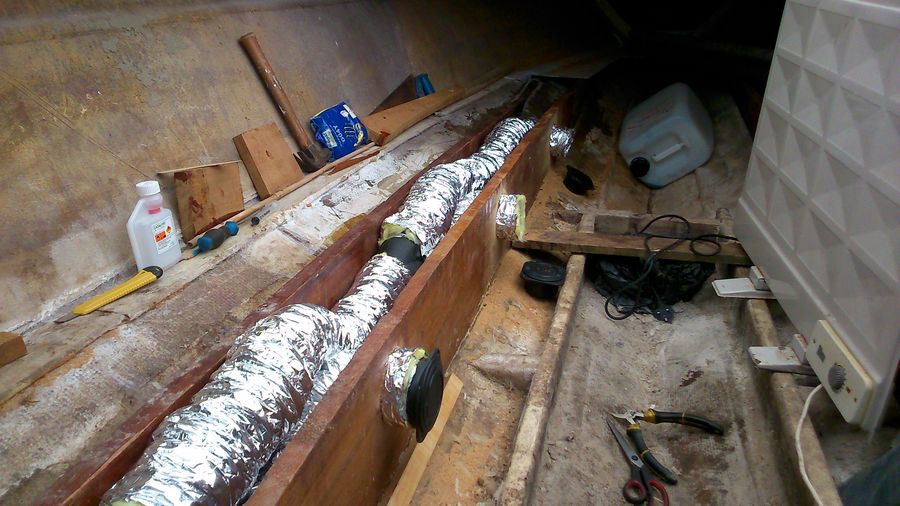
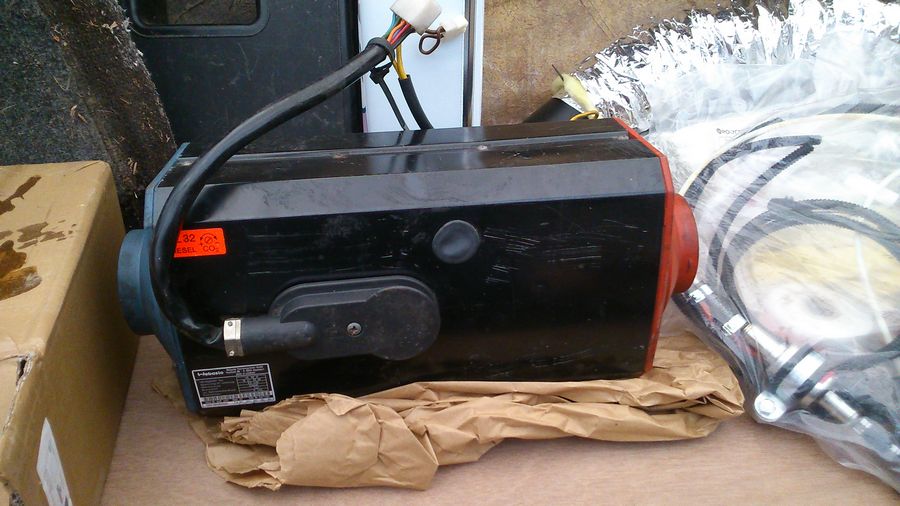
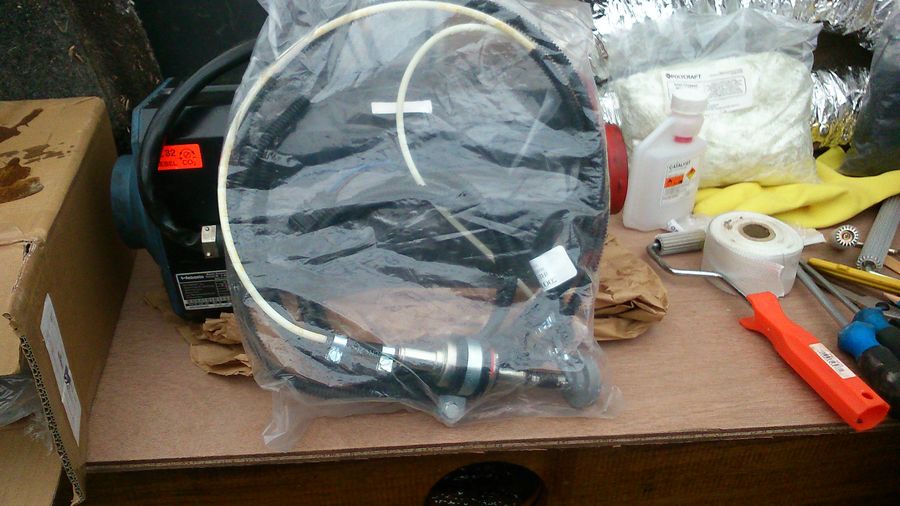
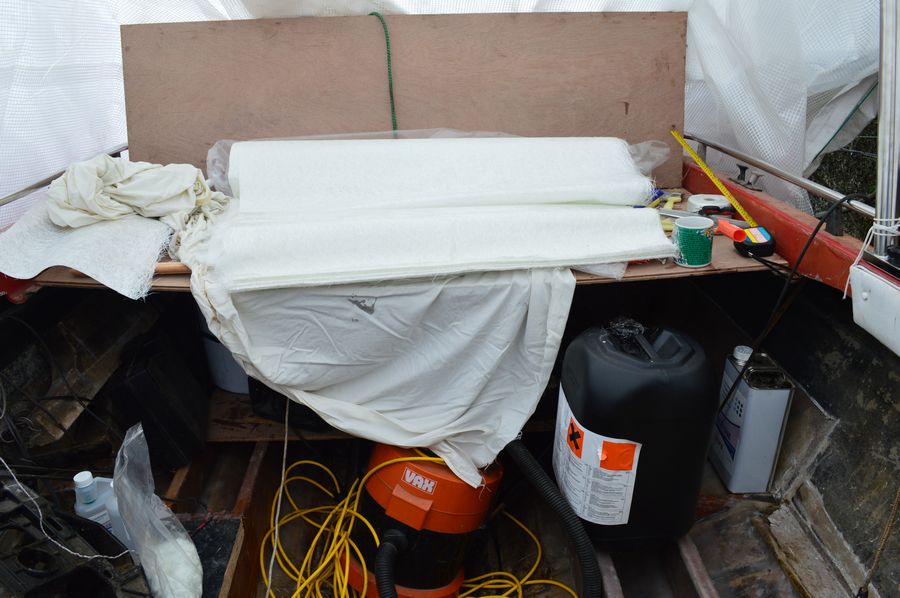
The port-side stringers are now tabbed in place using a 2" wide woven glass tape. I've yet to add ribs and encapsulate with glass mat & resin, but need to plane down and retreat the top edges - as despite using originals as templates, they aren't 100% level in a couple of places! Will tackle that when both sides are done, so now need to do starboard stringers. I needed to cut the 4" holes for heating vents so that I encapsulate around rather than cutting through. Did that this morning along with a test fit of ducting and the last section of tabbing. I picked up a diesel Webasto HL32 on eBay for £150 a few weeks back - complete with ECU etc but missing pump, so purchased new dosing pump complete with pipes and harness for £125. The various outlets and 'Y' sections came in just short of £100 (more than I expected) and the ducting at £40 for 10M (less than expected). The ducting was a tricky bit because I wanted to insulate against the heat in order not to damage floor etc - but insulating and then feeding the (somewhat expensive) official duct through an outer pipe was going to be a pain if not impossible... Persistence paid off however and I found the 10M heating duct from a gas supplier - inner coiled foil duct with thermal insulation and then outer coiled duct! It's rated at 160C do should be ideal. I'll need to insulate the 'Y' sections separately, but can use insulation from the excess (don't need anything like 10M) and some kitchen foil for that :) I'll use the permanently open vent in the cuddy as that's where heat is most likely to be always required. I got an extra 'Y' and vent so I could direct to engine bay if ever required - although I'm unlikely to need. I still have to get an exhaust and skin fitting plus a small diesel tank, but my £500 budget for heating looks just about ok so far. :rolleyes:

A few progress pics:

Just need to drill a little hole...
hole4duct.jpg


...or three!
ductholes.jpg


Bit of a tight fit, but does go without squishing ducts.
heaterducting.jpg


One s/h 3.4/1.7kW heater - doing my bit for MMGW!
webastohl32.jpg


New pump etc for above.
dieselpump.jpg
 
Robin,

good to see some are still working :p

massive holes there!
a bit confused though, the "floor" of the cabin space will be lower and these holes are just going to be pumping hot air at floor level, right?
what's going on top of the space between these stringers? Is it going to be sealed or open for checking/cleaning/dehumidifying?
got to do a v.good job at sealing now the stringers with the holes fully sealed without being too narrow for your ducting...

cheers

V.
 
Robin,

good to see some are still working :p

massive holes there!
a bit confused though, the "floor" of the cabin space will be lower and these holes are just going to be pumping hot air at floor level, right?
what's going on top of the space between these stringers? Is it going to be sealed or open for checking/cleaning/dehumidifying?
got to do a v.good job at sealing now the stringers with the holes fully sealed without being too narrow for your ducting...

cheers

V.

Hi Vas,

Yes indeed - felt a bit odd drilling big holes I must admit! And Yes again on the heat at floor level... :cool:

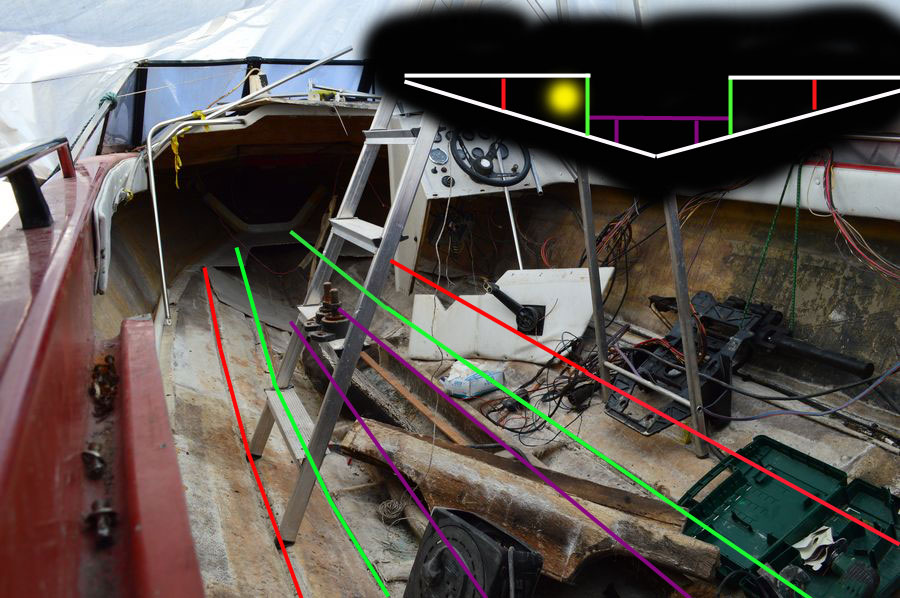
I did a sketch in top RH corner of the pic in post #84 showing the profile of hull/stringers/floor - as you can see, the central section is lower (about 9") and the yellow fuzzy circle was meant to represent the ducting. In reality the sketch wasn't very accurate (drawn from memory to illustrate concept) and I opted for a larger dimension duct (80mm rather than 60mm). The higher floor is where the front seats are affixed. I did consider making all the floor that level right across with a storage space and larger fuel tank beneath, but I opted for originality and a lower COG.

The idea is to seal all the sections under the side floors and fill with closed cell buoyancy foam i.e. there should be no humidity and thus the need to use insulated ducting to prevent heat transferring into the foam/sole. I'll need to ensure the ends of ducting are also well sealed - inner and outer foil, but I was planning on sealing the vents in too... Jury's out on that at the moment however and I may opt to leave that section empty! :rolleyes: The 4" holes are more than big enough to allow for resin and still fit the vents. I'm expecting to loose around 10mm of that 'channel' where the ducting runs with the stringer encapsulation (5-6mm target thickness) so there should be enough room - just!

Regards,

Robin

Picture from post #84
sept13fwd-edited.jpg
 
Last edited:
Wow robin more patience than me, the heating side looks well smart, a very good idea especially doing it now rather than later in the restore.

Hi Mark, Hope you are well. Not sure about the patience thing - from what I've seen you are doing a cracking job on the S23! Will we see you about in Torbay this summer or will you still be refurbishing? I'm assuming you are still planning on MDL Torquay? Can't wait to see her on the water :cool:
 
Hi Mark, Hope you are well. Not sure about the patience thing - from what I've seen you are doing a cracking job on the S23! Will we see you about in Torbay this summer or will you still be refurbishing? I'm assuming you are still planning on MDL Torquay? Can't wait to see her on the water :cool:

Hi Robin yeh still plannning for MDL around late april to May, must say its came around quick thou, just orderd a set of bennett 1612eic trim tabs to fit over the next few weeks,the eltrim ones are just two expensive to replace, still waiting for 2.5 power valve from states for the 4 barrel Holy, but carb now rebuilt with new gaskit kit, as your may know trying to sort hotwater tank out this week now im off shift, so hopefully that will pass fine with no leaks, copper coat is looking further and further away due to the outlay costs and plus ive spent more than i planned, but as enterprise told me, do everything at home were it cost me nothing and i have all the equimpent here.

Unlucky for me just had the leisure battery fail on me and leaked acid all over the painted bilge so ive been out all this week takeing off all the bilge paint with thinners and ive decided to wet back the gelcoat to remove the marks and then polish back up, im on daySpring every night and everyday when im off, serious hours geting but in to get all the jobs done or started.
Hope you can still log in to the sealine forum with my quest account robin if not give me call. what the time period on your arrowbolt, in the water for this year??, heating is a great idea as we dont have that luxury so we will just use a oil filled radiator which to be truithfull works a treat at the mo. hope fully we can join you this year to a trip to dartmouth.
 
Not much visual progress to report, but felt an update was in order...

Starboard stringers are now in too and both sides were planed to get tops level - even though I used originals as templates and measured, there was as much as 10mm variance! I had to do some of the tabbing of the starboard twice as in my haste I omitted to wash down with acetone and when the first attempt dried, I noticed that where the resin layer on the wood was very thin (brushed on) it had flaked in places. This probably wouldn't have been an issue with 5-6mm of resin and mat over the top, but didn't want to take the chance so cut it away, cleaned and replaced. Very well bonded as it happened so probably didn't need to redo, but it was one side of one stringer and about a third of the other side... :rolleyes:

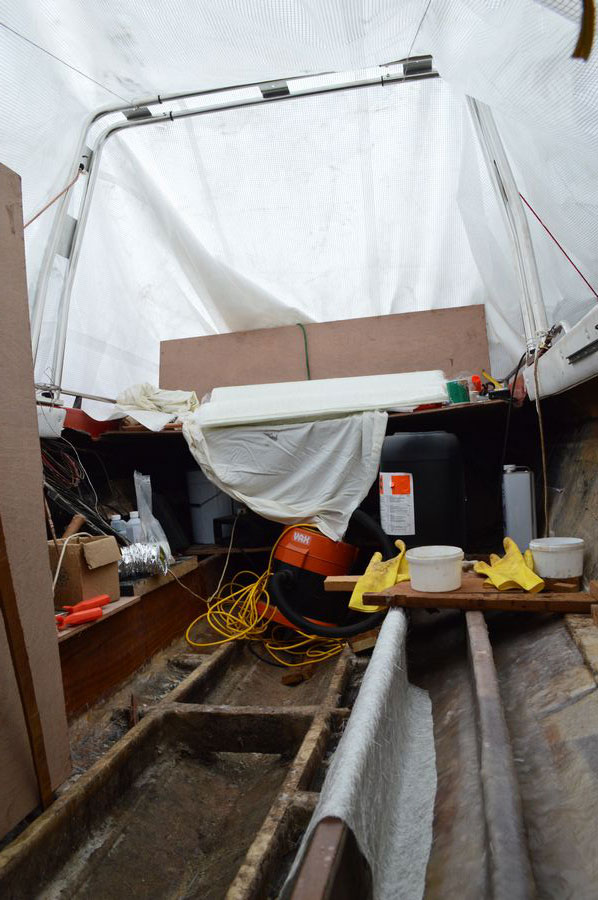
I've started on the encapsulation now - fitting the ribs as I go - with layers of 450g mat. Bit off way too much with first bit as it required 3 times more resin than I'd prepared, so a sharp learning curve and some rapid mixing ensued... Started with transom and the engine bay section and working my way forwards. I've already almost emptied another 25kg drum of resin - quite a surprise just how much the mat absorbs! :)

I also sourced a stainless radar arch which I will have next week and temporarily fitting this ahead of schedule will allow me to remove the stepladder holding the cover up! Once that's out of the way, I'll have more room and will also have a clear floor which will help.

Some pictorial updates either tomorrow or next week all being well...
 
I've started on the encapsulation now - fitting the ribs as I go - with layers of 450g mat. Bit off way too much with first bit as it required 3 times more resin than I'd prepared, so a sharp learning curve and some rapid mixing ensued... Started with transom and the engine bay section and working my way forwards. I've already almost emptied another 25kg drum of resin - quite a surprise just how much the mat absorbs! :)

judging from my experience with 280gr/m2 mat, the 450 must be a bitch to handle! Will it go round 90deg bends (and stay down!)?
Wouldn't be easier to use more layers of thinner mat??? I'm using a thinner epoxy just for that task, much easier than using thick stuff.

keep up the good work, waiting for the pics!

cheers

V.
 
judging from my experience with 280gr/m2 mat, the 450 must be a bitch to handle! Will it go round 90deg bends (and stay down!)?
Wouldn't be easier to use more layers of thinner mat??? I'm using a thinner epoxy just for that task, much easier than using thick stuff.

keep up the good work, waiting for the pics!

cheers

V.

Hi V,

Yes it will when soaked in resin - with a bit of perseverance and patience - neither of which I have much of... :rolleyes: :D

TBH there were a few air pockets in the first bit, but much less than the 1970's original and that has stood the test of time so I'm not going to fret too much! There don't appear to be any at the base of the stringers, but some 2mm x 10mm along the top edge at the sides where the mat has pushed itself away. There were gaps all along here however on the original where the floor appears to have been added when still wet (they must have moved quick!). I made the first bit particularly hard for myself by going over both stringers that side with one continuous mat - the other side done in two parts which was both much easier and a better end result.

I haven't thinned the resin at all, but being polyester rather than epoxy, I suspect it has different characteristics anyway?

Will try and sort some pictures tomorrow - the resin seems to transfer to everything so I've been keeping camera away! I've only stuck my knees to the floor once so far, so not doing too bad. :p

Best regards,

Robin
 
Well, once again it's been over a month since I posted so overdue an update. Not as much progress as I'd have liked, but inching forwards! Today I completed the encapsulation of port stringers - 3 layers of 450gsm mat and an alarming amount of resin (approx 80kg so far!)! I had taken a few days off to make some progress, but hit hard with a flu virus and thus spent my days off, weekend and 1 further day in bed with fever, shakes and aches :( The other 'setback' in terms of time was buying another boat that hadn't been used for 18 months, but that's another story... :ambivalence:
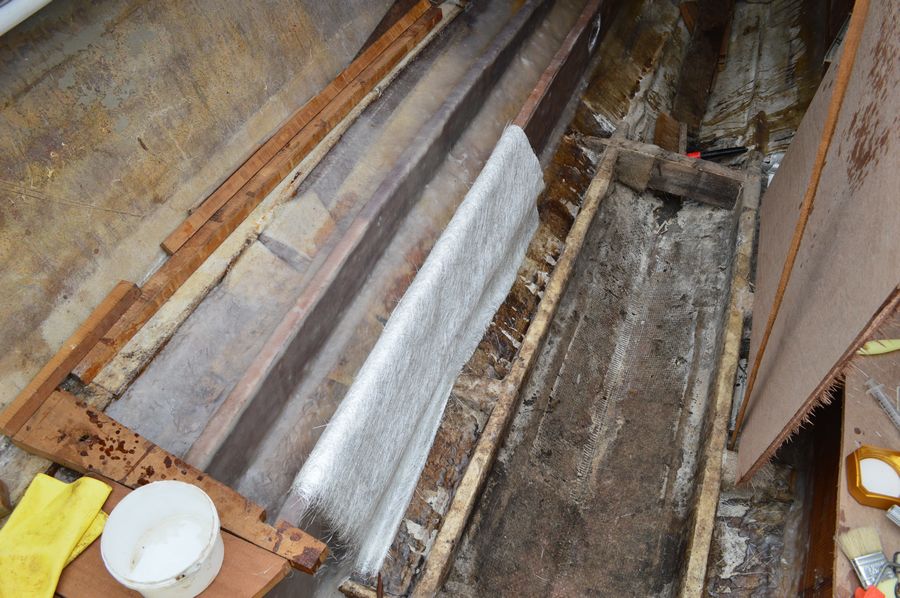
So, apart from the fibreglass work the only other change is the addition of a stainless radar arch. This was always on the wish list and I expected to have to get one custom made, but one popped up on eBay new and I saw a chance to save a few bob! (Cost was £250 delivered) At the moment this is tied in place as I've not yet determined the final position, but already it makes working so much easier as it supports the covers and I've been able to dispense with the step ladder. Work is thus starting to get easier with some flat surfaces and some space.

I have the Fletcher Rally at the start of May and have also volunteered my services for some offshore race marshalling at the end of May (seemed like a great idea!), but evenings are light/warm enough now that I should still be able to make some headway in May. I'd like to get the two side floor sections in place and then determine the plan for the cuddy/anchor locker.

Did get a few air bubbles in the end and yes, mostly at the top edges of the stringers where the mat 'folds' over to make the cap. Not overly worried as there is less than in the original layup and that held good for 30+ years. Most seemed to form where I had finished for the day and thus stopped going back over the completed areas - they seem to 'pop' away from the stringer whereas I'd assumed the vacuum would hold down once all the air was expelled!

Doing smaller sections paid dividends and meant much less of a rush (not good in confined space!)
beforeresin.jpg


Some typical 'overnight' bubbles - sorry it's dark, flash was reflecting too much!
bubbles.jpg


Completed encapsulation close up (apologies for auto-focus - should have done manually)
encapsulated.jpg


Impromptu work bench made life a lot easier...
bench.jpg


As did the radar arch - headroom such a luxury! The arch incidentally will hinge forward when fixed - thus opening up choice of camper or tonneau covers. (Camper covers will hopefully use the arch for fixing point)
arch.jpg


That's about it for the moment, but more soon!

Regards,

Robin
 
Well, once again it's been a while but just to let you know it's not abandoned I thought a small update was in order.

The project stalled a bit - mostly because of time, but also because I needed more resin and having (hopefully) learned from mistakes I didn't want to get more until I knew I had some time to get on with it! I have most of next week off and a few weekends free, so trekked down to CFS for another 80kgs last Friday. Oh, and the weather caused a significant delay too - not (for once) because it was too bad, but because it was too good! The plus side of that is we've covered 300 miles on the water since May, taking in The Dart, The Exe, The Teign, The Yealm, The Tamar and most of coast in between. From flat calm to F5/6, it's been a great season for building local knowledge and experience. :)

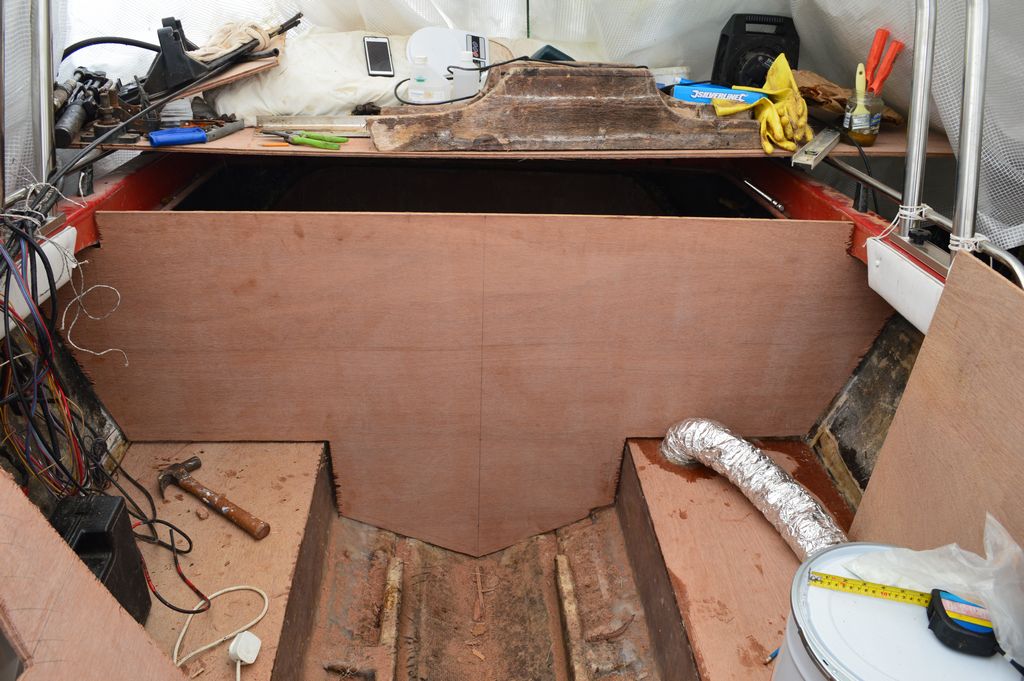
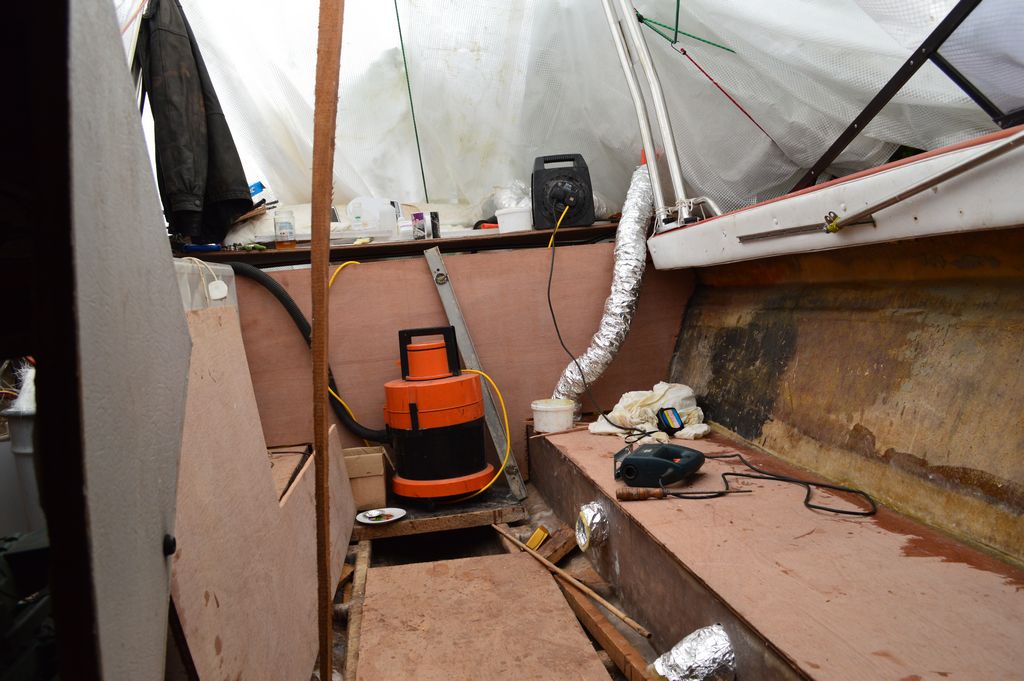
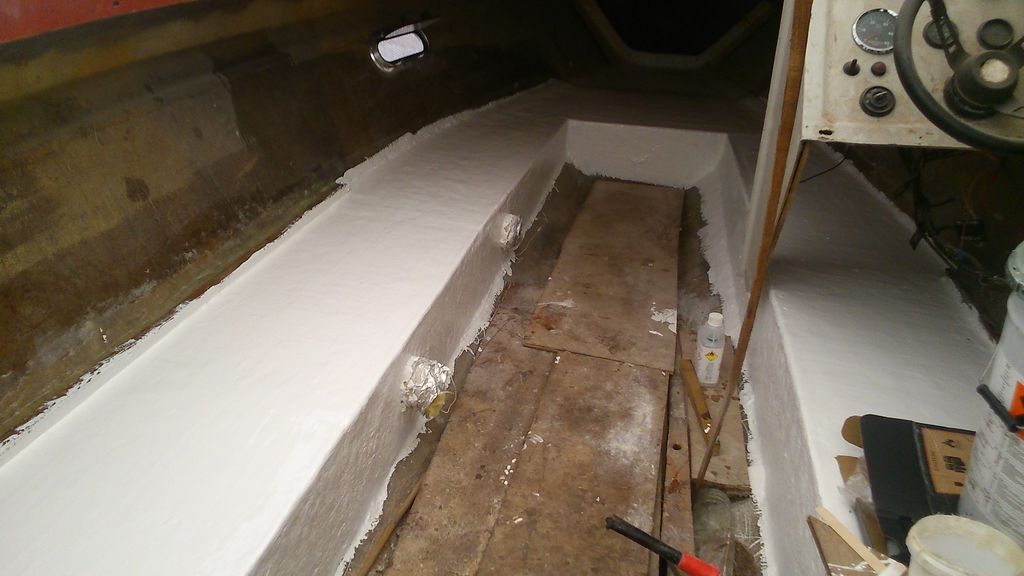
So, as it stands, the new Iroko stringers are glassed in - bedded on a 6mm chopped strand 'putty', tabbed along all joins with webbed tape and overlaid with 3 layers of 450gsm mat giving approx 5-6mm of GRP. I've now started the floor on the two raised side sections and will overlay this plus the exposed edges of the central stringers with another 2 x 450gsm. The underside of floor is just painted with resin (no mat). I can't really do the overlay until the cuddy floor is formed and the bulkheads and side panel fixing batten in place as I want this to be seamless with tabbed joins beneath the main layers. Once this stage is done and sanded as smooth as I can get it, I aim to flowcoat the entire cockpit floor area apart from the centre (lower) section - which I'll do separately later.

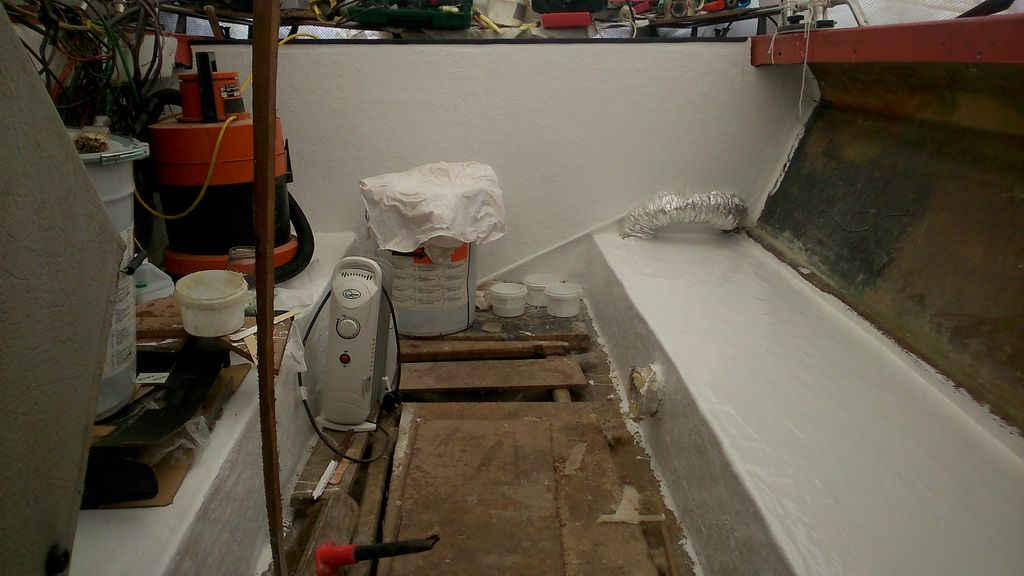
I've decided to seal the engine bulkhead and add an additional bilge pump forward of this along with a bung as close to keel as possible (accessed from the engine bay side). There will be a sealed lift-out section in the bulkhead, behind the rear seat for better engine access down to the level of the top of the fuel tank (which sits in front of the bulkhead under rear seat). The silver ducting seen in pictures is for the heater and will feed through the bulkhead as high as possible from the diesel heater which will be located in the bay to the port side of the engine. Batteries will be relocated to starboard side.

I'm aiming to complete the structure of the cuddy area and bulkheads next week as well as cuddy portholes and re-enforce the topsides for the radar arch for a temporarily fit. I'd like to have got the hull and topside resprayed before the winter so that I can overhaul and refit the engine and drive over the winter, but this is looking less likely unless we have an Indian summer...

bulkheadnew.jpg


floorin.jpg


More next week if all goes as planned. :D
 
Last edited:
Robin,

good to see you're still working on it, albeit speed is not your #1 goal :p

wonder how you manage to "bend" 400odd gpsm matt around 90degree angles. Always had air trapped (well not really, just matt wouldn't stick and stay put so to speak) around, making the whole exercise pointless. Went down to 150 or so gpsm matt to be able to do decent wraps.

cheers

V.
 
Robin,

good to see you're still working on it, albeit speed is not your #1 goal :p

wonder how you manage to "bend" 400odd gpsm matt around 90degree angles. Always had air trapped (well not really, just matt wouldn't stick and stay put so to speak) around, making the whole exercise pointless. Went down to 150 or so gpsm matt to be able to do decent wraps.

cheers

V.

Hi Vas,

I'm lost for words on your progress and in awe of the dedication and effort (as well as exhausted on your behalf :)), so my speed will always seem slow to me. That aside I'm enjoying the project and thankfully I have use of another boat so not going stir crazy! I'm am however glad that a) mine's only 21' and b) it isn't made of wood - as I don't think I'd ever find time alongside a 60 hour+ working week.

With regards to the glass mat, I used polyester resin and that may or may not have a bearing as you can vary the catalyst to adjust curing time? My 'method' was as below - right or wrong I can't say, but I'm generally happy with the end result... :rolleyes: I folded mat dry to the shape of the target (already coated in a cured coat of resin), mixed up smallish quantities of resin (500g approx), coated the surfaces liberally and then left long enough for me to mix another similar sized batch without rushing. By this time the first coat was reacting and starting to warm/thicken (rubbing between fingers it's sticky rather than liquid). So gloves on and press the mat well into the first coat before over-painting with a generous second coat. I then waited a short while (3-4 minutes) and worked in with the roller to squish out any air. This is the point at which the wet mat starts to lift - especially if the earlier 'fold' moves - but by this time the first coat seems to be starting to cure and if timed right, is sticky enough to have some hold on the mat. There are a few bubbles here and there where timing wasn't perhaps as good, but the original encapsulation had an air gap all the way along the top both sides of the stringers down to perhaps 10-15mm from the top of the 'hat' and that stood the test of time! I have perhaps 1-2% of air bubbles in terms of area - mostly in the same places as the original, but my biggest is perhaps a 6-7mm diameter. I kept rolling until the point at which the resin was clearly getting sticky and there I stopped so as not to start pulling it off. I did two further layers and where I could these were done before the first had fully cured (within a couple of hours). This seemed to help in terms of stickiness, but if too soon seems to create more smaller bubbles (result of exothermic heat?) and thus needed working for longer. Overall, I'm fairly pleased with result, although not perhaps as smooth as I'd have liked... I think perhaps I needed to do more in each phase in order that all the joins/overlaps were done in one go rather than curing and creating a step? Had I have waited for a big enough time window however I'd still be waiting to start - i.e. small steps rather than no steps! I did pull off the first section of mat before it cured as I was in too much of a hurry, hadn't waited for the first coat to start to gel and it was full of large bubbles! Rather than abandon however, I grabbed the next precut section of mat, mixed another pot of resin and got stuck in again. This was perhaps pivotal as I realised both that I had more time than I expected and that actually slowing down made it work better. I've kinda got more relaxed and confident as I've gone along and results seem to be getting better by not rushing. I've long way to go before I'd say I was any good at it, but I've sussed adjusting the catalyst fairly well now to suit the amount I have to do and the working temperature - probably a good thing as the floor is next and that's going to be a much bigger pot/mix/area! :ambivalence:

Best regards,

Robin
 
Ok, a long overdue update as a number of you have asked about progress, so I guess a bit of a catchup after two-and-a-half years of silence...

Progress has been slow, but the project is far from abandoned. I decided it was time for a career change from IT and accounts and thus took a year out as a kind of working holiday driving vans/trucks delivering food all around the Westcountry. Thoroughly enjoyable despite early starts and long hours, but a chance to revisit many places I hadn't been in years and some I'd never got around to! Little time or funds for the project however. Then, in February this year I started a new job in the marine service sector - a total change from anything I'd done before, but what an interesting and exciting opportunity... :D Finally found something close to my heart that is both interesting and suitably challanging to not get bored! And as a bonus, learning oodles of very useful stuff and some staff prices on parts - bonus! ;)

As some will know from other sources and posts, vehicles have also been a bit of an achilles heel and thus very little boating with the little Fletcher either. Thus there have been a few jobs done on that one during her enforced shore-leave... Thankfully neither cost a penny sat on the drive doing nothing, so no urgency.

The final aspect has been the passing of both my Uncle and Mother-in-Law in the last 6 months and thus with a son moving up schools and all the other life issues, the Arrowbolt hasn't really been a high priority. That said, I have grabbed a few hours escape here and there and hopefully as finances improve over the next 12 months, I will be able to resume at an ever greater pace.

So, a quick update and some pictures follow below - still a long way from the water so don't get too excited!

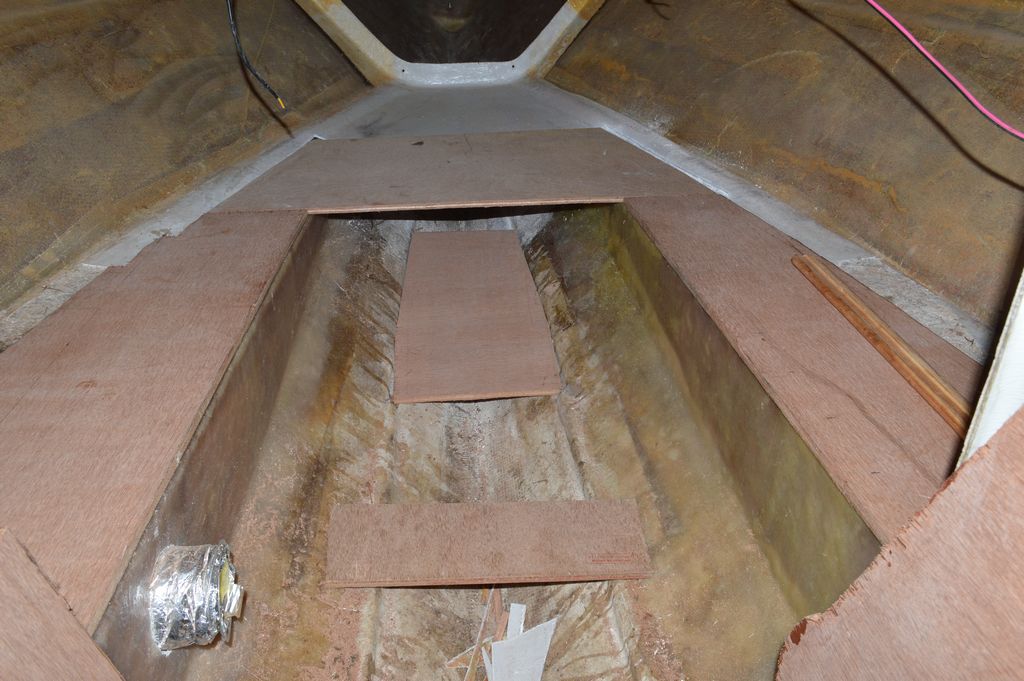
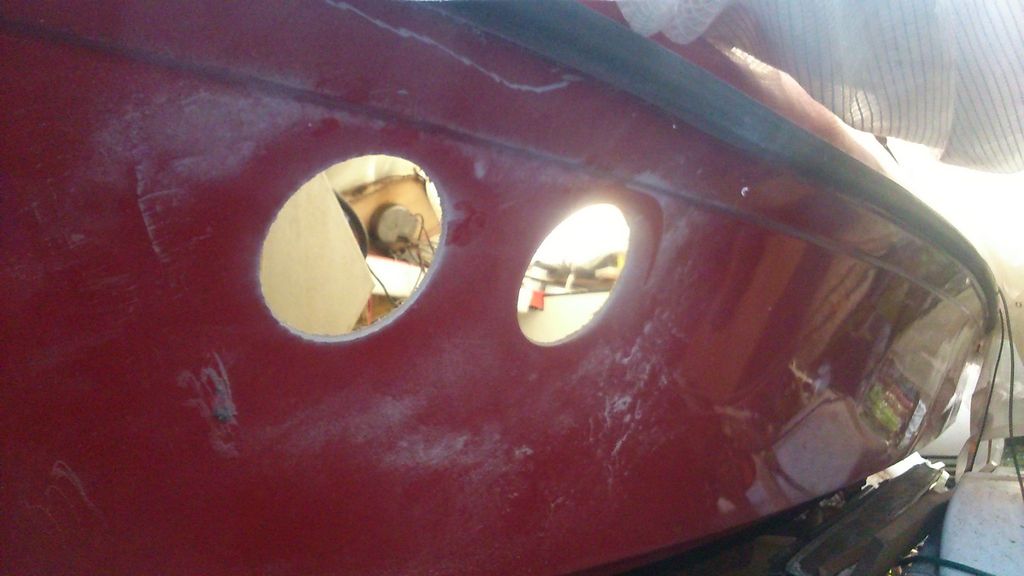
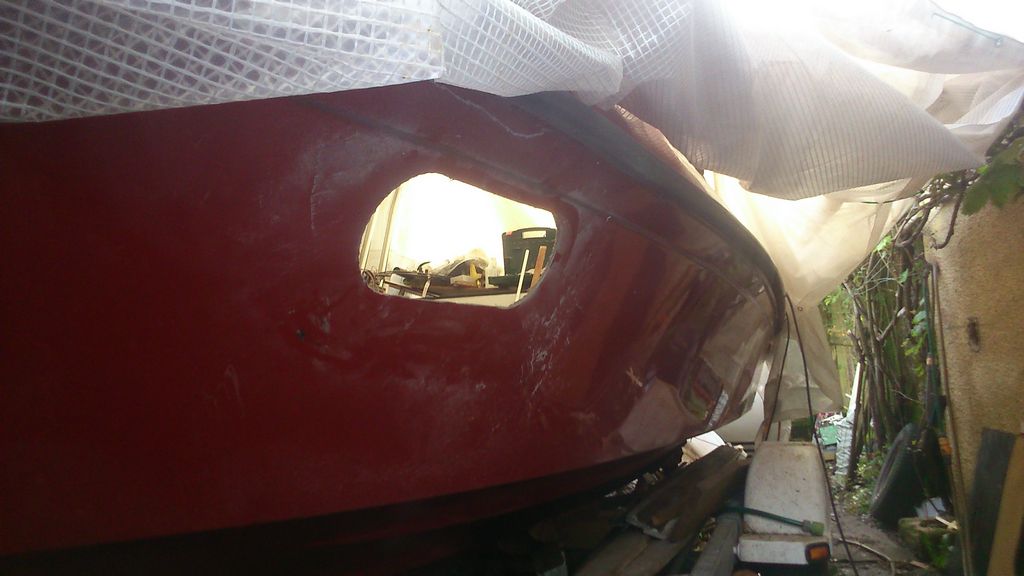
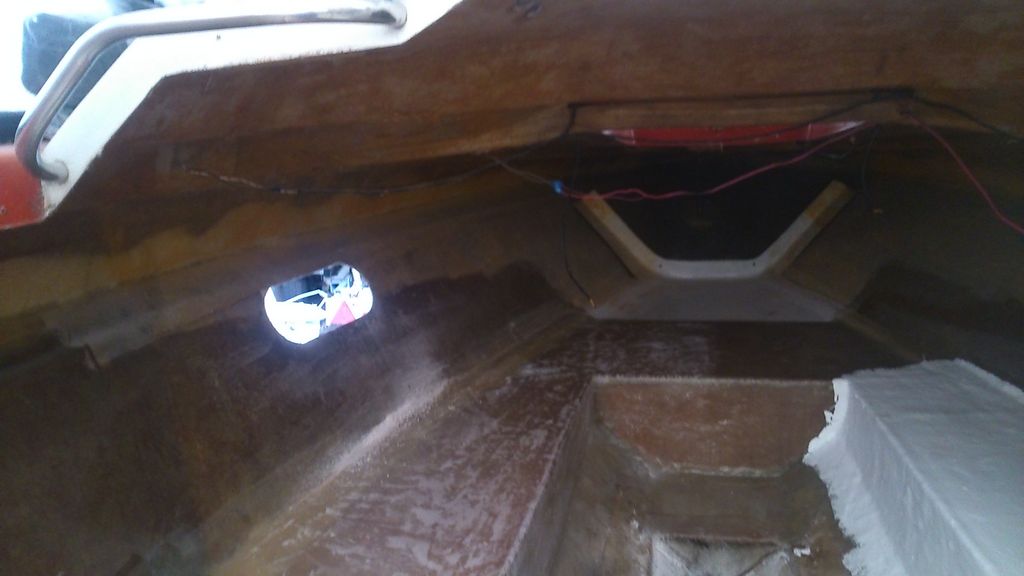
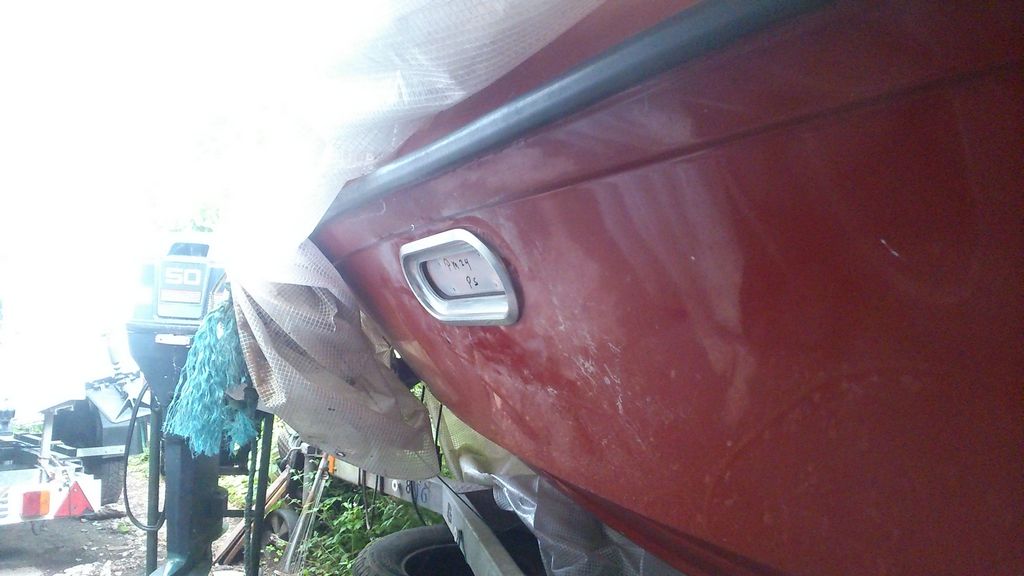
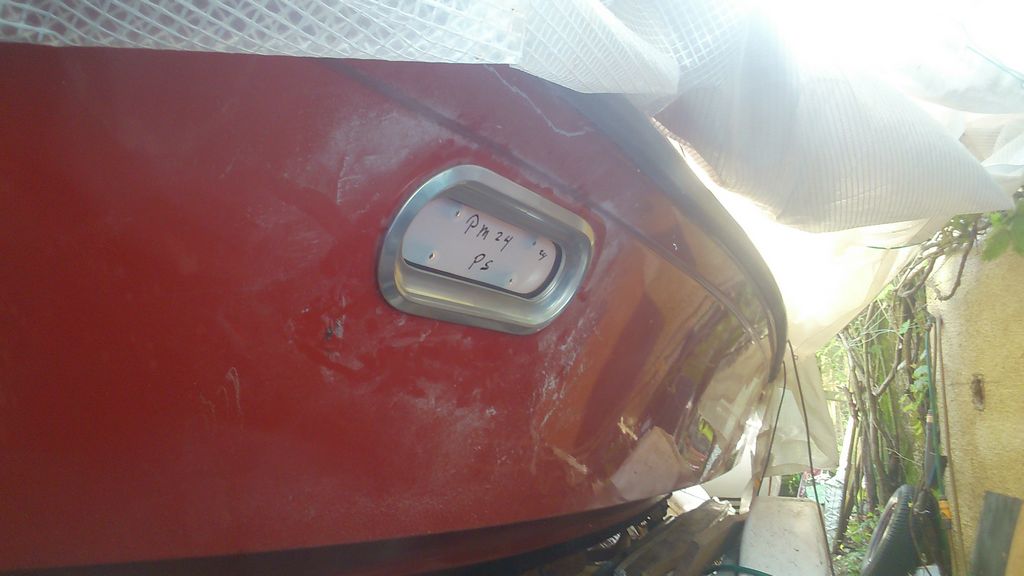
I have finished glassing the two rasied side levels of the floor and started re-forming the cuddy with some minor changes. I've fitted a new engine compartment bulkhead, glassed in and flow-coated this and the floors (initial coat only - much sanding and further coats to follow). The centre section and engine bearers are still to do. I've cut and test fitted the cuddy portholes and started playing with some ideas for making an anchor locker.

cuddy_floor.jpg

porthole_1.jpg

porthole_2.jpg

porthole_3.jpg

porthole_4.jpg

porthole_5.jpg

flowcoated_floor_fwd.jpg

flowcoated_floor_aft.jpg


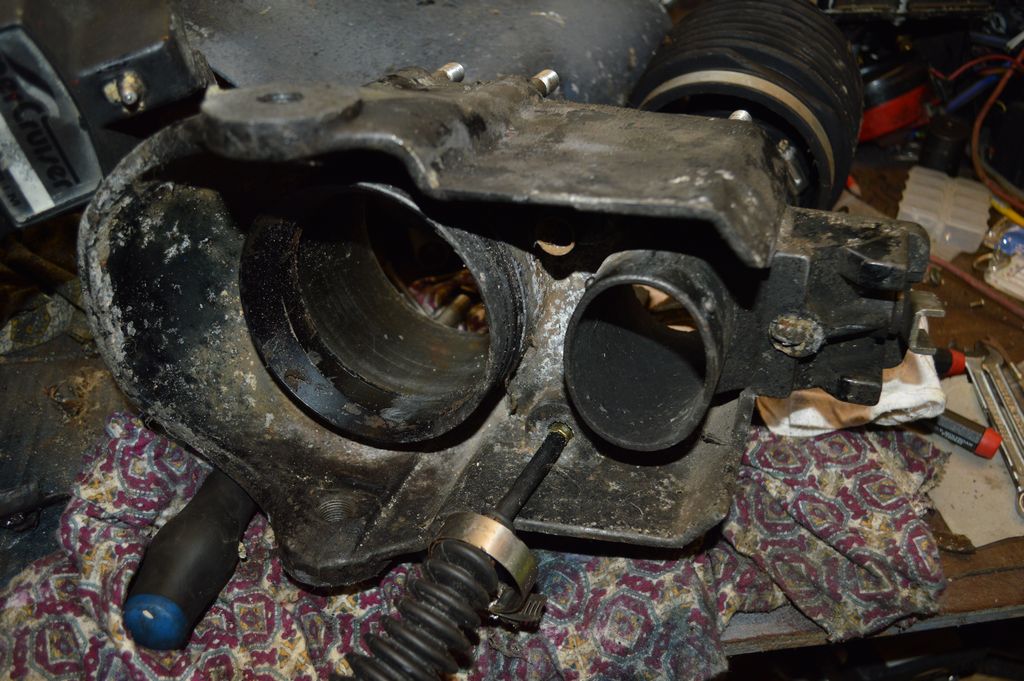
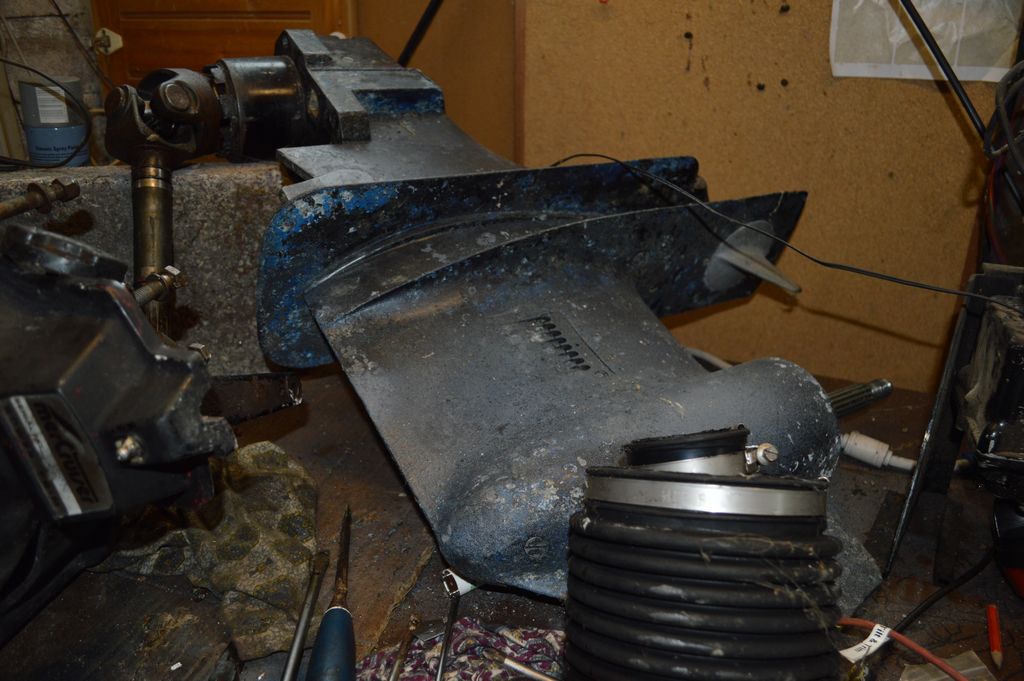
Started to clean up the drive a couple of weeks ago too... Nothing like starting another aspect!
drive_1.jpg

drive_2.jpg
 
Hi
Lovely to see someone restoring such an iconic boat. Huge fan of classic fletchers and they hold a place in my heart. One of my very first real boats was a classic 1979 Fletcher arrow sport 15 with a 3.0 140 mercruiser. A lovely looking thing, which sadly went to ruin in a boatyard in Scotland (after being used as a spare parts source to thieves one year when I first went to sea as a marine engineer). One of my biggest regrets !
Surely the arrow bolt 21 along with the arrow beau 17 will go down as one of the best hulls ever made. They are fast, stable and sure footed in almost any weather.
I didn't read all the posts, but I'd imagine this isn't the original engine. They normally came with a 5.7 (350ci) mercruiser and a pre alpha 1 leg, in this vintage ??
In an effort to make up for my wrongs, my father and I recently bought an abandoned mid 90's fletcher arrowsport 16 (all be it an outboard) and have almost finished restoring her to as good as new, or as near as damn it !
Looking forward to seeing more progression.
As mentioned, haven't read all the old posts, but where did you get her ? Looks like Scotland ?
Allan
 
Hi
Lovely to see someone restoring such an iconic boat. Huge fan of classic fletchers and they hold a place in my heart. One of my very first real boats was a classic 1979 Fletcher arrow sport 15 with a 3.0 140 mercruiser. A lovely looking thing, which sadly went to ruin in a boatyard in Scotland (after being used as a spare parts source to thieves one year when I first went to sea as a marine engineer). One of my biggest regrets !
Surely the arrow bolt 21 along with the arrow beau 17 will go down as one of the best hulls ever made. They are fast, stable and sure footed in almost any weather.
I didn't read all the posts, but I'd imagine this isn't the original engine. They normally came with a 5.7 (350ci) mercruiser and a pre alpha 1 leg, in this vintage ??
In an effort to make up for my wrongs, my father and I recently bought an abandoned mid 90's fletcher arrowsport 16 (all be it an outboard) and have almost finished restoring her to as good as new, or as near as damn it !
Looking forward to seeing more progression.
As mentioned, haven't read all the old posts, but where did you get her ? Looks like Scotland ?
Allan

Hi Allan,

Yes a 27 hour round trip North of the border from the opposite corner! I agree they are iconic boats and it's great to think that this one will get a new lease of life - hence no hurry and enjoy the process. We also have a 1992 Fletcher ArrowSport 150GTO (15'9"), so similar yours I would think? The earlier one sounds an interesting vessel as not many that size would have been inboard - would be quite a find now! :encouragement:

I made the decision quite early on to modernise a little along the way, so there are a few practicality modifications, but do aim to keep as much original as is realistic. The cuddy is a crawl space and very dark, hence the portholes. We also hope to use when done as more as a compact coastal cruiser that can be trailered year round, so have added heating and the radar arch. The arch was copied from the style of the Fletcher ZS and as well as for navigation, will provide a much stronger fixing point for covers when underway in winter! (Will also fold down for transport if needed) The next item I need to tackle is an anchor locker and as access to the bow isn't easy (no opening centre section of screen on this era), also contemplating a windlass. The only nagging doubt here is the amount of weight this will add to the bow. Not too worried from the horsepower aspect as may yet go with a new 5.7, but freeboard isn't as generous as later incarnations of the Arrowbolt and thus have to be aware of sea keeping, balance etc and not too much additional weight. I could add later but would mean ripping quite a bit of the cuddy out I suspect after it's done - although I am trying to keep maintenance in mind as I rebuild...

Hopefully not so long before the next update. :cool:
 
Brilliant stuff...
Can't wait to see the finished article, but as you say, worth taking your time. Our project was a great thing to get on with. We really enjoyed it. I would post pictures, but using iPhone and not great with how to post them !
The 5.0l will be plenty enough, I'm sure. Just don't ever remember seeing one with a Volvo 5.0. Usually Merc 5.7's.
One advantage in having the Volvo 5.0...it's likely fairly close to the power of the old Merc 5.7. From memory, the volvo's usually eek that little bit extra power from the bigger 4 brrl carb. Probably around 220hp or there abouts and saves a little weight, as you say. Hopefully the Merc leg and prop are well suited to it.
If you had a spare few bob, a corsa marine captains call (quiet or noisy) straight through stainless exhausts would be lovely...tastefully done, of course !
All the best and good luck with it all. Looks amazing already !
 
I quietly followed this thread at the time (it's a project I would love to do myself one day!) and love the arrowbolt 21. Has any progress been made recently?
 
I quietly followed this thread at the time (it's a project I would love to do myself one day!) and love the arrowbolt 21. Has any progress been made recently?

I've been thinking about this thread recently - and actually getting some work done on the boat!

Sadly time and available funds dried up late 2014 and boats took a bit of a back seat. I decided I'd had enough of IT and decided on a change of direction, so went driving for a year! Then in Feb 16 an opportunity arose in the marine sector and always up for a new challenge, I went for it.

Getting back to normal a bit now, but bought a third boat, so focus shifted again :) Missus wanted a boat with a loo and I'd been looking at classic Sunseekers for a while... So, to cut a long story short, we purchased an 'almost ready for the water' boat - a 1983 Portofino 25. This has however absorbed much of my free time over the last couple of months - I'll do a post on this in a couple of weeks when she's afloat. Almost there now, so as this one will be berthed in Torquay, there will be time and space to resume work on the Attowbolt in September.

Floors are largely done now and flowcoated, but lots of sanding to do and then I aim to flip her upside down and prepare and spray the hull. (I ordered a compressor just last week) I needed the structural rigidity of the stringers & floor before attempting this to minimise flex, but not too much weight so I can't roll over. Once her hull is painted, I'll turn her back over and repaint the superstructure. The roll over will involve moving her onto a better fitting trailer too. Then can I resume the fitting out inside and refit the engine and drive etc... A long way to go, but she's wrapped up dry in the meanwhile and I'm still enjoying the journey. :cool:
 
Top