Condensation,small cabinedboat.

Those gadgets can't actually absorb much moisture.

The answer to condensation is ventilation, and lots of it. (Most production boats have inadequate numbers/sizes of ventilators for the purpose.) Leave doors and locker lids open as much as possible so the air can move about inside the boat, as well as get in and out of it.

Also, make sure that inside surfaces are clean (mould etc. will grow on dirt), and especially clean of salt (which is hygroscopic and will absorb and retain moisture, even if you haven't got actual condensation). We get salt on our clothes from spray etc. when outside on a boat, and it gets brought inside the boat and transferred to cabin soles, seats, seat backs etc.
 
Those gadgets can't actually absorb much moisture.

The answer to condensation is ventilation, and lots of it. (Most production boats have inadequate numbers/sizes of ventilators for the purpose.) Leave doors and locker lids open as much as possible so the air can move about inside the boat, as well as get in and out of it.

Also, make sure that inside surfaces are clean (mould etc. will grow on dirt), and especially clean of salt (which is hygroscopic and will absorb and retain moisture, even if you have got actual condensation). We get salt on our clothes from spray etc. when outside on a boat, and it gets brought inside the boat and transferred to cabin soles, seats, seat backs etc.
Agree, perfect advice. A dry bilge helps too.
 
Those gadgets can't actually absorb much moisture.

The answer to condensation is ventilation, and lots of it. (Most production boats have inadequate numbers/sizes of ventilators for the purpose.) Leave doors and locker lids open as much as possible so the air can move about inside the boat, as well as get in and out of it.

Also, make sure that inside surfaces are clean (mould etc. will grow on dirt), and especially clean of salt (which is hygroscopic and will absorb and retain moisture, even if you have got actual condensation). We get salt on our clothes from spray etc. when outside on a boat, and it gets brought inside the boat and transferred to cabin soles, seats, seat backs etc.
Ok,but it’s not the time of year to be cutting holes to put invents,it’s not a large quantity just a bit onthe north facing cabin side
 
"Ok,but it’s not the time of year to be cutting holes to put invents,it’s not a large quantity just a bit onthe north facing cabin side"

Then go sailing when it isn't raining more often, and have the hatch open! 😃

Berth the boat facing the other direction every other time.

And when you're aboard, cook and sleep in the cockpit. ;)
 
Those gadgets can't actually absorb much moisture.

The answer to condensation is ventilation, and lots of it. (Most production boats have inadequate numbers/sizes of ventilators for the purpose.) Leave doors and locker lids open as much as possible so the air can move about inside the boat, as well as get in and out of it.

Also, make sure that inside surfaces are clean (mould etc. will grow on dirt), and especially clean of salt (which is hygroscopic and will absorb and retain moisture, even if you have got actual condensation). We get salt on our clothes from spray etc. when outside on a boat, and it gets brought inside the boat and transferred to cabin soles, seats, seat backs etc.
Ok,but it’s not the time of year to be cutting holes to put invents,it’s not a large quantity just a bit onthe north facing cabin s8

"Ok,but it’s not the time of year to be cutting holes to put invents,it’s not a large quantity just a bit onthe north facing cabin side"

Then go sailing when it isn't raining more often, and have the hatch open! 😃

Berth the boat facing the other direction every other time.

And when you're aboard, cook and sleep in the cockpit. ;)
Yes🙄
 
I have 4 moisture traps all over the boat and 2 crystal bags that trap moisture and in my opinion, they work. The moisture traps , once full of water you discard and the crystal bags you can put them in the microwave when the painted dot turns pink, indicating saturation. I open some windows when onboard if it’s not raining and leave the porthole on the heads open when I go to sleep. As previously mentioned, open all cupboards and cabinets and keep curtains or blinds retracted or even better, take them home with any other unnecessary soft furniture.
 
I have 4 moisture traps all over the boat and 2 crystal bags that trap moisture and in my opinion, they work. The moisture traps , once full of water you discard and the crystal bags you can put them in the microwave when the painted dot turns pink, indicating saturation. I open some windows when onboard if it’s not raining and leave the porthole on the heads open when I go to sleep. As previously mentioned, open all cupboards and cabinets and keep curtains or blinds retracted or even better, take them home with any other unnecessary soft furniture.
I do the same and have found the small moisture traps very successful. I have pleasure craft, so moisture on board I personally have found increases substantially when onboard and breathing in a cold cabin. However I change the traps regularly, and keep all doors open. It seems to work well.
 
If you use the boat then a good electric dehumidifier and some mould spray are just a requirement there’s no two ways about it. If you don’t want those then either stop using the boat or stop breathing and cooking.
Under bunk air matting helps a bit, ventilation can help if well timed but realistically lets moisture in as often as out. Heating helps too, in combination with a dehumidifier but otherwise just makes it warm and moist which leads to mould.

Cilit bang black mould works exceptionally well and smells like pool water. Buy some and use the boat.
 
I just leave a front hatch open on the catch and then one at the rear, as well as all doors open. Air flow is the key. I also use a small oil filled radiator, at about 1/4 power to stop it freezing. It seems to work well to keep the damp/mould at bay.
My boats on the the hard in Scotland so it’s fairly wet this time of year.
 
I use the refill bags for the moisture traps in net bags hung over the sinks. Certainly attracts the water. Also lots of ventilation put a new vent in the main hatch a couple of years ago. Definitely better.
 
I once read in a Canal Boat Newspaper that there is a special paint which they use on the inside of the hull of metal canal boats which has very small beads of insulation in the paint which reduces the amount of condensation.
 
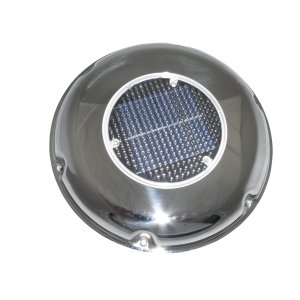
I’ve found solar powered roof vents very effective on my last few boats. I’ve always had the type with an inbuilt battery, in summer in the uk with long daylight hours they run 24hrs, in winter well into the evening.
You can get them in the standard size as a drop in replacement for the usual passive vetus style roof vent, so easy to fit without chopping up your boat.
1766827002970.jpeg
 
The condensation has to go somewhere though. If the hull is insulated too well then it’ll be whatever the coldest thing inside is. It’s the same with houses, insulation causes damp as often as it helps with warmth. Overdoing it on the ventilation often means it’s colder inside and soft furnishings end up damp. Well ventilated old boats are often the reason we all recognise “boat smell”. They’re usually the ones with smelly heads too, adding to the need for ventilation 😂
 
I do the same and have found the small moisture traps very successful. . . However I change the traps regularly, and keep all doors open. It seems to work well.

But if you have moisture traps and external ventilation you are trying to dry out the universe!


. . . I have pleasure craft, so moisture on board I personally have found increases substantially when onboard and breathing in a cold cabin. . .

Yes, trying to minimise moisture accumulating while you're on board is important. Challenging if you sail often in the winter - cooking, breathing, bringing in rain soaked oilskins/boots, etc.

I think good ventilation helps keep it down, and definitely favour any blown hot air heating drawing in fresh air rather than recirculating .

. . . Well ventilated old boats are often the reason we all recognise “boat smell”. They’re usually the ones with smelly heads too, adding to the need for ventilation 😂

That's not my experience at all.

I've mentioned before that a friend's unusually well ventilated (dorados, etc. - it had been fitted out anticipating cruising in the tropics) old-fashioned boat was left very hurriedly and untidy at the end of a long summer cruise to Brittany. We assumed he would be back in a week or so to tidy up. Due to an extended family crisis, though, and then my friend ending up working abroad, the boat sat untouched and unheated for years in an East Coast mud berth. When we went aboard again it was like a time capsule - there was the tea towel where in my haste to leave I'd left it on the table instead of hanging it up, etc.

The boat smelt fresh as a daisy, and there wasn't a trace of mould on clothes, furnishings or said tea towel.
 
My Albin Vega was left from August through to Julythe following year with no smell or damp.The fore hatch was left ajar and it had a vent in the companiony way boars.Atthe momment the forehatch on the Dufour 24 is closed but as another addition to the to do list will be wooden hatch over aka theVega
 
To clarify, I was talking about boats that are used as boats. If you’re not using it then less moisture gets in, but then you could just sell the boat and stop worrying 😂
 
I do the same and have found the small moisture traps very successful. I have pleasure craft, so moisture on board I personally have found increases substantially when onboard and breathing in a cold cabin. However I change the traps regularly, and keep all doors open. It seems to work well.
I should add, I keep internal doors open to cabins, not the sliding doors to the outside world.
 
Top