Bilge Water

  • Thread starter Thread starter Deleted member 478
  • Start date Start date
Our stuffing box always leaks after motoring and/or anchoring. That's what the greaser is for. I tend to forget to use it until I hear the auto bilge pump come on.

You need to find it, because if you don't have a stuffing box you could have a failing rubber seal or face seal. The former fail slowly, but the latter can fail catastrophically.

Just realised I have a spare bilge pump I could have given you. Bit late now we are back in Alvor, but next time we see you.. . .
 
This evening, I finally located the stuffing box, or some other gizmo that is rubber and surrounds the prop shaft. It's effectively dry underneath it, so that's unlikely to be the location of my leak, despite another 100, or so, litres emptied from the bilge today.

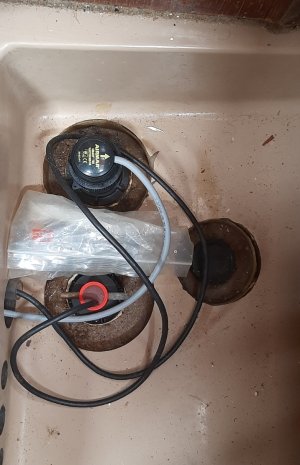
My current suspicion is the heads, but the sump in there is bone dry.

Edit: tomorrow I'll check the depth sounder gizmo. What else could it be?
 
Last edited by a moderator:
This evening, I finally located the stuffing box, or some other gizmo that is rubber and surrounds the prop shaft. It's effectively dry underneath it, so that's unlikely to be the location of my leak, despite another 100, or so, litres emptied from the bilge today.

My current suspicion is the heads, but the sump in there is bone dry.

Edit: tomorrow I'll check the depth sounder gizmo. What else could it be?
It’s time to lift all the sole boards. Dry the bilges and sit and wait. You will catch your mouse.
 
This evening, I finally located the stuffing box, or some other gizmo that is rubber and surrounds the prop shaft. It's effectively dry underneath it, so that's unlikely to be the location of my leak, despite another 100, or so, litres emptied from the bilge today.

My current suspicion is the heads, but the sump in there is bone dry.

Edit: tomorrow I'll check the depth sounder gizmo. What else could it be?
Log ?
 
W e have had leaks from freshwater tanks and the first leak was fresh as expected but then rapidly became salty.

The culprit was an inch deep layer of salt over a square meter or so under the engine. When the bilge level rose a little and the boat rocked then water would spill into then out of the salt layer. Yes, we should have noticed it when we bought the boat and in the couple of years following. It was a lovely salt layer too, with a sort of stalagmite hidden but below the shaft gland which dripped very very slowly when motoring and I presume all evaporated after each trip.
 
I agree that talc is better, but I understood that talc is a carcinogen. However, it seems that, while raw talc contains small amounts of asbestos, for the pure talc used in cosmetics, the evidence is, at best, unclear. Using it once, and taking a bit of care not to breathe the dust, probably won't kill you.
 
Bailing every few days is probably good exercise for this lazy bastid, so until I find the leak, exercise every few days will continue.
 
The area where the log etc are located, is bone dry, as is the area between there and the bilge i.e. the water is not coming through the chainlockerScreenshot_20241101-141251_Gallery.jpg
 
My undersole area is, as they say in Plymouth "As dry as a Nuns crutch!"

I put it down to using one of those excellent Volvo type stuffing boxes.

Volvo never made them, they had them made for them, and their Patent has long run out. The technology is now available for anybody to use.

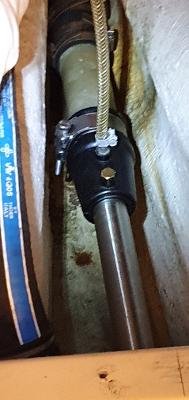
Due to access problems - even the Orangutang from "Any Which Way But Loose" could not have reached the OE Bronze type, and if he did, tools would not have freed off and adjusted it. I moved it forward on an 8 inch thick wall GRP wet exhaust joining tube. This means the annual greasing - done using the brass hex screw - is now so easy.

Pic shows it installed. Tube is fixed well above the waterline and means no 'burping' is needed after drying out or after lifting.

Mine is an 'Orbitrade' version. ASAP have different types, metric and imperial, and a good stock. You need the shaft and tube sizes when ordering.

If you click the image and enlarge it, the rusty throw off stain can be seen from the old, impossible to adjust traditional stern seal.
 

Attachments

  • stern gland.jpg
    stern gland.jpg
    15.4 KB · Views: 16
I agree that talc is better, but I understood that talc is a carcinogen. However, it seems that, while raw talc contains small amounts of asbestos, for the pure talc used in cosmetics, the evidence is, at best, unclear. Using it once, and taking a bit of care not to breathe the dust, probably won't kill you.
I don't think talc contains asbestos. Talc has a mineral structure not dissimilar to asbestos and the suggestion is, or was, that it impacted humans the same way. The evidence has been enough to satisfy some claims against suppliers of talc consumer products.

Talc was used extensively as a filler in resin systems and was used with gay abandon by mothers on their babies - neither user group has raised a claim on the suppliers of talc.

Its strange - silicosis has been known of for decades, its a recognised disease. It is only recently, maybe 12 months ago, that in Australia severe restrictions were placed on Ceasar Stone (effectively killing the industry) but granite bench tops that also contain silica have escaped mention. Similarly other fibrous products (like chopped glass fibre) have also escape comment.

Instead of talc powder there are a host of minerals still freely available, chalk, dolomite etc freely available as cheap as chips at your local garden centre.

Jonathan
 
What does the area around the keel bolts look like? Might be worth a look. Where is the water collecting on the boat? If you can find the general suspicious area of leakage then use plasticine or duct tape to create cofferdams around suspect fittings etc and see which is the culprit. Good luck. It'll keep you busy in the winter.
 
What does the area around the keel bolts look like? Might be worth a look. Where is the water collecting on the boat? If you can find the general suspicious area of leakage then use plasticine or duct tape to create cofferdams around suspect fittings etc and see which is the culprit. Good luck. It'll keep you busy in the winter.
Stingo won't like that. Being kept away from the bar.
 
I don't think talc contains asbestos. Talc has a mineral structure not dissimilar to asbestos and the suggestion is, or was, that it impacted humans the same way. The evidence has been enough to satisfy some claims against suppliers of talc consumer products.

Talc was used extensively as a filler in resin systems and was used with gay abandon by mothers on their babies - neither user group has raised a claim on the suppliers of talc.

Its strange - silicosis has been known of for decades, its a recognised disease. It is only recently, maybe 12 months ago, that in Australia severe restrictions were placed on Ceasar Stone (effectively killing the industry) but granite bench tops that also contain silica have escaped mention. Similarly other fibrous products (like chopped glass fibre) have also escape comment.

Instead of talc powder there are a host of minerals still freely available, chalk, dolomite etc freely available as cheap as chips at your local garden centre.

Jonathan

As I recall ... correct me if wrong .... but Johnson & Johnson suffered Action about Talcum Powder products - which led to withdrawal in some markets / change of product in others.
 
What does the area around the keel bolts look like?
Damp, but not enough to be concerned i.e. there's no staining or rust marks.

And the bilge has no water in it today, despite the heavy rains last night.
 
Tomorrow, if I'm not too busy relaxing, I might put the engine into reverse for a few minutes and then check for water dripping from that rubber gizmo that surrounds the shaft.
 
Hmm, ten minutes in reverse and not one drip coming from that rubber thing. Yes, I was pointing my torch at it hoping the extra light would help. Nada.

Back to to drawing board (or the beach bar - difficult choice)
 
Top