Beginning to think we need a bigger boat

I see it very differently. I've owned a succession of cheap boats which were cheap because either they were unfashionable or other possible buyers were scared of them. Result - a lifetime's happy messing about in boats.
This discussion has been very focused on ‘practical’ elements. Space, comfort, stability, access to swimming platform, habitability In port during hot weather, refrigeration, tankage, speed on various points of sail, manageability of sheet loads, price of replacement equipment, cost of maintenance & mooring, angles of heel, manoeuvrability in tight marina berths………

Sadly, but understandably, no one has mentioned aesthetics.
 
You make comments as if you are an expert but you don't sail in the conditions the Op describes
Maybe you need to read this
Understand your boat and her statistics
I have read all that and fully understand it. Unfortunately that kind of data is not readily available for older boats, although I have seen some and it does not fill one with confidence if you are judging a boat's suitability for offshore cruising on that basis. The measures were developed for the RCD to provide a common basis for assesssing calculated stability as a basis for categorisation and as post#22 shows very different designs of boat can end up with the same figures. STIX is heavily influenced by size of boat - so it is inevitable that bigger boats will have higher STIX.

Anyway as I understand it your beef is that lighter displacement low ballast ratio boats are uncomfortable, not that they are more prone to loss through capsizing and there are many examples of light displacement boats boats sailing successfully offshore in challenging conditions - I posted a link to Patrick Laine's site earlier as an example of a successful offshore cruiser using both a Bavaria and subsequently light displacement boats such as his latest RM. You may also like to consider all the Ovnis that are around the world carrying their owners safely even though they barely meet the minimum AVS to get Cat A. Or even closer to home my Golden Hind does not meet the minimum for Cat A - I have seen the calculations from before (that is for my original design boat) and after the modifications, primarily increased ballast for the last 6 boats that were Cat A. Despite that there are at least 40 recorded transatlantic crossings at a time when they were uncommon and several circumnavigations mostly long before anybody worried about stability calculations.

The reality is that despite your waffling about only certain types of boats being suitable for offshore cruising, the rest of the world gets on fine by using a wide variety of boats and inevitably that means many if not the majority are of the modern designs with lighter displacement and lower ballast ratios. Why is this? simple, They are what rational (and often very experienced) people choose to buy out of the options that are available.
 
The reality is that despite your waffling about only certain types of boats being suitable for offshore cruising, the rest of the world gets on fine by using a wide variety of boats and inevitably that means many if not the majority are of the modern designs with lighter displacement and lower ballast ratios. Why is this? simple, They are what rational (and often very experienced) people choose to buy out of the options that are available.

Price has a large bearing for Mr & Mrs Average, which restricts choice to a large extent to mass production boats, build down to minimum standards for the charter market. Sadly, RCD caused smaller builders of more traditional designs to disappear.
 
Price has a large bearing for Mr & Mrs Average, which restricts choice to a large extent to mass production boats, build down to minimum standards for the charter market. Sadly, RCD caused smaller builders of more traditional designs to disappear.
What evidence have you for that? The size of the UK market caused the demise of the multitude of smaller boat builders nothing else. Head across the chanel and go to La Rochelle's grand pavois show or Dusseldorf, or just buy a copy of Voile magazine to get some facts instead of ungrounded opinion. There are literally hundreds of small boat builders on the continent happily building boats and coping with RCD. Just because most of the makes and brands never see the tiny market over here doesn't mean they don't exist. The demise of small builders heŕe was down to the small market, unwillingness of brits to adopt anhthing new, cost of labour, etc etc and not to do with RCD.
 
This discussion has been very focused on ‘practical’ elements. Space, comfort, stability, access to swimming platform, habitability In port during hot weather, refrigeration, tankage, speed on various points of sail, manageability of sheet loads, price of replacement equipment, cost of maintenance & mooring, angles of heel, manoeuvrability in tight marina berths………

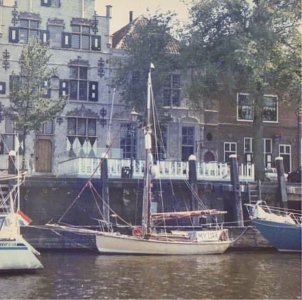
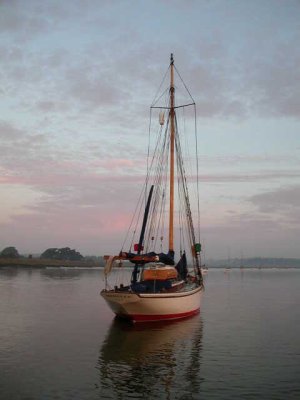
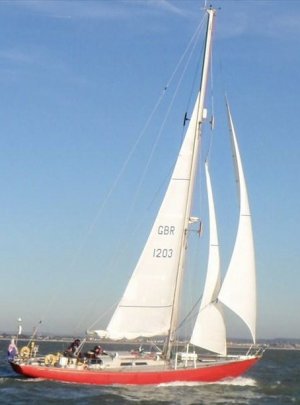
Sadly, but understandably, no one has mentioned aesthetics.
I simply couldn’t own a boat that was not beautiful to look at. I dare say that others will consider the aesthetic part of owning a boat to be less important, but to me, it really matters.
 

Attachments

  • IMG_1410.jpeg
    IMG_1410.jpeg
    1.3 MB · Views: 28
  • IMG_0192.jpeg
    IMG_0192.jpeg
    41.8 KB · Views: 27
  • 1721B11C-48ED-4EDA-8489-28AC38372AF8-8373-000002FD4FF827C5.jpeg
    1721B11C-48ED-4EDA-8489-28AC38372AF8-8373-000002FD4FF827C5.jpeg
    47.9 KB · Views: 27
I simply couldn’t own a boat that was not beautiful to look at. I dare say that others will consider the aesthetic part of owning a boat to be less important, but to me, it really matters.
I'd love to agree with you, but the budget says no. Few would call a Catalac a thing of beauty, but she meets our other requirements very well, and she has a purposeful air about her that I quite like.
 
I have read all that and fully understand it. Unfortunately that kind of data is not readily available for older boats, although I have seen some and it does not fill one with confidence if you are judging a boat's suitability for offshore cruising on that basis. The measures were developed for the RCD to provide a common basis for assesssing calculated stability as a basis for categorisation and as post#22 shows very different designs of boat can end up with the same figures. STIX is heavily influenced by size of boat - so it is inevitable that bigger boats will have higher STIX.

Anyway as I understand it your beef is that lighter displacement low ballast ratio boats are uncomfortable, not that they are more prone to loss through capsizing and there are many examples of light displacement boats boats sailing successfully offshore in challenging conditions - I posted a link to Patrick Laine's site earlier as an example of a successful offshore cruiser using both a Bavaria and subsequently light displacement boats such as his latest RM. You may also like to consider all the Ovnis that are around the world carrying their owners safely even though they barely meet the minimum AVS to get Cat A. Or even closer to home my Golden Hind does not meet the minimum for Cat A - I have seen the calculations from before (that is for my original design boat) and after the modifications, primarily increased ballast for the last 6 boats that were Cat A. Despite that there are at least 40 recorded transatlantic crossings at a time when they were uncommon and several circumnavigations mostly long before anybody worried about stability calculations.

The reality is that despite your waffling about only certain types of boats being suitable for offshore cruising, the rest of the world gets on fine by using a wide variety of boats and inevitably that means many if not the majority are of the modern designs with lighter displacement and lower ballast ratios. Why is this? simple, They are what rational (and often very experienced) people choose to buy out of the options that are available.

You have no experience of sailing in tough conditions but you are very quick to offer your advice. That advice is not based on experience but on a basis that if somebody else has done it it must be ok. Of course you can sail any boat anywhere in the world nobody is stopping you. People sail all sorts of boats. If you speak to some of those sailors about those experiences, you would be very surprised to hear how often they say that they wish they had a different boat. Experiences shape you. From experience you gain a better understanding of what is needed for a particular job.
Reading the OPs post he has specific ideas about what he wants based on his experience. It is different experience to yours gained in some nasty weather
 
Camp1, the traditionalists. These people will generally advise that a boat must be heavy, strongly built, conservative in both looks and hull shape, that an encapsulated keel (ballast enclosed in fiberglass and moulded in the hull) is preferable to a bolted on keel, skeg for the rudder protection, center cockpit for "safety", shaft rather than saildrive, slab reefing rather than roller.
I'm struggling to think of a boat that actually has all of those features. Maybe a Rival 41AC?
Westerlies had bolt on keels and spade rudders. Warriors have sail drives and aft cockpit. Moodies have bolt on keels. Etc...

Maybe there's a third camp, in which I would put myself- people on a tight budget.
I prefer a shaft drive because I don't want the expense of renewing a seal every seven years.
I want a sloop because I don't want two sets of standing rigging to replace.
I want slab reefing because I want to able to fly baggy old sails without risk of jamming up the in-mast furling system.
I want a solid boat that can happily sit on its own keel, so that I can dry out against a wall to scrub down.

There are other reasons for choosing these features, or not, but ongoing costs should be considered.
 
I don’t find a centre cockpit “safer”; rather the reverse, but there are some centre cockpit Nicholsons which would tick all the boxes.
 
Few of the replies mention the abilities of the Captain.

I choose not to sail in bad weather but in our first "big" boat we got caught out in unexpectedly high winds and waves going between Guernsey and Cherbourg. Boat was a 36' Dufour Classic. Boat was OK but wife was terrified and refused to go on a fast reach to UK so we went backwards in the tide and a 5hr journey took 14hrs!

While trying to be a "safe" sailor years later we missed the tide at the entrance to the River Garoone. In the dark we found ourselves in breaking waves over the entrance sandbanks. We surfed down the wave and in the trough turned out to sea at full speed. This was repeated until in deep water then motored on the edge of the deep channel into Port. Depth gauge going from 18m to 1.8m was frightening. This was in a Jeanneau 43 sun odyssey.

I have also abandoned a X Channel crossing when the wind reached F6 due to my concern over the inexperienced crew members.


Both the above boats were what many consider disparagingly AWBs , lightweight beamy boats - not what many would choose for foul weather or ocean crossing.

in some 25,000 sea miles why trying to be safe you will inevitably encounter unexpected conditions. Most boats can cope its the crew that may not.

if you want to enjoy sailing find a boat that your wife/family like - I have met too many whose wife have given up sailing. A hot shower on board may be the important boat choice determining factor on whether you sail happly as a family or on your own.

most important thing though is know you boat and it capabilities and try to make sailing enjoyable.

Some say gentlemen dont beat. I have had a hard motorsail in cold windy conditions from Weymouth to Poole. My daughter and family did not enjoy it and will probably avoid sailing for the rest of their lives now!

Good luck on whatever you choose.
 
I simply couldn’t own a boat that was not beautiful to look at. I dare say that others will consider the aesthetic part of owning a boat to be less important, but to me, it really matters.
Yes. 100%. But I’ve never planned a long ocean passage or lived aboard for more than the length of a decent holiday. So I can see how in many cases the priorities are different.

But I thought it was worth mentioning.

And I did own a small boat that only its mother could love, once. And had a lot of fun….
 
if you want to enjoy sailing find a boat that your wife/family like - I have met too many whose wife have given up sailing.
This is one of the reasons we are looking for something bigger and heavier. My wife is a competent sailor and willing to challenge herself but does not necessarily enjoy tougher conditions in our Hunter while on the Jeanneau Voyage I have mentioned she was fully comfortable and liked the experience feeling there was still plenty of room for the wind to increase. On the other hand that boat was a bit too big when it comes to sail size for her to be able to easily pull the main up without electric winches. This is an important safety factor. She needs to be able to deal with everything on her own using just her strength in case something were to happen to me.
 
A lot of people buy boats to please etheir families and wives. I remember when showing a cruiser racer at Excel and Southampton many couples were really only interested in the galley, the bathroom and having a lovely IKEA like open plan living area. I've spoken to so many whose wives and kids still don't really enjoy sailing after that.

For me, and i think for the majority of sailors, having a boat that you can sail by yourself or your mate is key to using the thing. No coincidence that double handed racing classes seem to be the only growing area. Few of these teams seem to be husband and wife.
 
This is one of the reasons we are looking for something bigger and heavier. My wife is a competent sailor and willing to challenge herself but does not necessarily enjoy tougher conditions in our Hunter while on the Jeanneau Voyage I have mentioned she was fully comfortable and liked the experience feeling there was still plenty of room for the wind to increase. On the other hand that boat was a bit too big when it comes to sail size for her to be able to easily pull the main up without electric winches. This is an important safety factor. She needs to be able to deal with everything on her own using just her strength in case something were to happen to me.
On the whole, a larger boat will be much more comfortable and reassuring to the sort of sailing wife who meets the usual stereotype, as well as children. Of the wives I know, the chief stumbling-block was being offshore and out of sight of land, but being confined and thrown around at sea is part of the problem. On the other hand, as you have found, a larger boat brings its own problems. Although my 34 is pretty handy by the standards of similar craft, my wife never quite got to grips with much of the gear, though she adopted the electric anchor windlass as if it were her own.

Another side of the coin is that a larger boat will encourage you to cruise further, and longer legs and nights at sea bring their own problems. In addition, you and the boat will be happier going to sea in worse weather than previously, and while you will enjoy it she may not. On our Sadler 29 a F6 was a gale in all but name and we we happy just to survive, whereas on our 34 it gave us most of our best sails, though I should point out that the Sadler could have coped with worse if properly managed. Personally, I am not concerned on your behalf because you are clearly aware of the chief issues.
 
This is one of the reasons we are looking for something bigger and heavier. My wife is a competent sailor and willing to challenge herself but does not necessarily enjoy tougher conditions in our Hunter while on the Jeanneau Voyage I have mentioned she was fully comfortable and liked the experience feeling there was still plenty of room for the wind to increase. On the other hand that boat was a bit too big when it comes to sail size for her to be able to easily pull the main up without electric winches. This is an important safety factor. She needs to be able to deal with everything on her own using just her strength in case something were to happen to me.
I've been through the exact same situation. With our last boat (a Beneteau First 345), the wife never felt 100% happy. The boat was tiller steer with reefing at the mast, etc. I always had to sail the boat, and she got worried when the wind got up or the seas got rough for similar reasons that you give.

just over 20 years ago, we bought a Bavaria 49. It was never supposed to be our "forever boat", but was supposed to be with us for about 5 or 6 years until the kids grew out of coming sailing with us, however we still have it, mainly due to the fact that the wife absolutely loves it. she has complete confidence in it, and is also happy that she would be able to get it into port without me should I be incapacitated (or worse). It's far too big for us, and I wouldn't suggest for a moment that you buy anything that big, but I would say that the key things that make her comfortable with this boat are:-

1./ It has enough length and weight not to get thrown around
2./ It stands up to the wind very well, as it has the deep lead keel (I sailed one with the standard iron keel, and couldn't believe the difference).
3./ It as wheel steering with a top-notch autopilot
4./ Everything is done from the cockpit. There is no need to leave the safety of the cockpit to raise, lower, or reef sails.
5./ The cockpit feels quite enclosed (there are high comings and the boat has a back on the cockpit).

I think that if you went from what you have, to any production boat of 38-40ft, your wife would be much more comfortable and confident, hence I suggested the Bavaria 38 or 39 (the 39 really is a lovely boat).
 
This is one of the reasons we are looking for something bigger and heavier. My wife is a competent sailor and willing to challenge herself but does not necessarily enjoy tougher conditions in our Hunter while on the Jeanneau Voyage I have mentioned she was fully comfortable and liked the experience feeling there was still plenty of room for the wind to increase. On the other hand that boat was a bit too big when it comes to sail size for her to be able to easily pull the main up without electric winches. This is an important safety factor. She needs to be able to deal with everything on her own using just her strength in case something were to happen to me.

you can buy a battery operated high torque right angle drill with a winch bit in the chuck. Years ago I bought the 28v Milwaulkee drill - it raised the heavy fully battened mainsail on our 43 Jeanneau easily. We were advised not to equip the boat with electric winches as it was going on charter so hence the Milwaulkee drill!
 
Last edited:
Bavaria 38 or 39 (the 39 really is a lovely boat).
39 does look impresive, 38 seems to be more widely available in the UK though. The 39s I have seen are above our budget but I guess it would be justifiable to increase the budget considering what the boat offers.
you can buy a battery operated high torque right angle drill
True, that is an option, but it goes against the principle of keeping it simple, so would prefer to avoid it.

So overall Bavaria seems to be the winner and I definitelly need to try to sail one next season along with a few others mentioned earlier before committing to anything. Thank you all for the contributions so far. And to Patrick Laine ;)
 
Last edited:
Yes, have been following them for a while. They are one of the reasons I have mentioned the Oyster. The one I have seen was listed for £45k.

I am leaning towards newer designs after this discussion. Mainly because it would be a boat we would hope to use for 20 years+. I guess it is like with old cars, you can keep the going at a significant expense as a hobby but if you drive a lot you will possibly spend more than on a newer car with warranty.

I also see that increasing the budget to 100k as previously suggested would make a significant difference in the options we have. Not too keen but can see it might actually save money in the long term.
Having read through the thread with interest I would add regarding budget someone mentioned they spent around 75% of the purchase price getting there boat up to standard. I considered myself luck to find a 20 year old boat the a couple of previous owners had spent a considerable amount of money on it. While the seller had only done DIY maintenance (thankfully to a good standard) the owner before had spent lots of money to prepare it for retirement sailing before sadly getting diagnosed with cancer and selling it. The previous owner had it 12 years and seemed happy to spend money so my 20 year old boat had new engine, sails (plus unused cruising chute) Radar AIS, standing Rigging, Tender, Outboard, life raft and touch screen chart plotters.

Still 3 years later I have managed to spend approximately £30 k on maintenance, repairs and upgrades. Admittedly I am possibly more OCD than most but that is 62% of the purchase so probably worth factoring in some upgrade/maintenance money in to any purchase.
 
Regarding seaworthy ness, my boat at 34 foot is pretty much bang in the middle of your current and intended length of boat.

At 23 years old now my Jeanneau Sun Odyssey 34.2 although an AWB it is more heavily built than the latest generation but not as solidly built as previous generations.

The forefoot is on the flatter side so does slam a bit at times although surprisingly on a recent channel crossing with F7 - 8 and 5 foot waves she didn’t slam once. With hand steering to keep at a steady angle to the wind I even managed to keep her over 8 knots for the last couple of hours (never got into the 8’s before, felt good. Might have to get a folding prop.)

I am sure a 38 or 40 would feel even better but I have always been impressed with how the boat seems to take every thing it it’s stride. As has been said earlier, crew is probably the limiting factor.

I have been on an older Bavaria 46 and while not in particularly bad conditions it went well and felt solidly built with plenty of space.

It would be interesting to go bigger but having spent so much updating etc I really don’t fancy starting again and I can sail mine single handed easily 🤔
 
Last edited:
Top