AIS System - Where to Start?

Jonny A

Well-Known Member
Joined
25 Jul 2018
Messages
289
Location
Poole
Visit site
Hello everyone,

I want to add AIS to my boat but I can't afford to do it all in one go so I'd like
to install the system in stages. I'm far from an expert on AIS so I'd appreciate
some advice please.
Please bear in mind my boat is a Contessa 26 and I need to keep everything as
simple as possible, espcially in terms of power consumption.

Anyway, the order in which I think I'd like to be able to do things is as follows:

1. Allow other AIS users to see my position (even though I can't see their position)
2. Tell other AIS users when I need assistance
3. Get a warning if another AIS user gets too close (even if I don't know exactly where
they are)
4. See other AIS users positions and know if they need assistance

For 1 I think I just need a transponder, can I get one that has some sort of
emergency button so it also covers 2? What makes/models are recommended?

How can I do 3? Is it possible somehow with just a transponder? Do I have to do it
at the same time as 4? I'd need to be able to turn this feature off in crowded
locations without turning the whole AIS system off.

I currently have a very basic chartplotter that can't accept AIS data so I'll have
to get a new one before I can do 4. I'm not interested in going for a full NMEA
integration of wind data, log, autopilot etc. I just want to get to the point where
I can see AIS data on my chartplotter when I want to. If I get a suitable chartplotter
can I hook it straight up to the transponder, will I need anything else?

Thanks in advance for any and all advice.
 
I'm bound to be shot down for this - AIS uses a receiver and a transmitter not a transponder. The transmission, depending on the class of the AIS - basically big boat or small, contains a message of position, heading, speed, boat name, boat type, etc.. This info is programmed into the transmitter and changing it tends not to be trivial. The receiver gets AIS info from other vessels and needs a display device, could be anything from a mobile phone to a full-blown plotter.
I don't know of a transmitter that does not come packaged with a receiver. The simplest reciever only is probably the NASA AIS Radar display - a totally stand-alone small screen device (or does it need a GPS input, I don't really know). Have fun!
 
Hi Jonny -
All good questions.
I'd suggest reordering your list though.
a/ AIS receiver (I've just bought a Quark black box, paid sub £100) , some VHF radios incorporate AIS receivers and offer a simple display. You can then send the info to a plotter tablet or laptop and will get collision warnings (CPA) and ship info.
b/ A (class B?) AIS which transmits your posn. as well as receiving the ships which have class B sets.
You'll need a GPS signal from somewhere but a dongle, a plotter, a tablet or even phone can provide this.
Your point about offering assistance to vessels in distress is covered by DSC radios rather than AIS.
 
For a small boat you want to a cockpit mounted display and don't need anything fancy linked to pcs or plotters etc

Google Matsutec HP528A class b Combo GPS/AIS transponder.

I have been using the predecessor to this unit for 5 years. Excellent product.

You only need an additional VHF aerial on your pushpit or pole mounted on your stern connect the supplied gps mushroom and you are then able to see and be seen at up to 15nm. Never less than 5.

This is a full receiver and transmitter and has excellent displays of other ais transmitters. It will automatically give you a boat name and call sign for any potential collision. It is also a gps that an be used with way points and routes as a normal gps. It also records your tracks but has a chartless display.

I find the radar ais display is most used in bad visibility or when crossing shipping lanes. You can connect this to a chartplotter if you want full integration in the future.
 
Last edited:
For a small boat you want to a cockpit mounted display and don't need anything fancy linked to pcs or plotters etc

<dodgy link omitted>

This may be a good recommendation and you may not be aware if you just cut and pasted the link but that is not the direct link to the product : it's an affiliate link which someone is getting money for referrals from. The skimming company is also illegally setting browser resources without consent...

If it was a deliberate pasting of an affiliate link we had some debate on this a few years back with amazon affiliate links and iirc the conclusion was that folks didn't mind if it didn't affect the price but it was sporting to declare an interest.
 
Last edited:
I recently purchased a Matsutec HA102 that connects to my chartplotter by NMEA 0183. It’s a send and receive AIS device, easily programmable (and re-programmable) MMSI, and it has a red emergency button, although I’m unsure what exactly the button does and don’t see myself using it as I have a DSC vhf which has its own red button.

Cheap unit at £200 from AliExpress- less than half the price of the competition and so far has worked very well. Worth a look.
 
If low power consumption is overriding factor, then consider a receive only such as a NASA display (you may well find one second hand where somebody has changed to an integrated display). You can set an alarm for this in a guard zone. Pro's - sometimes useful to see targets without the clutter of chartplotter; stand alone; low power; your destiny is in your hands not somebody else's. You can use a simply stubby antenna for this and still get a useful range, even if mounted inside.

Sometimes seeing targets on a chartplotter makes more sense - I use both, and find both useful at times - eg in the channels of the Thames Estuary.

If you are in the market for a chartplotter and so doing it the same time then arguably worth doing both at the same together.

A DSC VHF with GPS (or feed) may serve you better as an alert.

Some VHF's have AIS facility built in. Has advantages with regard to antenna installation. Not sure if there is a small NMEA2000 VHF/DSC/AIS for future proofing other upgrades.

Under what circumstances will you use AIS? Worth thinking about as say a Jester trip to the Azores might give you a different requirement from a fog passage up the Solent. If you want a serious alternative to sight for navigation then you need to go radar - AIS is handy but too many vessels don't transmit, or plotted positions are not accurate enough to rely on fully. Your 'assistance' points are interesting, but maybe a bonus rather than a reason to choose?
 
I recently purchased a Matsutec HA102 that connects to my chartplotter by NMEA 0183. It’s a send and receive AIS device, easily programmable (and re-programmable) MMSI, and it has a red emergency button, although I’m unsure what exactly the button does and don’t see myself using it as I have a DSC vhf which has its own red button.

Cheap unit at £200 from AliExpress- less than half the price of the competition and so far has worked very well. Worth a look.
AIS SARTS are built similar to Epirbs but they work on a local level. EPIRBS collect your position via GPS and send that information to a Rescue Coordination Center which organizes a rescue but they do not notify nearby ships – the same ships that are your best chance for getting rescued in a MOB situation – of your immediate distress. AIS SARTS also collect your coordinates via GPS but they take this information and (like older RADAR activated SART) broadcast it to all nearby ships.

Upon activation, all nearby ships, and boats equipped with AIS receivers, will be notified with messages popping up on their AIS device and connected ECDIS systems, and will get a range and bearing to your exact location which is updated, in real time.
 
Last edited:
Thanks for all the comments so far, feel like I have a lot to learn! I'm currently only doing Channel cruising and the odd crossing.
As you don't have a plotter for display your choice is limited really to a NASA which does have a usable display. I used one for years for the sort of sailing you do. The really big benefit is seeing the big ships in the channel (in addition to using your Mk1 eyeball and lights at night. That really is the big jump, and adding to a chart display is just a bonus that enables you to more quickly see where they are in relation to you. Personally I think a transmitter is of little value. Close misses and actual collisions were almost unheard of before AIS because people were more aware of the dangers and professional skippers of big boats pretty good at spotting and missing you! AIS really helps you do the sensible thing of keeping clear and not sure transmitting adds anything to informing the ships where you are.

In a similar situation to you except I have a chart plotter, I shall be fitting a quark receiver on a splitter from the masthead VHF and a dongle for the GPS quark-elec.com/product/qk-a026-wireless-ais-gps-receiver/
 
Anyway, the order in which I think I'd like to be able to do things is as follows:

1. Allow other AIS users to see my position (even though I can't see their position)
2. Tell other AIS users when I need assistance
3. Get a warning if another AIS user gets too close (even if I don't know exactly where
they are)
4. See other AIS users positions and know if they need assistance

For 1 I think I just need a transponder, can I get one that has some sort of
emergency button so it also covers 2? What makes/models are recommended?

How can I do 3? Is it possible somehow with just a transponder? Do I have to do it
at the same time as 4? I'd need to be able to turn this feature off in crowded
locations without turning the whole AIS system off.

I currently have a very basic chartplotter that can't accept AIS data so I'll have
to get a new one before I can do 4. I'm not interested in going for a full NMEA
integration of wind data, log, autopilot etc. I just want to get to the point where
I can see AIS data on my chartplotter when I want to. If I get a suitable chartplotter
can I hook it straight up to the transponder, will I need anything else?
This is going to sound harsh, but it is written from a 'critical friend'.

I don't think you actually understand the AIS system, specifically what it is designed to do:
  • A basic system will allow you to see other vessels transmitting an AIS signal
  • A transmitting system will allow you to see other vessels and send your position for them to receive.
  • I'd be worried in the extreme if an AIS system advised me that another vessel was getting to close without being able to see them. I don't worry about anything more than 200 metres from me if under 50 metres, larger than that I like to keep well out of its way.
  • AIS can transmit a distress signal but I understand it is not part of the SOLAS regulations - a nice to have. I have yet to see AIS being used in a distress call, but can send one on my unit. I have no idea what this might look like on screen. My DSC VHF set wakes the dead when the red distress button is pressed. VHF is the primary way of calling for help.
I'd be asking myself why do I need (not want, but need) AIS. Are you crossing busy shipping channels? Or is it the Poole Condor service that scaring the s&!t out of you/me and everybody else?

My AIS system came with the boat, it is there so that:
  • family and friends know there I am
  • sailing friends know when I will eventually arrive in the bar
  • the CG can see what I have been doing if I ever need to hit the wee red distress button
  • crew can play with it on watch as it passes the time knowing that the big ship over there is going to Rotterdam or Hull.
 
I currently have a very basic chartplotter that can't accept AIS data so I'll have to get a new one before I can do 4.

Or get OpenCPN and run it on a tablet or laptop. It has a very good AIS display. It will meet your requirement 3 as well. Charts for all the UK are about £30. For Windows the app is free. For Android it's less than a tenner.

If I get a suitable chartplotter can I hook it straight up to the transponder, will I need anything else?

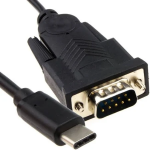
If you run OpenCPN on a tablet you will need to connect your AIS reveiver/transceiver via one of these for a tenner (or the USB A plug equivalent)...

1647541412936.png
You will also need the plug to put on the cable from the AIS device, and a 12V power supply for the tablet.

You can get AIS transceivers with built in antenna splitters (like the Emtrak B923) which save a bunch of money and hassle fitting extra cables and aerials.

For your requirements 2 and the 2nd half of 4 that's really the job of a DSC VHF radio.
 
1. Allow other AIS users to see my position (even though I can't see their position)
Hello,
I do not think this can be possible: the AIS protocols require the individual station to find a suitable available moment, "time slot", before transmitting its own data, this means it must have a receiver too to collect everything that is being transmitted around.
Once you have the receiver circuitry inside the box, it would be a pity not to use it to make the data available in some form.
 
I don’t believe that there is a simple way of buying a simple system which will allow you to add other functions later at modest cost. Most people doing things like Channel crossings value the ability to see other vessels as their first requirement. I think that most people will agree with me that sailing with AIS, even in good weather, can add a lot to the ease of one’s progress. Being able to transmit one’s position usually comes second, although worthwhile. My choice would be to choose the simplest system you can get and be prepared to pay quite a bit more if you want to upgrade later. Trying to get one to fit a plotter may involve some false economies that you may later regret, since you may end up with a system that doesn’t fully meet your later needs.
 
Friend got run down by a big ship a few years ago and was kicking himself that he didn't know that a RX only AIS was a) Cheap, and b) used little power, so it could have run off his small solar panels.
BUT, more recently, another friend had a near miss. The very big ship chargeing up from astern, half way across the Atlantic, did not have it's AIS turned on... So their RX only did not 'see' it. A call on the VHF got a reply that they had been seen, but it was so close that they didn't believe it.
 
A downside to transmitting AIS is that for Marinetraffic etc. to be able to show your loved ones where you are (unless they buy the satellite version) it depends on shore stations getting your signal. This means that you can disappear which tends to cause concern back home.
 
I've just fitted an AIS receiver and I'm as novice as it comes!

Bought a glomex VHF/AIS signal splitter, which needs a 12v input to run and a quark AIS WiFi router receiver (payed £20 extra for the GPS version for a bit if future proofing). The quark needs a 5v input, so I bought a 12v to 5v USB convertor for £5 off Amazon. £176 all in.

Really easy to fit, all the wires come attached. Just had to plug it all in, connect the tablet to the quark and switch on AIS in navionics. Worked a treat

Kind of wish I'd gone for the NMEA2000 version for extra future proofing, but budget was getting tight.
 
BUT, more recently, another friend had a near miss. The very big ship chargeing up from astern, half way across the Atlantic, did not have it's AIS turned on... So their RX only did not 'see' it. A call on the VHF got a reply that they had been seen, but it was so close that they didn't believe it.
I have had a number of similar cases: crossing ships with their AIS transmit turned off, crossing ships having the whole of their AIS switched off -so they could not see my transmission, ships (or CG planes) having their AIS on but hailing through radar target contact; really not impressed with AIS in general, I'm surely in a minority I guess :)
 
AIS SARTS are built similar to Epirbs but they work on a local level…

cheers for that explanation Bob, useful to know what the red button actually does, as in common with all Chinese stuff I’ve bought the manual was less than perfect.
 
I have had a number of similar cases: crossing ships with their AIS transmit turned off, crossing ships having the whole of their AIS switched off -so they could not see my transmission, ships (or CG planes) having their AIS on but hailing through radar target contact; really not impressed with AIS in general, I'm surely in a minority I guess :)
Yes, I think you are in a minority. On the whole, it works very well. The onus is on the user to realise that it is not perfect and use it in a facultative mode.
 
Top