What lessons for this week

Well the last month has been manic.
Delivering various yachts, competing in RTIR and attending the Classic Regatta at Cowes.
In between the fun stuff the yard has had lots of "urgents" with breakdowns, rescues and boats being hit by visitors not to mention a bloody great cruise ship!
On top of that my girlie is out of the water and I'm trying to get her ready for our Hols next week, it'll be tight.

I mentioned to the boss a few weeks back that passing trade seemed to be lighter this year.
Well after that the flood gates opened.

We've seen a 45 ft steel yacht en-route from Grimsby to Gibraltar, towed in by the lifeboat with a blown oil seal.
Easy fix, gone next day.
A 26ft Delta en-route from Hull to Channel Islands, with a split alloy rudder stock.
Stock taken of and welded and back on within a day. (believe he's a frequent lurker here)
A ben 44 that was scraped badly by a Belgian yacht which had some of its rubbing strake fasteners sticking out.
Took me a couple of days to do the gel repairs but around 6hrs work.
A 30ft something that was hit by the cruise ship tender.
A sun Odyssey 32 with a leaking fuel filter and needed the auto helm replaced.
A Morris Griffiths Tideway gaffer with a fuel supply issue and a new bowsprit which snapped off during her tow in.
Countess 36 with a dodgy alternator.
And three motorboats, all with fuel issues.
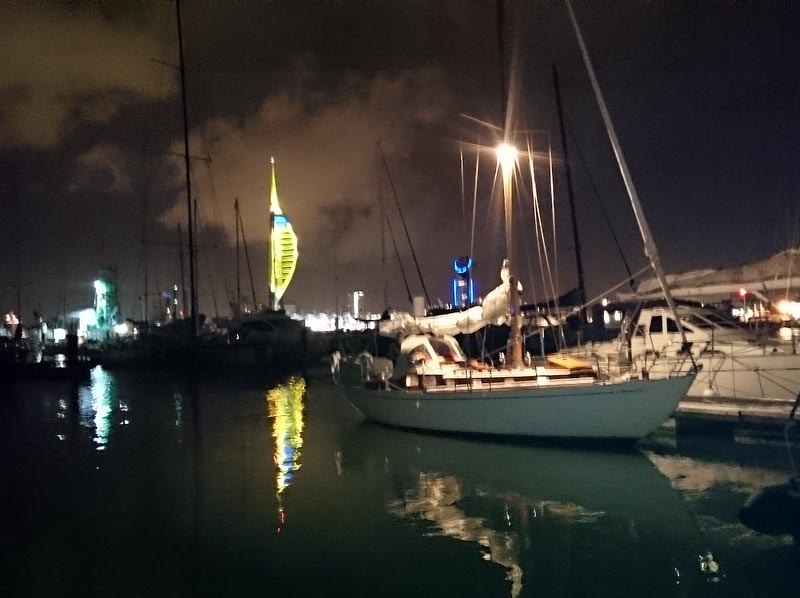
Oh and Panther, a local fishing trip boat who snapped his prop off somehow.
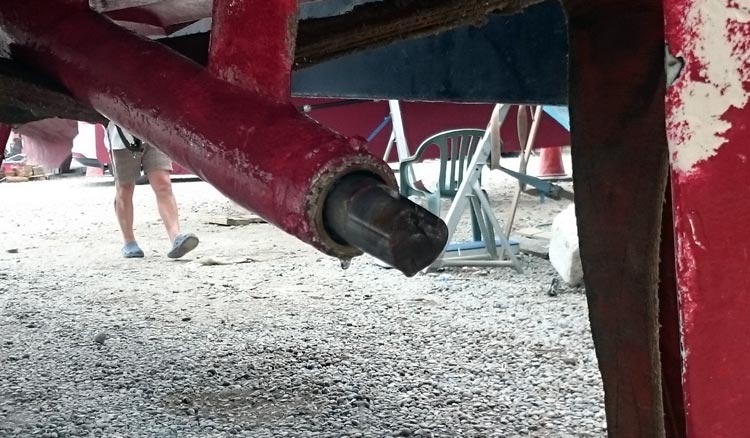
panther_001.jpg


I also seem to have lost a whole bunch of progress photos especially on the bow thruster and the rib repair, both of which are done and sorted.
Did find a photo of a gori folding two bladed prop I brought back to life though.
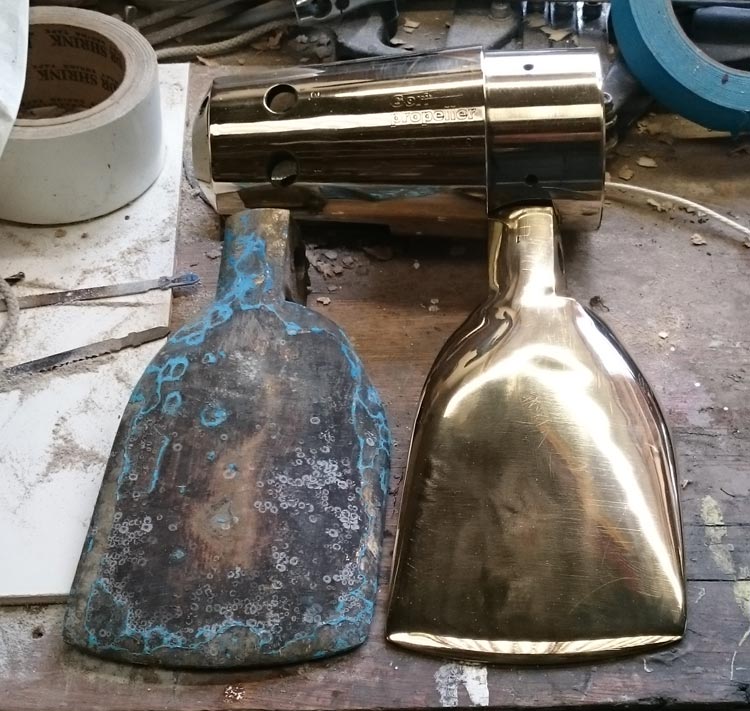
prop_001.jpg


So what lessons this last few weeks?
Well the one that hit me like a brick was Swmbo coming down to review my progress on our boat.
Yes she liked the new North sails, B&G electronics, led internal lights, mid way deck cleats, four new mast cleats, which apparently are all boy things, though she does approve of the new headlining and trim.
What she didn't like was the fact that I've not fitted the fridge that I promised to do before the holiday!
So Danforth compressor ordered yesterday, Celotex in the back of the car from Wilks.
Got three days, wish me luck.....
 
you deserve a good holiday after all these excellent posts, for which continued thanks.


and a few cold beers from the fridge as well :)
 
If it makes you feel any better Javelin, I'm into week 4 of my 3 week mini-refit and I'm still scraping poxy epoxy off the damned hull*. Haven't even started on the fridge, hot water and shower that madam stipulated had to be done pronto and her summer holidays start in a week :disgust:

* I'd love to get my hands on the idiot that trowelled on a thick layer of what our local GRP expert reckons is almost certainly a non-marine epoxy which has fallen off in lumps in some places, trapped water behind it in others, failed to fully cure elsewhere but around the waterline is hard as nails
 
Not done an update for a while and looking back over the last 6 or 7 weeks so much has happened I think I'll just have to start with whats fresh in the memory.

I'll start with a fishing boat we took out on Friday.
She's been in the water for 18 months but still we didn't quite expect the level of growth on her bottom.
rcarol_001.jpg

Turns out that the owner had used a very cheap antifoul the last time and we reckon he's paid for that dearly in extra diesel pushing this boat about.
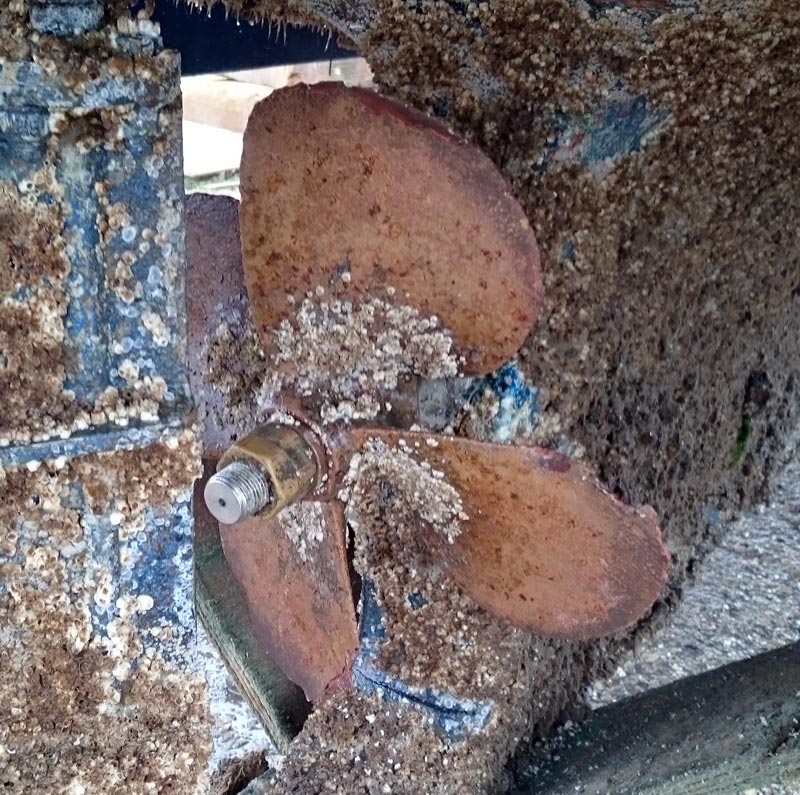
What was worse was the state of the prop.
False economy kicked in yet again as the owner bought some cheap anodes of the internet and the result is a completely destroyed prop.
rcarol_002.jpg

The photo doesn't actually show how bad it is.
The colour is the giveaway.
It should be the same colour of the prop nuts but the electrolysis has turned the prop brown.
The tips have become flaky and bend to the slightest touch.
So saving on antifoul, cheap anodes and avoiding a yearly lift turns out to be a very expensive decision.

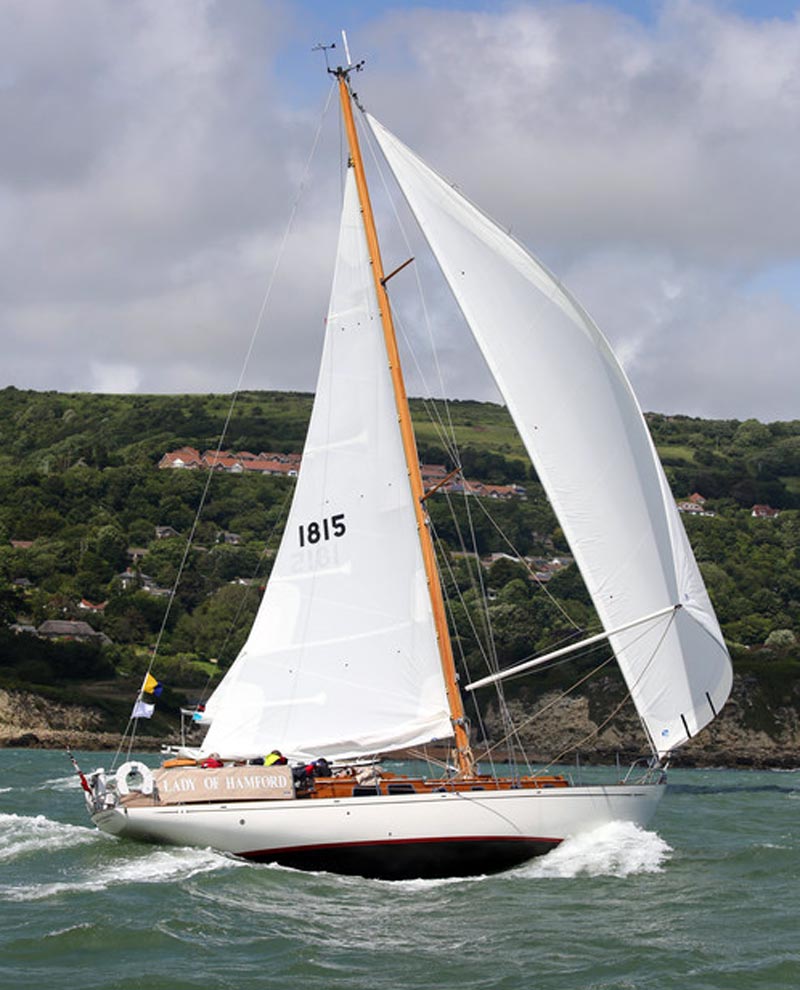
Lady of Hamford is back with us for a few mods having had a great few months in her new south coast home.
loh_023.jpg

There has been a book full of lessons on this boat since she was launched back in May.
With the big Classic motor boats we're well used to modernising the interior with heaters, fridges, electronics and all the mod cons, whilst keeping her looking classic and "In keeping".
With the Vashti being significantly smaller inside this has been much more of a challenge.
On the sailing side, losing gaudy modern tracks, blocks, cars and even ropes coupled with changing the modern alloy rig back to wood without losing performance was my particular challenge.
Lucky for us there's usually at least three different ways of doing the same thing on a boat so I think we managed to achieve most if not all the goals.
The biggest revelation for me at least has been the performance of the new wooden mast.
With the twin spreader setup the rig has been superb and it's been well and truly tested.
When I delivered her it was in winds in excess of 20knts and from Dover to Chichester it was bang on the nose.
Then we entered the Round the Island race and blitzed round in just over 8 hours finishing in the top 100 boats.
Oh and the wooden mast was almost £5k cheaper than the quote we got from Selden for an alloy one!!
Here she is in full flight off the back of the Island.
loh__022.jpg

After an appearance at the Classic Cowes regatta she was brought up to her old home to do the Classic regatta on the Orwell.
As it turned out we could only do the one race but true to form it was blowing old boots and we came 2nd.
It just goes to show you can have a classic looking classic without losing performance.
There is an article on her in this months Classic boat mag.
The funny thing is the owner is quoted in the mag that "she will NOT be raced".
Hmm, he's booked her in for the week long Cowes Classic regatta next year........

We've had a fair number of breakdowns off our coast this year.
Had one today, a Fisher from Lowestoft with an engine failure.
One yacht and forumite (lurker) who stopped off with rudder issues on the way to the Channel Islands, stopped off on his way back to the Humber with a mast problem.
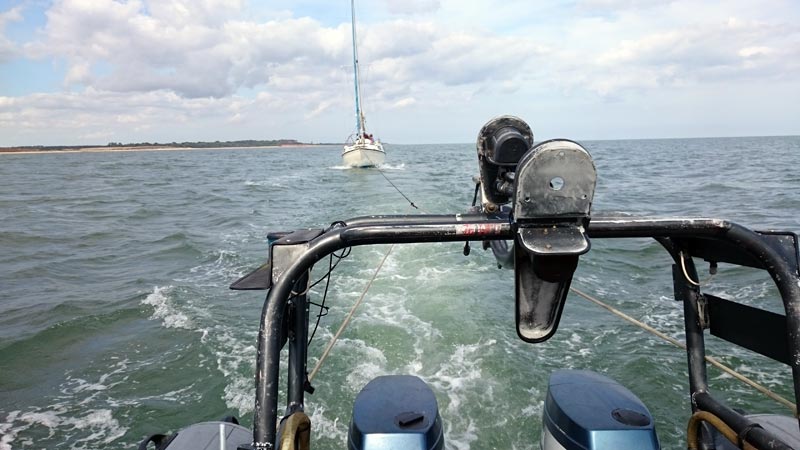
One of our workboats is an ex RNLI Atlantic 21 rib and it's been busy towing or escorting boats in this year.
pip_001.jpg

In this case it was a Westerly 25 which had melted its impeller.

Josephine_003.jpg

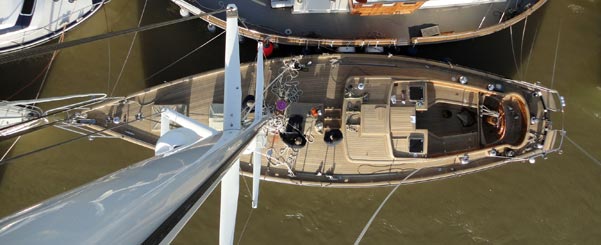
Josephine, a Hoek 51, is back after being back to the original builder in Makkum, NL to have the lifting keel removed and a new modern fixed keel fitted.
She's back with us for a short period so we can strip and re-varnish using Awlwood, a rig check and also removal of the old fridge and a new larger one built.
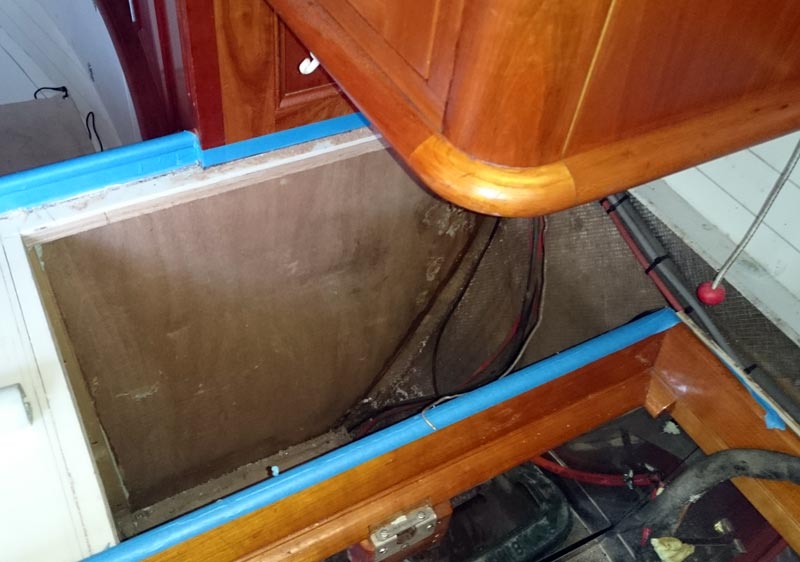
The fridge challenge is interesting in that the void will be largely the same size as the old one.
Josephine_001.jpg

The 25% greater volume is being created by replacing the foam insulation with space age Aerogel insulation blanket.
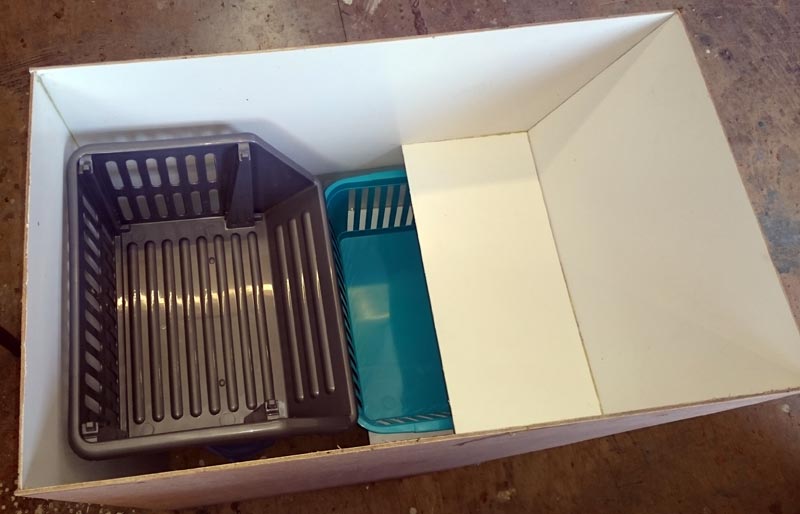
The internal area is being redesigned with shelves and SS stacking trays.
A mock-up was made so we can try various layouts and then see how it will work at various angles.
I'll keep you posted.......
Josephine_002.jpg
 
Last edited:
No she's up here for a couple of weeks.
We found rust stains on some of the mast and boom fittings so we're having them remade.
Also fitting a chartplotter outside in the cockpit, setting things up for the new spinnaker and assymetric, plus a number of other little mods and tweaks.

Loose plan is we'll do the east coast classic on the Orwell next year, Round the Island race again and then the Panerai Classic Regatta week at Cowes.
 
We've been having issues with stainless steel fittings this year.
We think its due to lower quality available with more carbon content.
Essentially the 316 stainless fittings we have made for various jobs are developing rust stains after just a couple of months.
So we've been removing them and having then remade with hopefully higher quality steel.
I guess time will tell if we've nailed it or not.
I wonder others have had a similar experience recently.

The fridge on the Hoek 51 is starting to take shape.
The aerogel insulation has been cut and fitted.
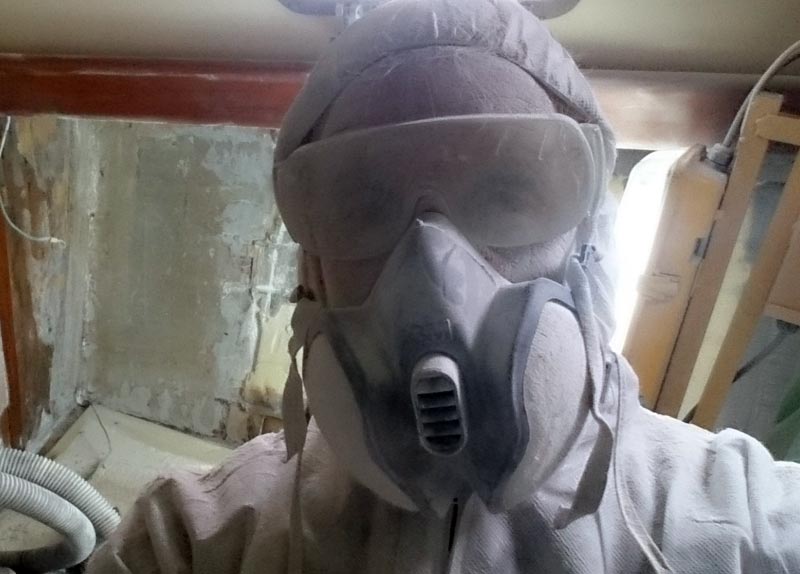
Boy its strange stuff to handle, the amount of dust it generates is amazing.
It gets everywhere and needs a fair amount of management to keep it to a minimum.
However cutting and fitting is a breeze compared to foam especially in an odd shaped void.
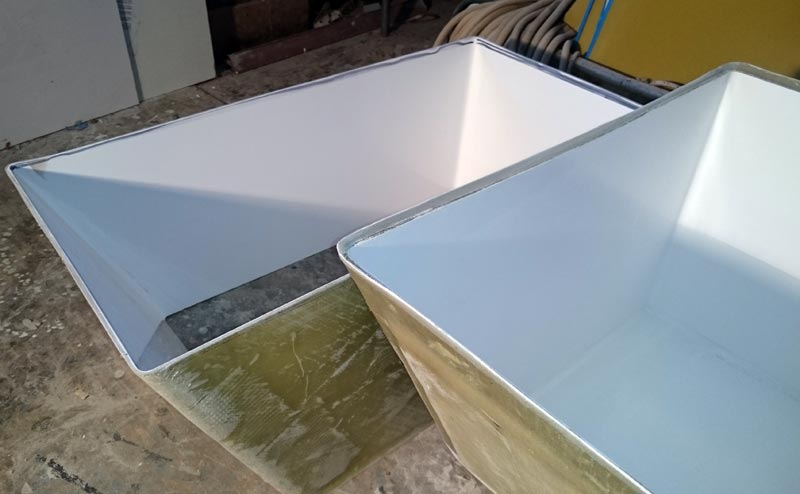
Due to the overhead locker seen in an earlier post the fridge is having to be made in two sections.
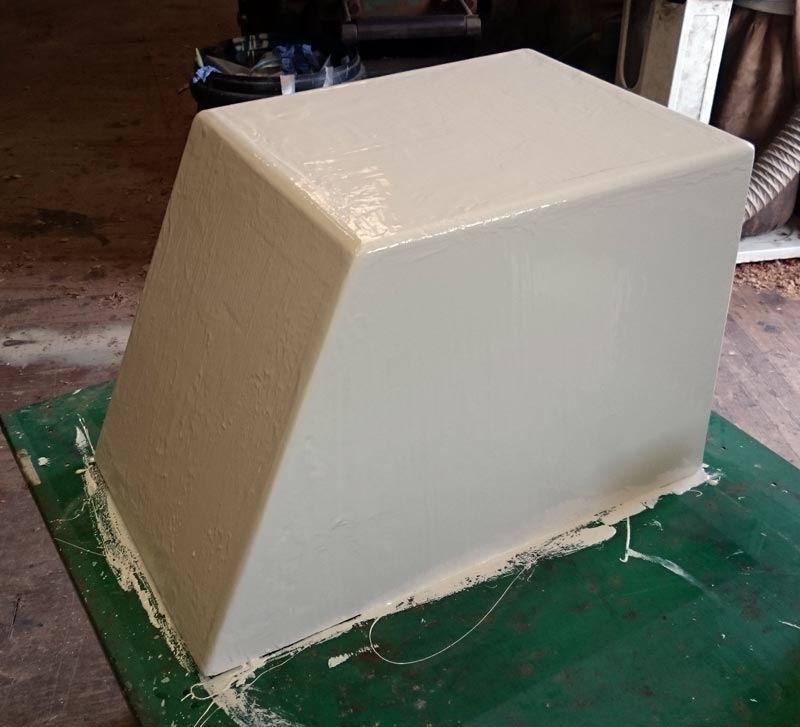
Below is the lower section that's been gelled and ready for laminating.
josephine_004.jpg


We have a Island Packet 420 in currently and one of the issues that came to light was how gutless the engine appeared to be.
In fact the engine seems fine and revs well and runs smoothly and quiet but it feels horrendously under propped.
At 2000 revs you should be getting 6.5 to 7 knots in flat water but its lucky to get 5.8knts
The strange thing is that the prop fitted is apparently the standard fit by the manufacturer.
I wonder if other Packet owners have suffered the same problem.
We'll pop her out in due course and have a better look.
420.jpg


We've a Moody 35 bilge keeler here that's just been sold and we're doing some post survey work on her.
One of the jobs is to replace the keelbolts.
There are 10 bolts each side.
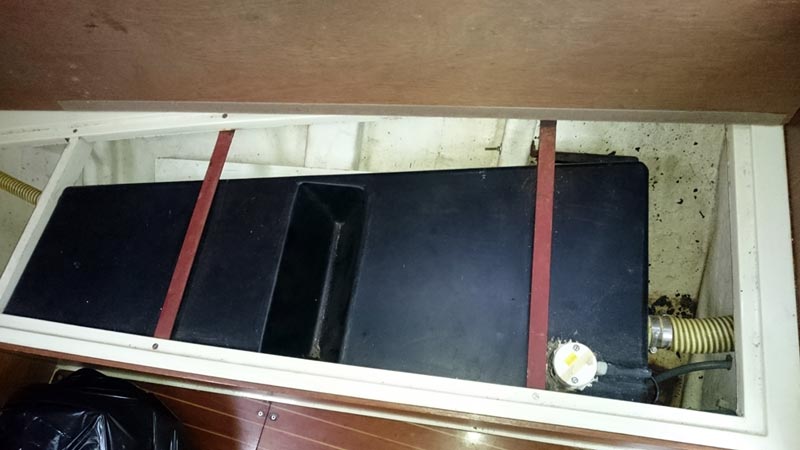
4 of which on each side you can get too pretty easily but the others require you to take the water tanks out.
holly_001.jpg

Once the tanks are removed the access is pretty good to attack the others.
holly_002.jpg

The slightly unusual thing with these is that Moody used mild steel keel bolts, nuts and washers which obviously go rusty.
These were no exception and a few of the nuts were in very bad condition.
In fact all the nuts were rusted solid to the studs so when trying to remove them the stud came out as well which actually made life slightly easier.
We've replaced them with high tensile mild steel as they are stronger than stainless and we figured that Moody probably had good reason to specify these in the first place.
However we will take special care to make sure they're well coated to try and avoid the rust issue in future although even then I think they will need a good inspection, cleaning and re-coating every couple of years.

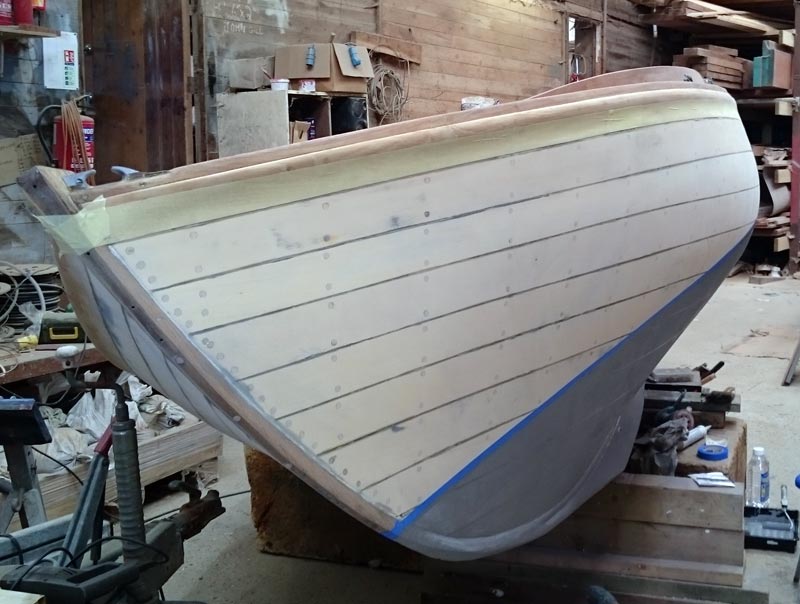
The little Herreshoff planking has all been completed and we're onto sanding and painting now.
She really does have lovely lines.
herr_005.jpg


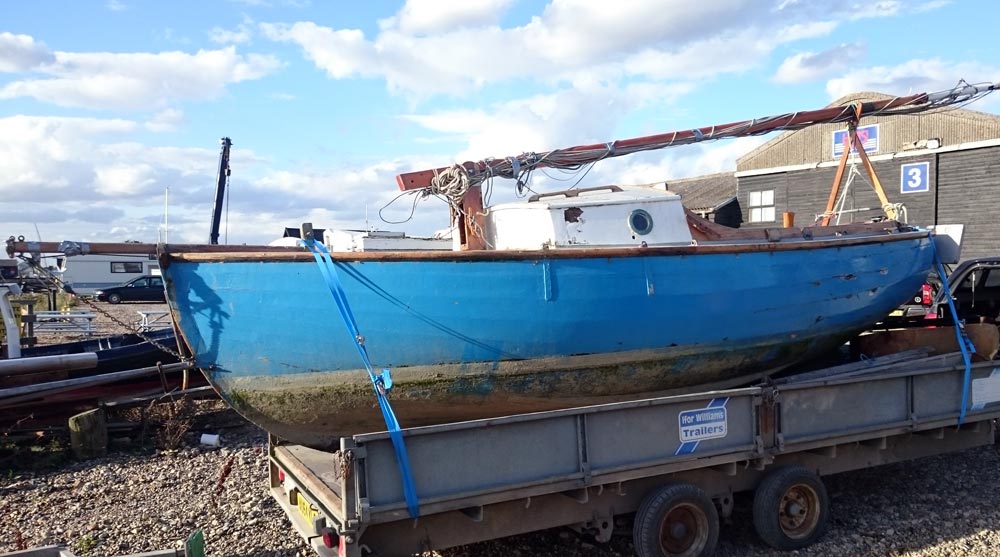
Talking of nice lines, one of our guys here was gifted a project that we're trying to find more info on.
Does anyone recognise what design she is?
greg_001.jpg
 
The little blue boat looks very much like a 1937 2.5 ton Johnson & Jago that I once owned. The coach roof has been butchered to extend the cockpit.
Hillyard 2.5 tonners looked very similiar, but in the 30s many yards produced pocket cruisers which tended to come out looking like that.
 
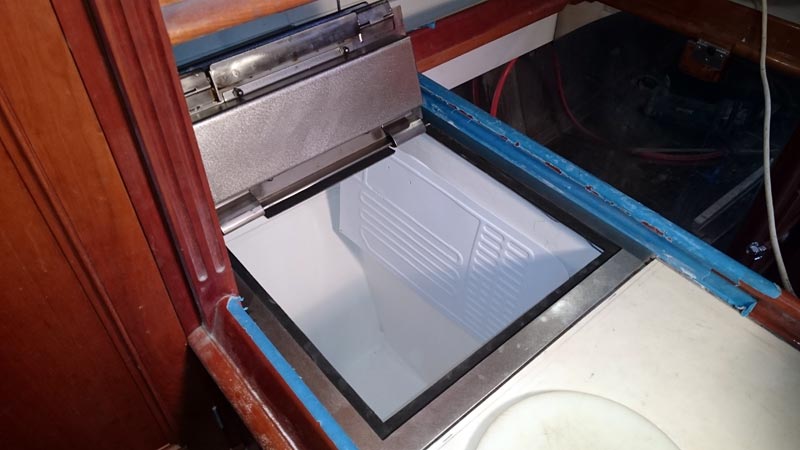
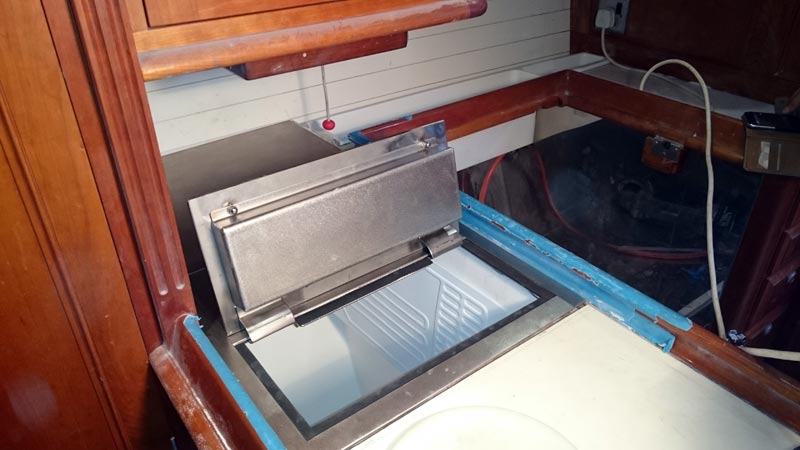
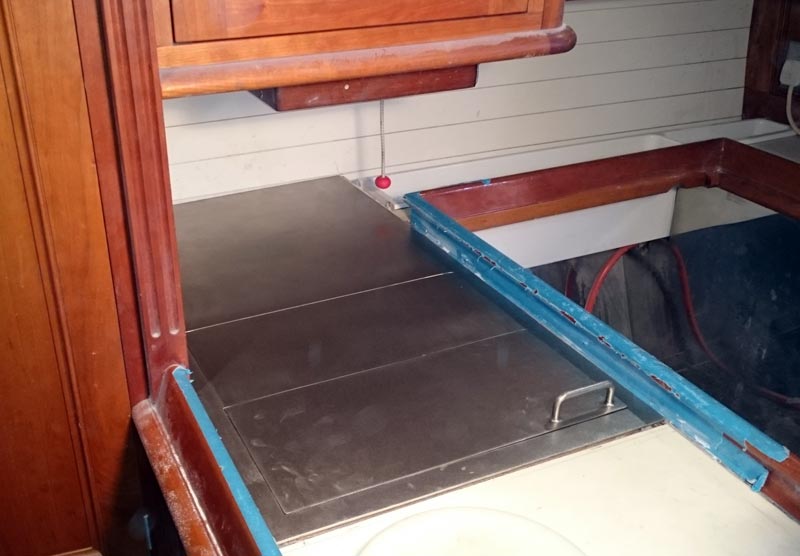
Update on the new fridge on Josephine, a Hoek 51.

Summary so far is the old fridge was not well insulated and the owner wanted more volume but we had to use the same position.
By redesigning the shape and utilising Aerogel insulation we've managed to increase the volume by 25% to 130ltr.
Additional requirements were an area to place hot items from the stove so we built a ss insulated flush lid and surround.
A complication was the position of an overhead locker so the hatch had to be double hinged.
See the photos below.

We're now working on a nesting and sliding ss basket system for the interior so until this has been completed the lid has to wait before final fit and new fiddles to be installed.
josephine_006.jpg

josephine_007.jpg

josephine_008.jpg

josephine_009.jpg


The keel bolts on the Moody 35 bilge keeler have been withdrawn and replaced with new and whilst every nut had corroded onto the old thread, the actual studs came out without much fuss, aided by relatively good access which is more than you can say for many other boats.
holly_003.jpg


The funny thing about the sort of work we see here is that we can go months, even years without seeing a particular issue and then we see two or three at the same time.
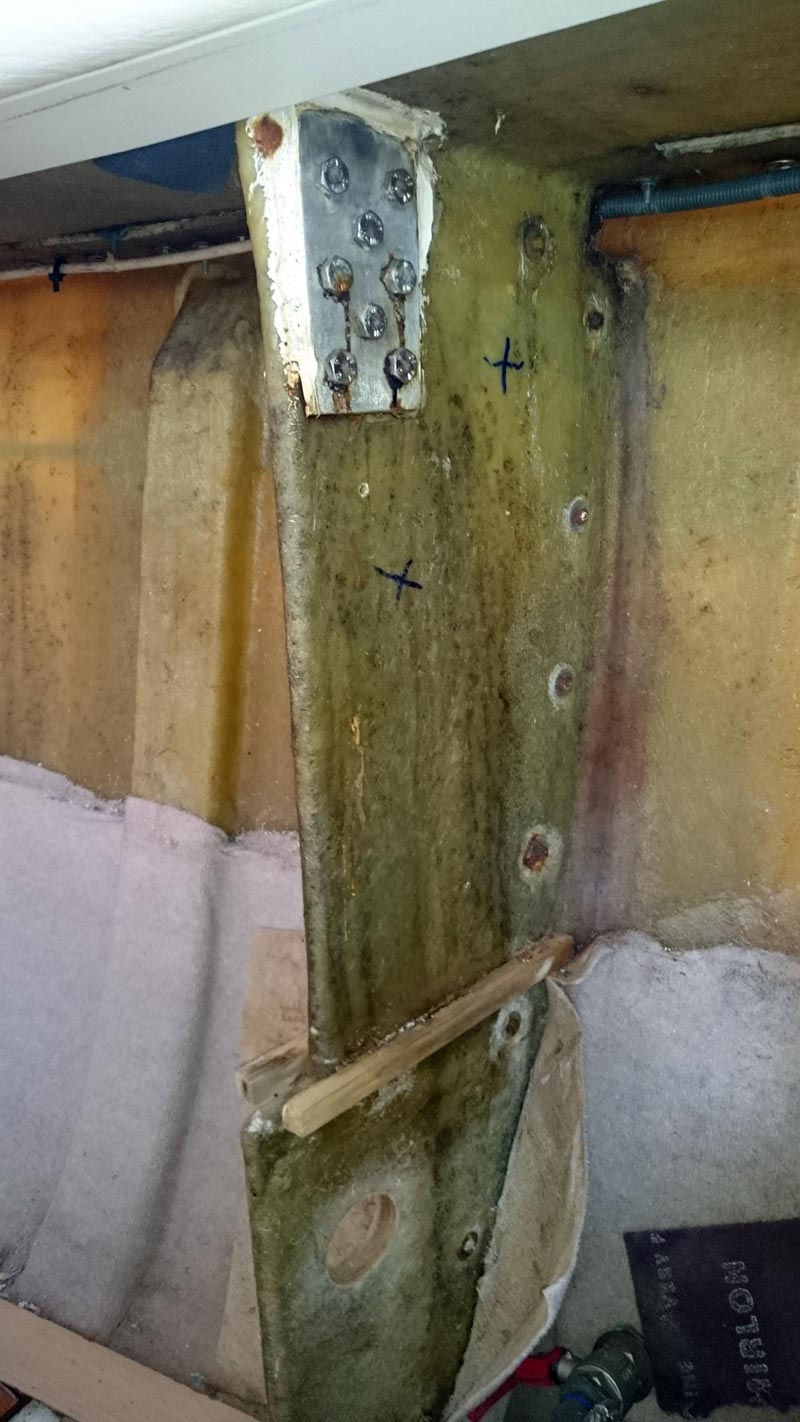
On the moody there was concern about the chain plates and so we investigated further, which as other owners can testify is no mean feat getting to the chain plate knees.
From the photo below you can see the way the factory installed the chain plate.
In our opinion its not clever.
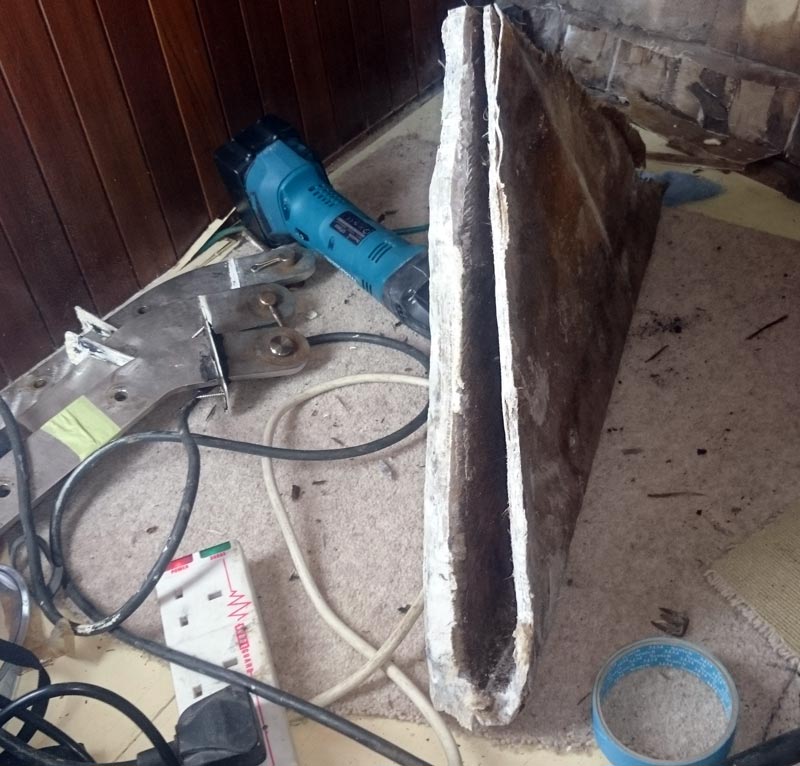
The knee is sheaved in glass, so any water leaking from deck level enters the knee with no exit which eventually turns the inner plywood into mush.
At the bottom of the photo you can see a hole cut through so we could test the moisture content, which was off the scale.
Now waiting on owner for the go ahead to repair/replace.
holly_004.jpg

The other chainplate issue is on a Chuck Payne 42'.
As with the Moody, water got into the knee via the deck and it rotted out from the inside.
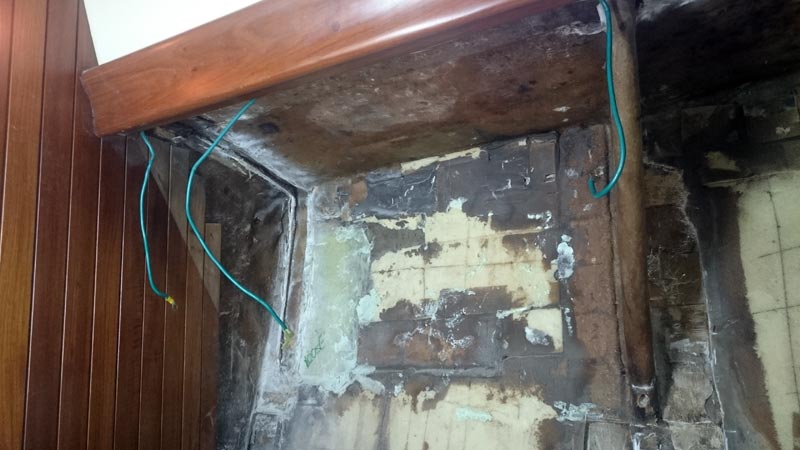
Below is where we cut out the old knee.
You can see that at some stage somebody has attempted a repair just forward of the knee but they didn't get a good key and its delaminated.
eastwind_001.jpg

eastwind_002.jpg


The plan is to clean a good area around the knee location on the hull and under the deck.
We also intend to block out the bulkhead slightly aft of the old knee position and include this in the new chainplate anchorage.
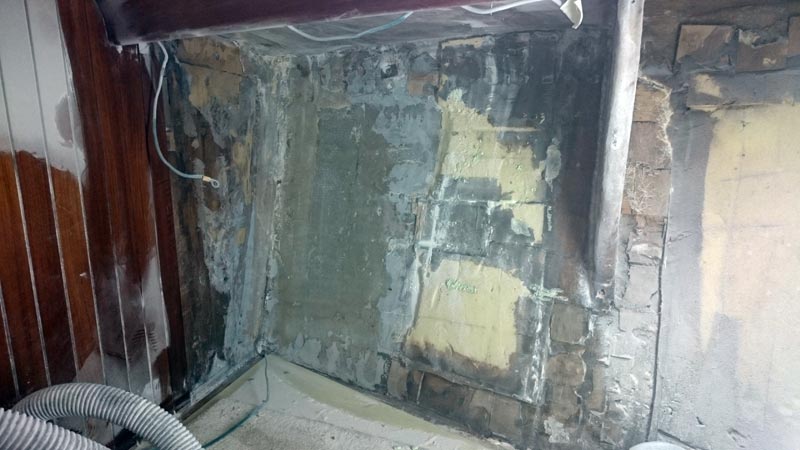
Below is after a couple of hours of grinding the old rubbish away and getting back to a decent layup.
eastwind_003.jpg


If anyone feels that its all sun and roses playing with boats all day, I can tell you its often not quite as sexy as you may think.
eastwind_004.jpg
 
Last edited:
Well doesn't time fly.
October since my last update, oops.

We've been really busy, and judging by the lists of booked in work it looks like being another bumper year.

Apart from the booked in stuff around 30% of our work is urgent, boat sinking kind of stuff.
One such recently was a large catamaran fishing boat the "laura K"
Visitors of the floating pontoons will be aware of Laura K as he does have the tendency to run his big 6 cyl engines whilst hosing down.
Anyway another fishing boat just upstream had a line dangling over the side and it ended up getting round the port prop.

Ok so no big deal?
Well the line wrapped itself round the propshaft forcing the prop and shaft aft.
The torque of the engine ignored the fact that there was a line wrapping itself up like a Archimedes screw.
(possibly the skipper was giving it the beans although he pleads he was innocent)
The end result was the four m16 engine feet bolts snapped, the engine was pulled aft until it hit a bulkhead and then the gearbox ripped itself off the bell housing, smashing the casting and shearing bolts in the process.
I think it was at this stage the skipper realised something was not quite right and shut the engine down.
How the engine didn't actually break itself out of the hull we'll never know.
The deep sea seal was dislodged and she started taking in water, fast.
The rope cutter did cut a little but not enough and soon got overwhelmed.
We dragged her up the slip as she is too wide for our Travel Hoist, used our crane to whip the engine out.
I think it took us nearly three weeks to dismantle, get appropriate spares and refit once the skipper had convinced his insurer to pay up.

The point of this story is to remind folks that getting a line round the prop is not an uncommon occurrence and it can be a very serious matter indeed.
The weak link is usually the plastic coupling, which is normally the first thing to give up the ghost,
In this case the engine feet were badly corroded and so they broke first and then the flying engine beat the hell out of the gearbox.
So if your engine feet are looking a bit second hand maybe its time you changed them.
 
Last edited:
Do any rope cutters actually work?

Yes. www.ropestripper.com. However there will always be a point where there is so much rope moving so fast - as seems to be the case here. We don't know what sort of cutter was fitted. There are some that would be completely ineffective in this situation, but I would expect the one linked to would cut more than a "little".

Most situations are just a single line or piece of net picked up while on the move. Running a powerful engine while static is not normal!
 
Most situations are just a single line or piece of net picked up while on the move.

And they are not necessarily of the 'brute force' type mentioned by Javelin.
A friend picked up a fishing line around his prop. It wound its way forward, through the cutless bearing, along the shaft and out through the lip seal type stern gland. He only saw water pouring in through the stern gland and it wasn't until later that he discovered the cause. There was no rope cutter fitted but not sure it would have helped in this situation.
 
Do any rope cutters actually work?

Definitely
I have caught a number of pots & seen the marker float away as it has been cut.
In 2016 i hooked a large piece of polythene which disabled the boat but when the diver pulled the rubbish off the prop the polythene had been chopped loads of times & enough for the prop to rotate for me to manage 1.5 kts.
Again a few years ago I picked up a net & when the boat was lifted the stripper had cut it in over a hundred places enabling the prop to turn
I have picked up weed that has stopped the prop & the cutter has eventually cleared it after some reversing . I have also seen bits of polythene bags steaming out from the stern
Would not be without the stripper.
That being said I have sheared the pins 4 times in the 7-8 years I have had it so it has had some times it has been overloaded. I have also bent it & had to make my own bearings for it as it has worn& the standard ones would no longer fit
 

That one is effective in the situation shown in the clip. However will not chew through balled up material such as nets. The combination of scissors action and serrated teeth copes with a much wider range of obstructions and materials. The one you show is very expensive to fit as the propeller has to be machined. while some commercial users have adopted it, very few are seen in the leisure market.
 
That one is effective in the situation shown in the clip. However will not chew through balled up material such as nets. The combination of scissors action and serrated teeth copes with a much wider range of obstructions and materials. The one you show is very expensive to fit as the propeller has to be machined. while some commercial users have adopted it, very few are seen in the leisure market.
Thanks for that. I did wonder.
 
When we get a boat in for restoration invariably the cause for most of the damage is due to fresh water and not salt water as many folk would expect.
Rain water leaks through the myriad of fixings, joints, windows, frames we have on our decks, it leaks down between the frames and rots the timbers from the inside-out.

On a modern grp boat this problem does not go away.
Most decks are laminated construction with Glass on top, foam, balsa or ply in the middle and more glass underneath.
So water gets in through a fixing hole and soaks into the core material and/or between the laminates.

Those with wooden boats tend to expect this to some extent and for them the fix is relatively easy to carry out. (cut out the rot and renew)
On a grp boat the fix is quite a lot harder as its sometimes not obvious what the extent of the water ingress is.
Moisture meters help but even these can give spurious readings.

On a modern plastic boat one of the most common causes of soggy decks is the genoa track.
Essentially a long line of holes right through your deck, usually in difficult places to inspect below decks.
Sika, Saba and the other adhesive sealants are ok but they do fail over time.
The adhesive sealants lose a lot of their flexibility and you only need the tiniest hole for water to wick in.

The other main culprit is the through deck chainplate where again the water seeps in over time and gradually degrades the seal.
Its often not something you can see easily by eye unless you dismantle and inspect.

Below is a solution for the genoa tracks.
Remove the track. (often much easier to say than do)
Then we drill out each hole from the usual m6 to M20 but only down to the lower laminate.
So through the top layer of glass and then through the core and no further.
You can now inspect each hole and see what the condition of the core material is.
If the core is dry and firm just coat the inside of each hole with neat epoxy resin which will soak into the core a little and then fill the rest of the hole with thickened epoxy using micro balloons or similar.
If the core material is damp but firm you may well get away with a heat lamp or similar running for 12 hours. (Warm not Hot!)
If the core is mush then you need to dig it out until you find firm core again.
Usually the areas that are affected the most are outboard and aft of each hole.
Once you have dug out the wet core and dried out the areas as best you can you seal with epoxy using a small brush and a syringe and then fill the rest with thickened epoxy.
If the extent of the mushyness is further than around 4" from the hole then we're into a bit more surgery which will either involves cutting out a section under the effected area or if you think you can make an invisible repair then cut out from the top and then simply rebuild with grp.

The first couple of shots below show where we've removed the track.
Note we've marked the exact position of each hole before we drilled out to 20mm.
holly_001.jpg

holly_002.jpg


Next, after checking the core at each hole we seal the core with epoxy.
holly_003.jpg


And then fill with thickened epoxy.

holly_004.jpg


When the epoxy has set, using the center line marks we can re-drill the m6 holes and then we countersink each hole to provide a kind of o-ring effect round each bolt.
My rule of thumb is that if a fitting is bolted onto a deck then there is no need for an adhesive sealer, so in these cases I use Arbokol 1000 or butyl rubber.
I find it seals just as well and lasts much longer plus it makes future removal a breeze.

You can see that the track in this case has a hollow base, which is a pain as there is nothing to compress the sealant.
So we've used small ss washers that fitted nicely into a recess in the base of the track.
Also note we've coated each bolt and top of the washer with duralac where the stainless touches the Alloy track to avoid corrosion.
HG_034.jpg


A bit more arbokol round each bolt and then we can place into position and bolt up using decent sized backing plates below or at a pinch penny washers and nylock ss nuts.
HG_035.jpg
 
Top