What lessons for this week

With the post on the Fisher's sailing, what effect was the mizzen having do you think, was it slowing the roll - and did it induce a turning force which had to be counteracted with rudder? Some say other motorsailers can roll a bit :o
 
The short answer is yes the mizzen was there to damp the roll and not provide much drive.

The slightly longer answer is,
The conditions really determine the best solution so as they change then so does the solution, which in turn leads to no one best solution.
In this case the wind was NNE 15 to 20knts apparent so 20 to 25knts true, our general course was S with periods of SSE and towards the end SSW.
The sea was running at around 1 to 1.5 m most of the time with some rougher bits locally, maybe 2m with 40% white tops.
Tide was with us pretty much all the way which is another story as the passage was over 10 hours!
The waterline on the Fisher is 21'
She didn't have much gear in it and her draft is around 1m however she has a pretty healthy 45% ballast/displacement ratio.
Also she was being helmed by a reactive autopilot and not a proactive human.

I personally follow the theory that downwind yachts prefer to be pulled rather than pushed.
In other words foresails and spinnakers make for a easier ride than mainsails and mizzens in terms of propulsion.

Even with lots of kicker on it was almost impossible to remove the twist in the upper third of the main.
Twist in this area when the boat is close or slightly above hull speed results in rolling.
So the main came down and the sail stowed but as this boat didn't have a spinny pole I pushed the boom out to its full extent and held it there with a preventer and led the genoa sheet round the end of it effectively providing a whisker pole for the genoa. (in the photo I'd not got round to doing this yet)
This allowed us to sail by the lee with the genoa so we could fly the staysail on the other side without it collapsing, coupled with the fact that with the main down the foresails are in much less undisturbed air.

In a sloop that would be about it but with a ketch you have a further option.
As with the main unless you can remove the twist you will encourage rolling.
There is no kicker on this mizzen so I sheeted in as if on a board reach and then attached a strop vertically down from the boom to the pushpit which acted as a kicker and preventer.
The trick here is to keep the mizzen on the same side as the boomed out genoa or in other words have it set slightly by the lee.

So in the photo above the mizzen and genoa are out to starboard sailing around 5 to 10 degrees by the lee and the staysail out to port.
My theory is that when rolling to port the boat turns to starboard, the mizzen acts directly against the turn, damping and slowing the turn.
When rolling to starboard the boat turns to port, the Genoa, being the most powerful sail set should pull her back as the staysail will start to narrow in projected area. (much easier to show than describe)
As long as the mizzen is not sheeted in too hard the genoa will easily beat its turning drive.
 
Last edited:
I thought this might interest somebody.
Sea trails means different things to different folks.
When we sea trail a power boat it's all about engines, steering, handling and whats about to come crashing down of the floor or shake loose.

Sea trialing a yacht is a whole different story and it can sometimes take a number of outings to get things spot on.
And hey before you all shout about racing only, this is for CRUISING, on a predominantly CRUISING boat.
Sailing efficiently is not just for racers.

Anyway this is about the sea trials for Lady of Hamford.
To recap - general refit, replaced alloy spars with wood to original drawings, new standing and running rigging, new sails, though the jib is 140% not the original 150%

The aim of the initial sea trial is to set up the rig which has already been static tensioned to 10%.
Set up the fairlead positions for genoa for each reef position and full sail.
Set up mast pre=bend to match mainsail shape and provide some reference points for sheeting for the owner.
Test reefing systems.
General check of controls, halyards, electronics etc.

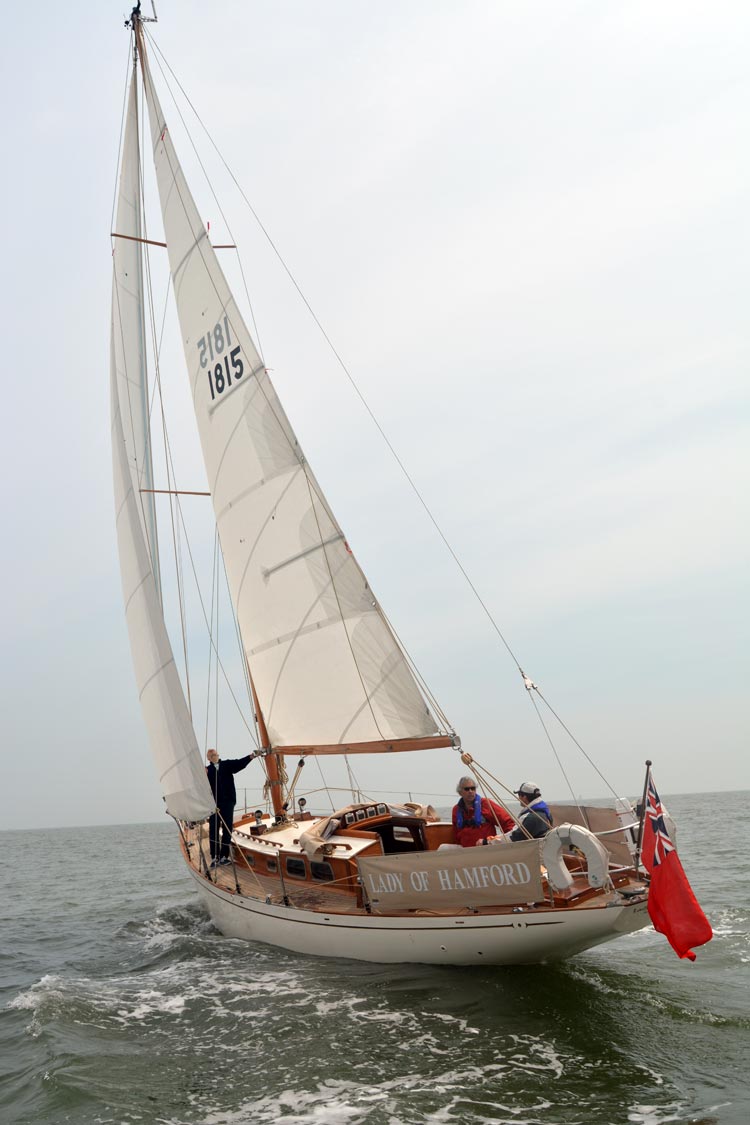
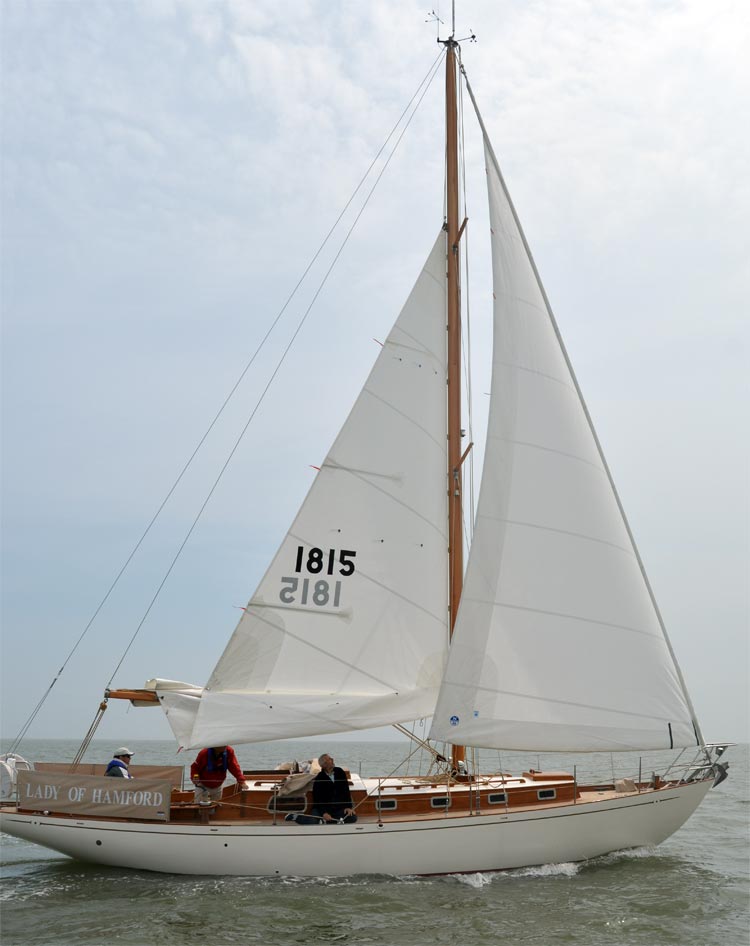
Firstly a couple of self indulgent shots of the boat on our way out.
loh_015.jpg

loh_018.jpg


In the above shot yours truly is standing in the slot checking the slot or the gap between the leech of the genoa and the back of the mainsail.
I'm looking up.
If you remember something make sure you remember this.
The top third of the sails do two thirds of the work.
So you need to look up.
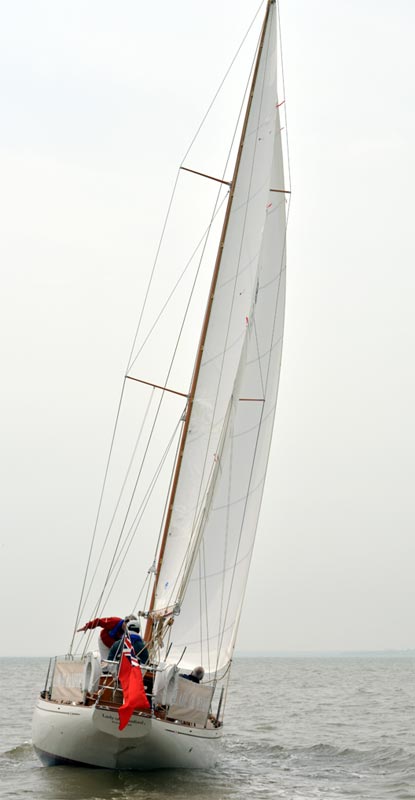
You also need someone to follow you and take photos from directly behind as sometimes its hard to check you have it right when on the boat.
They need to take a number of shots and I'll show why lower down.
loh_019.jpg

Above is the photo angle I want to see.
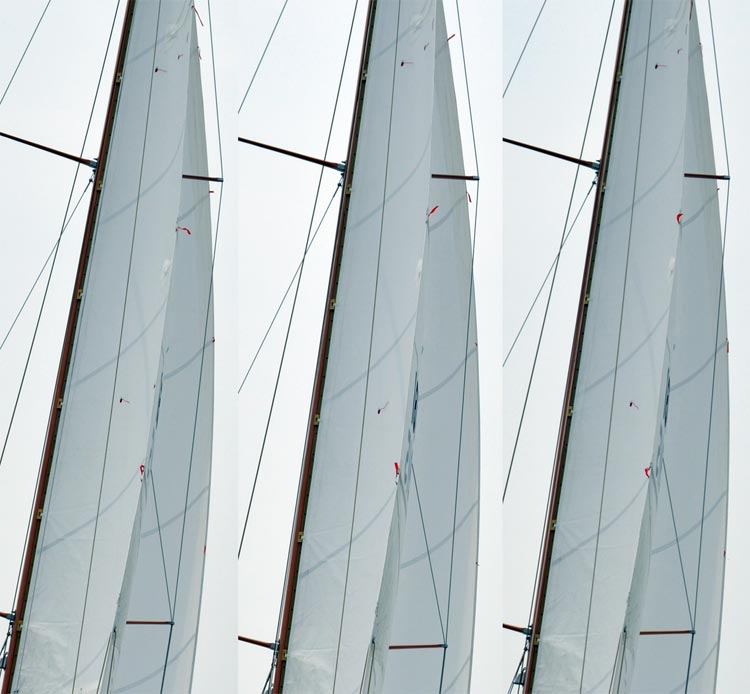
I can then put a number of these into Photoshop and play with the contrast to get the following.

loh_020.jpg

So above we have three photos taken roughly 10 seconds apart, side by side.
Before we left the pontoon I lowered the genoa and added 4 leech tell tails to the upper half of the genoa.
These won't stay on long but long enough to show me where the fairleads need to be.
Many of you will have leech tell tails on your mainsail and you will know that you need to get these flying straight back roughly 50% of the time and curling round to leeward 50% of the time.
You generally achieve this with mainsheet tension and or kicker. Too much and the tell tails will curl more than 50%. Too less and they will stream all the time. (we're talking 5 to 20knts)
The leech tell tails on the genoa work in the same way but this time the control is the fore and aft position of the genoa fairlead and sheet tension.

Going back to the photo above the main looks pretty good with streaming tails and curling tails.
The top tail on the genoa looks spot on with a curl, stream and curl.
Next one down (just below spreader) looks pretty good also.
The next two down though look like they're stalled too much.
This tells me that I need to try moving the genoa fairlead (car) aft a couple of holes and add a little more sheet tension.
I don't usually need the photos to tell me this but they do act as a reference when back on land and confirm my lead positions.

Next we reef the main to test the system works smoothly.
Then we reef the genoa to the predetermined marks on the foot to set up the lead positions.
loh_021.jpg


In the case of Lady of Hamford we will mark the fairlead (car) positions subtly with a stainless screw for each position on the inside of the toe rail directly under the track.
I'd normally also mark the sheet with a permanent marker so that its easy to see how much to sheet in but the sheets are brand new and the owner wasn't keen!

Like I said I hope this is of interest.......

ps. the bloody tacktick electronics failed, grrrr
 
Last edited:
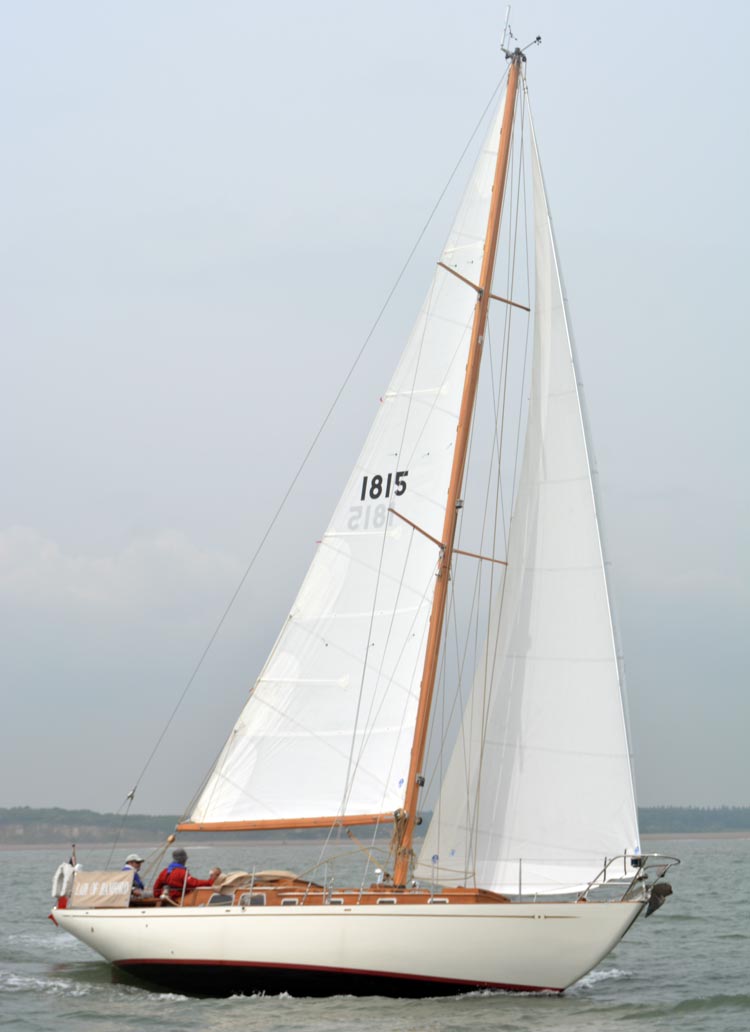
She is a Vashti Class.
Designed by Alan Buchanan
38' long, 9 1/2' beam and 6'3 draft and around 12 ton.
She was built in 1962 and was one of 7 including the original "Vashti" (which we also di a refit on about 10 years ago.
Honduras Mahogany planking with a teak on ply deck.
loh_016.jpg


If anyone is about between Ipswich and Southwold tomorrow, give us a wave as I'll be bringing back another little classic for a three week spruce up.
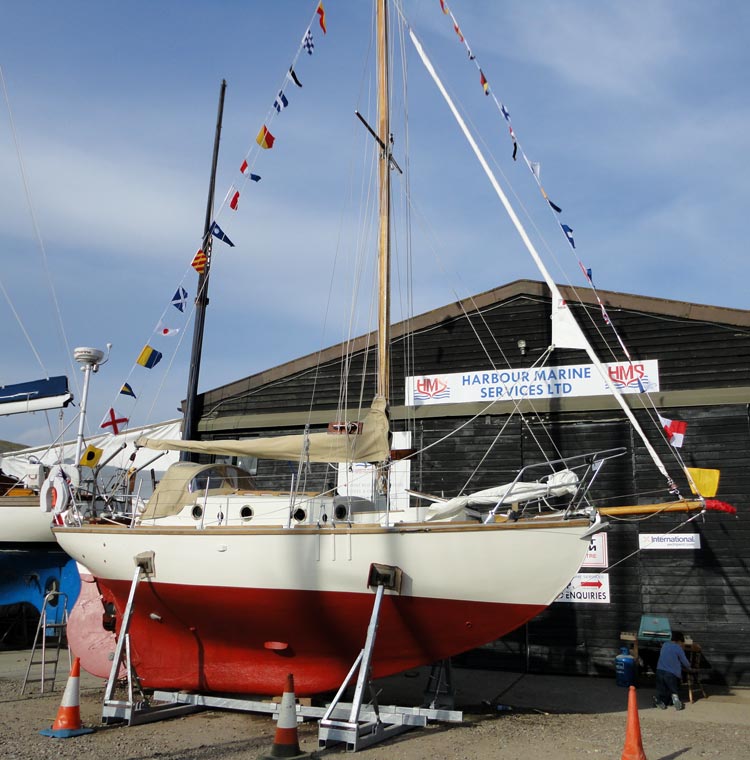
"Dynamene" a 1948, Yachting World 5 tonner.
Seen below after her last refit six years ago.
dynamene_001.jpg
 
By coincidence I was admiring Dynamene this morning. She's near us in Haven marina.
It's a pity Lady of Hamford couldn't do the East Coast Classics. A good event as usual.
 
I have a soft spot for Dynamene.
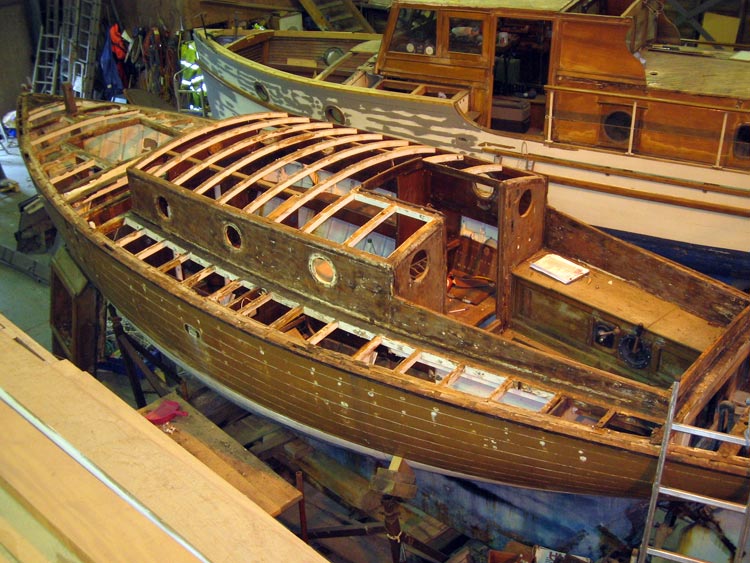
In 2010 she was in our shed 1 and looked like this,
dyn_01.jpg


A quick update on the Prout Cat rudder repair as they are repaired and fitted and she'll be launched tomorrow once I've stepped her mast with the new rigging and a spanking new Pro-furl jib furler.
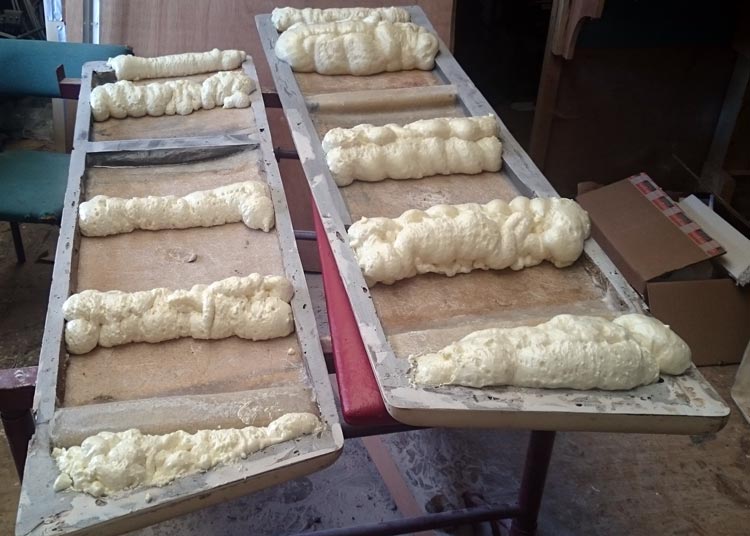
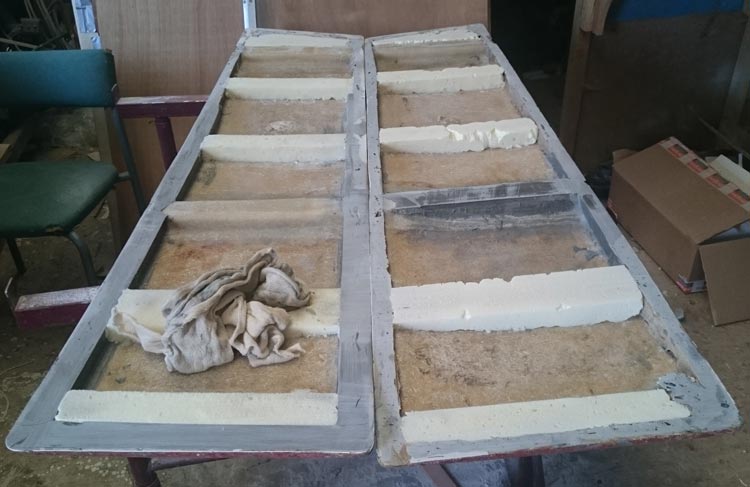
After glassing in the hard points for the pintle brackets and having rebuilt the edge flanges I decided to add some foam to support the blade in the lower stress areas.
rudder_04.jpg

Left over night I smartened up the foam and made sure that all the faces are square and would meet nicely.
I actually used a 3ft length of 80x80 stainless angle and used double sided tape to stick on a 3ft length of 100 grit sand paper.
You use the weight of the angle to apply the sanding pressure whilst you just concentrate on pushing and pulling it, I find i get much more consistent results.
rudder_05.jpg

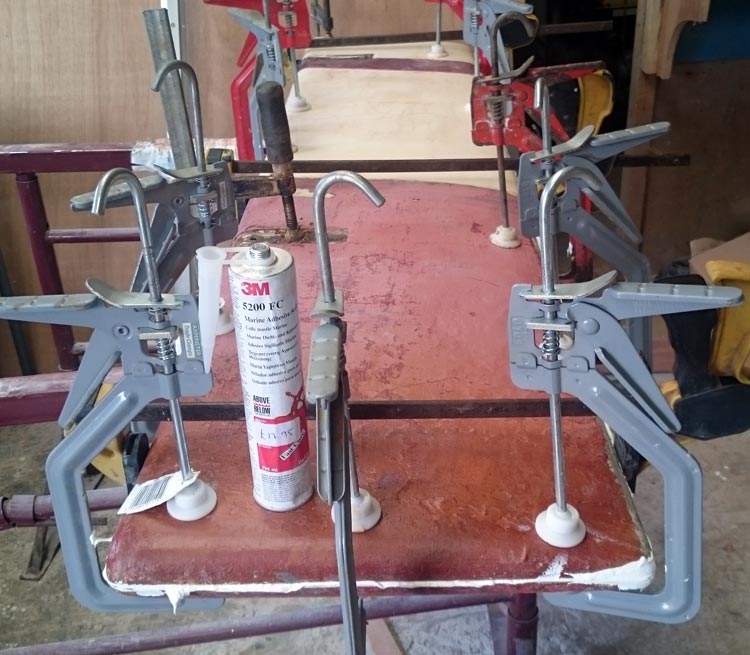
Then is was time to stick the two halves together.
At the flanges were built using Polyester I couldn't use epoxy to glue the halves together and I don't much like polyester bonding paste for a item that will flex.
So I decided to use 3m 5200 fc marine adhesive sealant.
If its good enough to stick great lumps of lead on the bottom of yachts its good for sticking rudders together.
rudder_06.jpg


Oh and incidentally on a somewhat different tack we received two identical sized boxes today from North sails.
They weighed pretty much the same as well.
One had my new mainsail and my masthead 140% genoa for my 34'
The other had the fractional 130% genoa for a Sun Odyssey 43.
When ever I think I might want a bigger boat I'll remember just how much bigger and heavier stuff gets with a boat over 40'
As long as everything goes well there wont be any issues but if something nasty happened I doubt I'd have the strength to sort it out?
 
Last edited:
Got a nice little challenege today.
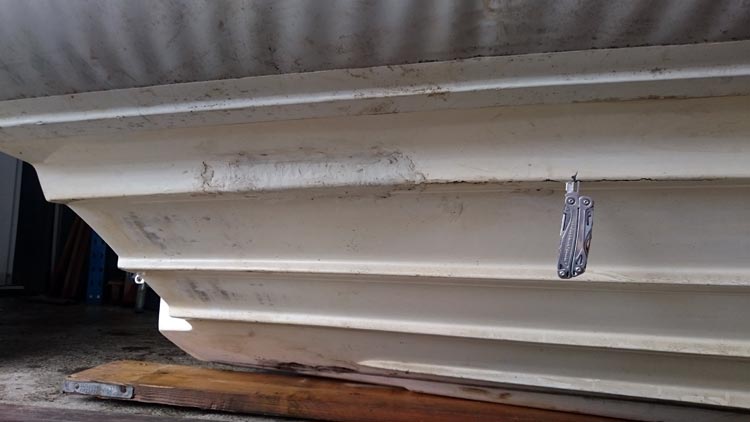
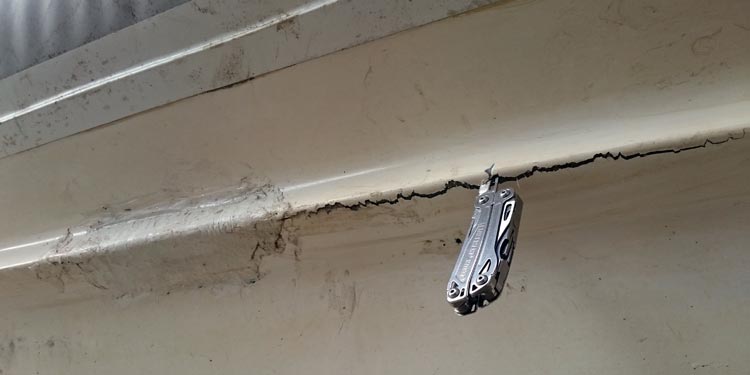
A 5m rib that had trailer damage in the past with a poor repair.
The underlying crack spread and resulted in the rib having to be towed in by the lifeboat with two very wet and very cold peeps on board.
Lucky for them that it is a rib or they would be at the bottom.
Anyway the crack can be seen below.
The solution will come to me in my sleep with any luck. :)
rib_001.jpg

rib_002.jpg


Oh and a lesson learnt today is that whilst the Pro Furl furler is a very good product and we get them at a very good price the bolt rope groove is made for a 5mm bolt rope.
The one I fitted the other day was for a jib with a 8mm bolt rope and guess who didn't check beforehand.
oops.

Disaster averted though as I sent one of our guys to Suffolk Sails in Woodbridge and got 12m of 5mm bolt rope with dacron tabs.
Cut off the old boltrope and used my trusty Pfaff to sew the new one back on.
£20 for the boltrope and a couple of hours after work sorted out my cock up.
 
Saw a very strange thing today.
We hoisted out Meridies, a 1937, 45ft twin screw motor yacht.
She has been sitting on her mooring right next to our yard for 11 months without moving.
She was coated with Seajet Shogun and was fouled but I'd say light to medium.
Sorry no photo as it wasn't significant at the time and she was washed off immediately.

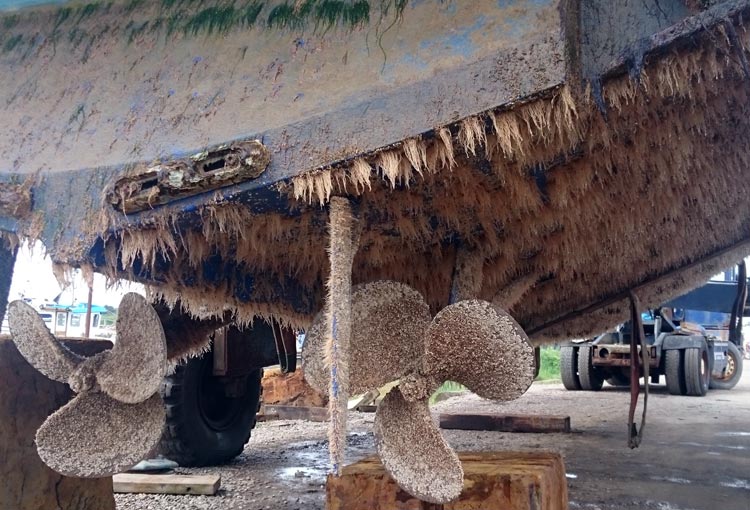
We also hoisted out Rumpole, a 1990, Oyster 390, twin screw power boat.
Rumpole has a mooring just 100ft from Meridies and she had been in the water for 10 months and left her mooring two or three times.
She (Rumpole isn't a very good girls name but I can't face calling it a him) was also coated with Seajet Shogun but her fouling was very heavy, as can be seen below.

Our only theory is Meridies was launched the day after she was antifouled where as Rumpole was launched around 10 days after being antifouled.
Other theories are welcome............
rumpole_001.jpg
 
As a longish term user of Shogun, my experience is that it performs best if immersed pretty quickly after application. This year Gladys went in just over a week after application, I await the diver's report (I have a wipe off 4 times a season) at the end of this week
 
Top