What lessons for this week

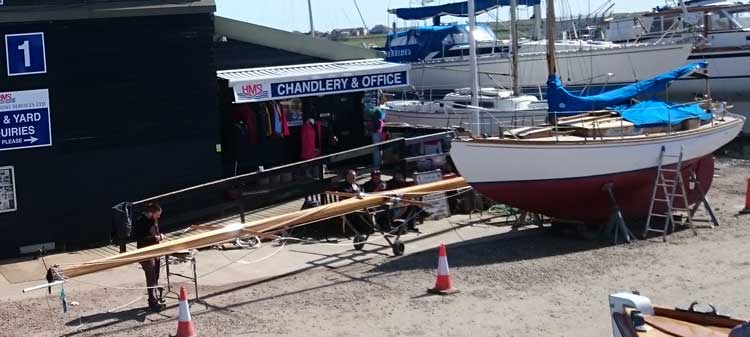
Called into HMS today and saw the results of the work - absolutely first class, completely transformed, ahead of schedule and on budget, I know Javelin is posting in a technical capacity and not to drum up business but if you haven't come across HMS they are superb, a full service yard but without some of the drawbacks of other more well known full service yards.
 
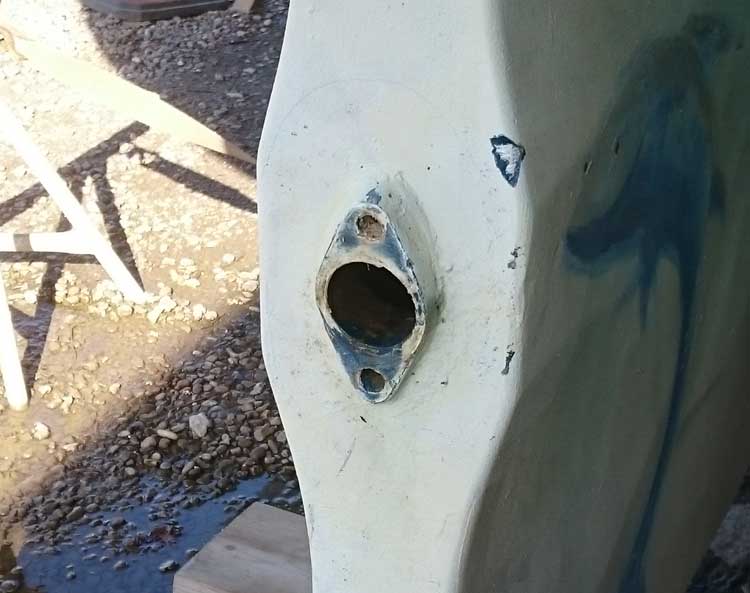
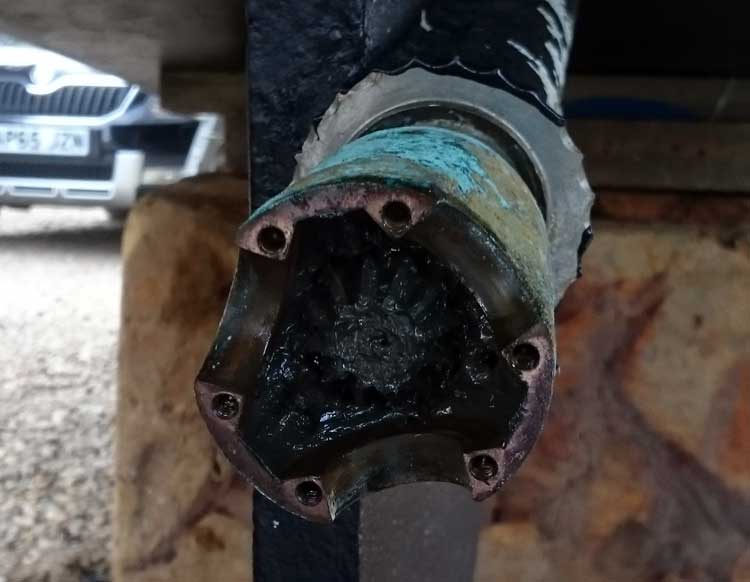
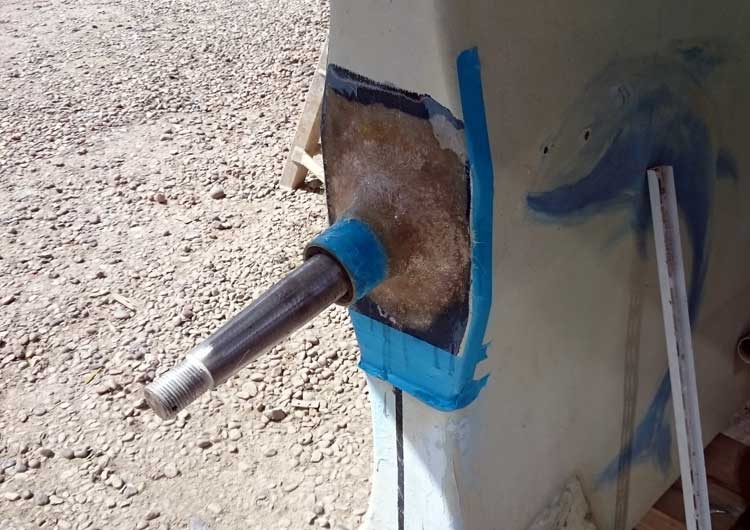
Today I started on the new prop shaft tube on a Colvic Watson.
The access inside the hull to the exit hole is too tight to get any decent amount of glass round the tube to secure and seal even if you could get it clean enough to accept grp.
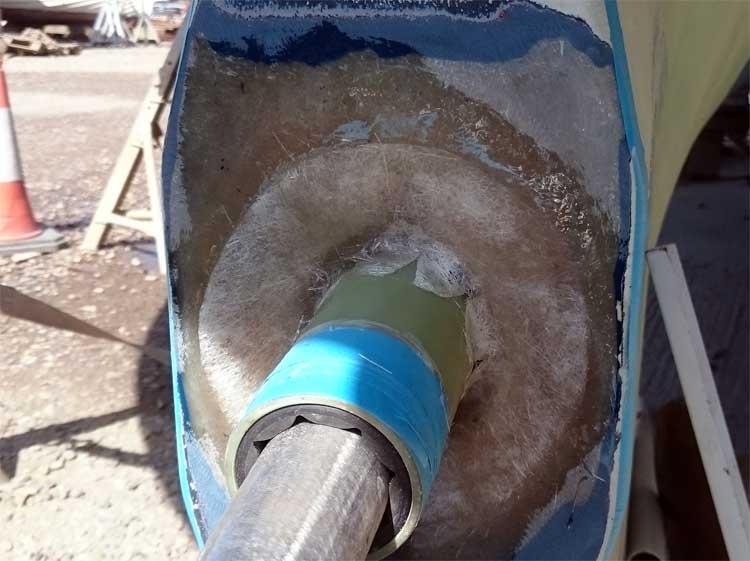
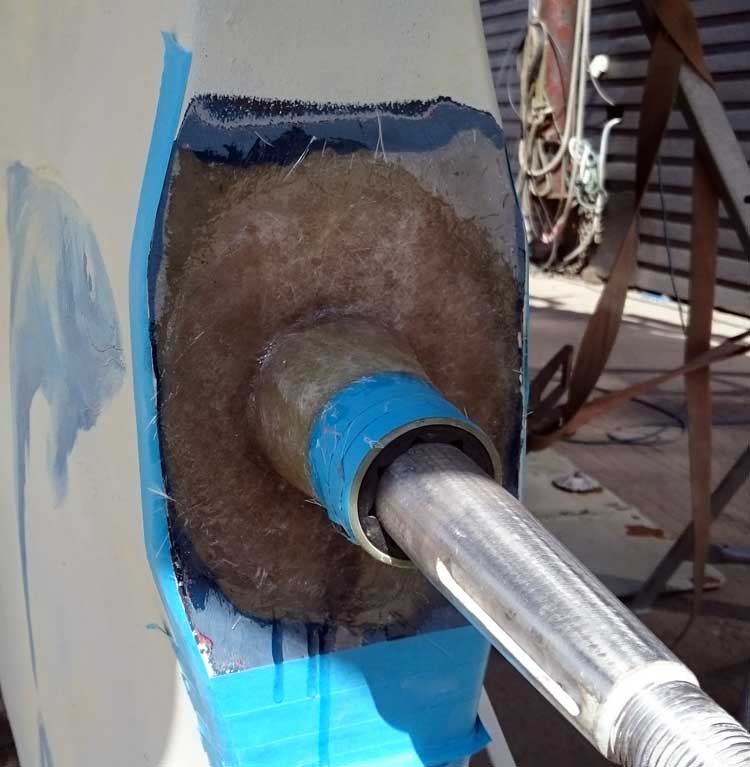
So I decided to attack it from outside.
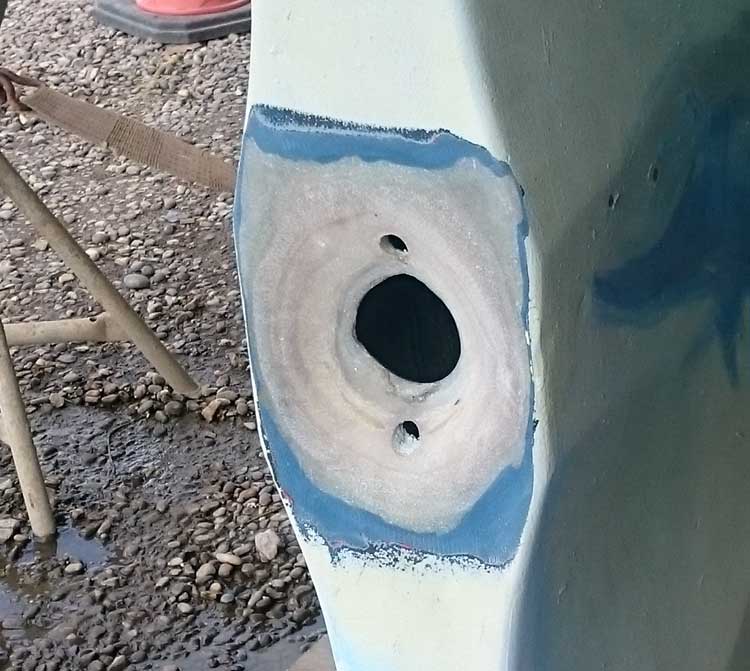
The layup is around 1 1/2" thick plus the old flange base so it took quite a lot of digging and grinding to get a nice taper but leaving the original hole diameter largely untouched.
lk_010.jpg

lk_011.jpg


Next we needed to remove the old inside gland seal from its little bulkhead.
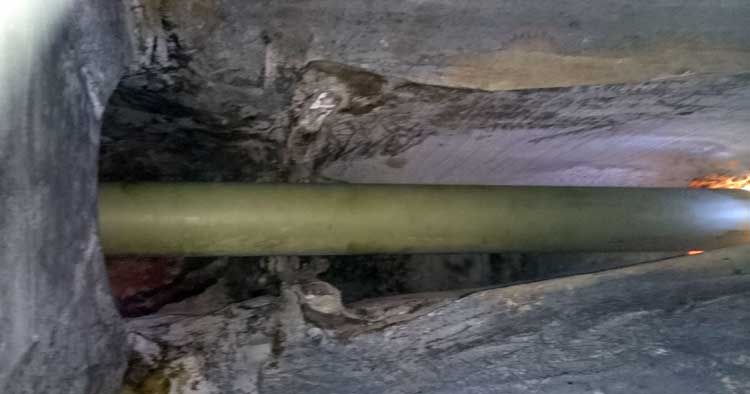
To the right you can see the light shining through the exit hole.
Deep down you can just about make out the bolts holding the keel/rudder heel fitting.
This void was filled with foam but over the years this had degraded and shrunk and so the hole was full of very mucky/oily/greasy water.
This will be dried out an re-filled with two part chemical foam rather than the builders stuff, to about 2" short of bilge level and the rest will be filled with a polyester/microbaloon mix.
lk_012.jpg

lk_013.jpg

Once the old gland had been removed we could get a grinder in and clean up a bit and then get the tube in place.
lk_014.jpg


Next job will be to fix the engine mount positions.
Position the engine and attach the propshaft inside the tube.
This will allow me to measure up the position of the forward tube bulkhead exactly.
The new seal will run off the inside end of the new tube so will have far better access.
 
Last edited:
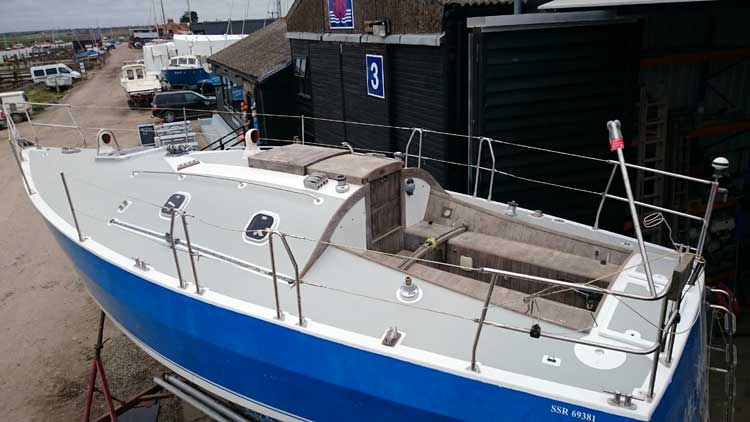
The 3/4 tonner left shed 2 last week with her new deck.
The owner replaced all the fittings but needed three weekends with a friend to do it.
One of the reasons we encourage owners to work on their own boats is they soon realise that a seemingly simple job takes a lot longer than initially envisioned.
vent_018.jpg


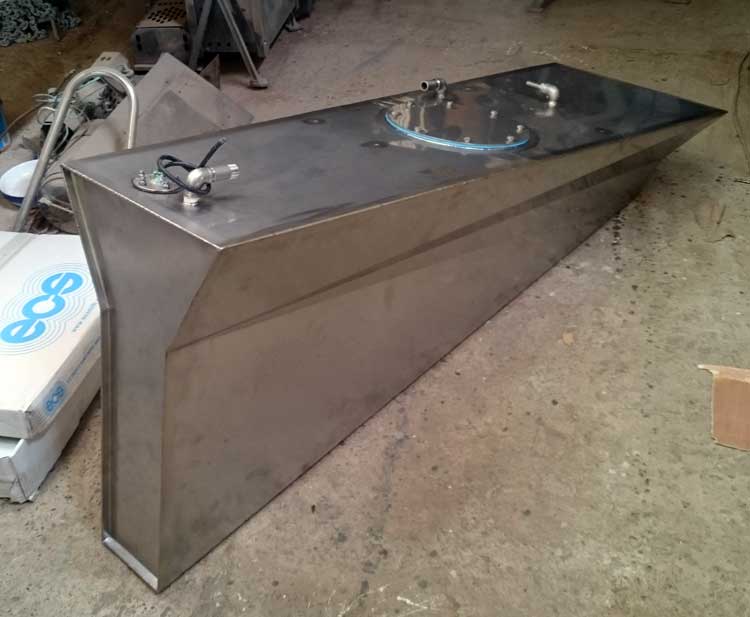
We broke the record (our record) for a new water tank which took 48 hours from deciding the old grp tanks were shot, designing a one piece tank to fit in the bilge of the Vashti, to getting the tank ready for fitting.
loh_007.jpg


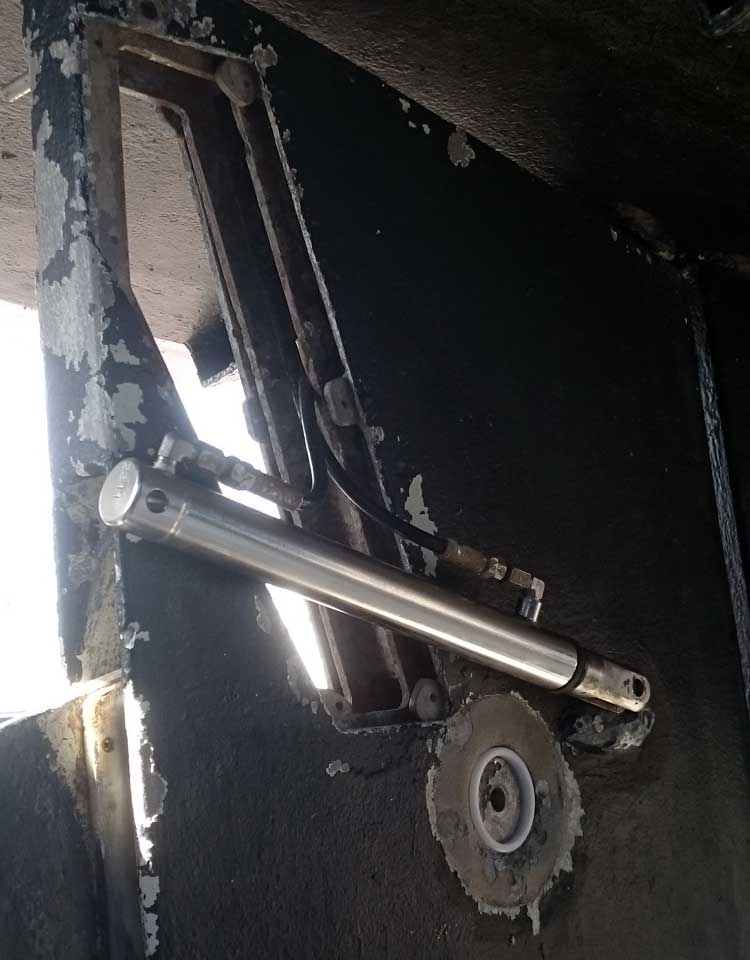
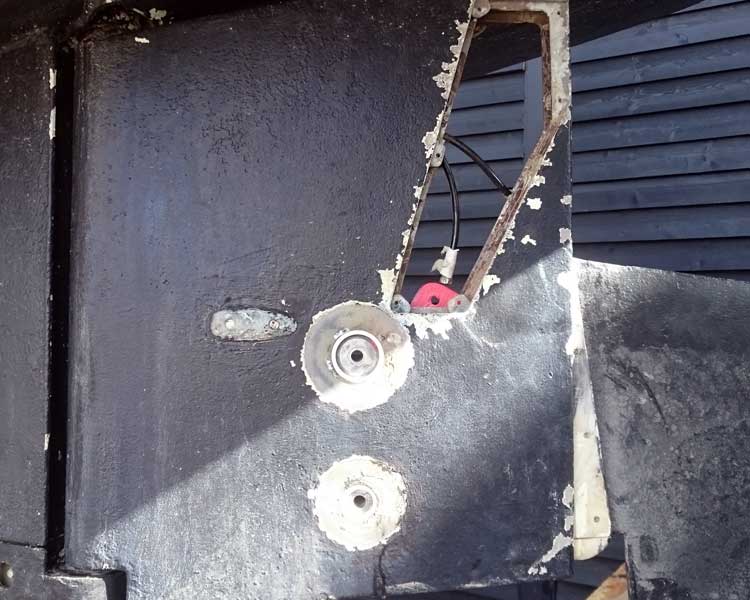
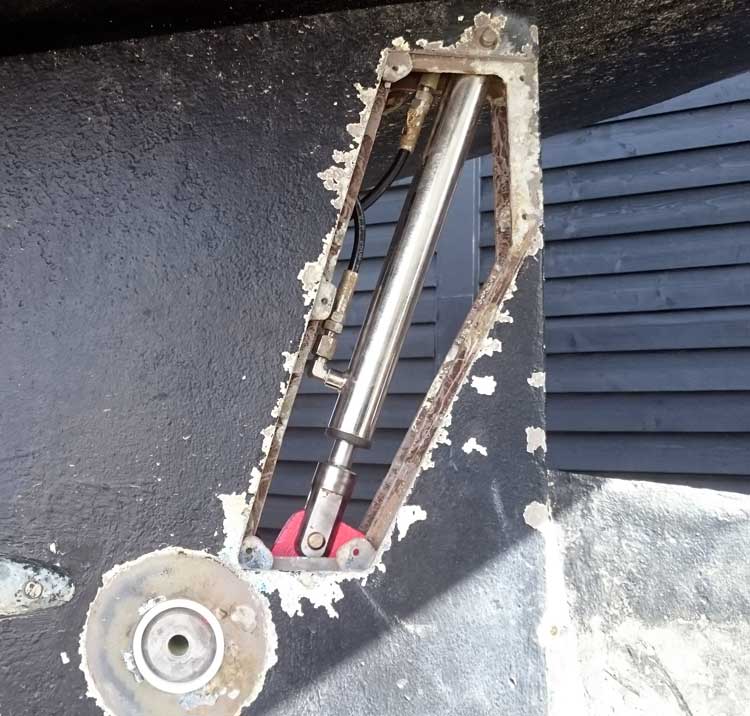
I spent a couple of days stripping out the rudder on a Ovni 345.
These hydraulic lifting rudders can often be problematic.
So the owner decided to get all the bushes, bearings and ram changed before his trip to the med.
ovni_005.jpg

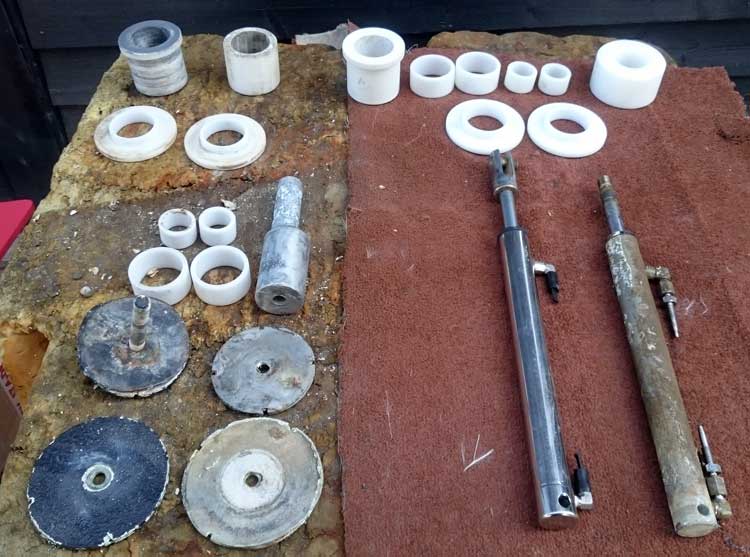
Quite a lot of stuff in these rudders. the new stuff is obviously the nice clean bits.
The owner sourced these direct from Ovni which I believe is no mean feat as they are not know for a great response to service inquiries.
To get the rudder of is pretty simple.
Just a matter of removing the lifting blade by removing the bushes by undoing four 22mm nuts, spinning off four threaded washers and drifting them out.
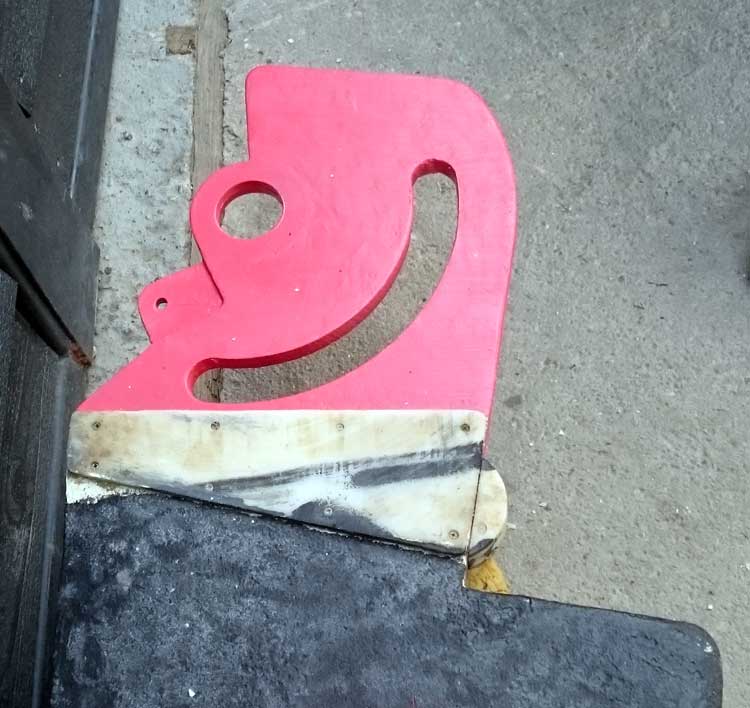
Here is the top of the blade after having a clean up and coated with trilux.
ovni_007.jpg

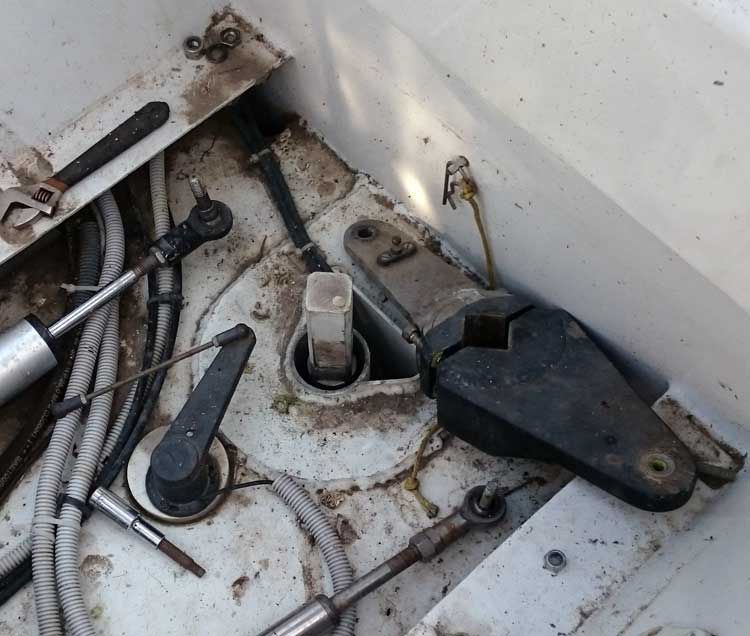
Once the blade has been removed all that then needs removing is the heel fitting with three m17 bolts and the steering quadrant.
ovni_004.jpg

ovni_003.jpg

The rudder shaft bearings fell off.
I assumed this was because they were worn but when I fitted the new ones they moved around just as easily and I'd say they were .8mm too big.
We checked the shaft in case this play was due to shaft wear but the bearings rattled around just as much and the vernier showed that the wear on the shaft was minimal.
After consulting with the owner we decided to carry on and fit the new ones anyway rather than moan at Ovni or get new new ones made.
Refitting the ram and the bushes for the blade was next and these bushes were spot on for size.
The ram bled up easily and once the blade was positioned correctly, was easy to fit with simple pins at each end.
ovni_006.jpg

ovni_008.jpg

ovni_009.jpg

Certainly seems a lot easier to lift now and drops faster as well so will wait and see once she's afloat.
Attention then turned to the Max prop.
3b_exploded_view_500x_web.jpg

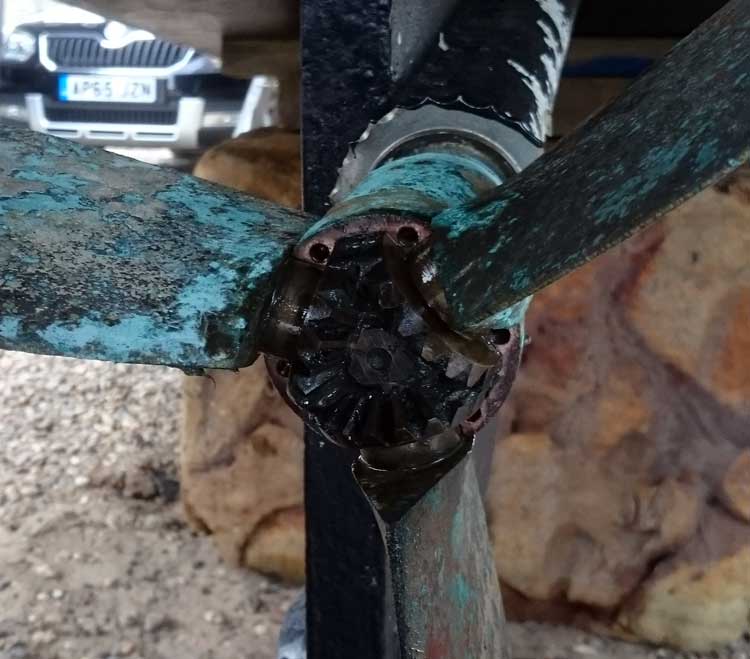
Well the Ovni's one may have looked like that but it has certainly taken a beating in the last 12 months.
ovni_010.jpg

Stripping these props is straight forward as long as you take your time and keep a record of all the settings.
ovni_011.jpg

ovni_012.jpg

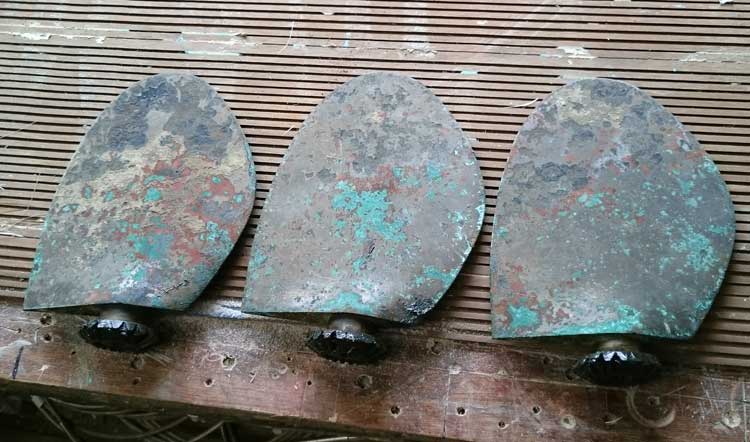
The blades have taken a real beating and will need a fair amount of work to remove the pitting and corrosion.
ovni_013.jpg

The prop anode had fizzed away in 10 months leading to this corrosion.
The other anodes around the prop were about 25% hit.
So something is badly wrong somewhere and we'll need to nail it down in the next week.
 
I'm glad to have got last week over.
Had a couple of minor disasters.
Need to replace the hatch lid on a Lewmar Ocean 60 and one of the hinge pins refuses to budge.
No amount of tweaking, soaking, tapping, bashing or walloping had any effect.
A call to lewmar for a hinge bracket was in order.
Whilst they offer the ss pin and the little plastic washers as spares they don't list the removeable alloy bracket as a spare.
So an alloy hinge bracket with a stainless steel pin on a foredeck hatch, what could possibly go wrong?
No option other than to cut the pin and drill it out.
https://www.dropbox.com/s/49jz4qpcmhsvv0b/DSC_0557.JPG?dl=0

Before we raised the mast on the vic 38 I checked the lights as usual and all worked fine.
A week later and the masthead light stopped working.
Sent one of our young ones up the mast armed with a meter to check voltage and send the LED light down so we could check it.
The LED was fine and the young one had varying amounts of volts, from zero to 3v to 12v.
The owner mentioned that this cable may have been joined in the middle at some time.
So the decision was made to run a new cable the next morning.
Found another one of our youngsters and sent him up.
From experience its always easier to run the new cable from top to bottom with the guy in the bosuns chair feeding down and someone at the bottom pulling up the slack.
In this way you don't put the joint between the old and new cable under any tension.
The Vic mast is keel stepped so you need to get the floor up to get access which also means you have to raise the saloon table up the mast 3 ft, which is a pain.
When we lifted the floorboards it also exposes the lower fuel tank and ERGH, looks like we have a fuel leak from the tank tender (fuel gauge) fitting.
On this boat there is an additional 50 lt fuel tank above and inside the saloon bench.
This effectively pressurizes the lower tank with a 50 lt head when full and yup it was filled a few days earlier.
The leak was an ooze really until I investigated it and gave it a bit of a tug and this resulted in a drip, drip, drip.........
Bugger , got a guy up the mast who is now getting cold as the wind is picking up, got another guy mopping up diesel and trying to stem the flow and I'm trying to tease the cable out of the bottom of the mast.
Did I mention the owner was on board?
Well lucky for us this particular owner has seen it all and is famously difficult to scare.
Though he has the quote of the year thus far,
"I came here with a diesel leak and it looks like I'll leave with one"!!
Not to mention he'd had the keel removed and replaced, a new engine, new engine wiring and new main fuel tank.

Anyway cable pulled through, wired up and worked ok, man back down, and for his sins was thrown down below to start pumping out 50lts of diesel so we could sort the leak.
The fitting was removed and the vacuum pipe removed.
I cut an inch off the pipe as I could feel a slight indentation at the end, and was re inserted.
We pressure tested and no leak, so we refilled the tank, sighs of relief.
After some water and bilgex removed the smell and leaked diesel we could return the saloon back together again.
 
There's a general rule that Volvo's have right handed props and yanmar and the rest have left handed props.
That is apart from the exceptions to the rule.
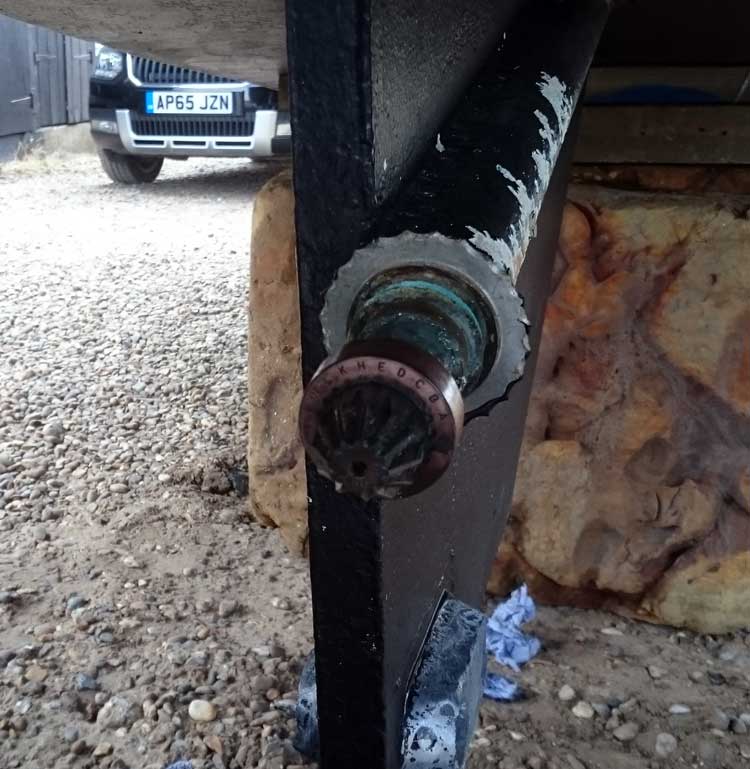
One such exception is the 40hp Volvo fitted to the Ovni with the dodgy prop.
I know this cause I checked and I'm pleased I did.
The story I heard is that volvo brought out some cone gearboxes that could go either way, however the first ones overheated so they added a copper pipe matrix inside to help cooling.
Trouble is they then suffered from corrosion.
So their solution was to isolate the gearbox using plastic inserts, bushes and a bell housing plate and added a notice - "DO NOT GROUND"

Trouble is the French yard that fitted this engine took the warning too far and didn't ground the engine or the shaft either.
The result is the fizzed away, £2000 max prop that after cleaning up was found to be too far gone to repair.
The small Max Prop anode is big enough to cope with the prop but not big enough to cope with the added mass of the prop shaft.
The solution (I hope) is a 60mm longer prop shaft (£150) so we can fit a shaft anode and a brush earth on the shaft grounding down to the hull anodes adjacent to the prop.
We've also decided to go with a Feather Stream prop replacement (£1500) which has a slightly bigger prop anode and the mounting bolts have more meat round them.

There's been a little trick with these prop anodes where the mounting bolts are close to the edge and that is to put a dab of antifoul on the outside so that this doe not get eaten and reduces the chances of the anode falling off.

We also discovered that the grounding system on this ovni went through double pole battery isolators.
This means that when you turn off the isolators you also turn off the grounding system.
Not a very clever idea on a aluminium boat.
 
Well the owner is rightly paranoid about the fact that he sails in what essentially is a big anode, so the dammed thing is covered with them, plus when he moors up he lowers another one from the bow and one from the stern on sheathed wire. (I did note that the one on the stern was attached via a shackle to a recently painted bracket so wouldn't have done much)

So luckily the hull is fine, also the lifting keel and rudder is fine.
The old prop shaft is ok but with starting signs of attack.
The old prop however, is toast.
 
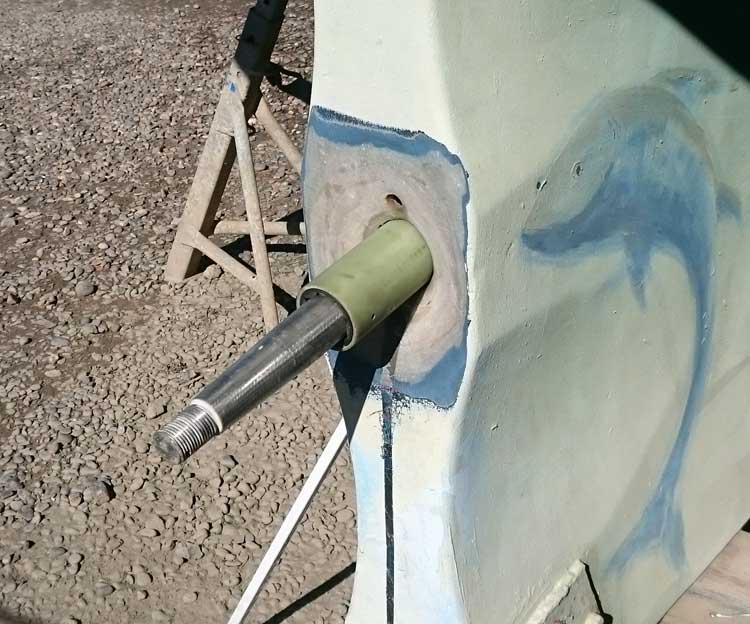
Today I decided to fix the new prop shaft tube to a fellow forumites boat.
We aligned the engine as best we could without a true datum but the eye is pretty accurate at these things and the engine mounts will still allow a little up and side to side adjustment if needed.
We inserted the shaft and the tube and ensured the shaft went fully home in the taper.
The front of the tube was shimmed so the the shaft was in the center whilst the cutlass bearing looked after the aft end.
lk_15.jpg


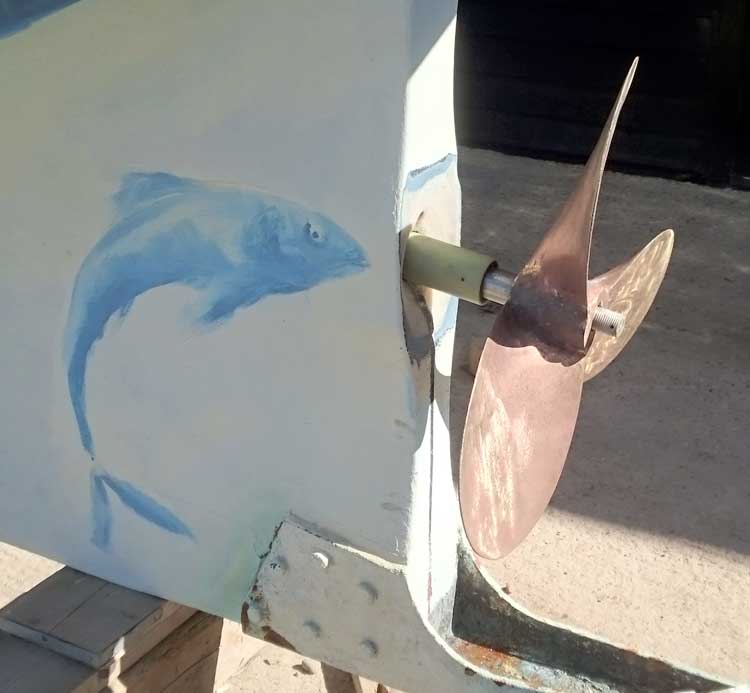
The deadwood area, or in this case the grp keel mould, is frankly huge.
Not much thought was given by the designers for a nice flow over the prop.
Possibly why they decided to fit a prop the size of Wales on it.
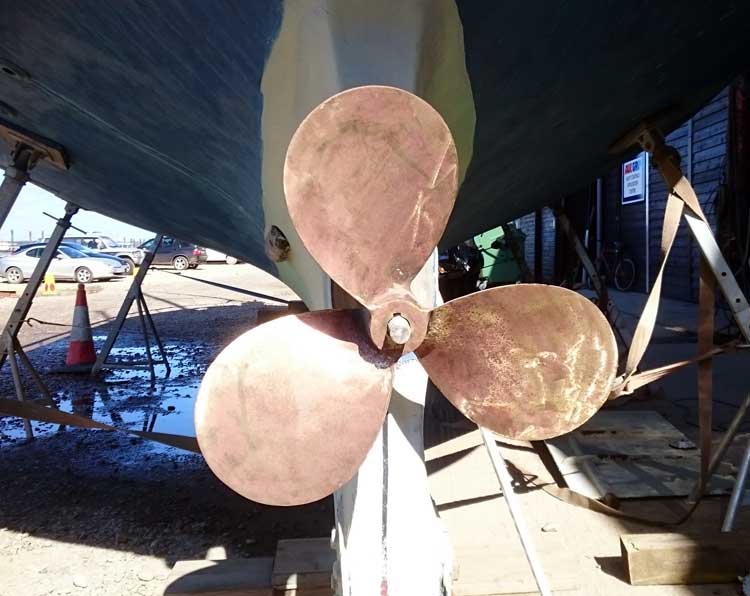
As you can see the keel almost hides a blade but the other two blades must reduce speed when sailing by at least a knot or two.
lk_16.jpg


With this in mind we decided, (not told the owner yet!) to drop the engine aft a few inches to give the flow a little more chance to get to the prop.
I'd like to hack the back three feet off the keel and start again but maybe another year....
So the new position is shown below which also allows for a rope cutter.
lk_17.jpg


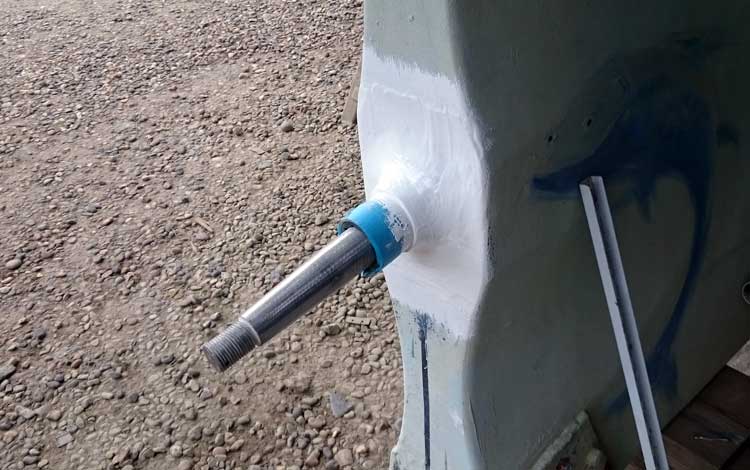
Then it was a case of sitting in the sun and glassing the tube in using a mix of 450gsm mat, some layers of heavy weave and some core mat.
I started glassing at 11:00
The tube was scored and keyed although in the photo it looks smooth.
lk_18.jpg

After a couple of hours the recess was filled and I started to bulk out.
lk_19.jpg

Below the glassing was essentially finished, just about lunch time :) (13:30)
lk_20.jpg

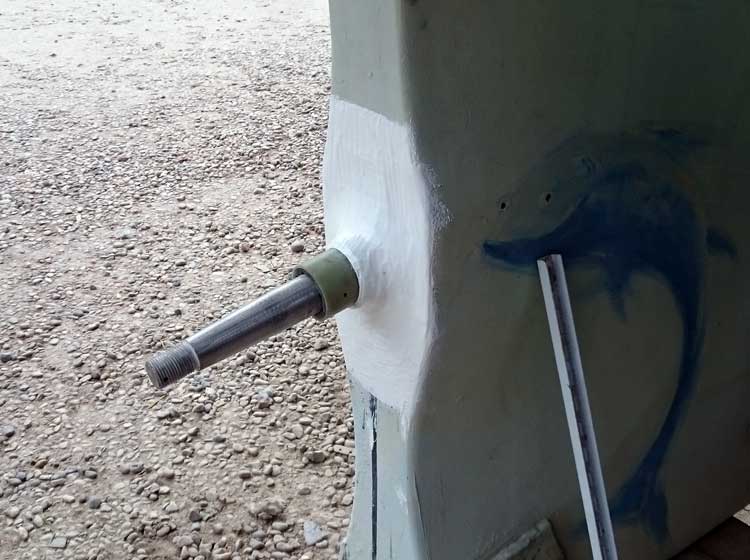
Once the glassing was done and had gone off (about 15:00) I applied the first of three coats of white gel coat and a final coat of gelcoat with wax added to act as a flowcoat.
lk_21.jpg

Whilst the gel was still in its rubbery stage I removed the tape.
lk_22.jpg

Tomorrow it'll be ready for a bit of sanding and coating with a antifoul primer.

Then we'll move to the inside and start glassing in the tube bulkheads, the though the Vashti Class is coming out of the shed tomorrow and I think the plan is to step the new mast which I've still got to dress So the Colvic might have to wait a day or so.
 
Last edited:
We learn't today when everything goes well you can achieve a lot.
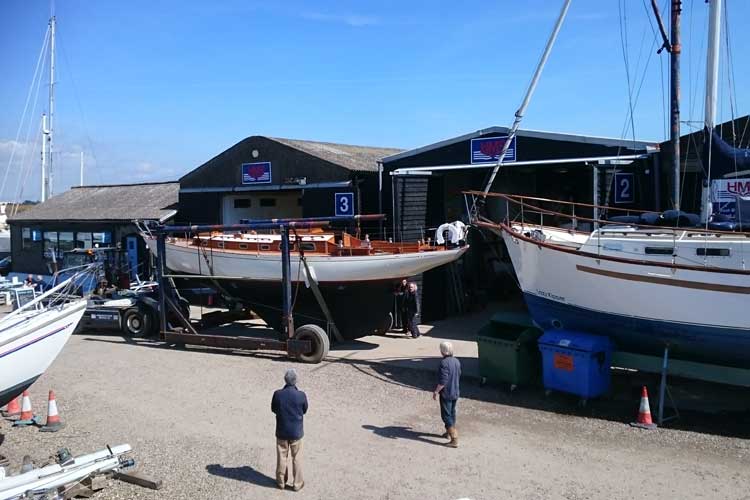
The Vashti Class "Lady of Hamford" was ready to leave shed 3.
Scaffold and walkways were broken down and floor cleared of restoration detritus that always seems to collect under the walkways.
loh_011.jpg


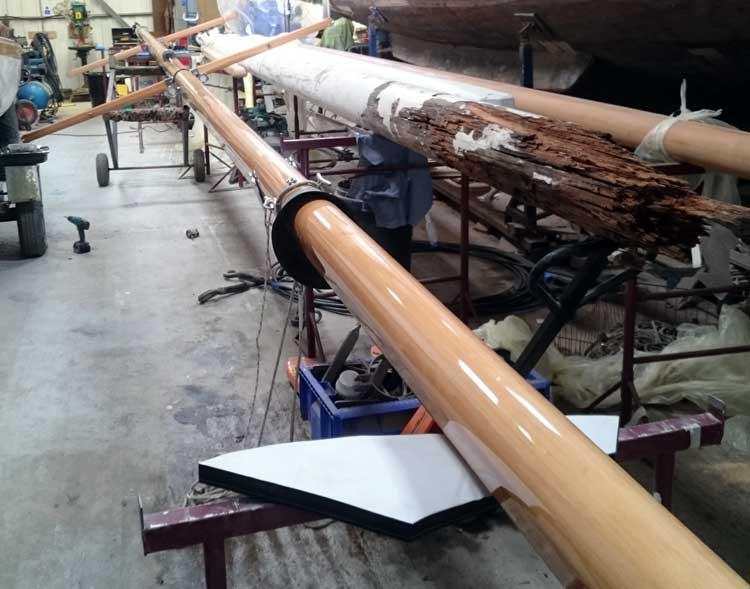
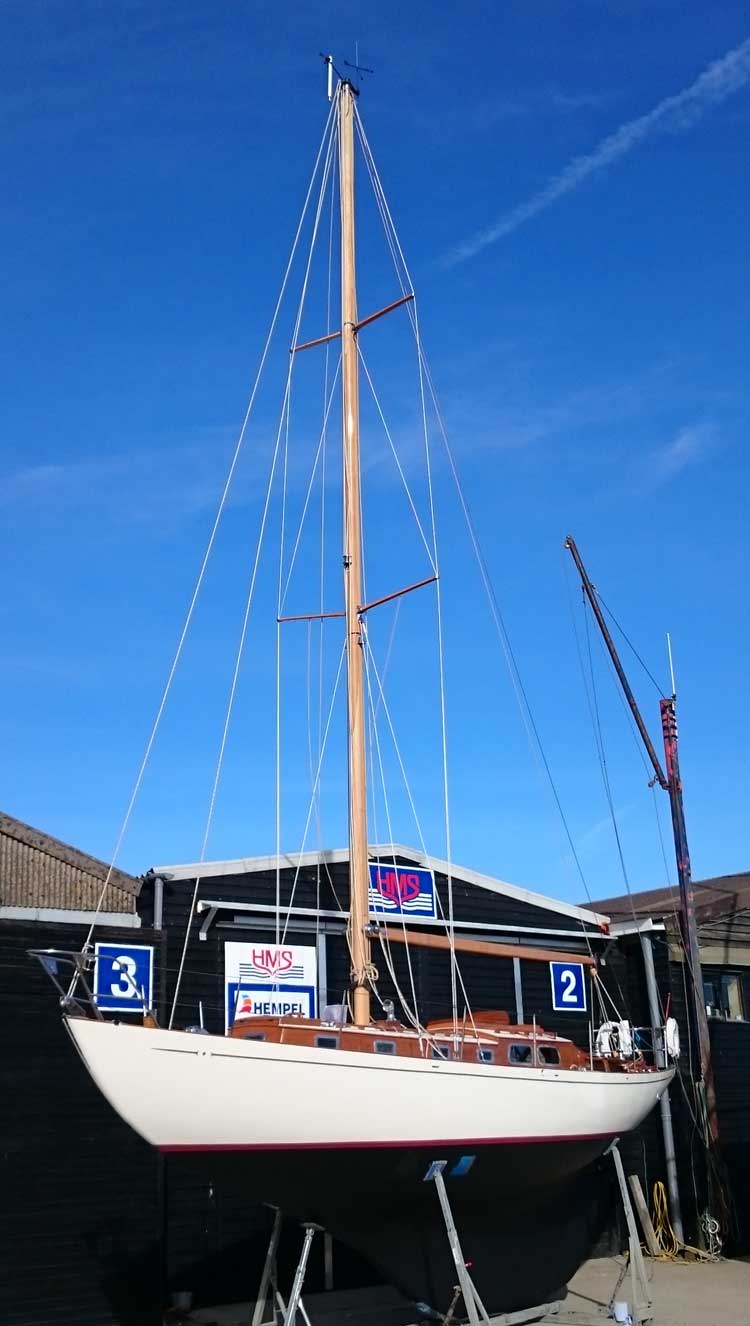
In shed two we were putting the finishing touches to the new wooden mast and running the running rigging.
The big rotten spar along side is Southwold Towns Green flag pole which, as can be seen, needs a little work!!
loh_009.jpg


Once outside the standing rigging and masthead gear was fitted and everything tied up to ensure a smooth lift.
Today we had a SE so the mast had to be slung on the aft side of the mast and due to it being keel stepped and 48' long the sling had to just clear the top of the bendy things at the top of the mast.
loh_010.jpg


We use an old fixed width hoist when moving boats in and out of shed three as our new hoist won't fit.
Its a timely reminder of the old ways of moving boats with chainblocks and sweat though thankfully rarely any tears.
loh_012.jpg


We used the original drawings for the rig but I was still nervous about fixing the lengths of the standing rigging before we'd put the mast up.
So I opted to initially set the mast using ropes and then cut and set the shrouds in situ using Sta-lok terminals. (hense the additional ropes on the mast)
Looking at her with the wooden mast and boom fitted she really looks a picture.
Can't wait to get her in the water, get the sails on and take her out for sea trails before we help the owner sail her in the forthcoming classic regatta on the Orwell and hopefully the Round the Island race.
The on to her home at Chichester.
loh_013.jpg
 
Last edited:
Top