What lessons for this week

Panel ready for fitting in the cockpit.
12930997_1308730472474052_3843843572348839297_n.jpg
 
Today I delivered an Oyster 435 from Suffolk Yacht Harbour up to Southwold. (5 1/2 hours, was a fast trip)
Overall a very nice example, solid, stable, very high sheet loads at 24knts apparent, very little weather helm.

She's up for a number of things including standing rigging which is currently in a shocking state and badly set up.
The aft lowers were doing nothing, on a beam reach the leeward inter's were flopping around in the breeze whilst the leeward caps was bar tight.
The forestay sagged off around 3ft to leeward and the backstay only had a bottle screw for adjustment and that was wound right up.

Before the current owner bought it a couple of months back this boat had sailed accross and back in the arc.
With the rig set up like that I wouldn't want to sail it much further than the 30 miles to Southwold.
Also no wind steering gear, genny or watermaker so god knows who prepped the boat for the crossing.

Electronics are B&G Hornet 4 and the Displays look like new, only they don't work.
Will be investigating whether Tinley can convert NMEA2000 to old hornet language as the displays still look great.
 
Last edited:
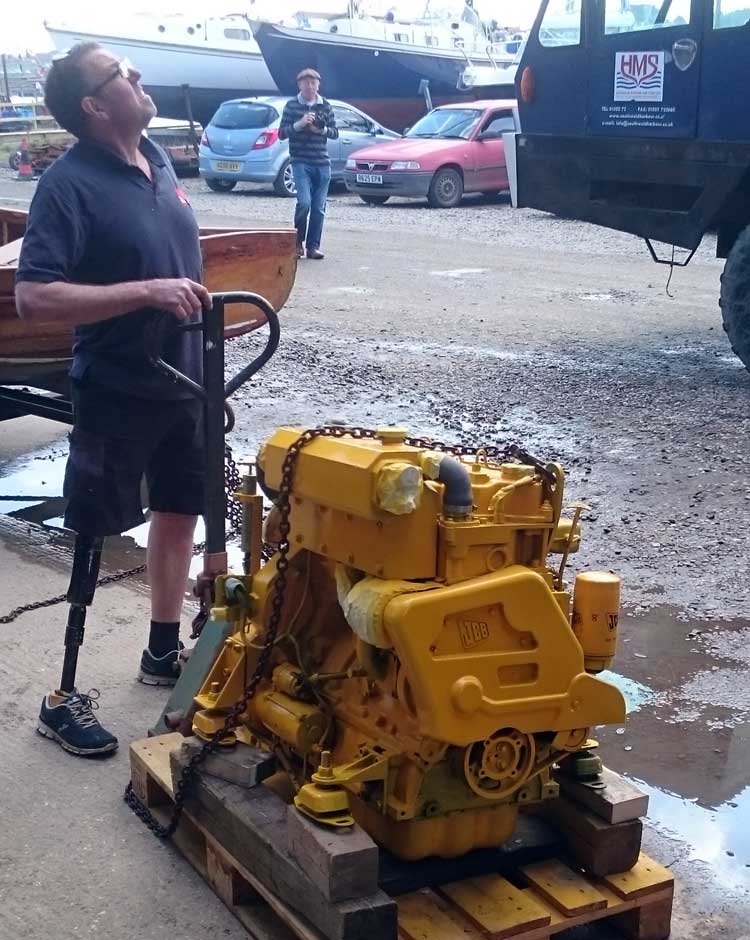
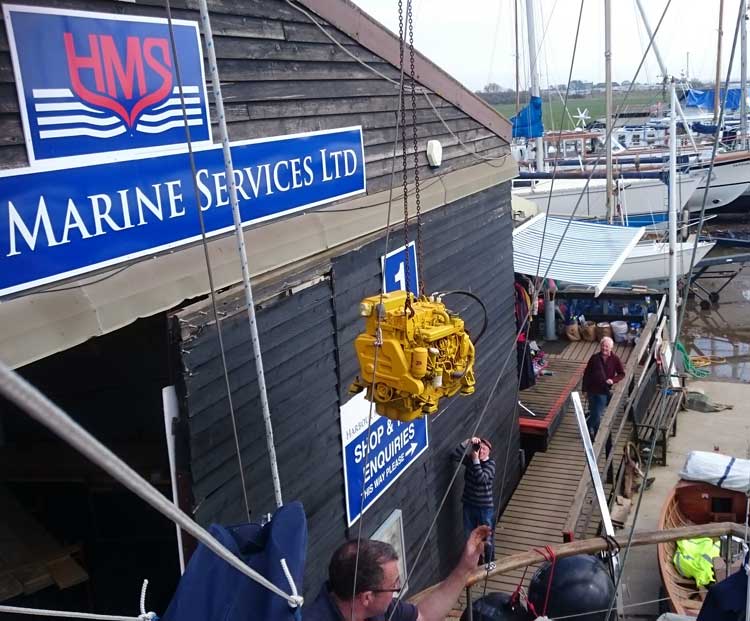
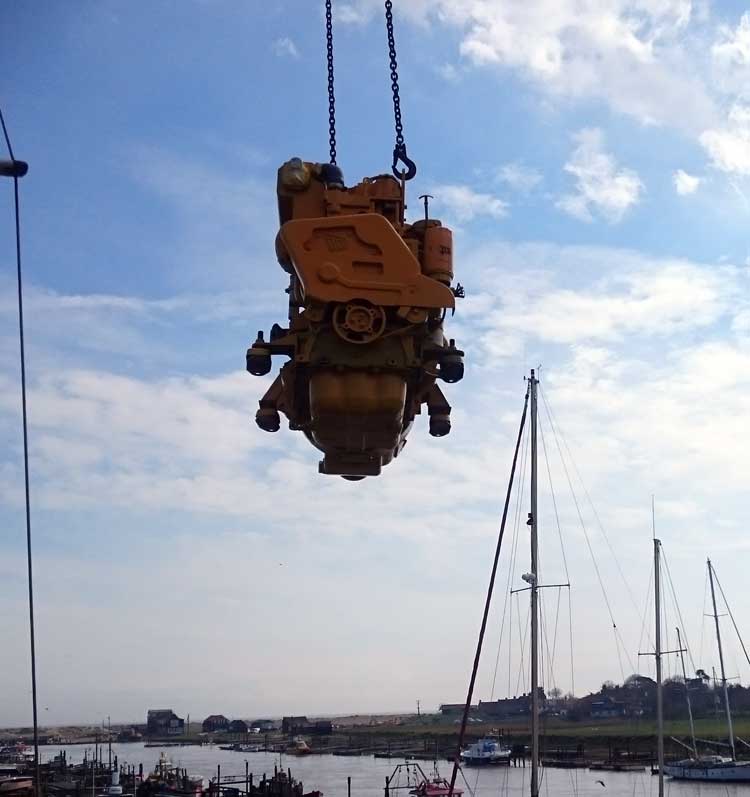
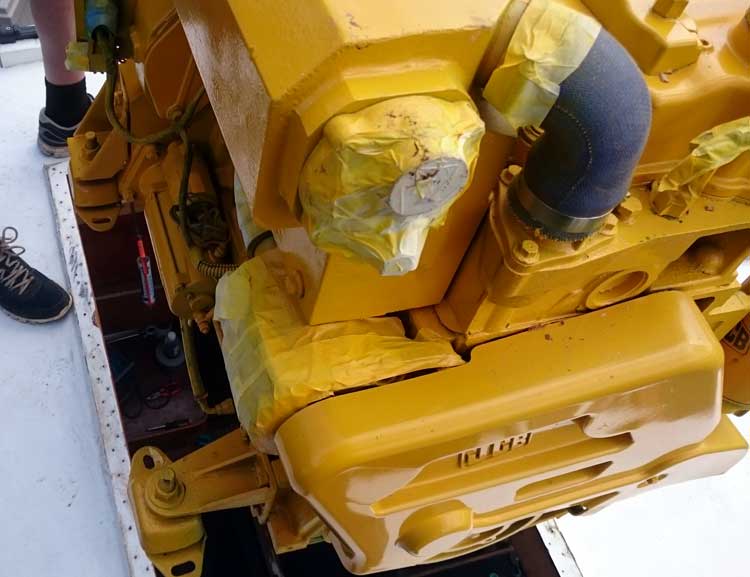
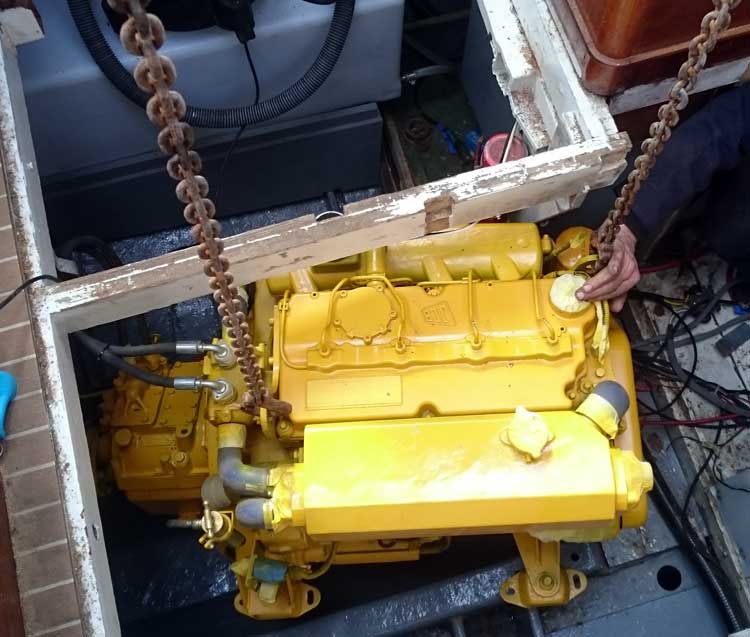
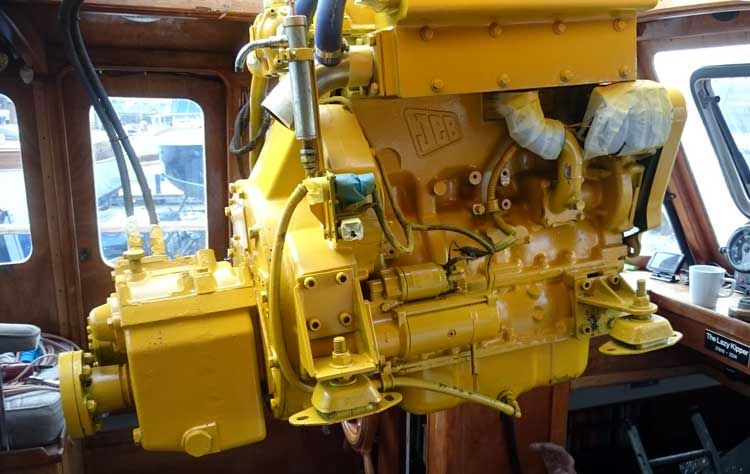
It was black, blue and yellow, a real mess of colours and cleaning it and painting it stops corrosion, plus the new ones are JCB yellow. P

And let's face it, you're jealous :D
 
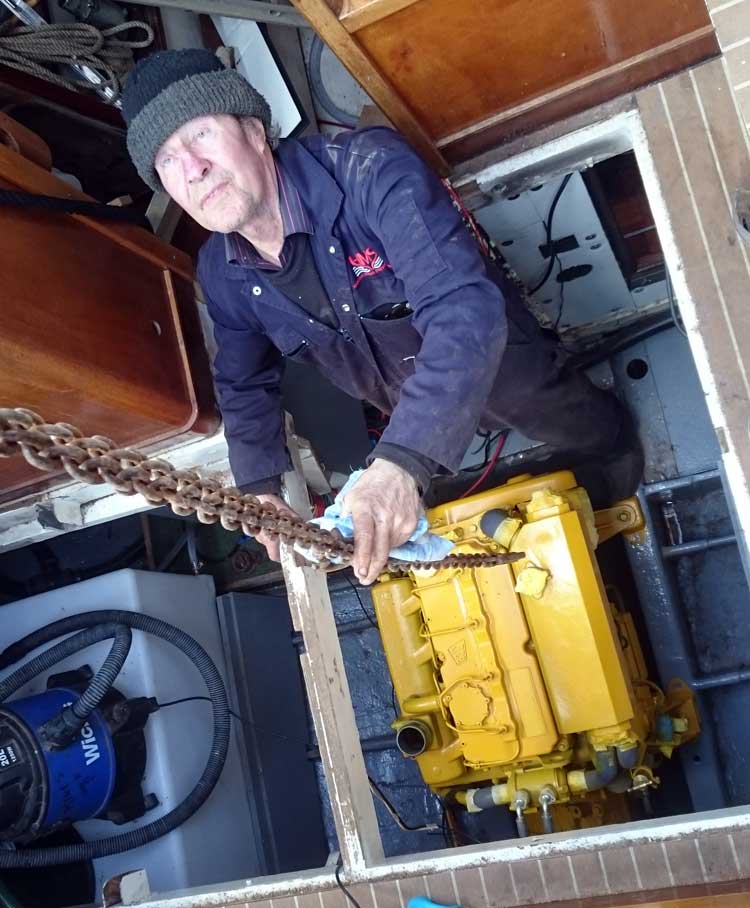
Yes its funny the engine didn't so big once it was down in the hole.

Will get the shaft aligned and work out how to glass in the new shaft tube.
Looks like I'll have to dig a big hole in the skeg outside and glass the tube in from the outside as access inside is almost impossible, especially under the shaft tube.
Quite a task as the skeg is about 40mm thick!
Probably why it wasn't done properly the first time.

On a different note we lifted one of our regulars out the other day.
A 1948 YW 4 tonner
She'd been over wintering at ABP, Ipswich.
She was fitted with piranha anodes before the last launch instead of the usual McDuffs around 7 months ago.
We didn't fit them as this work was done by ABP.
The anodes were not touched but the prop is written off and it looks like a few rib nails are on the way out.

It looks like a bad batch of anodes or perhaps something happening at the berth in Ipswich.
 
Yes its funny the engine didn't so big once it was down in the hole.

Will get the shaft aligned and work out how to glass in the new shaft tube.
Looks like I'll have to dig a big hole in the skeg outside and glass the tube in from the outside as access inside is almost impossible, especially under the shaft tube.
Quite a task as the skeg is about 40mm thick!
Probably why it wasn't done properly the first time.

On a different note we lifted one of our regulars out the other day.
A 1948 YW 4 tonner
She'd been over wintering at ABP, Ipswich.
She was fitted with piranha anodes before the last launch instead of the usual McDuffs around 7 months ago.
We didn't fit them as this work was done by ABP.
The anodes were not touched but the prop is written off and it looks like a few rib nails are on the way out.

It looks like a bad batch of anodes or perhaps something happening at the berth in Ipswich.
Is this a commercial break
 
I just can't get over why such a relatively simple cover should be so expensive.
Material costs, about £50 to £60 and I'm sure their material costs would be much less.
Would take me (and I'm slow) maybe four to five hours to machine.
Another hour or two to sew lacing loops.
So at our full yard rate that would be a total of £250
£750 looks pretty steep to me.

Please remember that we are all rich yachties for which money is no object. If we don't spend it on our boats then we'll spend it elsewhere so marine suppliers and sailmakers make sure they get in there first.

Oh, and the £250 and £750 bits. Don't you remember the 'cost price' and 'selling price' work in Maths at school.
 
Don't forget, for some people the more you pay, then better it is. Even if it's the same thing, the more expensive one is better. "It's value is not what it costs the seller, but what it's worth to the buyer"
 
Don't forget, for some people the more you pay, then better it is. Even if it's the same thing, the more expensive one is better. "It's value is not what it costs the seller, but what it's worth to the buyer"

Many years ago I used to work for an American company that sold jeans worldwide. We had 68 factories in the USA, Ireland, Scotland, Belgium, Malta, Spain, Ivory Coast, South Africa, Portugal and some others that I don't recall.
We had two main lines of jeans and they had identical fabric, thread, findings, construction but one sold at almost twice the price of the other.

The reason? One was called "Wrangler" and was marketed as 'fashion jeans' while the other was called "Maverick" and was 'work jeans'.

Same marketing philosophy as with most things that are sold: If it costs more it MUST be better. Think about all the stuff that carries a 'Marine' tag...
 
Many years ago I used to work for an American company that sold jeans worldwide. We had 68 factories in the USA, Ireland, Scotland, Belgium, Malta, Spain, Ivory Coast, South Africa, Portugal and some others that I don't recall.
.

Would not surprise me if the ones made in USA, Ireland, Scotland, Belgium cost twice as much to produce as well !!!!
 
Top