vas
Well-Known Member
Re: port gearbox works only on reverse
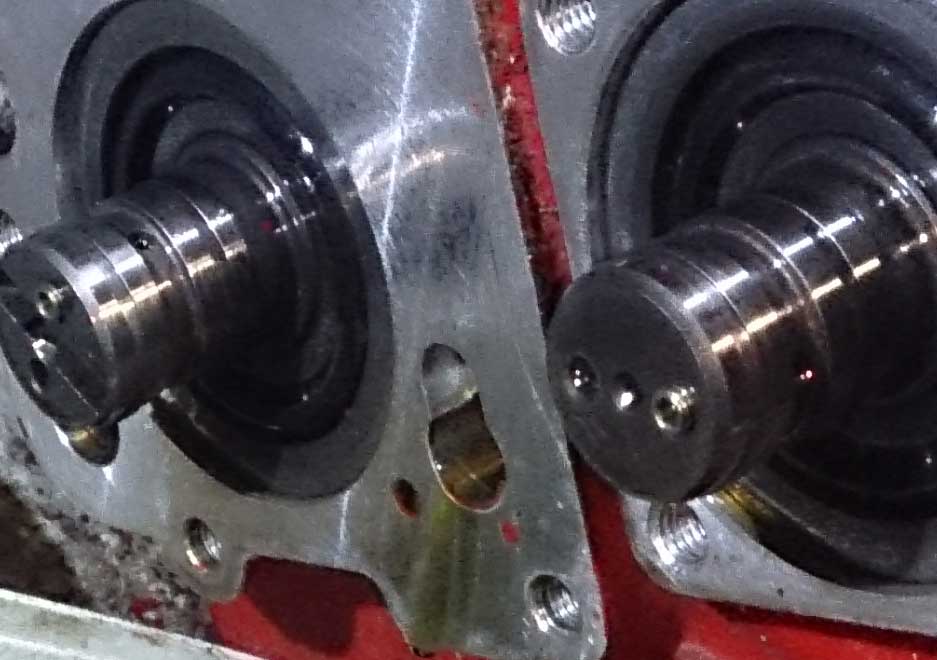
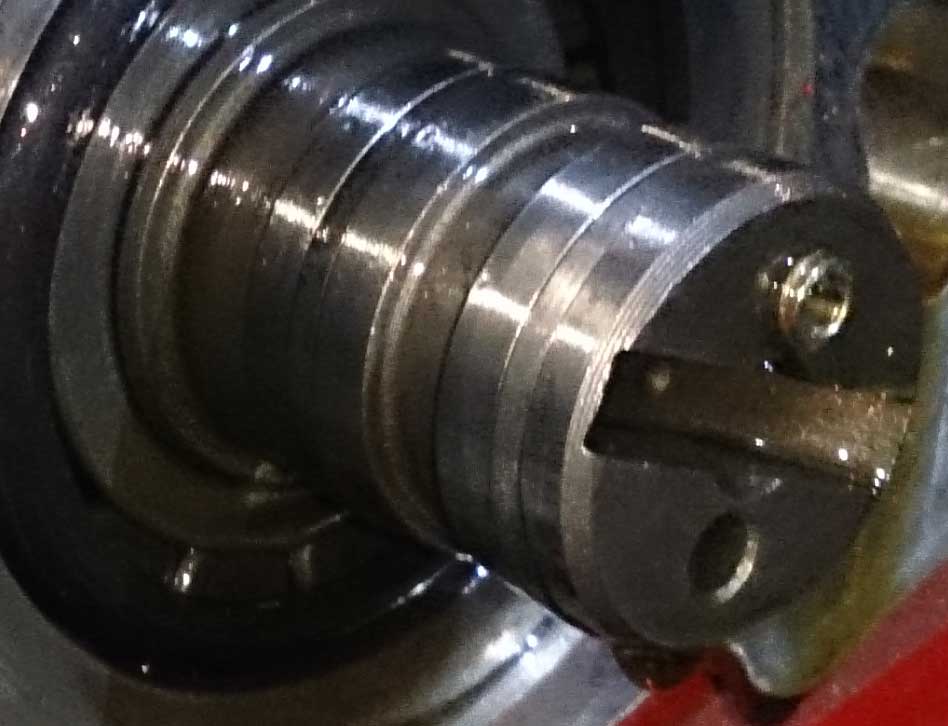
Thanks NU, however having examined carefully and measured the distances and worn marks, it is definite that there was NOTHING in the two narrow grooves. All the marks are from wobbly axle touching as it's been pushed offset from the gear (most likely due to wrong preload).
OK, SH this matches the scores on the cast iron bit.
Discussed it with machinist, Vangelis is not particularly happy as it's a tough job creating a properly balanced "base" plate, bolting the casting on it and making it true on the lathe. Then he'll use some bronze alloy for the ring, heat press fit et al. Doubt it's going to be extremely cheap but curious to see if the stbrd box has similar wear on the other shaft (opposite rotation props obviously, so the astern forces go to the other side...)
Wonder if/where I can try and source this part (maybe keep on in stock in case of a failure on the move as it's only going to be half an hour to replace)
Also seriously considering swapping the set of diverter valve/cover assemblies from port to stbrd so that the untouched and unharmed bits go from the reverse to ahead axles
Should keep the system running a bit longer.
Finally, I'm curious if this is a recurring fault of these boxes or a plain coinsidence that the service manual for the 170 shows a rebuilting of the box with replacing the diverter body only (only the part that is worn on mine!)
cheers
V.
On the first of your pics on post 70, the groove you can see in the middle of the circumference of the shaft, with the circular hole in it, that is the groove that fills with oil, transferring pressure to the clutch pack via that hole and down the centre of the shaft. It is fed oil via the outer casting that you have unbolted, from the control valve. It's a groove so the feed of oil is continuous as the shaft turns. Ahead and astern of that oil groove as kevb says above you can see a difference in the surface of the shaft- a ring- these are the worn down to flush piston rings. They are made of a different material prob cast iron, hence the different texture. Incidentally, the astern shaft doesn't look too clever either! Have a look at the other gearbox to compare. Here's a random Google image showing what you should have, without the rings in place
http://i.ebayimg.com/images/i/261633908672-0-1/s-l1000.jpg
Thanks NU, however having examined carefully and measured the distances and worn marks, it is definite that there was NOTHING in the two narrow grooves. All the marks are from wobbly axle touching as it's been pushed offset from the gear (most likely due to wrong preload).
A labyrinth seal works on the principle of pressure drops and flow across a restriction. As the oil floes through the restricted area its pressure drops. So by creating some zones with grooves the flow speed reduces and the pressure momentarily increases, creating a back pressure to the preceding restriction, the sequence repeats and the pressure drop is controlled effectively.
Was widely used to sealing the high pressure side of steam turbines to prevent the steam pressure blowing the oil out of the bearings amongst other engineering devices.
OK, SH this matches the scores on the cast iron bit.
Discussed it with machinist, Vangelis is not particularly happy as it's a tough job creating a properly balanced "base" plate, bolting the casting on it and making it true on the lathe. Then he'll use some bronze alloy for the ring, heat press fit et al. Doubt it's going to be extremely cheap but curious to see if the stbrd box has similar wear on the other shaft (opposite rotation props obviously, so the astern forces go to the other side...)
Wonder if/where I can try and source this part (maybe keep on in stock in case of a failure on the move as it's only going to be half an hour to replace)
Also seriously considering swapping the set of diverter valve/cover assemblies from port to stbrd so that the untouched and unharmed bits go from the reverse to ahead axles
Should keep the system running a bit longer.
Finally, I'm curious if this is a recurring fault of these boxes or a plain coinsidence that the service manual for the 170 shows a rebuilting of the box with replacing the diverter body only (only the part that is worn on mine!)
cheers
V.