Technodrive TM170 TM880A, TwinDisk engaging failure, low hours

Re: port gearbox works only on reverse

You're talking to an expert here on wasting time watching Wheeler Dealers. Of the 100 made, there's probably about 10 stand out ones if you want to be more selective!

Cool, let me know about the socks, no rush.

Regarding the letters, get some narrow 3m VHB tape (eBay) and get the wife or kids to cut it into pieces and stick it on. Note that the tape comes in various thicknesses that you might be able to use if you have a slight curve where you're fitting the letters. Pics would be great!

comeon then, give us the top 10 WD videos!

I'm worried that the heat and sun down here will destroy this tape. Was even thinking of getting small rods (circa 3mm) welded on the back of the letters and drilling one hole on the transom for each letter, AND use the 3mm VHB tape :D

Vas, hopefully you have found the culprit, and it passes the test of reasonableness as well, as to why it was OK when first re-launched, and then suddenly failed. I guess the seals may have deteriorated after several years being idle, and you have found some of them in the debris.

fingers crossed it's this P.
Theory matches with the worn out sections of the diverter valve body which is just where the oil seals should have been. Problem is that I've not seen ANY traces of rubber/silicon or whatever in the box/oil. May have disintegrated completely and wasted in the oil...

Still my problem is what type of o-ring do I get, yes, I know I'll get a few different sizes and try them out and remove the assembly on 10h to check condition.
I'll try silicon as they handle heat much better and it's what was used originally on the gbox oil heat exchanger. I don't like the fact that the o-ring will have to seal 300psi between a rotating axle and a casing.

Another point (just thought of it!) is that the reverse axle has exactly the same setup and also doesn't have o-rings! OK, body is not worn, which implies that with the right tolerances system works without o-rings.

Wonder if adding rings may cause any problems (overheating or something like that) compromising the strength of the axle. Similar to what happens with wrongly adjusted stuffing box that can overheat and destroy the axle.

cheers

V.
 
Re: port gearbox works only on reverse

It's not usually rubber orings sealing between the shaft and its housing- I would expect a steel ring ( edit- or cast iron?) with a split/hook arrangement, think of a similar arrangement to a piston ring. They are known to seize on the shaft and weld themselves in place but if you compare with the functioning astern shaft it should be obvious.
The bad news is if ahead clutches have been operating for a time with reduced oil pressure as a result ( possible source of carbon, burnt oil from heat/ clutch slip?) You should really open up the clutch pack for inspection.
 
Re: port gearbox works only on reverse

It's not usually rubber orings sealing between the shaft and its housing- I would expect a steel ring ( edit- or cast iron?) with a split/hook arrangement, think of a similar arrangement to a piston ring. They are known to seize on the shaft and weld themselves in place but if you compare with the functioning astern shaft it should be obvious.
The bad news is if ahead clutches have been operating for a time with reduced oil pressure as a result ( possible source of carbon, burnt oil from heat/ clutch slip?) You should really open up the clutch pack for inspection.

interesting,

service manual explicitly states that they are Fascia elastica – Seal ring which I guess means some sort of elastic seal = rubber or silicone, where's MM when you need him ? :D

Do you recon that other than longevity there maybe another reason not to use silicone o-rings?
Machinist is polishing and smoothing the casing there in order to refit and test.

The astern shaft is identical, again 3 groves, 2 narrow and one wider in the middle with the oil hole, and no sign of rubber or metal ring!

Further, if you read all this thread, I've tried tapping a WIKA 450psi gauge and even on the running box, registers nothing at all. Still haven't had the time to try some old gauges I have on the existing pressure sensors, so not sure if there's something else going on, but yes, I'd like to make sure I get the right pressure on the system.

I'll see if it works this way and then decide if and when I'll open the box.

cheers

V.
 
Last edited:
Re: port gearbox works only on reverse

You may be right about the material Vas, I could not download the manual from the link given previously, and my comments reflect my experience of larger twin disc gearboxes, not the particular one you have.
 
Re: port gearbox works only on reverse

service manual explicitly states that they are Fascia elastica – Seal ring which I guess means some sort of elastic seal = rubber or silicone, where's MM when you need him ? :D
LOL, you might not see him, but the big brother is always watching you! :D
"Fascia elastica" literally means elastic band - in fact, it can be used also for those elastic braces that you can fit to elbows or knees.
But actually, as a mechanical term, I've only ever heard of it as referring to the piston rings.
Now, 'fiuaskme what place a piston ring can have in a transmission, well, your guess is as good as mine... :ambivalence:
 
Re: port gearbox works only on reverse

Vas

You seem to getting somewhere, but does not look like good news, as I expect the whole gearbox will need to come to bits.

From the photos I cannot get a full idea on what has caused the wear on the housings, but it looks like the outer race of the support bearings has been free spinning in what should be a tight fit in the housing. Have you more assembly diagrams where the damaged area can be highlighted ?

Examining broken machines in a dismantled state like this and working out what has caused it is part of my day job, but not seeing it first hand I just need more photos and diagrams to understand what might be the issue.

I would expect lip seals, rather than O rings on a rotating shaft sealing against a static housing. An O ring will tolerate slow movement of two surfaces if well oiled, but is not intended to provide a rotating seal. If the seals have worn away / disintegrated there will be an equivalent volume of debris left behind, and it is unlikely that all vestiges would have gone away. Lip seals are not very effective against higher pressures. A tight clearance may provide the pressure seal required on the labyrinth principle.

Do you have an exploded view of the damaged casting parts and what bears where within these, e.g. bearing races. If it is sloppy outer races then machining the bore oversize, followed by some interference freeze fit sleeves, which would require reboring to final size. Not a simple job, but within the capability of a decent precision machinists.

If this part of the box has worn I would be concerned about the other associated journals and bearing housings, hence the likely need for it all to come apart.
 
Re: port gearbox works only on reverse

You may be right about the material Vas, I could not download the manual from the link given previously, and my comments reflect my experience of larger twin disc gearboxes, not the particular one you have.

we will see, MM comment underneath is a bit confusing. Sketch on the exploded diagram is an old proper drawing converted to PDF at reasonably good resolution to see bits but not high enough to establish if the ring is indeed a round rubber/silicon o-ring or a piston type ring square in section...

LOL, you might not see him, but the big brother is always watching you! :D
"Fascia elastica" literally means elastic band - in fact, it can be used also for those elastic braces that you can fit to elbows or knees.
But actually, as a mechanical term, I've only ever heard of it as referring to the piston rings.
Now, 'fiuaskme what place a piston ring can have in a transmission, well, your guess is as good as mine... :ambivalence:

nice confusing reply P, thanks :p


Vas

You seem to getting somewhere, but does not look like good news, as I expect the whole gearbox will need to come to bits.

From the photos I cannot get a full idea on what has caused the wear on the housings, but it looks like the outer race of the support bearings has been free spinning in what should be a tight fit in the housing. Have you more assembly diagrams where the damaged area can be highlighted ?

Examining broken machines in a dismantled state like this and working out what has caused it is part of my day job, but not seeing it first hand I just need more photos and diagrams to understand what might be the issue.

I would expect lip seals, rather than O rings on a rotating shaft sealing against a static housing. An O ring will tolerate slow movement of two surfaces if well oiled, but is not intended to provide a rotating seal. If the seals have worn away / disintegrated there will be an equivalent volume of debris left behind, and it is unlikely that all vestiges would have gone away. Lip seals are not very effective against higher pressures. A tight clearance may provide the pressure seal required on the labyrinth principle.

Do you have an exploded view of the damaged casting parts and what bears where within these, e.g. bearing races. If it is sloppy outer races then machining the bore oversize, followed by some interference freeze fit sleeves, which would require reboring to final size. Not a simple job, but within the capability of a decent precision machinists.

If this part of the box has worn I would be concerned about the other associated journals and bearing housings, hence the likely need for it all to come apart.

SH,

puzzle is still not solved. As you say, I cannot figure out how the metal casing of the diverter is worn out like that!
It's not symmetrical, it's not all over but on the areas that would more or less fit on the hypothetical o-rings.
Further, shaft looks fine and shiny (will check again wearing specs as I may have missed some scoring on there)
I'll be hard pressed to accept that there WAS an o-ring in there. No rubber traces anywhere, just a wee bit of metal powder found on the oil filter, which nicely fits the volume or metal scraped out of the diverter casing.
The tight tolerances that the shaft has to the diverter casing and the fact that the reverse shaft also has NO o-ring and is not slipping, leave us with two options:

  • Shaft slightly bent or wobbly due to worn bearings "eating" out material from the diverter casing letting oil pressure out and back to the gbox casing
  • oil pressure manage to wear the area where oil was trying to squeeze between shaft and casing.

Don't like option 1 as it means box out and dismantle.
I like option 2 as you describe easy to lathe down the hole, and press fit a sleeve that brings up back to the right tolerances to get the oil pressure up, but it's a bit science fiction that oil under pressure eats up metal casings :rolleyes: Very difficult to swallow that especially at 620h!
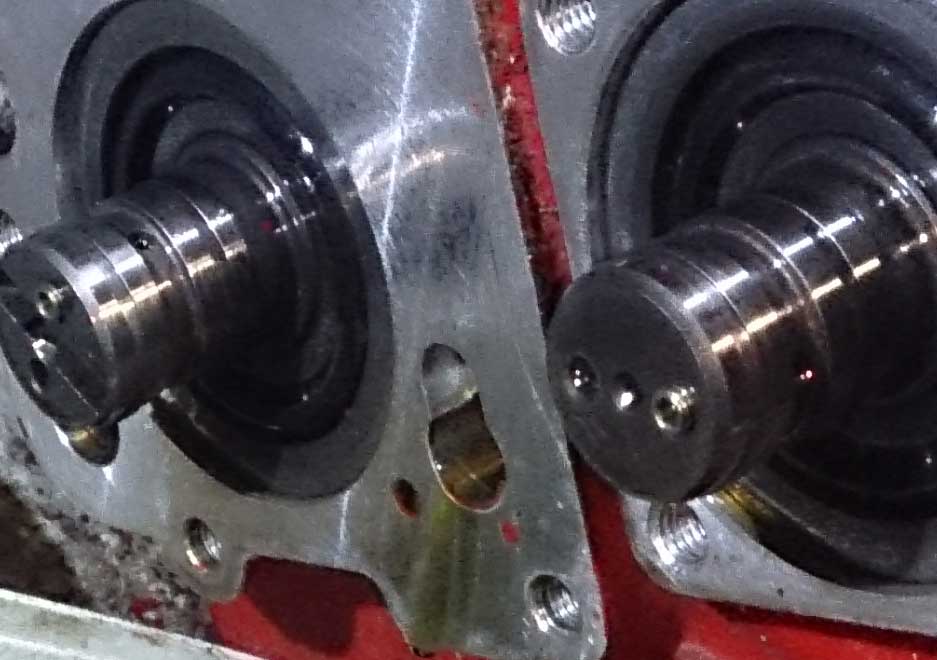
Further mystery is the lack of registering pressure on the oil on both boxes (even the one working fine (stbrd box)
Now that I have it out, I'll try to tap on these hallen screws that are around the body.
Tapping on the return pipe from the heat exchanger as it enters the diverter assembly on the right.

Polishing the hole, getting a few silicone o-rings and testing is nothing.
If it works, I'll remove stbrd diverter assembly and examine. Check dia of the worn out bit and get the machinist to match that with no o-rings.

Other than that, running out of ideas especially considering the 620h on the boxes.

cheers

V.
 
Re: port gearbox works only on reverse

SH,


  • oil pressure manage to wear the area where oil was trying to squeeze between shaft and casing.
...

Polishing the hole, getting a few silicone o-rings and testing is nothing.
If it works, I'll remove stbrd diverter assembly and examine. Check dia of the worn out bit and get the machinist to match that with no o-rings.
I would rule out erosion by the oil. in just 600 hours. We observe screw compressors run for > 50,000 hours and do not observe oil or gas erosion of any consequence to castings, shafts etc. Now bearing failure, thats another matter ...

What bears on the worn area - is it an outer bearing race - if so it should be firmly held. I wouldn't go adding in any form of sealing ring not intended to be there.
 
Last edited:
Re: port gearbox works only on reverse

comeon then, give us the top 10 WD videos!

I'd have a job getting it down to 10 but these are some of my favourites....

"1978 Porsche 928"
"1976 Porsche 911 2.7S Targa"
"1972 Alfa Romeo Spider Veloce 2000"
"1982 Lotus Esprit S3"
"1971 Fiat 500L"
"1974 Citroën DSuper 5"
"1984 Bentley Mulsanne Turbo"
"1975 Ferrari Dino 308 GT4"
"1970 Bond Bug 700ES"
"1968 Volvo 1800S"
"1968 Lotus Elan S4"
"1973 Jaguar E-Type"
"1979 Mini Moke"
"1982 DeLorean DMC-12"
"1992 Morgan +4"
"1977 Renault Alpine A310 V6"
"1974 Porsche 914-4"

Full list here https://en.wikipedia.org/wiki/List_of_Wheeler_Dealers_episodes.

Pete
 
Re: port gearbox works only on reverse

I would rule out erosion by the oil. in just 600 hours. We observe screw compressors run for > 50,000 hours and do not observe oil or gas erosion of any consequence to castings, shafts etc. Now bearing failure, thats another matter ...

What bears on the worn area - is it an outer bearing race - if so it should be firmly held.

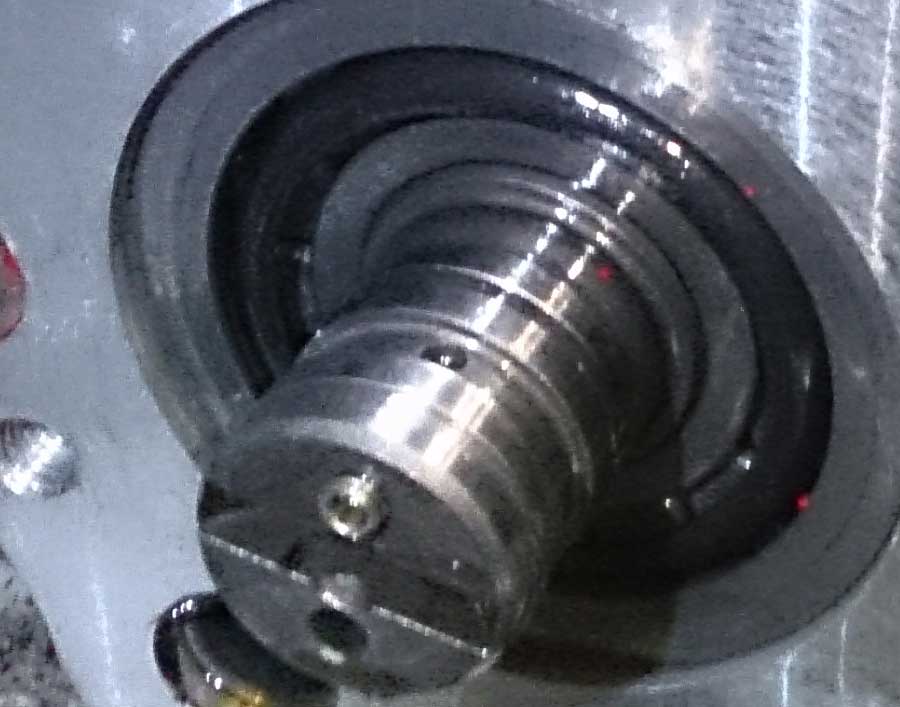
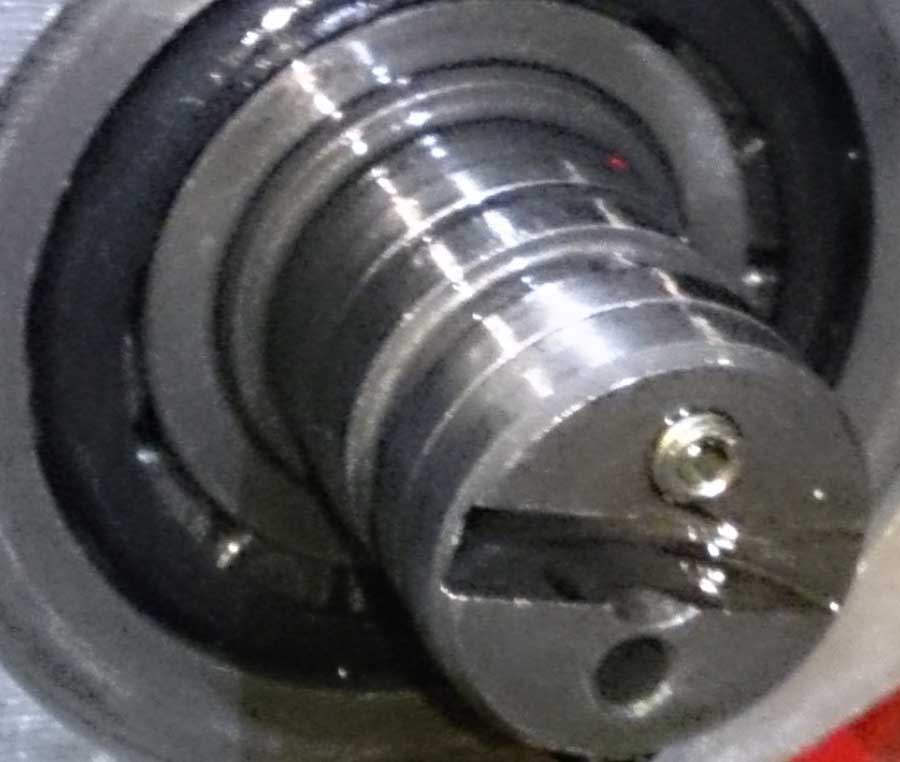
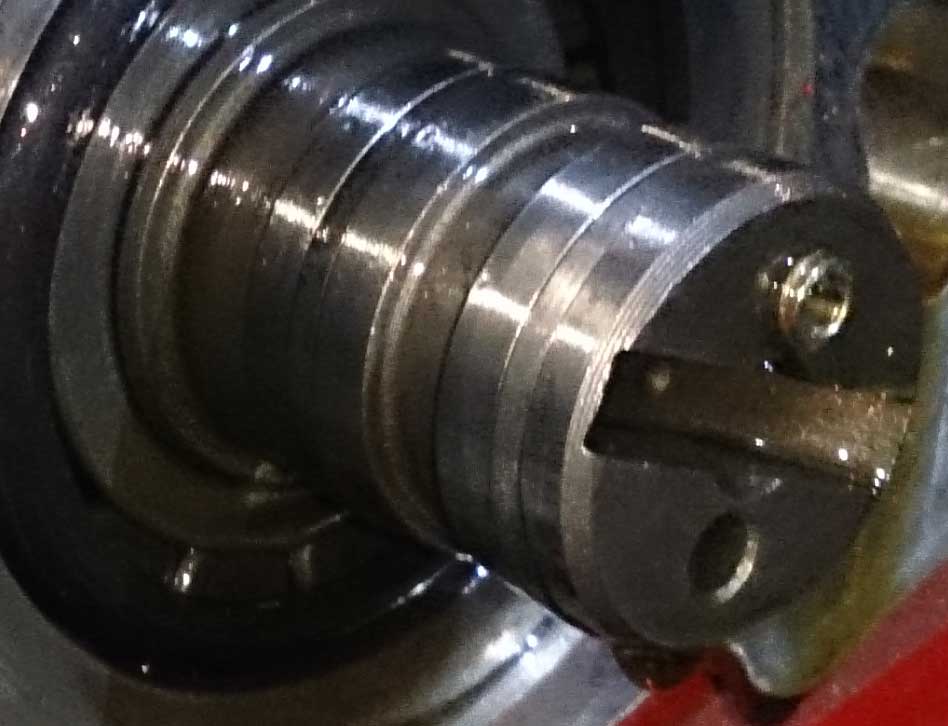
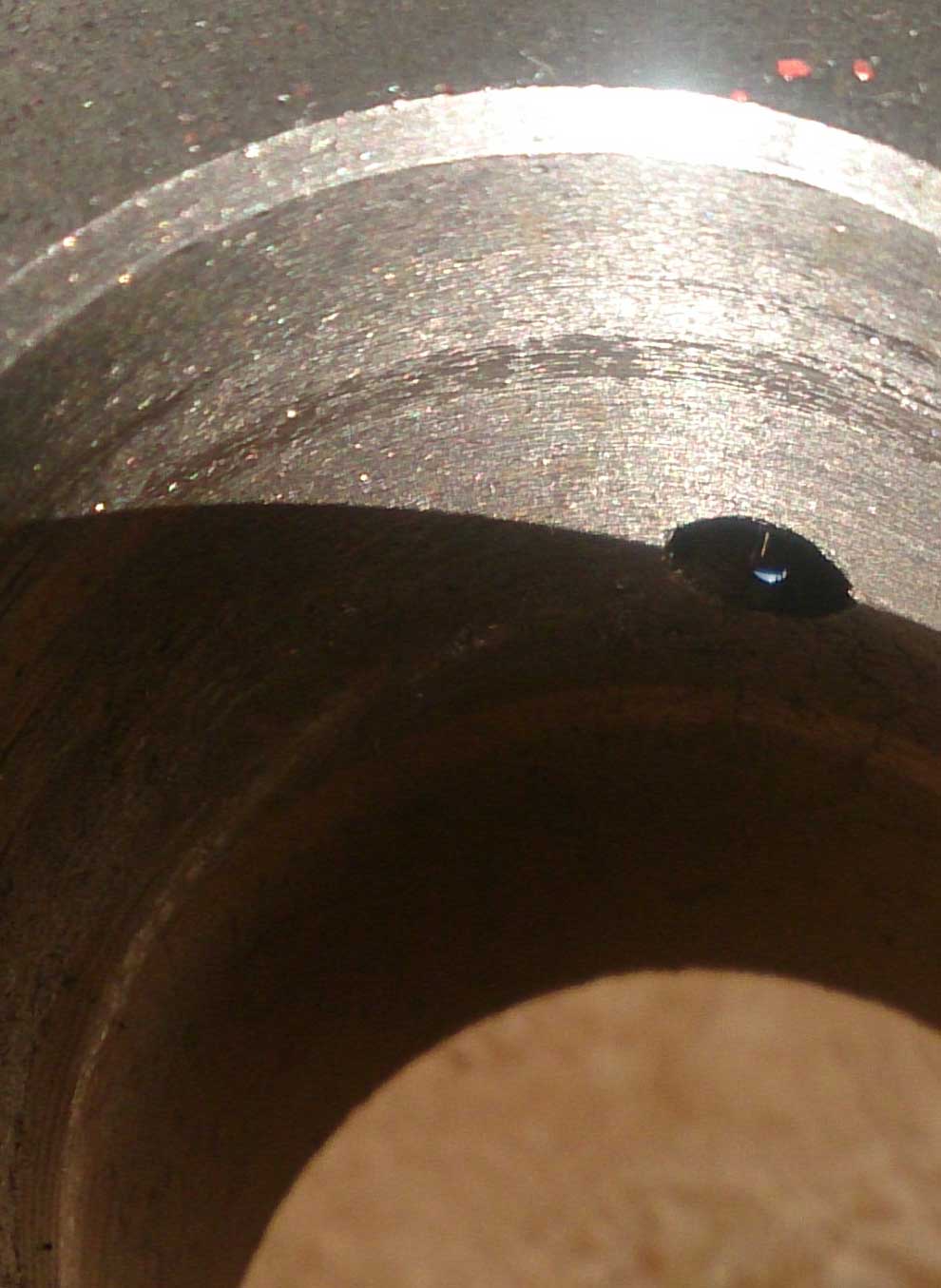
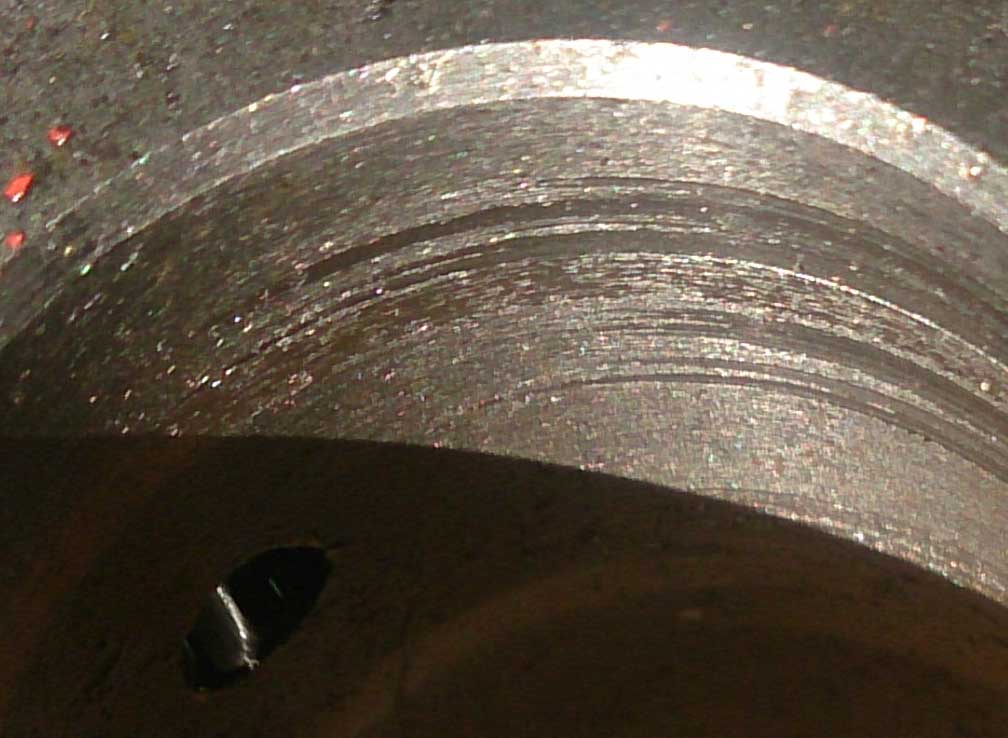
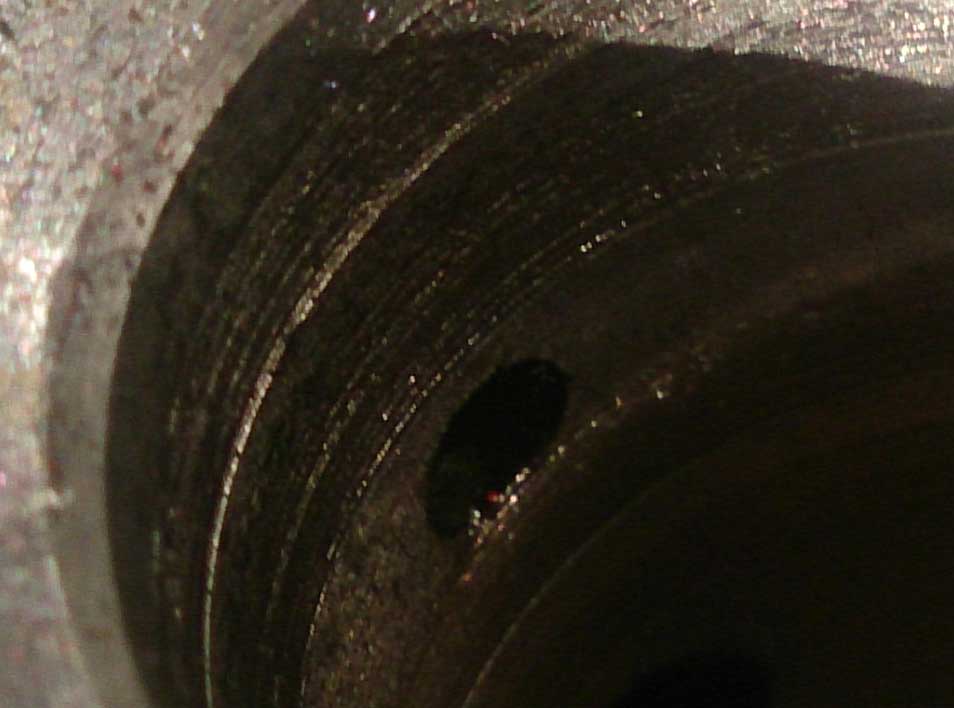
OK, managed to crop and prepare some detailed hi rez pics for you. On examining the last one, it is easy to match the unworn part with the groves on the axle. So I'd guess that the axle for some reason is touching the housing wearing the material there. Which would either mean bent shaft (I'd guess highly unlikely!) or failing bearing.
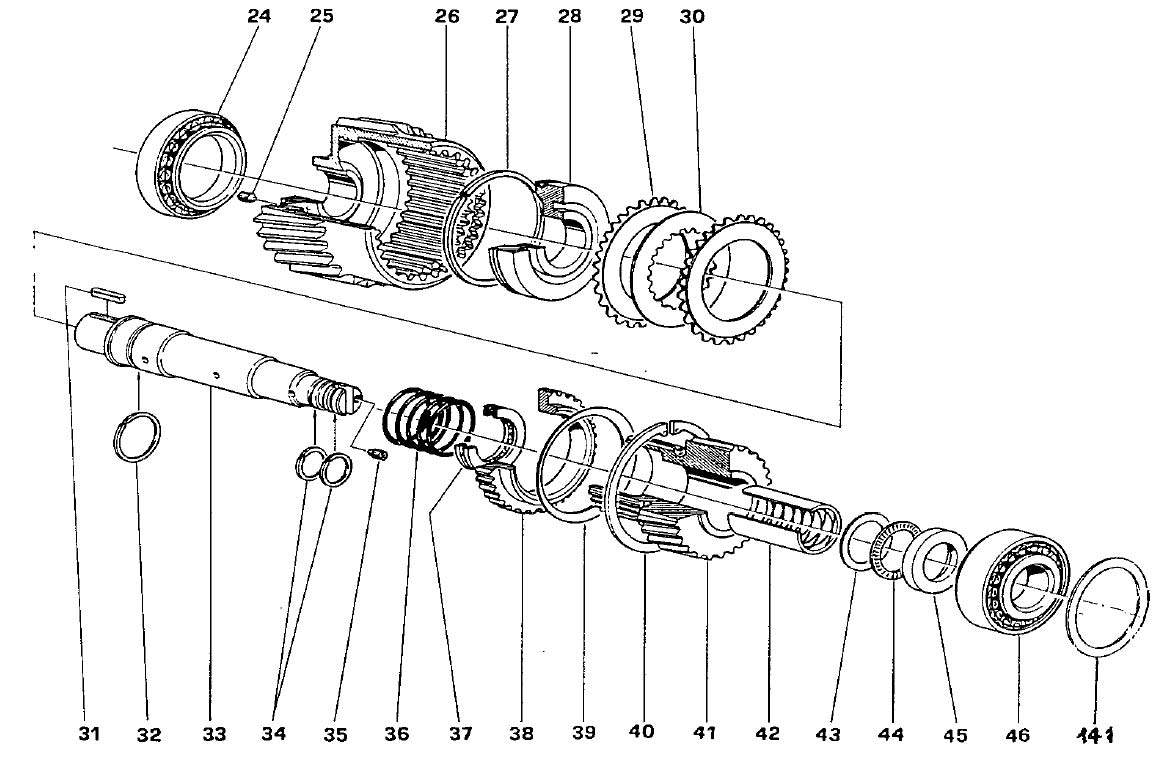
From the diagram it's needle bearings (translating Greek here, not up to all the mech eng terminology I'm afraid) which should make the axle rather stable and robust... I'm attaching a high rez diagram of the axle assembly.

I guess before refitting for test purposes the diverter assembly on there, I could get someone to turn the engine on the starter motor and see if axle is true. For 20-30secs I wont be damaging the gbox (more than what it is now...)

Very long shot is that diverter assembly has moved on it's centers (don't know how easy that would be ) and was fouling on the axle...

anyway, have a look at the following pics:

technodrive_14.jpg


technodrive_15.jpg


technodrive_16.jpg


technodrive_17.jpg


technodrive_18.jpg


technodrive_19.jpg


technodrive_20.jpg


technodrive_21.jpg


technodrive_22.jpg


and extracts from the service manual:

technodrive_23.jpg


technodrive_24.jpg


cheers

V.
 
Re: port gearbox works only on reverse

we will see, MM comment underneath is a bit confusing. Sketch on the exploded diagram is an old proper drawing converted to PDF at reasonably good resolution to see bits but not high enough to establish if the ring is indeed a round rubber/silicon o-ring or a piston type ring square in section.
Well, my bet would be on something very similar to a piston ring - if nothing else, because that would make the "fascia elastica" description perfectly consistent.
Nobody in his right mind would call "fascia elastica" an O-R, which btw is called "o-ring" also in IT.
 
Re: port gearbox works only on reverse

Ok now I see it. To form the seal the shaft needs to be a very snug fit in the pump end housings and it won't tolerate any side play, which I suspect is the cause of the wear, especially as the wear pattern is uneven one side to the other. With the wear area present I can certainly see why it will not build up any significant pressure.

Which leads me to the bearings (items 24 & 28 on the upper shaft in the exploded view and similar in the lower view). These look like they are taper roller bearings, in which case something must pre-load them, presumably the clutch spring, but also the whole lot appears to be be locked by the split rings (missing !) items 34.

(The problem with studying an exploded view is that it is not obvious what all the parts do until observed close up and personal).

Sorry Vas, but I think it all has to come to bits to identify why the bearings are sloppy, and the damaged castings will need the machining mentioned earlier to restore the proper running snug clearance fit. I wouldn't be surprised if you identify some bearing damage once it is in bits.

Possibly due to aggressive operation at some point.

Edit

Looking at the Twin Disc MG502 manual item 22 on the clutch shafts seems to be the shim pack which would pre-load the assembly, and it describes the item 23 (in your pic 34) as piston rings, although the shallow recesses in your shafts don't look like piston rings, more like labyrinth recesses.

I have also found this manual which is similar but might have further details.

https://www.dropbox.com/s/6dnc5apxejj6vzn/Twin Disc MG502 MG502-1 1015924_0382_CD.pdf?dl=0
 
Last edited:
Re: port gearbox works only on reverse

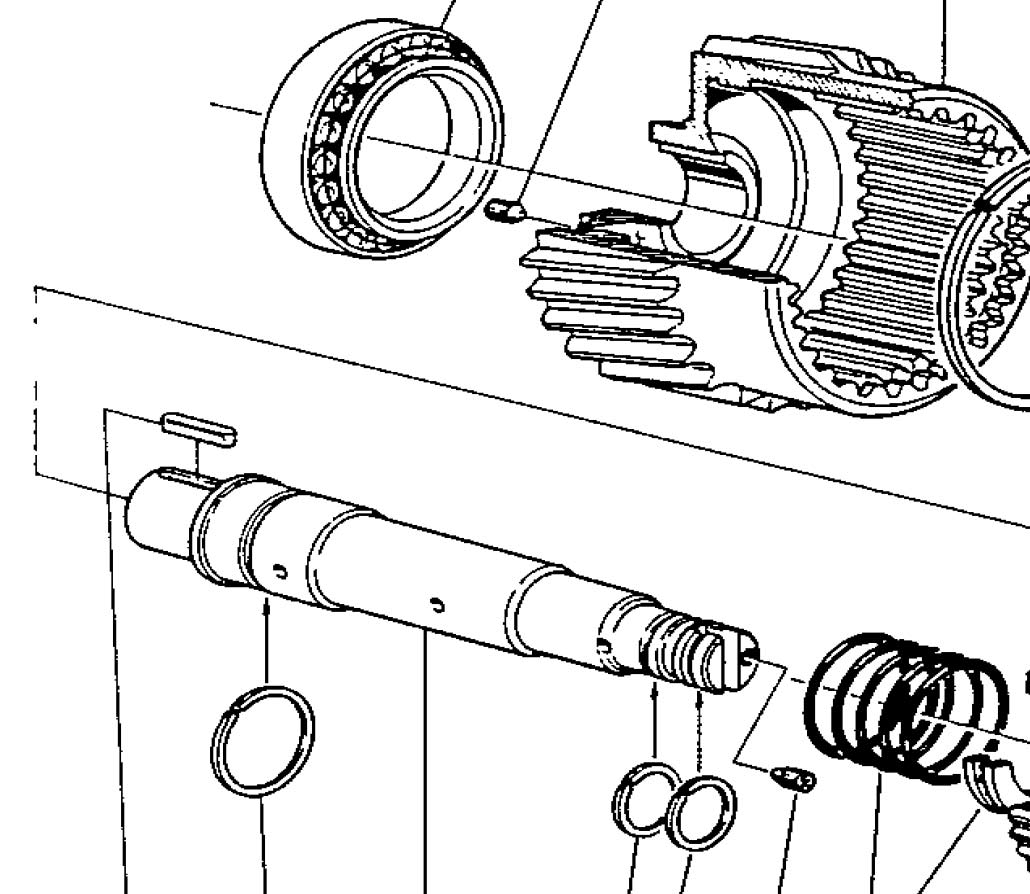
I"ll stick my oar in again.... The groove with the oil hole in it is just that, an oil way. Either side of it is a sealing ring ( like a piston ring) which has been worn flush with the shaft , because the taper bearings on the shaft were not shimmed correctly - not enough preload. The wear pattern is offset because of the radial thrust from the gear train.

P's thanks for the translation MapisM.
I still cannot open thepdf, on a nexus which refuses to cooperate!
 
Last edited:
Re: port gearbox works only on reverse

thank you very much MM SH NU

slowly getting there, well impressed that I may end up fully understanding how marine gearboxes work :D

OK let me get some facts down from my studying of the two manuals:

0.07-0.1mm preload has to be measured and shimmed properly before putting the cover/diverter assembly back on.
Makes sense that this is not right now (easy to measure!) which explains the non-uniformal wear on the diverter case.
Further the fact that the main axle that the power is transfered is on the oposite side of the wearing (have to check it but I'm pretty sure about that) justifies the uneven wear.
So weak pressure on the taper roller bearings (what I called needle bearings, thanks for the terminology SH!) enables forcing the axle in the oposite direction of the main output axle creating the wear.

I'm happy with that and does make sense, also matches the little metal debris found on the oil filter.

Now, on the seal ring being rubber or steel, I'll measure and examine the grove and we can establish that. Personally I don't believe there was anything there, there would be signs of wear on the grove footprint on the casing not on the solid axle bit!
NorthUp thanks for the explanations, but how would you justify the lack of any trace of these two seal rings?
Don't forget that the manuals I'm reading are from a "brother" box with straight output axle, mine is 10deg slanted one (170 vs 880) and more detailed ones are from a later cousin (iirc) so some type of sealing is not cast in stone...

Maybe the labyrinth recesses that SH mentions are the solution. Care to explain how these would work SH and what sort of tolerance they'd handle?
Finally, what's the reason for the sig change SH, so soon after getting your corvette?

The 2 million drachma questions are:

why was it wrongly shimmed or why shimms wear was so excessive on 620h

are the tapper bearings ok, will I make it without a gbox out with the right preload and the sleeving of the diverter?

No answer on the first one, I think the second is probably I'll make it for a while...


cheers

V.
 
Last edited:
Re: port gearbox works only on reverse

I'd have a job getting it down to 10 but these are some of my favourites....

"1978 Porsche 928"
"1976 Porsche 911 2.7S Targa"
"1972 Alfa Romeo Spider Veloce 2000"
"1982 Lotus Esprit S3"
"1971 Fiat 500L"
"1974 Citroën DSuper 5"
"1984 Bentley Mulsanne Turbo"
"1975 Ferrari Dino 308 GT4"
"1970 Bond Bug 700ES"
"1968 Volvo 1800S"
"1968 Lotus Elan S4"
"1973 Jaguar E-Type"
"1979 Mini Moke"
"1982 DeLorean DMC-12"
"1992 Morgan +4"
"1977 Renault Alpine A310 V6"
"1974 Porsche 914-4"

Full list here https://en.wikipedia.org/wiki/List_of_Wheeler_Dealers_episodes.

Pete

I'll add it in my xmass break must watch list then :D

cheers

V.
 
Re: port gearbox works only on reverse

looking at this picture there does seem to be two distinct bands either side of the oil hole where rings could be worn flush. Or could just be trick of the light..

technodrive_20.jpg
 
Re: port gearbox works only on reverse

On the first of your pics on post 70, the groove you can see in the middle of the circumference of the shaft, with the circular hole in it, that is the groove that fills with oil, transferring pressure to the clutch pack via that hole and down the centre of the shaft. It is fed oil via the outer casting that you have unbolted, from the control valve. It's a groove so the feed of oil is continuous as the shaft turns. Ahead and astern of that oil groove as kevb says above you can see a difference in the surface of the shaft- a ring- these are the worn down to flush piston rings. They are made of a different material prob cast iron, hence the different texture. Incidentally, the astern shaft doesn't look too clever either! Have a look at the other gearbox to compare. Here's a random Google image showing what you should have, without the rings in place
http://i.ebayimg.com/images/i/261633908672-0-1/s-l1000.jpg
 
Re: port gearbox works only on reverse

A labyrinth seal works on the principle of pressure drops and flow across a restriction. As the oil floes through the restricted area its pressure drops. So by creating some zones with grooves the flow speed reduces and the pressure momentarily increases, creating a back pressure to the preceding restriction, the sequence repeats and the pressure drop is controlled effectively.

Was widely used to sealing the high pressure side of steam turbines to prevent the steam pressure blowing the oil out of the bearings amongst other engineering devices.
 
Re: port gearbox works only on reverse

Bear in mind when the clutches are engaged the oil flow is almost zero, pressure against a dead head. Lubrication will be by spray and splash from elsewhere in the gearbox
 
Re: port gearbox works only on reverse

Bear in mind when the clutches are engaged the oil flow is almost zero, pressure against a dead head. Lubrication will be by spray and splash from elsewhere in the gearbox
It is not the flow to the clutches.but to the low pressure zones of the gearbox, through the journal restrictions. These will be continuous. The flow to the clutches is minimal even in activation along the oil ways in the shaft annular grooves and passages.
 
Top