Solent - places to practice anchoring

HamiltonSpreader

New Member
Joined
18 Apr 2025
Messages
10
Visit site
Please can I have some recommendations for places in the Solent that are good for practicing anchoring. Just somewhere uncomplicated/easy to access, to go and drop the anchor, have a coffee and bring it up again. Thanks in advance.
 
I suggest you take a seasick tablet if you are going to be that ill after a coffee 😁 :ROFLMAO:
Seriously there are literally 100's of places to try depending upon where you are located and prevailing winds. Allow anchorages where there is plenty of space for swinging/getting it wrong e.g Osborne Bay, Priory Bay, Totland Bay, outside Keyhaven to name a few. Avoid places like East Head and Newtown Creek on a crowded weekend.
Good luck, it really isn't that difficult to get right
 
It also depends on the wind direction. You want to be sheltered and also to drag away from the beach if it goes wrong.

On a summer's day, with a SW'ly, you'll see people going in to Osborne bay - just don't go in to the protected swimming area.
 
My top tips for Solent anchoring -

1. Make sure your calcs allow you to stay there at the bottom of the tide in case your anchor gets snagged (there is about 4m range at springs).

2. Set a trip line.

3. Make sure any seasick crew take something as most anchorages around the main Solent are very rolly with passing vessels as the water rolls up into the shallows.

4. Go somewhere exciting, eg just east of the drying bit of Bramble Bank or on the bank itself subject to rule 1 & 2. No restrictions on anchoring there, just watch the world revolve around you. Make sure to hoist the ball!

Other areas to consider, just north of the swashway into Portsmouth, just west of Ryde Pier, by the western side of the entrance to Newtown. Just outside the main shipping channel by Hythe Pier and watch the big ships pass close. Again, pay attention to Rule 1. People have been sailing ships around the Solent for centuries and the seabed may have some old bit of ironmongery you can get snagged on.

5. When your anchor is off the bottom, raise it to leave it just poking in the water and reverse away from the anchorage, in circles if necessary, until the grey clay like gloop is all washed off. We were pleased to find a ball in Newtown on Sat night as it meant we didn't have to poke 20kg of mud off the anchor in the morning.
 
5. When your anchor is off the bottom, hoist it to leave it just poking in the water and reverse away from the anchorage, in circles if necessary, until the grey clay like gloop is all washed off. We were pleased to find a ball in Newtown on Sat night as it meant we didn't have to poke 20kg of mud off the anchor in the morning.
I have not anchored in the Solent but there are one or two spots on the East Coast with a bit of mud. We have also used the reverse-off methods at times. It can also help to bring the chain up tight without breaking out the anchor for a minute or two, which will allow the mud on the chain to wash itself off.
 
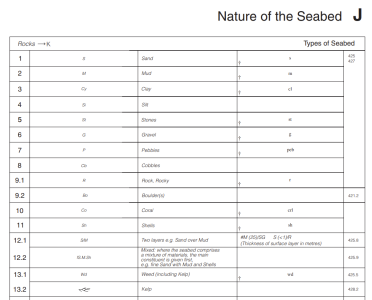
If you feel the need too practice then recommended locations will be invaluable. It would be useful if the contributors defined the seabed and depths likely for the locations they suggest

But this is just the beginning (and usually lacks anything controversial.

If you really want detailed advice I might suggest you define your vessel, how much chain, length (metres) size (mms) is in you chain locker and how much rope you intend using. Is your chain marked, length (every 5 metres, every 10 metres etc or not at all.

Define - do you have an electric windlass, where is the on off aka up and down switch, usually bow (foot switches) helm (rocker switch)

Importantly what type and size of anchor you are going to use

You don't need it but

Choose a nice day, sunshine will make the event so much better. I suspect at this time of year it might be a bit chilly, make sure the crew are wrapped up. It might be time to make some hot chocolate (or break out the Dewar you thoughtfully filled)

Good Luck

Keep children and dogs away from the chain and windlass

And report back.

You will need to sort out the wheat from the chaff - but ask if you don't understand - there are no penalties for not knowing everything

Jonathan
 
My top tips for Solent anchoring -

1. Make sure your calcs allow you to stay there at the bottom of the tide in case your anchor gets snagged (there is about 4m range at springs).

2. Set a trip line.

3. Make sure any seasick crew take something as most anchorages around the main Solent are very rolly with passing vessels as the water rolls up into the shallows.

4. Go somewhere exciting, eg just east of the drying bit of Bramble Bank or on the bank itself subject to rule 1 & 2. No restrictions on anchoring there, just watch the world revolve around you. Make sure to hoist the ball!

Other areas to consider, just north of the swashway into Portsmouth, just west of Ryde Pier, by the western side of the entrance to Newtown. Just outside the main shipping channel by Hythe Pier and watch the big ships pass close. Again, pay attention to Rule 1. People have been sailing ships around the Solent for centuries and the seabed may have some old bit of ironmongery you can get snagged on.

5. When your anchor is off the bottom, raise it to leave it just poking in the water and reverse away from the anchorage, in circles if necessary, until the grey clay like gloop is all washed off. We were pleased to find a ball in Newtown on Sat night as it meant we didn't have to poke 20kg of mud off the anchor in the morning.

Gotta love forums always contradictory advice. I reckon 1-3 is gross overkill. 4 is just a bad idea - OP should go somewhere nice and calm and enjoy the experience. 5 never ever works for me beyond getting the very worst off. I always need a brush.

So that's a full house.
 
Gotta love forums always contradictory advice. I reckon 1-3 is gross overkill. 4 is just a bad idea - OP should go somewhere nice and calm and enjoy the experience. 5 never ever works for me beyond getting the very worst off. I always need a brush.

So that's a full house.
When you've had to use a blunt junior hacksaw to saw through a chain to free yourself from a snagged anchor in a charter boat in a fast ebbing anchorage then you can decide if this is "gross overkill".

We all learn from our experiences. This is mine.
 
What type of anchor are you going to practice with? Internet ''wisdom'' seems to suggest that practicing with some types of anchor would be a waste of time, utterly useless apart from realizing they are crap. Or, yours might fall in the ''chuck it over the side and it s done'' anchor category, so probably useless practice as well. :cool:
 
When you've had to use a blunt junior hacksaw to saw through a chain to free yourself from a snagged anchor in a charter boat in a fast ebbing anchorage then you can decide if this is "gross overkill".

We all learn from our experiences. This is mine.

I once pulled myself down 10m to manipulate an anchor out of a crevice. I'm sure we've all got our Anchor horror stories. But I only bother with a trip line in places with a reputation for needing one and looking around me that's typical.

But there's no right answer, the OP can read both opinions and make his own judgement.
 
If you are singlehanded then find somewhere with plenty of space and sheltered from wind and waves. Plenty of places to anchor for a short stop on the Isle of Wight N side for a few hours. I have done this often to avoid tide. Look on Navionics or a pilot guide. Choose according to wind but check the tide out too - easy spots like off Newton Creek have significant tide flow which can sweep you onto nearby boats or obstructions whilst setting or retieving.

Once you have the routine established its easier than marina berthing.
 
If you feel the need too practice then recommended locations will be invaluable. It would be useful if the contributors defined the seabed and depths likely for the locations they suggest
He didn't actually ask for tips on anchoring - just spots that would be good for easy practice. To me part of the "process" is working out if the bottom is OK, the depth I'll encounter etc - and that would be part of the "practice".
When you've had to use a blunt junior hacksaw to saw through a chain to free yourself from a snagged anchor in a charter boat in a fast ebbing anchorage then you can decide if this is "gross overkill".

We all learn from our experiences. This is mine.
no rope bitter end?
I once pulled myself down 10m to manipulate an anchor out of a crevice. I'm sure we've all got our Anchor horror stories. But I only bother with a trip line in places with a reputation for needing one and looking around me that's typical.

But there's no right answer, the OP can read both opinions and make his own judgement.
I don't routinely use a tripping line, but interestingly I did in an area with a reputation last year and bouyed it. Because I was sorting that end my crew were on the helm and actually found it far easier to visualise where the anchor was relative to us etc. So even if its not routinely needed he might want to consider it whilst becoming well versed, although its an extra thing to get tangled etc. so isn't necessarily a simplification.
 
He didn't actually ask for tips on anchoring - just spots that would be good for easy practice. To me part of the "process" is working out if the bottom is OK, the depth I'll encounter etc - and that would be part of the "practice".

no rope bitter end?

I don't routinely use a tripping line, but interestingly I did in an area with a reputation last year and bouyed it. Because I was sorting that end my crew were on the helm and actually found it far easier to visualise where the anchor was relative to us etc. So even if its not routinely needed he might want to consider it whilst becoming well versed, although its an extra thing to get tangled etc. so isn't necessarily a simplification.
Yes, the 50m chain was fixed to the boat with a short rope to a fixing in the locker. Since we were only in about 3m of water, I cut the chain at the bow roller hoping remaining chain would be sufficient but the charter company needed to fit a new 50m length for coding, so now my own boat has the 47m that replaced the 25m it had when I bought her ;-)

The charter company also fit Rocna so the snagging cost me around £1,000 in total. I still have the GPS position of the anchor and now I've learned to scuba dive and got the kit, may go back one day and see if I can recover it. I did think of pulling myself down the chain to investigate but tide was running strong, water was cold and this would be inherent with risk of me getting stuck and drowning.
 
Places I'd suggest for playing with your anchor.

1. NOT Newtown Creek. The bottom is mud soup, well stirred by a million anchors before you. Yes, you can get an anchor to bite, but it may not be the first try or even the second.
2. Outside Newtown Creek, west of the entrance. Much better holding, but can be rolly.
3. Osbourne Bay, but it's standing room only during summer weekends
4. The Folly reach on the Medina, south of the pontoons, on the west side, but you'll dry out.
5. East Head, in Chi Harbour. Again, standing room only at busy times but, if you can take the ground, there's a spot roughly south of Snow Hill buoy.
6. Another spot in Chi Harbour, east or NE of Pilsea Island, which isn't so busy
 
1. NOT Newtown Creek. The bottom is mud soup, well stirred by a million anchors before you. Yes, you can get an anchor to bite, but it may not be the first try or even the second.


It's funny how we are all different, we anchor at Newtown Creek a lot of the time, never had a single problem holding, never had to set it a second time but you do get a muddy anchor that needs a good hose down afterwards.
 
I feel that it’s worth pointing out that anchoring is no longer permitted close to shore from Yarmouth to Cowes. According to current charts that coastline is designated as a conservation area. Unfortunately that also includes the entrance to Newtown Creek.
Mike
 
I feel that it’s worth pointing out that anchoring is no longer permitted close to shore from Yarmouth to Cowes. According to current charts that coastline is designated as a conservation area. Unfortunately that also includes the entrance to Newtown Creek.
Mike

The only up to date charts I have access to right now are Orca and there's no 'no anchor' zone on that and the area outside Newtown Creek is marked with an Anchor just as it always was. Google is silent. I can't find a NTM.

I could easily be wrong but I think the no anchor Zone might just be a weird feature of Navionics Charts with no legal basis.

Someone asked a few years back with no takers:
 
Top