Homemade tools

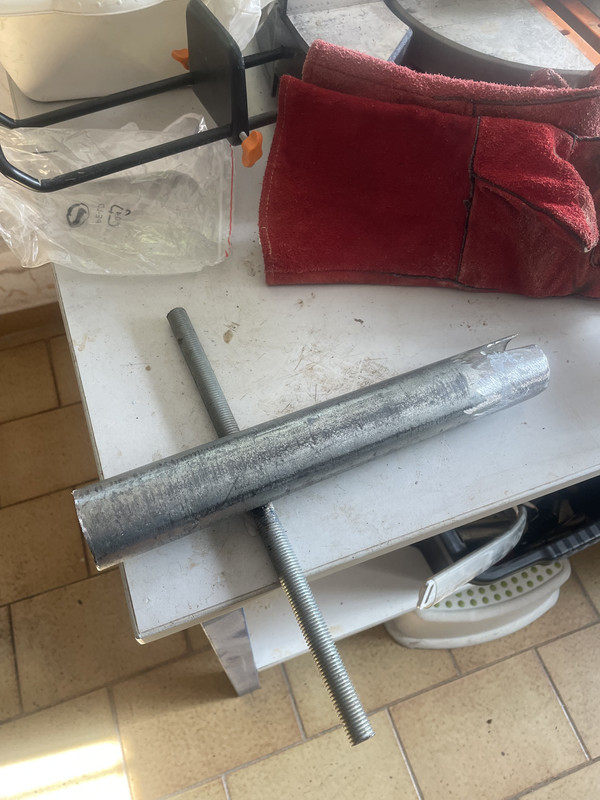
I’ve made loads of tools.....I don’t have a machine shop...just a workshop. So I get a more rough and ready finish than your superb machine fit. My favorite method is to find two tools that almost fit the job...then cut and weld them together so they are perfect for the job at hand.
I think your nipple rings look great....I just don’t have the sausage fingers to do them justice 😀
Yes we rememberScreenshot 2025-04-21 at 14.10.16.png
 
Let's put this to bed once and for all:
The initial statement made no mention of changing the standard male end found on a cable for a female one,
Eh, the standard arrangement is for the male end of the cable to go in the marina end of the socket and the female end goes to the boat.

I did say that it would be marginally safer to exchange it for a female one which he now seems to be doing.
Anything else would be dangerous on any installation. It’s not his fault you have forgotten which end of the cable normally goes to the boat before you started preaching.
It still leaves the live end of a trailing cable which he has now confirmed he will secure with a lock.
I agree it’s not ideal but walk round any marina and you’ll find such a cable or someone who has unplugged in the wrong order - people aren’t electrocuted all the time. To be honest I’d be more concerned that a cable which is left in place is not being regularly examined like it is when we install and remove each time so wear and tear will go unnoticed.
However IP44 is a very basic splash proof rating which is OK for a fixed installation such as the pontoon distribution panel
And for connecting to the boat which is very exposed to rain! Plenty of “extensions into extensions” around yards, campsites and marinas too which if hung up and not left in a puddle are quite reliable.
but it is not immersion proof
Nobody claimed it was. It’s IP44 which means it will cope with ordinary rain.
and until I see evidence of a substantial foolproof arrangement for securing it I still maintain it's a liability.
Probably no more so than many temporary trailing cables though and indeed done with some care and thought COULD be actually less of a trip hazard, less susceptible to trolleys.
Then you ask the question, why? To save a minute for running out and then another minute when collecting your shore power cable either wearing a pair of gloves and or giving it a clean by running it through a cloth as you coil or wind it up if it gets that dirty.
I didn’t ask! But I agree it’s never need a major issue for me, but I’m sure I plenty of boats leave their cables just lying on the dock (hopefully turned off / unplugged).
 
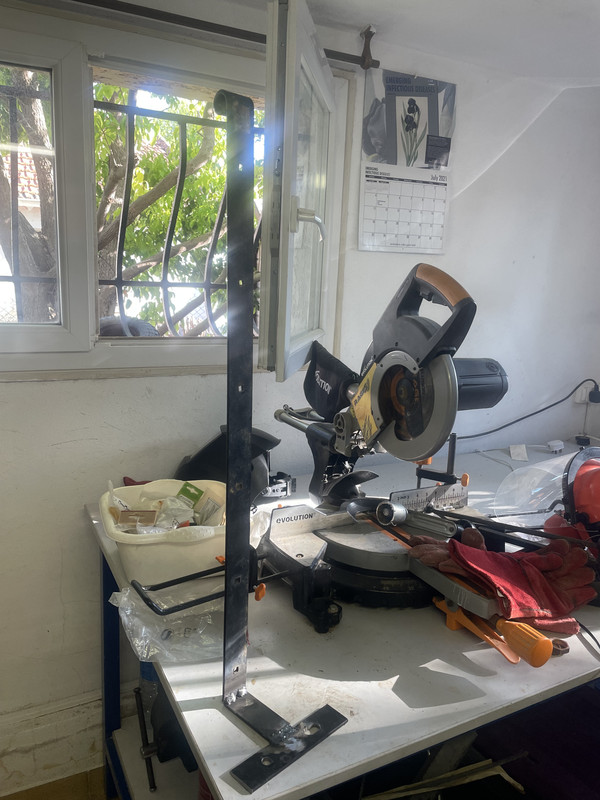
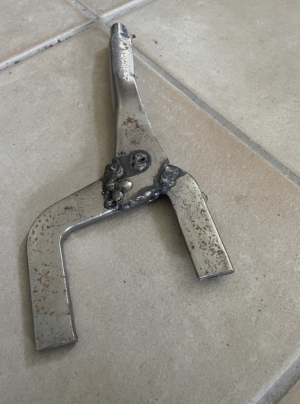
A work of functional beauty - particularly how the welding is such a perfect reflection of the overall manufacturing quality 😍
What people seem to not get is the speed of manufacture….I’m working on the boat…realise that I need a tool that doesn’t exist (or I forgot to purchase)…I drive home…hit the workshop and within minutes I am back on the road
 
Here’s a recent example…. I am fitting a new thru hull…when I need a tool…. I rush home….the Sikaflex is already applied…but I need a pipe of an exact EXTERIOR dimension…interior pipe dimensions are easy peasy…I’m running around my garden with my vernier caliper…when I came across the jockey wheel of my trailer…bingo !…take it into the workshop, saw it in half weld on a handle…bonus…it already had grooves in exactly the right place !…back to the boat before the sealant even got tacky
 
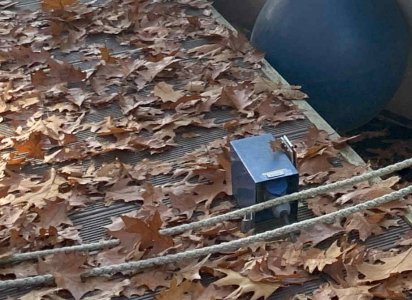
Even though it is complete…I want to add a supporting bracket tomorrow…the pontoon is a little bouncy to stand on…especially if anyone else steps on it….the stand has a natural handle on the top (from its previous life as a hinge)…so if someone lost their balance and grabbed it to support themselves, I want to make sure it doesn’t bend and they fall in the water
 
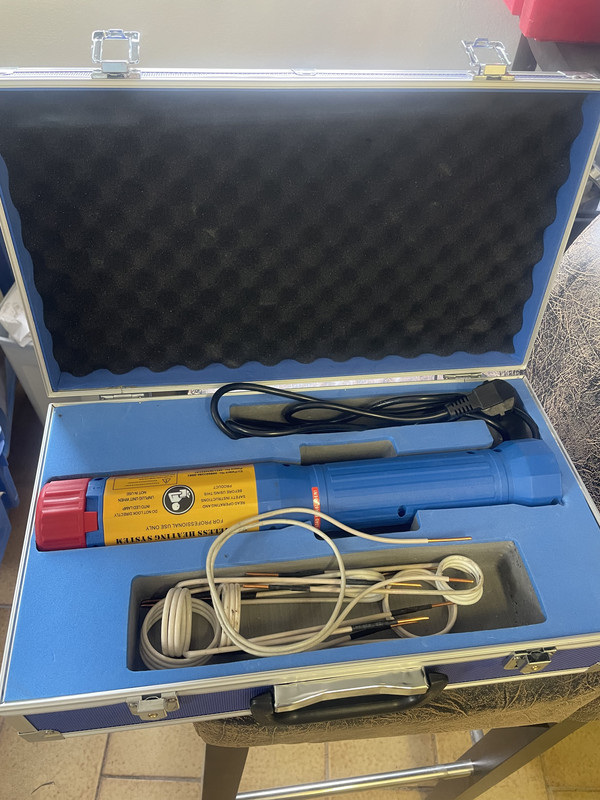
If you don’t bend your metal with one of these…then you are not having as much fun in your workshop as you should
 
Err, that’s how it should be anyway.

Plugs should be IP44 at least so most rain would be fine, so long as the “flap” lid still intact (often broken off/removed to fit the boat connector easily). Higher IP rated version are available. However best practice would still be not to have the live end where it can be dropped in the water.

Many marinas and boatyards I’ve been in you don’t get allocated a specific charging point - I’ve seen boats leave a cable connected with the switch turned off when they leave - kind of like putting a traffic cone outside your house to reserve the space when you get back. Marinas don’t like that either because if there appears to be to no free connections other customers moan/don’t pay for overpriced electric.
We have dedicated outlets for our berths, they have a bar and padlock to prevent people from connecting or disconnecting to a particular outlet, the outlets also have a flag system to indicate whether the berth can be used while you are away from it, generally we have 2 or 3 berths for visitors.
Harbourmaster has skeleton key that fits all the padlocks in case of need.
Socket1.jpg
 
The welding on the top of the curved bit looks a bit poor compared to the rest Bouba. Not that I'm saying that the rest of the welds are perfect. I don't have a welder so can't show any attempts of welding.

I do think that it is kind for you to put a handhold in on your berth for anyone who visits whilst you are away .....
 
Top