Fletcher Arrowbolt 21 - Project (70's/80's?)

Well, long overdue for update, but work and rain have hampered progress!

I removed plugs and confirmed engine turns over freely by hand cranking and then fitted a battery. Bilge pump and blowers work, but no sign of life from starter - slight voltage drop when key turned to 'start', so suspect solenoid.

Sent prop off for a refurb, but suspicions on condition confirmed - too electrolytically corroded to repair. Old prop was a 17 pitch, which also seemed a bit course, so now have a new 19 pitch (not fitted yet).

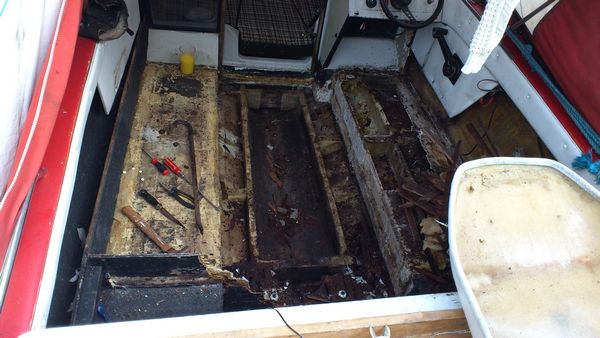
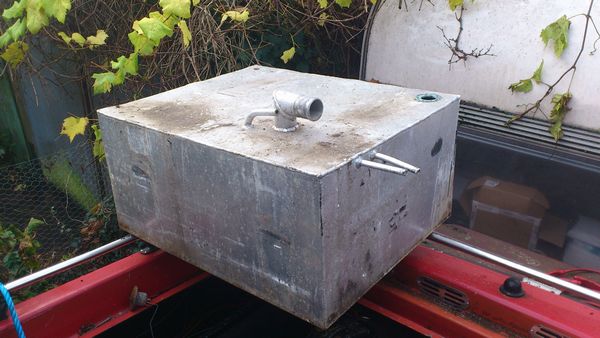
Have today started removing floor and bulkheads... :) Tank out and in good nick fuel gauge wasn't connected so need to run new wires and perhaps fit new sender. Have removed old one and will test tomorrow.

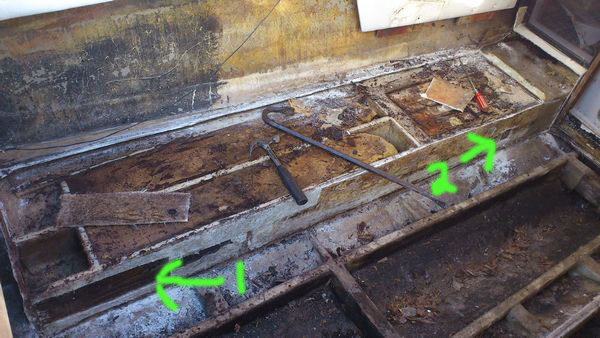
Removed top layer of starboard floor (seems to be two!), much wetter than expected! Removing fibreglass base layer and then lower floor - also rotten. Stringers appear solid, but will probably cut into fibreglass covering of them to confirm this. Will then either replace or re-glass as required. New floor will be glassed before fitting and then glassed into place.

There is some buoyancy foam between stringers, but this can be wrung out so won't replace! Contemplating plastic balls or similar as an alternative! :rolleyes: I know many will say not to bother with anything, but I like the idea of filling as much space as possible to limit available space for water to collect as once in, it can't escape. If I replace stringers, I will leave drainage holes to the bilge anyway from each of the sections.

Working tonight, but hoping for more progress tomorrow...

Rear seat and fuel tank removed.
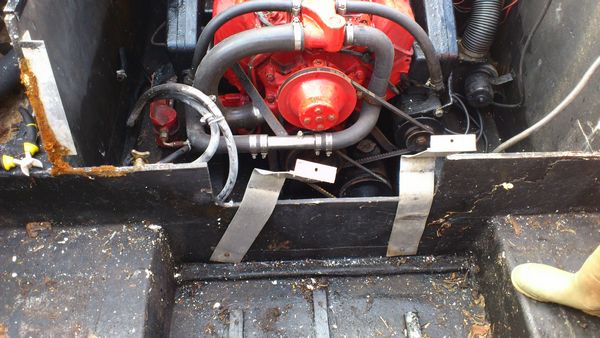
tank_out.jpg


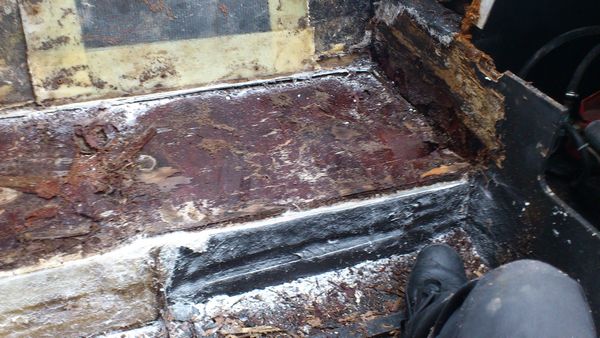
A layer of paint hides a multitude of issues...
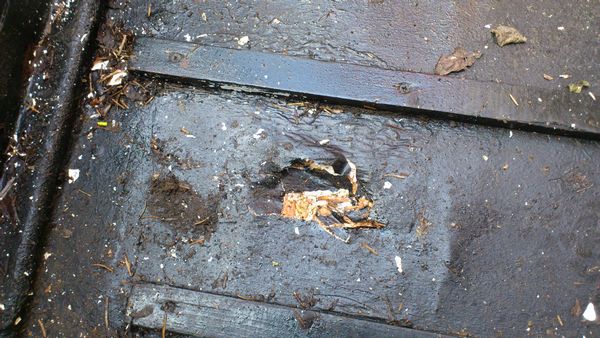
floor_1.jpg


The light coloured wood has the texture of cottage cheese! (removes with fingers)
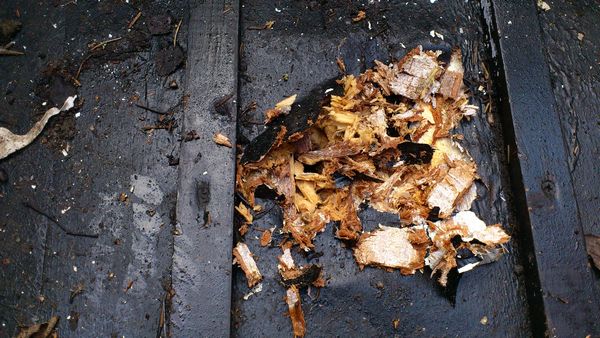
floor_2.jpg


Starboard floor doesn't 'look' that bad - just a coule of soft bits... :D
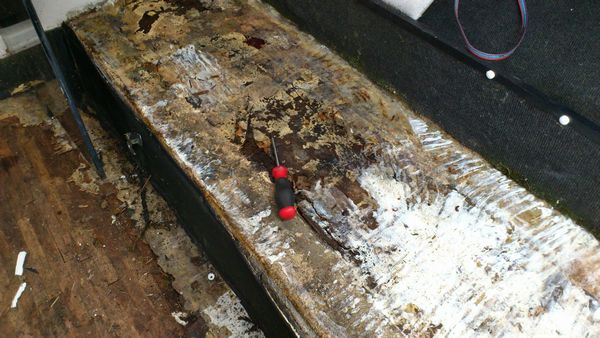
floor_3.jpg


However, knowing what lies beneath prompts some digging! Lifting away the fibre-matting...
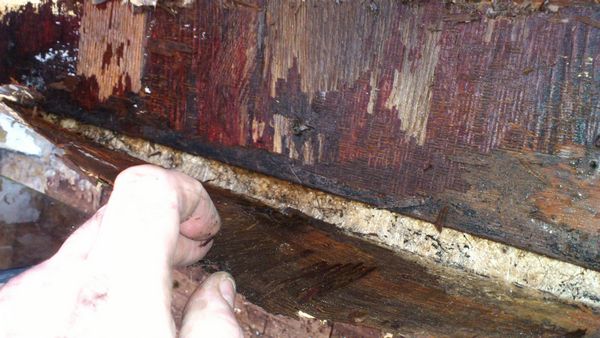
floor_4.jpg


First layer of 'floor' gone, also started to remove tabbing from bulkhead - I want to use as a template so hoping to remove complete.
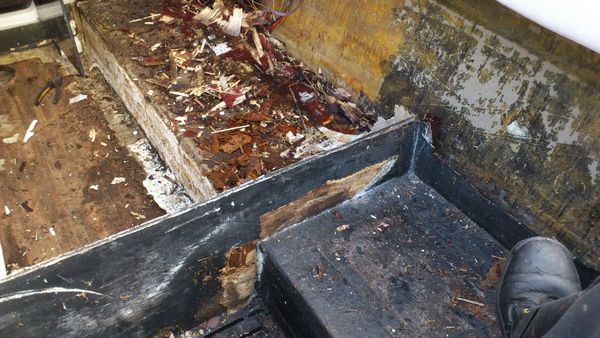
floor_5.jpg

And so on to the underneath layer... Bit harder going now as much more fibreglass. I think this is the original floor - top seems to be a later 're-inforcement'...
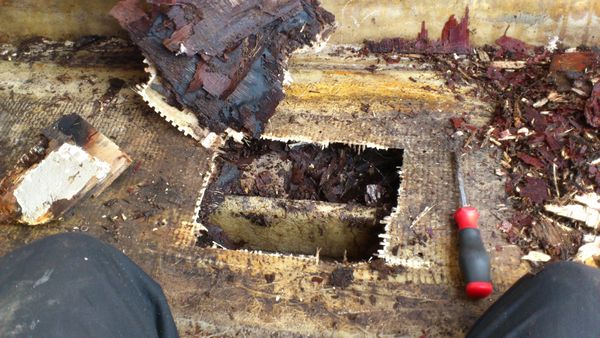
floor_6.jpg


More tomorrow if it goes to plan and perhaps an idea on the condition of the stringers... :D
 
Day 2 on floor...

A bit more time today - managed a good 4.5 hours in between household stuff and work!

Floor about 50% removed now, but now need to invest in a small circular saw or Dremel etc to cut away fibreglass where bonded to hull. I think I'm perhaps a bit heavy handed to continue with jemmy, screwdriver, hammer and chisel! :o (abandoned the latter in favour of screwdriver early on as not quite as sharp/destructive!)
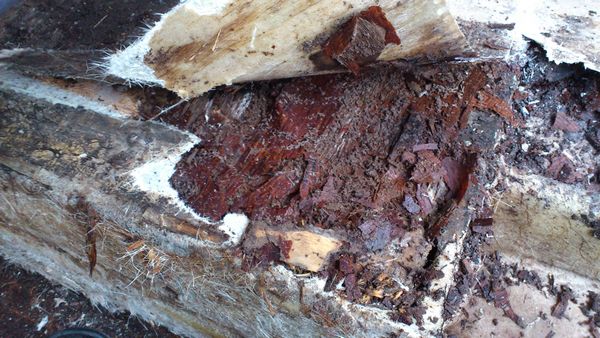
Not yet done a core sample of stringers, but now pretty sure they'll need to come out as original floor was nailed into them - together with various screw fixings. Water has clearly filled the recesses under-floor long term as it had nowhere else to go. Have removed one small stringer and whilst not yet rotten, it was waterlogged... :(

Anyway, here's the pics! :)

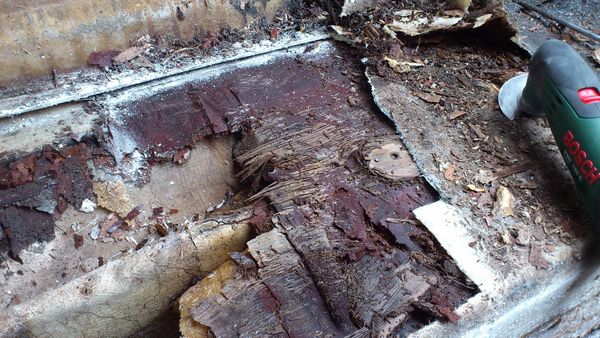
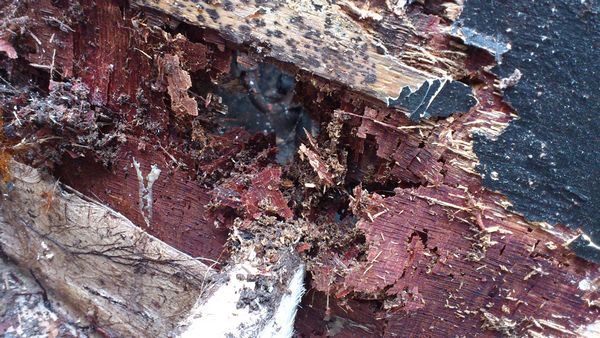
Peeling back the fibreglass under the starboard side of cockpit floor reveals a kind of laminated compost! :eek:
floor_7.jpg


Central blockboard floor out. Whilst much of the wood here was OK, the laminates both sides were rotten and thus the floor had 'sunk' between the stringers.
floor_8.jpg


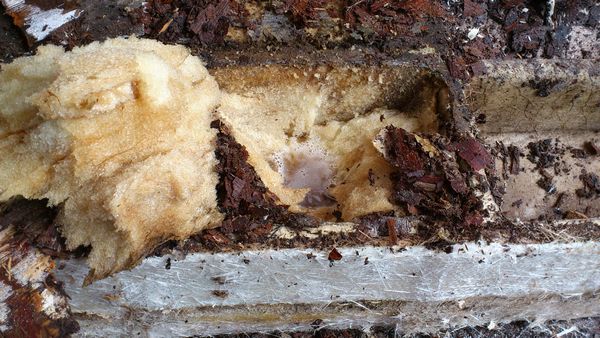
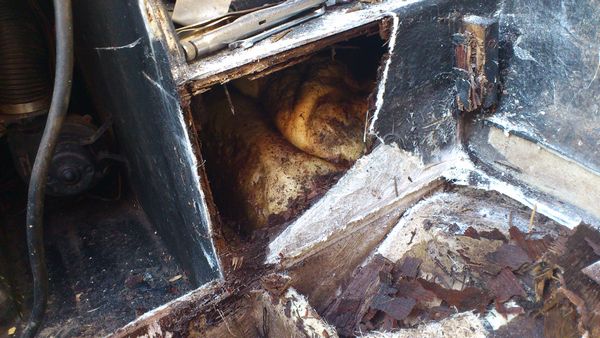
Buoyancy foam under the cockpit floor is saturated - look closely for the puddle where foam has been pulled out.
foam.jpg


..and so on to the port-side floor...
port_floor.jpg


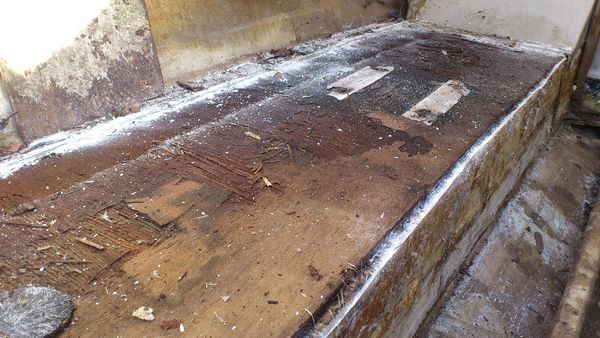
First look under the rubber matting and all looks ok - it isn't however as will be seen later I'm sure when the port side is also cut out.
port_floor_2.jpg


The wood that isn't rotten is waterlogged.
stringer.jpg


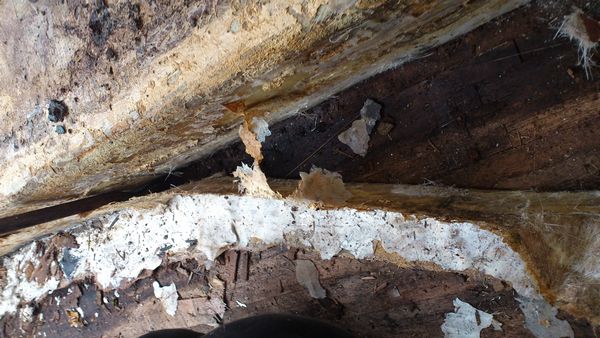
Like the floor itself, the floor carriers are not completely encased in fibreglass - just tabbed in along the edges. Thus water has largely done it's worst, but at least the bilge gets some air, so rotting nis slower here.
stringer_2.jpg


With a little help from a screwdriver and hammer to start and a jemmy to progress, the tabbing pulls away from the stringer.
tabbing.jpg


Good job that tank isn't wooden... :D
tank.jpg


No more progress until next weekend now, but armed with power tools for a more precision cut out of tabbing against the hull, the remainder of the floor should be cleared on Saturday - weather permitting!

Not yet sure what I'm going to fill the voids with? Not sure about foam, but I guess if I created glassed through 'drains', the water-logging would not be repeated? The thinking being that in the event of boat getting swamped, the foam would resist water ingress better than open space, and yet could drain if compartments were not sealed at the bottom... Any thoughts/experiences?
 
5 * topic:D Love these type of reads, shame i cant fast forward to the end product. I prefer the classic lines of that type of boat, but unless i could find a bargain and have a bottomless pit of money to re create the original only better with modern equipement and parts its a no hoper for me:mad:

That lump seems massive for a boat that size, what were fletchers performance specs for it back in the day:confused: Surely has to be a 50 mph + on flat water.
 
Just seen the pics and thought Oh my god:eek: your very brave, i would get dishartened, no doubt you have your work cut out.

Ive been slowly completing little jobs on mine now she winterized till next year, trying to work out some underwater blue led for swim platform, Hk and the states have some good ideas for diy kits.
 
5 * topic:D Love these type of reads, shame i cant fast forward to the end product. I prefer the classic lines of that type of boat, but unless i could find a bargain and have a bottomless pit of money to re create the original only better with modern equipement and parts its a no hoper for me:mad:

That lump seems massive for a boat that size, what were fletchers performance specs for it back in the day:confused: Surely has to be a 50 mph + on flat water.

I have the same view on the 'classic' appeal - hence I don't mind doing whatever it takes to get her back up to scratch. :) I think June is a somewhat optimistic target date however! I do intend to modernise a little and I'm slowly collecting materials/electronics as I go. I'm looking to discreetly install dimmable LED lighting around the cockpit and also add chartplotter, VHF etc. I've also picked up a couple of portholes for the cuddy, but undecided if I'll fit them at the moment. The hatch is opaque so little natural light, but unlike many of the glass/perspex hatches it doesn't leak! I suspect the final cost on this one will be around £5000 - so well worth the money IMHO as it should end up like new.

As for speed, Fletcher set a speed record for a production sportsboat boat in 1974 with the Arrowbolt at 79.4mph... :D I think I'll be more than happy at 50mph however... :rolleyes:
 
Just seen the pics and thought Oh my god:eek: your very brave, i would get dishartened, no doubt you have your work cut out.

Ive been slowly completing little jobs on mine now she winterized till next year, trying to work out some underwater blue led for swim platform, Hk and the states have some good ideas for diy kits.

Hi Mark, Not at all disheartened at the moment and enjoying every minute of it! The only problem so far has been lack of time, but once I start re-instating I suspect the frustration will switch to lack of cash! I'm collecting odds and ends as I go, but the next big hit will be about £400 of timber and a similar amount of resin and fibreglass matting. No idea if my estimation of quantities is correct, so an even bigger bill may be in order - then I'll get disheartened! :rolleyes:

Not yet winterized the V8 etc , but it hasn't been run and spent the last few years in the highlands, so any frost damage will probably have happened already! I've hand cranked and she turns over fine, so as there's no life from starter at the moment I'll probably wait until the spring to overhaul. As I may need to do stringers (possibly even the transom too) then it may well be coming out soon anyway... :D
 
keep it going RBcoomer, this is why there are classic boats still around today due to the dedicated people like your self doing the hard core work you have to do.
I worked in the winter weather last year at -5 and have to be honest not funny and certainly not enjoyable:(, but the addition made me go out. Would be good for you to but up a scaffold frame and cover over the winter, keeping you and the boat dry.

When you finished the boat i will certainly be there to wave you off, might even buy a bottle for the grand launch.:D:D
 
keep it going RBcoomer, this is why there are classic boats still around today due to the dedicated people like your self doing the hard core work you have to do.
I worked in the winter weather last year at -5 and have to be honest not funny and certainly not enjoyable:(, but the addition made me go out. Would be good for you to but up a scaffold frame and cover over the winter, keeping you and the boat dry.

When you finished the boat i will certainly be there to wave you off, might even buy a bottle for the grand launch.:D:D

:D You'd be most welcome - with or without the bottle! I'll let you know when we next have a get together on the water - probably Feb/March time now. Although we'll probably brave a few outings in the interim, they're likely to be spur of the moment as it's quite hard to plan this time of year.

I am planning to cover the entire boat, similar to what you suggest, but as the trailer needs to go (have a replacement lined up for New Year), I'm looking to build a kind of cradle out of 4x2! The idea being that I can then drop the trailer off the axle stands away from the boat and just pull out. I'm planning on incorporating the 'temporary shed' into the cradle - if that makes sense? I'll leave the ends open as it's a draughty spot and will catch the wind otherwise, but also it will ventilate the resin fumes when I'm working out there...
 
You look like you are doing a grand job there!
The engine was always a good starter if enough electricity fed to it. I used to run it regularly through the summer but the battery I had wasn't good so I jumped it off a running vehicle otherwise it wouldn't turn over, just click like you say. A bit of petrol down the carb got it to fire up ok. Other thing is to fiddle with the throttle/gearlever, I think there is a cut to the supply so it won't start in gear.
I put anti freeze in the engine via one of the hoses and didn't run it in the winter.
 
You look like you are doing a grand job there!
The engine was always a good starter if enough electricity fed to it. I used to run it regularly through the summer but the battery I had wasn't good so I jumped it off a running vehicle otherwise it wouldn't turn over, just click like you say. A bit of petrol down the carb got it to fire up ok. Other thing is to fiddle with the throttle/gearlever, I think there is a cut to the supply so it won't start in gear.
I put anti freeze in the engine via one of the hoses and didn't run it in the winter.

Hi Gordon,

Good to hear from you and hope all is well. Any snow up there yet? ;) I'm really enjoying the challenge of this and have to say it was well worth the trip! :D
The cover was a major bonus and although, like you said, it was a puzzle to figure out, I've improvised part of the frame to support it. Once it was wet, it stretched back into shape a bit so all the poppers fitted to the screen and although there are clearly some bits of frame missing, it provides a good starting point. Hopefully I can either get it repaired or if not, at least use as a template for a new one. That's a little way down the list at the moment however as there's plenty to keep me busy... :)

I do have a good battery fitted from the ArrowFlyte (new in July), but location makes a jump start difficult. The battery was massively over specified for the ArrowFlyte outboard, but as that was a difficult starter too (even with jump leads), I went for 110Ah deep cycle/starter with a 900A crank capability! I have charged it up too, but might try again with both it and the Land Rover battery in parallel.

I suspect you may be on the money with the throttle/gear linkage however as it seems more like it's inhibited somehow. There's no audible click, but voltage drops by about 1/2 volt when key is turned to 'start'. Ultimately I'll fit a pair of similar batteries and rig a split charge, but no point until the hull work etc is done and close to re-launch as they'll only deteriorate without use. I need really to go through a bit more methodically with a volt-meter. As I was only looking to flush and winterise anyway, I might as well just push through some antifreeze and then leave until the spring. Once the bulkheads are both out I could probably get a jump lead directly on the positive of the starter so might have one more go then. The prop's off, so it won't really matter if it is in gear!

Depending on condition of the stringers, I'll probably do a couple of core samples from the transom - any hint of rot and I'll lift the motor out anyway in order to replace that too. (Not sure how I'd remove the engine yet, but probably figure/rig something! :))

I'm hoping to keep her for a long time and get a great deal of use, so worth the effort of doing the best I can I think....
 
More floor!

After a weekend off doing other things last week - including a thoroughly enjoyable day Sunday on the Dart and helping 'Sheppy' pulling boat out and jet-washing the hull, it was back to the floor removal yesterday!

A bit better prepared for what was in store this week having invested in one of those angular sanders with a saw attachment. Left an already slimming wallet £100 lighter by the time I'd added a few extra blades, but worth every penny! I can now cut the fibreglass away with a much greater degree of accuracy and vari-speed allows more control over how deep to cut. This was essential as I wasn't sure what was below or how far back the plywood had gone. I went for the cautious approach and then had to cut more away but preferable to removing too much! :)

floor_tabbing.jpg


floor_tabbing2.jpg


stbd_floor1.jpg


stbd_floor3.jpg


As can be seen from the pictures, the power tools have enabled much cleaner and quicker progress. Most of the floor is now out, as is the centre section. On the whole, pleased with progress but have confirmed a few fears along the way - none of them much of a surprise, but a bizarre streak of optimism had remained alive - now quashed...

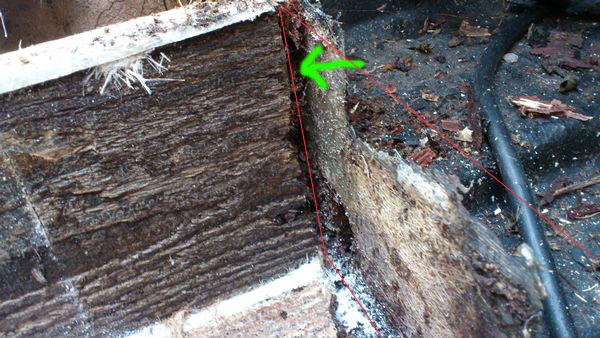
1) The stringers will need replacing - if not completely, then most of! Not really a surprise and I'd kind of made my mind up to replace them anyway.

stringer1.jpg


Red line shows where the bulkhead was, the green indicates exposed end on stringer... :confused:

stringer2.jpg


The wood is still pretty solid but very wet. :(

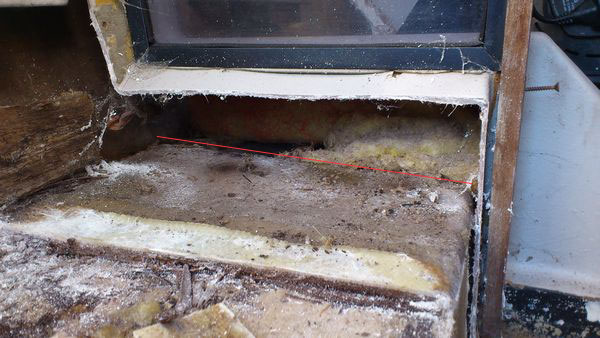
2) The cuddy floor may yet have to follow in the tracks of the main cabin. This isn't because it was wet, quite the opposite, but because the rot may have tracked through the divide. Unfortunately, although the floor doesn't run right through the foam 'sponge' does and there may also be wet timber elsewhere.

Best seen on Port side - where floor, whilst still rotten, wasn't nearly as decayed...

port_floor.jpg


port_floor2.jpg


Red line to illustrate where floor ended.

The stringers here are wet at (1), but dry at (2) where I have removed panels of fibreglass.

port_floor3.jpg


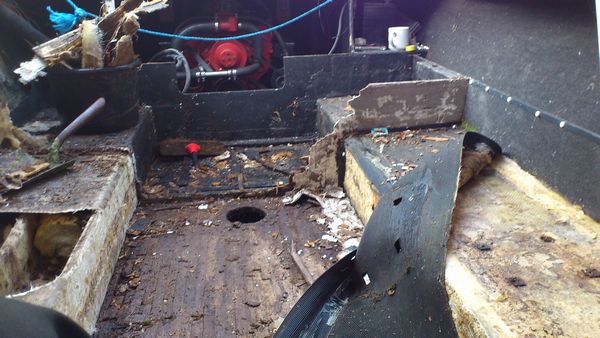
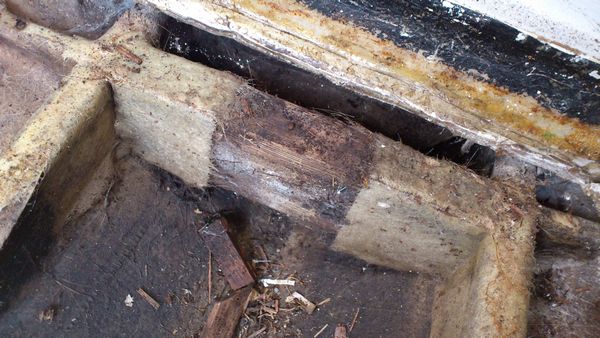
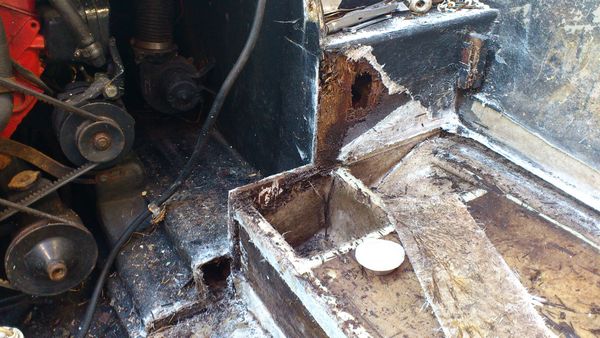
3) The engine bay ends of the stringers had no fibreglass encapsulation whatsoever! I was astonished by this as it has allowed moisture in the (rotten) bulkhead to track back under the fibreglass. Just as bizzarly, there are small air pockets below the engine bay fibreglass where 'shelving' has been done - unsurprisingly this is rotten beneath the fibreglass. Difficult to explain this, photos illustrate better!

engine_bay_floor1.jpg


engine_bay_floor2.jpg


In summary, looking more and more like a bare hull rebuild! There will be some challanges in the next few months as the V8 is now almost certain to be coming out for floor/mounts and the transom is unlikely to have faired any better... Unfortunately, me in my wisdom (and to be fair limited space) - have shoved her, stern first into a very restricted space. :( Lifting that V8 up to a height of around 9' and then backwards and sideways on a diagonal of about 10-12' is going to require some engineering! I'm thinking hoist and some kind of track, but I'll need to construct that it as there's no way anything will fit in past the boat. Plan B would be to complete the cockpit and cuddy floors, lay down some extra ply layers on top temporarily, and then lift engine forward into the cockpit to facilitate work in the engine bay. Plenty of time to weigh up these options whilst I do the main floor however.

I need now to also start planning fixings for seats, table etc as well as wiring for floor lighting etc as I'm aiming to encase all the wood in resin/matting prior to glassing in. I aim to avoid screws/nails wherever possible and any holes will be resin coated. I'm aiming to refurbish as much as possible of the original fittings including the fibreglass bucket seats - although I hope to add a swivel base to both.

Given the amount of saturated wood and foam removed so far, she will have had quite a crash diet prior to return to the water! Some of the foam filling also appeared a little sparse - Fletcher must have been on an economy drive the month this one was made... :)

rear_buoyancy.jpg


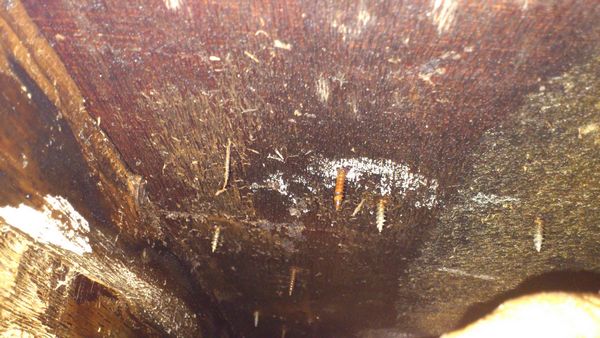
Underside of battery bay floor...

battery_bay_floor.jpg


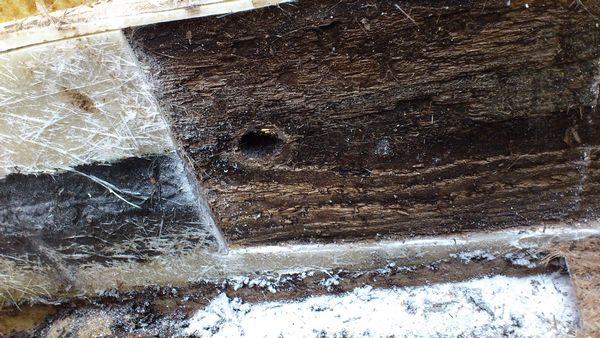
...and finally, bulhead 'fixing' for fuel valves... (yes that IS a hole)

bulkhead.jpg


More next week - weather permitting. :D
 
Jesus Robin, I hadn’t realised quite how much you’ve done so far. I can’t help thinking however, if you could manage to turn her upside down and just shake her a little, everything would just fall out :D

Seriously though, looking at those trailer pictures again, I still can’t believe we got back from Scotland in one piece - what a journey!

And if you stopped helping me all the time cleaning off my boat hull, you might actually get her ready for floating come the Rally in June – you know that’s the deadline :)

Great project and dedication though - must remember to email your thread to bro and he's supposed to be doing the same on his Glaston.
 
Jesus Robin, I hadn’t realised quite how much you’ve done so far. I can’t help thinking however, if you could manage to turn her upside down and just shake her a little, everything would just fall out :D
:D Barely started yet! Deceptive how solid most of the floor was - even without any plywood underneath! The fibreglass matting is 2-3mm thick and surprisingly strong. Once cut away however, the plywood inside is like compost - you can brush it out with your fingers. If you pinch between fingers, water oozes out. :eek: It's to be expected for a boat of that age however and will ultimately be all the better for have replaced more. You'll have to call in when you're next passing and see her in the 'revised state'. She'll be well worth it when done - like a new boat is the plan.

Seriously though, looking at those trailer pictures again, I still can’t believe we got back from Scotland in one piece - what a journey!

Yes, quite a trip and amazing what a Land Rover will pull (and stop) with ease. I was a bit worried about the strange noises from that wheel, but no heat, bearings solid and tyres good so the slow pace & regular checks the order of the day! There were loads of bits of spare metal inside the hub - probably resembled brakes once upon a time :rolleyes: Non-stop overnight was definitely the right call however - I wouldn't have wanted to do in heavy traffic... That said, all the weight bearing and structural bits are solid and the fact that nothing broke is testament to that.

And if you stopped helping me all the time cleaning off my boat hull, you might actually get her ready for floating come the Rally in June – you know that’s the deadline :)

Ah, but a bit of 'R&R' on the water is my inspirational therapy... so you're most welcome. :D

Great project and dedication though - must remember to email your thread to bro and he's supposed to be doing the same on his Glaston.

Yes, I'd like to see how he's getting on too - please send my regards...
 
Slow progress...

Well, New Year and thought it was time for an update!

Sadly not too much to report as a combination of rain and work conspired in December to halt progress. I have sourced a few odds and ends however for various stages of the project and thus the spend seems to be creeping up...

Raining again today so after a promised wander along Paignton seafront so son could try his scooter and emptying my pockets of 2p's in the pier arcade, I resorted to needlecraft! :eek::eek::eek:

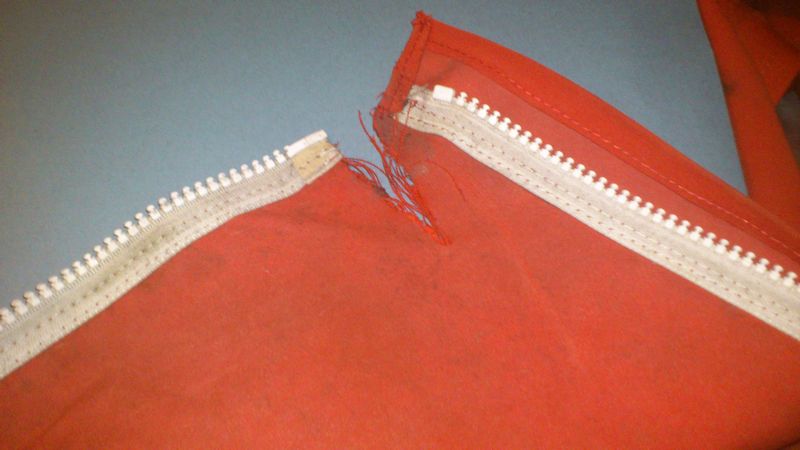
In light of the likely spend, I'm hoping to salvage the canvas camper cover and not have to replace for a couple of years. Thus I've resorted to patching up and restoration. I've re-sewn in the zips and hoping to patch the few tears and then clean and waterproof tomorrow. Not much else to tackle whilst it rains!

Top image shows where I have re-attached zip (underneath canvas) and just left with a small tear at the end.

cover_rip1.jpg


cover_rip2.jpg


May have to source some canvas to repair the rips above - have patched New Zealand rugs for horses before and guessing a similar method? No idea yet where I'll source red canvas...

The detergent/restorer and waterproofing additives I have are wash-in and can be added together, but I've decided to do in two separate processes as I think a re-dye cycle might be needed in between before I waterproof. Not done any of this before either so another shot-in-the-dark :)

I'm currently only doing the rear section which isn't in too bad a condition. A couple of days off at the end of the week so if dry, back on the floor and off to collect resin and timber... :D
 
Last edited:
Hi robin, for some reason i cant see any pictures on page 4, any ideas any one.

Sorry update, Got pics now:D:D

:eek: blimey robin how do you not cry when seeing things like you have with your boat,
 
Last edited:
Hi robin, for some reason i cant see any pictures on page 4, any ideas any one.

Sorry update, Got pics now:D:D

:eek: blimey robin how do you not cry when seeing things like you have with your boat,

:D:D:D

Actually, I'm really enjoying it - there must be something wrong with me! :eek: I could use more time and more cash, but that goes with the territory doesn't it? I started adding up costs the other day - surprising how it all adds up... :rolleyes: On the plus side, I'm within my original budget and picking up a few bargains here and there. (the wish list is also growing however. :o) It's also a quieter time of year work-wise now - so should be better progress in the next couple of months if the weather plays ball.
 
Is that a body on the right?:D

Fantastic thread - great to see - the more pix the better.

:D I was waiting for someone to comment on the foam - I looked twice when I downloaded the pics from the camera! It did smell a bit grim in there to be honest. :eek: That's the problem with that buoyancy foam once it gets wet and can't dry out. I thought the foam was also supposed to fill the voids too...
 
While i love posts like this and know the finished boat will probably look better than when it left the factory, but surely it will cost way more than buying a newer boat?

if its a classic you are wanting, there are a load of fletchers of the same year out there that just need minor work to get to a 'showroom classic'
Each pic you post seems to throw up more horror stories lol, cant wait to see the finished item, but would probably :eek: at the amount of £££ gone into it.
 
Top