Charging battery powered tools

Yep, that is rubbish for wire brushing a keel. Great for drilling holes in concrete.
Think I've only used an air-powered one once, when I had a temporary labouring job in a shipyard. No concrete was harmed in the stretching of that ship.

IIRC the gizmo seemed to work ok, though the ship wasnt as rusty as my keels
 
I have a Parkside mains SDS drill which is great for most of what I do. It's heavy, but the weight helps damp the vibration of the hammering. It gets used a few times a year, for the times when the battery drill isn't up to a job. I can't imagine any job where I'd need it on a boat except, perhaps, demolishing a ferro one.
 
I have a Parkside mains SDS drill which is great for most of what I do. It's heavy, but the weight helps damp the vibration of the hammering. It gets used a few times a year, for the times when the battery drill isn't up to a job. I can't imagine any job where I'd need it on a boat except, perhaps, demolishing a ferro one.
Thats two experienced-based views (I assume ChiaraS has hauled keels in the past) against using one for de-rusting keels.

I get that these drills tend to be heavy, but rust is hard to shift and I wouldnt have thought a basically sound cast iron keel was likely to be damaged.

Whats the reasoning?
 
Will never happen ... each manufacturer wants to lock you into their parts and batterys .... they make more money on batterys than the item it plugs into !
"They" (governments?) Seem to have managed it with mobile phone chargers...all now USB C.
...however I tend to agree with you.
And it's not quite the same thing in that the architecture of each tool/battery seems to be different, not just the charger plug/socket.

Personally, I'm locked into Hitachi/Hikoki thanks to a screwfix promotion many years ago! Still reasonably competitive £, but less choice of niche tools compared to Makita or de Walt.
However, I had a pal who was a Hilti rep (I couldn't justify the costs of these superb tools even at "mates trade" rates) who put us all off de Walt with his tales of them being "Black n Decker" in a party frock..."Handy Andy" days, remember him?

When we first started using cordless tools offshore (pretty much cost irrelevant, buy what you like once the concept of brushless n cordless tools was accepted as a safety case) we went for Makita, due to their perceived quality and universal availability of a very wide range of tools.
We did suffer an initial period of theft of batteries (I used to re_order 10 at a time) until it became a matter of instant dismissal, on the basis of both the theft and associated safety issues. It turned out folk were even swapping the asset tags over from their own old batteries to our new ones!

Regarding differing battery formats, you can buy adaptors (often 3D printed, and some of dubious quality) to "convert" from one physical mounting system to another.
 
Last edited:
"They" (governments?) Seem to have managed it with mobile phone chargers...all now USB C.

...however I tend to agree with you.
And it's not quite the same thing in that the architecture of each tool/battery seems to be different, not just the charger plug/socket.

Personally, I'm locked into Hitachi/Hikoki thanks to a screwfix promotion many years ago! Still reasonably competitive £, but less choice of niche tools compared to Makita.

Its an EU Mandated reqt for USB C ... for mobile phones sold in EU
 
Thats two experienced-based views (I assume ChiaraS has hauled keels in the past) against using one for de-rusting keels.

I get that these drills tend to be heavy, but rust is hard to shift and I wouldnt have thought a basically sound cast iron keel was likely to be damaged.

Whats the reasoning?
I have a boat with a cast iron keel, and frequently assist in restoration work, it’s a fleet of 200 historic boats. But I don’t need to do that to know that any of my SDS drills are unsuitable.
 
Regarding differing battery formats, you can buy adaptors (often 3D printed, and some of dubious quality) to "convert" from one physical mounting system to another.
I have an adapter that allows me to use Makita batteries in Ryobi tools. It doesn't allow me to charge them using the Ryobi charger though.
 
I already told you. Slow rotation speed, heavy, clumsy. No need for hammer action. Like Fred says, an angle grinder would be better, with a brush. Or any drill, other than an SDS, on high speed.
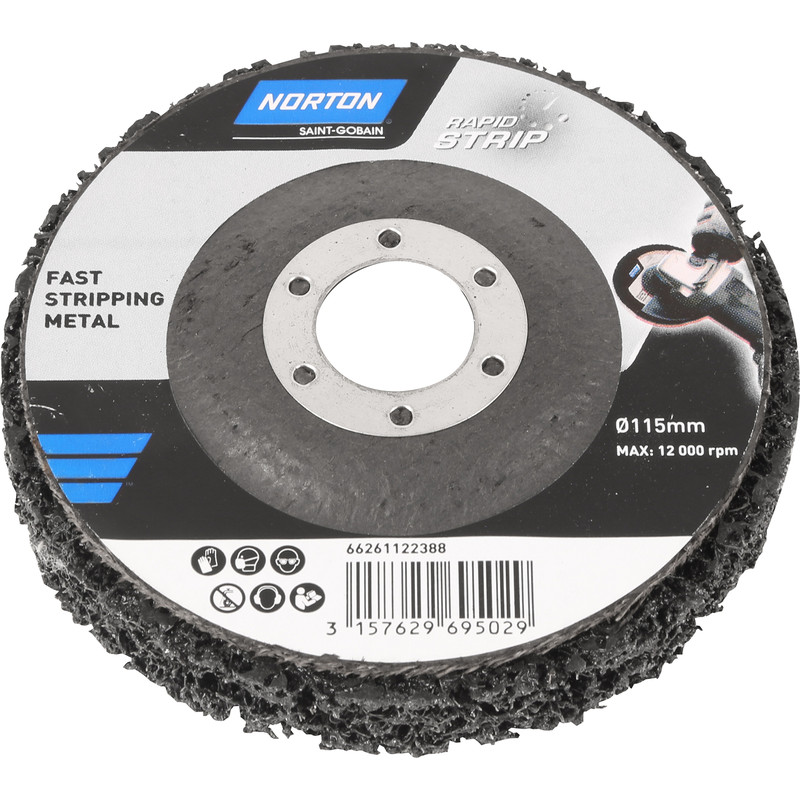
In fact, for de-rusting a keel, I'd be more inclined to use a small angle grinder with one of these

44388.jpg

For occasional use, a small Parkside or EInhell (Toolstation or Screwfix) would be fine. I have a cheapy that comes out a couple of times a year, and must be the best part of 20 years old now, but I'd go for mains, so you don't end up with another set of batteries and chargers. If you think you'll use it more often, get the same brand as your other battery tools
 
I already told you. Slow rotation speed, heavy, clumsy. No need for hammer action. Like Fred says, an angle grinder would be better, with a brush. Or any drill, other than an SDS, on high speed.

In fact, for de-rusting a keel, I'd be more inclined to use a small angle grinder with one of these

44388.jpg

For occasional use, a small Parkside or EInhell (Toolstation or Screwfix) would be fine. I have a cheapy that comes out a couple of times a year, and must be the best part of 20 years old now, but I'd go for mains, so you don't end up with another set of batteries and chargers. If you think you'll use it more often, get the same brand as your other battery tools
I've used a disk like that (with a drill, I dont have an angle grinder) a long time ago and IIRC it was fairly effective. Standard wire brushes just tend to polish deep rust, though the really aggressive knotted style are said to work.
 
I already told you. Slow rotation speed, heavy, clumsy. No need for hammer action. Like Fred says, an angle grinder would be better, with a brush. Or any drill, other than an SDS, on high speed.
I think you need the hammer action for a needle gun or a chisel to work. Needle guns are designed for the de-rusting job
(rather than making holes in concrete) though I dunno if the particular example I linked to is any good, ( I think "industrial strength" ones are usually pneumatic) or if I want to buy it to find out.

I might be able to borrow an SDS with a chisel though, and maybe an angle grinder.
 
In fact, for de-rusting a keel, I'd be more inclined to use a small angle grinder with one of these

44388.jpg

For occasional use, a small Parkside or EInhell (Toolstation or Screwfix) would be fine. I have a cheapy that comes out a couple of times a year, and must be the best part of 20 years old now, but I'd go for mains, so you don't end up with another set of batteries and chargers. If you think you'll use it more often, get the same brand as your other battery tools
I dont have any battery tools, and dont much want any, though I may not be able to avoid them much longer.
I have a fairly heavy duty 120V drill but no transformer, so getting one is an option
 
I think you need the hammer action for a needle gun or a chisel to work. Needle guns are designed for the de-rusting job
(rather than making holes in concrete) though I dunno if the particular example I linked to is any good, ( I think "industrial strength" ones are usually pneumatic) or if I want to buy it to find out.

I might be able to borrow an SDS with a chisel though, and maybe an angle grinder.
Needle guns are very effective on steel but not on cast iron. Iron keels are quite soft and porous due to the graphite content. Wire brushing is also poor on cast iron for the same reason. Angle grinding and other abrasive methods will provide better long term results.
 
I dont have any battery tools, and dont much want any, though I may not be able to avoid them much longer.
I have a fairly heavy duty 120V drill but no transformer, so getting one is an option
You can now get a 240v, 4 1/2" grinder for £40ish, reasonable quality too. Disposable at that price. Saw a Hikoki for £35 recently, almost bought it for spare, spare!

I keep my brushless cordless grinder for "best", certainly don't sacrifice that (and it's batteries) to cut stone or grind sh1tty keels etc.
 
Last edited:
Needle guns are very effective on steel but not on cast iron. Iron keels are quite soft and porous due to the graphite content. Wire brushing is also poor on cast iron for the same reason. Angle grinding and other abrasive methods will provide better long term results.
Pneumatic Needle guns were the mainstay of steel work prep on rigs and MN ships. Legions of the blighters, often working as a gang. I dare say there's a few on here who have spent many happy days/weeks/months with one as a deck apprentice?

As an Engineer Cadet, I spent much time trying to maintain/fix the guns...deck lads used to bu99er them up deliberately, so as to avoid work 🤨.
 
Top