Can you tell off the top of your head...

Be honest!


  • Total voters
    96
L, I'm not sure it's interesting to start a debate along the lines of "my boat is better than yours".
After all, as we all know, what really matters nowadays is the full beam cabin size, how large its windows are, and so forth.
And neither your nor my boat can compensate the lack of that with a better w/t compartments layout! :rolleyes:

Anyhow, since you insist, are you ready to be overwhelmed? Let's start...
The w/t compartments on my DP are as follows, bow to stern:
- anchor locker (if you wish to consider it),
- bow+guests cabins area,
- crew area,
- engine room,
- stern lazarette (with P brackets and rudders placed in that compartment, separate from e/r)

On top of these "internal" areas, there's also a large compartment under the swim platform (Ferretti style), also with its own bilge pump.
I didn't count it before as a w/t compartment, but its volume is probably 5+ times larger than the anchor locker, and much more relevant in terms of flotation reserve due to its position.
Besides, I completely disagree on structural tanks being negligible. Sure, in terms of flotation they are neutral when full, but if the hull bottom is ripped open in the structural tanks area, the worst that can happen is that diesel is spilled in the sea, as opposed to sea water flooding the hull - i.e., the boat flotation would be completely unaffected.
And since the forward structural tank is for water, with a bit of luck the spill might be just of fresh water!
Overall, the volume of these tanks is almost 4 cubic meters, which puts the anchor locker in perspective, I reckon... :p

All bulkheads are structural, glassed all around, with zero holes anywhere - not even gland sealed.
In fact, any hoses etc. needing to go through the compartments use a rather peculiar (actually unique, afaik) solution of routing them inside the hull stringers.
Each of the above compartments has its own electric bilge pump, with the exception of the anchor locker which obviously doesn't have any and the engine room which has two.
These pumps are backed by a large diaphragm pump that can suck from each compartment through a selectable manifold, which can also be connected to the raw water pump of one of the engines (the other one can suck straight from the e/r).
If you're interested in more details, I recently explained the setup, together with its three-levels alarm system, in this post.


Now, back to your pic of the half-sunk Itama, on second thought I think it's a bit weird.
Do you know what happened exactly? And are you sure that the boat wasn't sitting on the bottom with her stern?
I am asking because judging from the pic I would guess that both the stern cabin and the e/r are flooded, and only the forward accommodation area is keeping the boat afloat - which is surprising.
Anyway, fwiw I agree with your post #71 in reply to markc. A floating wreck is definitely much better than a sunk one - Titanic springs to mind... :ambivalence:

Thx P
Me too it’s not a debate on as you suggest in para1 ^ - apologies if it looks that way , and the thread drift .

Last para I don,t know what exactly happened - suspect hit under water object ripped stern gear - P bracket under rear compartment and pulled a shaft (s) hence ER .

Anyhow back to the thread subject I guess raised seacock awareness is a good idea .
When I got my boat several were seized - so I had them ( yard ) replaced .
The through the hull fittings and scoups on the main s took two blokes two days and a hydraulic jack to remove .
They angle grinded the scoop off then with a mini cutter - cut vertical channels inside say 12 cm dia , then used a jack n blocks to force the weakened pipe bit up inside the hull .
Not really DIY able .
Took a day of French labour to get them out ,then another day to replace / restore / Rebed new ones .
Another 2days one bloke did the smaller ones .
Then the black pipes in the ER replaced with new Vetus hoses .
They took ( another bloke- so one day 4 Fr guys on it while my mate and me trying to AF /polish /anode it )
The old ones off took them unto the shed and left them overnight,next day AM used them as templates to precut new ones .The old ones developed a set - were v stiff lost flexibility as you would expect .
Refitted all in the afternoon.- Fresh double clamping etc .
At launch an engineer came out for spin round the bay to check for weeps n seeps in the ER and other seacock stuff .

A bit of a moral dilemma then occurred .
The quote inc approx € 600 ex Tax each for the main engine seacocks with new scoups .
There was all the rest itemised + as things happen on the job - I made some changes as we went along .
So @ launch they said come back another day ( They trust me ) when we have done the final invoice .

Cut to the chase - the €1200 + vat were missed off the bill - for the main seacock s

What would folks do ?
 
Last edited:
as far as I’ve seen, most insubmersible are small foam filled boats along the lines of a Boston Whaler.
That's also my understanding, and of course neither DPs nor Itamas are in that category.
Still, I'd rather hit a buoy with either of them than with many other boats, if I really have to... :rolleyes:
 
15 for me.
Well, that's not much, considering the complexity of your small ship (two gensets, watermaker, etc.).
Am I right in guessing that all WCs go directly to the black water tank, with no option of straight u/w discharge?
 
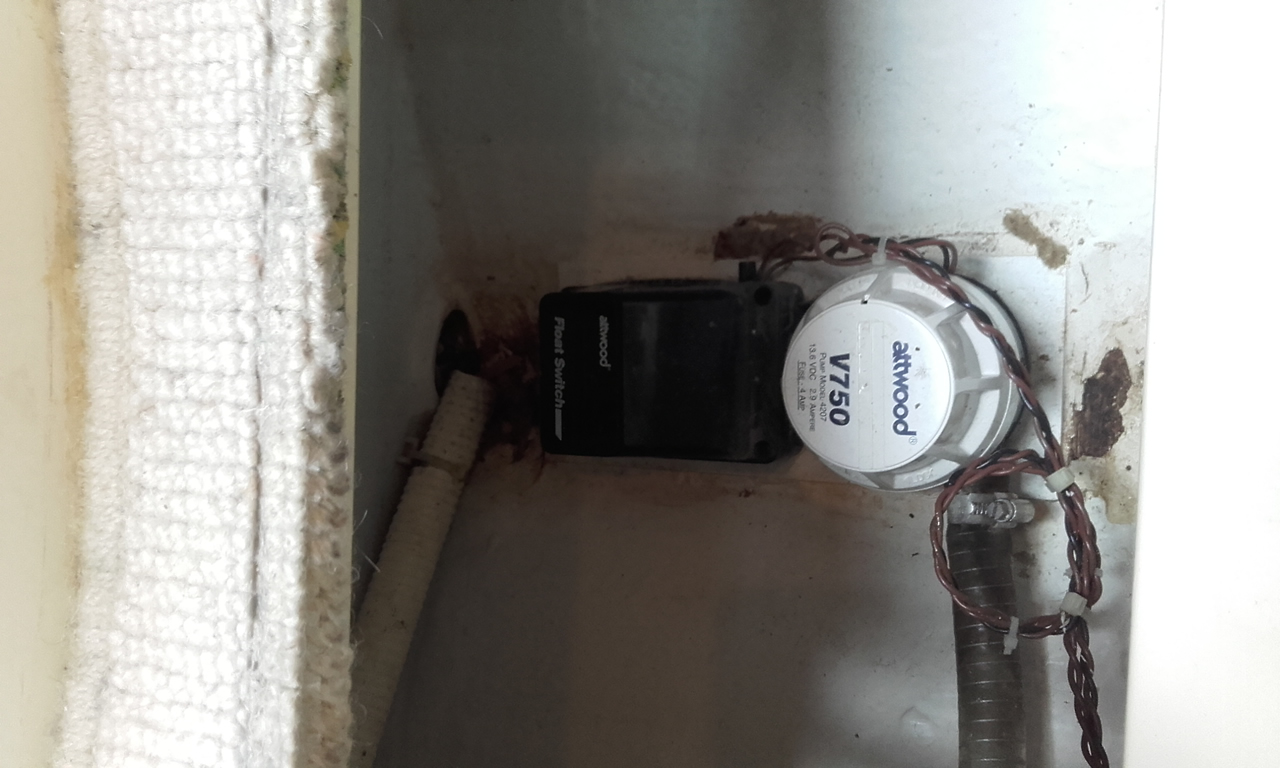
Porto, are you sure this bilge switch / pump is original? Also, how are they secured to the hull?

NVygr3J.jpg


FL mount them on a plate like this...

20170602_112826.jpg


Also note that the float switch has a cover to protect it. And before you ask, that outlet drain into the bilge is for the aft cabin washbasin overflow I believe. At worse, it would just give the bilge a swill of 232l of fresh water. It wouldn't sink the boat unless you connected the freshwater system to the mains like some people do :)!

Anyhow, I never use that washbasin, I think it's just fitted for vanity (did you see what I did there MapisM)!
 
Pete - exactly what classification if any have in the past or do currently Fairline adhere to in construction of there boats .

My boat is built to conform to the RCD/CE Mark. Interestingly I believe it's compliance to RCD/CE was performed by RINA. One could easily get confused and mistake that for it being built to a RINA standard.

But I don't think classification / standards are the be all and end all. Back in the day when my boat was designed, Sam Newington was in charge (I think) and he made sure things were done properly (as well built and safe as can be - within reason). (If the new F-line 33 isn't built to the same standard, Sam will be turning in his grave god rest his soul!)

You see ( happy to be corrected if I,am wrong ) I think there s some obtuse stiff like the ability to inspect / access all hull areas .
FL until recently have as you know ,built using a two part hull seperating both parts by a foam grid or core .placing a linner or inner skin glued - means if the access and inspection rule is valid you can,t get to see the inside of the hull layup cos of the linner glued on the foam grid network .
So in the event of a whack say a bouy two parts may delaminate unseen and water seep or maybe that were never properly sealed anyhow leading to seepage .

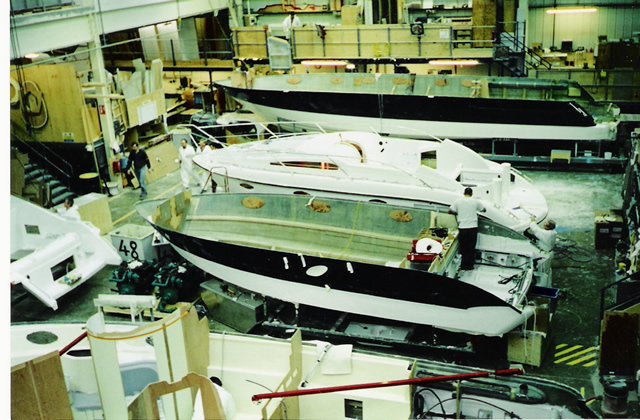
You're wrong! The bottom of the hull (below the sole has no liner over it). If you look at this newly released video (https://www.youtube.com/watch?v=F6c8s9nvMkQ from 00:59) you can see the single skin hull with the stringers being glassed in to give them strength. They've been doing it this way for years. Here's a pic of a Targa 30 in build...

gg1.jpg


In this pic you can see the stringers and just about make out the engine room bulkhead that goes to the bottom of the hull (and the anchor locker bulkhead but as MapisM points out this is well above the waterline and drains so is irrelevant).
 
Last edited:
Porto, are you sure this bilge switch / pump is original? Also, how are they secured to the hull?

NVygr3J.jpg


FL mount them on a plate like this...

20170602_112826.jpg


Also note that the float switch has a cover to protect it. And before you ask, that outlet drain into the bilge is for the aft cabin washbasin overflow I believe. At worse, it would just give the bilge a swill of 232l of fresh water. It wouldn't sink the boat unless you connected the freshwater system to the mains like some people do :)!

Anyhow, I never use that washbasin, I think it's just fitted for vanity (did you see what I did there MapisM)!

They are secured by L shaped brackets made of aluminium.

There’s a hole in the base of the L and the pump body slots in .You can see the ally ring round the pump motor .

The vertical part is then secured to a vertical mini bulkhead .Just out of the pic shot .

This means the pump is clamped in and can’t be dislodged or rise up , accidentally .
The attachment screws are thus kept dry as they are way higher than the water level activation level .Whereby with yours it’s possible for the water level - presume seawater to be at such a height in a marina ,the self tappers are submerged and rust .
But the WL is not high enough to activate the pump .The flat wooden plate actually raisers the height as well before the float can lift .
Basically your self tappers are open to corrosion ,they must get wet before the pump runs .
Potentially in a rough passage due to weakened securing screws your switch / pump may come loose .

The float switch in my pic looks original looking @ the wiring .
It’s fixed by a nut / bolt on a metal tang - I think you can just see that ? - that tang is bolted to the L that’s holds the pump down -

The “cheese “ thing is inside a cover - and there’s a test lever - see rhs of where the wire goes in .
Tbo Pete this is the only one (float ) that’s not been replaced - ie it seems to work every time I test it darn :)

I think cheese float switches are a much of a muchness and I understand a common source of V leaks in folks with anode wear issues .
The others as they have “ gone “ have been replaced fairly dear €65 contact switches - no moving parts and variable height adjustment bracket.- Which I hope are more durable and less likely to end up leaking volts .
I dab a wet sponge on the contacts to test as no moving parts .So far so good .

Alarm sounds and LED,s on the control pannal and dash - indicates when a bilge pump runs on its accord via its sentry .

The Sunseeker had them screwed on a glassed little flat board too ,just like yours btw .

As said “ Happy to stand corrected “ for any other debatable subjects and Tnx for reply :encouragement:
Historically the boat was built for commercial use - posh water taxi Naples / Capri . Hotel owners in its early years
That’s why air con was not specced but it was “ certified “ for 12 pax .
It came with all sorts of safety stuff .They bought a XL 51 I think as a replacement.
The XL ,s are made in the old Itama factory on the Tiber- Rome by the same guys .Since Ferretti bought Itama the brand around 2004 and moved production to the ApreaMare yard in Naples ( after buying AM ) then to Forli ( Pershing ) NE Adriatic about a year or so later after “ Mr Aprea Mare “ bought “his “Co back - or Ferretti sold it shortly after buying it .

Don,t ask what happened there business wise - hint Neopolitans :):):)
XL in Roma do a roaring trade in Itama pre 2004 refurbs too - not surprising .Thats where they were born !
Google XL boats and see the linage .
 
Porto, are you sure this bilge switch / pump is original? Also, how are they secured to the hull?
LOL, when I saw that you posted that pic previously linked by PF, I expected you to argue about the hole at the bottom of what looks like a not exactly w/t bulkhead, in the top side of the pic... :D :D

Btw, PF, while having another look at the pics you posted previously, your anchor chain wash pump grabbed my attention.
Aside from the fact that double clamps would be good practice on any seacock hoses, I suppose you might think that the label "Ancor" on the pump is related with its function (though anchor translates as "Ancora" in IT, not "Ancor"), but beware: that is actually the name of the supplier.
Now, I'll refrain from commenting in detail about the Company, its owner, and the quality of the PRC sourced stuff which they resell.
But trust me, you'd better chunk overboard each and every component you might find onboard with their label on it... :ambivalence:
 
If you look at this newly released video (https://www.youtube.com/watch?v=F6c8s9nvMkQ from 00:59) you can see the single skin hull with the stringers being glassed in to give them strength.
Blimey P, I can't remember when was the last time that I saw a YT video without thinking that it would have been better if shorter - and more often than not, MUCH shorter.
But with this one, I would have loved to see a longer version with more details.
Many thanks for the link, and kudos to FL. That's an impressively clean mould shop indeed! :encouragement:

I suppose you might not know the answer, but I'll try to ask anyway:
In several parts of the video, the foam used to fill the stringers is clearly visible, but at 1:05 there are also some substantial pieces of what looks like plywood.
Any idea of how are they used? Maybe in the stringers sections which are going under the engine supports?
 
Last edited:
LOL, when I saw that you posted that pic previously linked by PF, I expected you to argue about the hole at the bottom of what looks like a not exactly w/t bulkhead, in the top side of the pic... :D :D

Btw, PF, while having another look at the pics you posted previously, your anchor chain wash pump grabbed my attention.
Aside from the fact that double clamps would be good practice on any seacock hoses, I suppose you might think that the label "Ancor" on the pump is related with its function (though anchor translates as "Ancora" in IT, not "Ancor"), but beware: that is actually the name of the supplier.
Now, I'll refrain from commenting in detail about the Company, its owner, and the quality of the PRC sourced stuff which they resell.
But trust me, you'd better chunk overboard each and every component you might find onboard with their label on it... :ambivalence:

That hole - refer back to the description of the pic .
It’s all one space the fwd living ,those upright vertical sections are just interconnects ,the hole is as in Petes pic just connects the segregated spaces together .It s not the watertight bulkhead of that compartment

I rarther like those pumps - quick to open for impeller cleaning without tools .I suspect they are original circa 2001 editions ?- still working ,what does that say ?
I think there’s two clips in the seacock btw. But yup only one on the pump body , however if one should pop off - remember easily access -
My bilge alarm will go off as that “ hole “ will drain to the section with the pump behind it .
A light will tell me which one - simple access - flip the newish seacock ——- in theory :encouragement:

Got two more of those pumps - not sure what they do - need to work that out one rainy day
 
That hole - refer back to the description of the pic .
It’s all one space the fwd living ,those upright vertical sections are just interconnects ,the hole is as in Petes pic just connects the segregated spaces together .It s not the watertight bulkhead of that compartment
Aha, got it. Then of course there MUST be a hole. I was fooled by the fact that the upper part ain't visible in the pic, sorry... :o

Ref. the pump, good for you. Maybe they dealt with better quality stuff back in those days, 'dunno.
 
Blimey P, I can't remember when was the last time that I saw a YT video without thinking that it would have been better if shorter - and more often than not, MUCH shorter.
But with this one, I would have loved to see a longer version with more details.
Many thanks for the link, and kudos to FL. That's an impressively clean mould shop indeed! :encouragement:

I suppose you might not know the answer, but I'll try to ask anyway:
In several parts of the video, the foam used to fill the stringers is clearly visible, but at 1:05 there are also some substantial pieces of what looks like plywood.
Any idea of how are they used? Maybe in the stringers sections which are going under the engine supports?

It's hard to tell from the photos. I believe the engine bearers are glassed in wood. Perhaps the ones at 1:05 are supports for the inner moulding to rest on? Remember how we all commented that the 63 is a heavily built boat?

Also, you'll see that they hand roll a layer of GRP before vacuum bagging. And they also supervise the infusion. I believe some manufacturers vacuum bag over the Gelcoat and leave the infusion to run unattended.
 
LOL, when I saw that you posted that pic previously linked by PF, I expected you to argue about the hole at the bottom of what looks like a not exactly w/t bulkhead, in the top side of the pic... :D :D

LOL, you know me too well P, I very nearly posted that question but I thought surely Porto can't think that's a water tight bulkhead!
 
Well, that's not much, considering the complexity of your small ship (two gensets, watermaker, etc.).
Am I right in guessing that all WCs go directly to the black water tank, with no option of straight u/w discharge?
One WC can go straight to sea in case of system problems. Reason for low ish count is that lots of discharges go into 2 internal "sea chest" chambers inside engine room so do not need a seacock yet are still quiet

Engines in 2
Gens in and (after gas separation) out 4
Hydraulic cooling in 1
Water maker in 1
Black tanks out 2
WC emergency straight to sea 1
Aft aircon in 1
Main air on in and out 2
One annoying deck drain that I will one day eliminate but have not had time 1
Total 15

Nerdishly I have a laminated seacock plan near the helm with exact details of each one and how to access it, in case anyone other than me has to deal with an emergency. Plus I have another copy with " service history". Perhaps I'll post a pic...
 
Pete where is that pic from? It's not your boat afaik. It is awful boatbuilding in several different ways. Exactly why I loook behind the scenes before buying a boat.

Remember it’s a 2001 and stuff been probably replaced along the way .
What specifically can you see to tag the word “ awful “ on .
Just curious.
The pre 2004 boats do seem to stand the test of time well and are getting sought after these days buy those that know .

Do l need to enter my nuclear bunker ready for the battering :):):)
 
Last edited:
That's Porto's Itama. The other pic was my boat.

This is all very confusing. How about an executive summary explaining in a few words who is slagging whose boat off and why?;)
 
Top