DFL1010
Well-Known Member
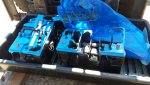
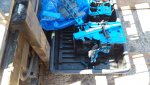
Not mine, thankfully. Certainly made a bit of a noise when they went.


I don't think that it's a sealed battery.Unlikely it was topped up, filler caps are flush and hidden under label.
I don't think that it's a sealed battery.
Richard
The answer is yes. However, we don't know whether that was the case in Paul's photo. I suspect that it was not but until the vent operation is confirmed we cannot be sure.I replaced my batteries in the winter, they have caps at top of each cell so can be topped up. They came with a plug in a vent hole (during transit), this is removed and a thin pipe attached (vent pipe I assume). I wonder if the plug was not removed if enough pressure would build up to cause an explosion is the batteries were gassing during charging?

Could be a two stage thing. Initial smallish bang from a hydrogen explosion, which distorts the plates to give a dead short, resulting in a much bigger steam explosion. I wouldn't have thought there was enough volume for a hydrogen explosion to be the main event.I'd be very interested to strip that battery down to see what happened. As others have said the vent pipe is connected and the battery exploded from the inside. This is not necessarily a hydrogen explosion. A dead short within the battery with vaporised lead may induce a similar pressure rise. If hydrogen inside the battery was ignited by starting currents it would suggest that the plates were exposed. When/how often was the water topped up? The over pressure looks like it may have been in the third cell from the bottom of the photo. Interesting one to look into.


With Hydrogen, you will get approximately an 8 times expansion when it goes off. In a confined space, it will go off extremely quickly, but it needs a spark, or unusually high temperatures (well in excess of the melting point of lead). For an internal explosion in a sealed battery, there is most likely to have been and internal spark. As for H2 explosions, even with the caps open, the flame speed will be to high for the caps to vent the explosion pressure. Seeing as the explosion occurred on cranking the engine, I'd suspect an internal electrical fault that couldn't cope with the current demand and fused. As I said, I'd love to be able to go through it in detail.Could be a two stage thing. Initial smallish bang from a hydrogen explosion, which distorts the plates to give a dead short, resulting in a much bigger steam explosion. I wouldn't have thought there was enough volume for a hydrogen explosion to be the main event.
With Hydrogen, you will get approximately an 8 times expansion when it goes off. In a confined space, it will go off extremely quickly, but it needs a spark, or unusually high temperatures (well in excess of the melting point of lead). For an internal explosion in a sealed battery, there is most likely to have been and internal spark. As for H2 explosions, even with the caps open, the flame speed will be to high for the caps to vent the explosion pressure. Seeing as the explosion occurred on cranking the engine, I'd suspect an internal electrical fault that couldn't cope with the current demand and fused. As I said, I'd love to be able to go through it in detail.
This happened aboard an angling boat we were called out to. Only they didn't tell us why they couldn't start their engine.
It was only as we were coming back into the harbour that one of the occupants mentioned that the acid on his skin was starting to sting a bit.
A flame might propagate back down the vent line, but this would mean that there was enough accumulated hydrogen outside the battery box/locker to be spark ignited. Under those circumstances, I would expect over-pressure damage in other areas of the boat as well, unless the vent line vented close to the spark. I would hope that the vent line went to atmosphere and not to the engine bay!Disagree. An external explosion will follow the gas back to it's source, i.e. inside the battery. I've heard about it happening through the vent of a "sealed" battery. The vent wasn't designed to stop flame.

Chemists please correct me when I go wrong ...Disagree. An external explosion will follow the gas back to it's source, i.e. inside the battery. I've heard about it happening through the vent of a "sealed" battery. The vent wasn't designed to stop flame.
Your chemistry is OK, not sure about your maths! 1.5 x 22.7 = 34.... and then you don't have 2 bar in the battery, because its vented, so you only have 12.6kJ in total.
However. you then need to look at the specific heats of H2, H2O, O2 and N2 to calculate the pressure rise and thermal expansion, and account for any heat losses and mixing with air.


 watering kit and watering them every month or so

I don't think that it's a sealed battery.
Richard