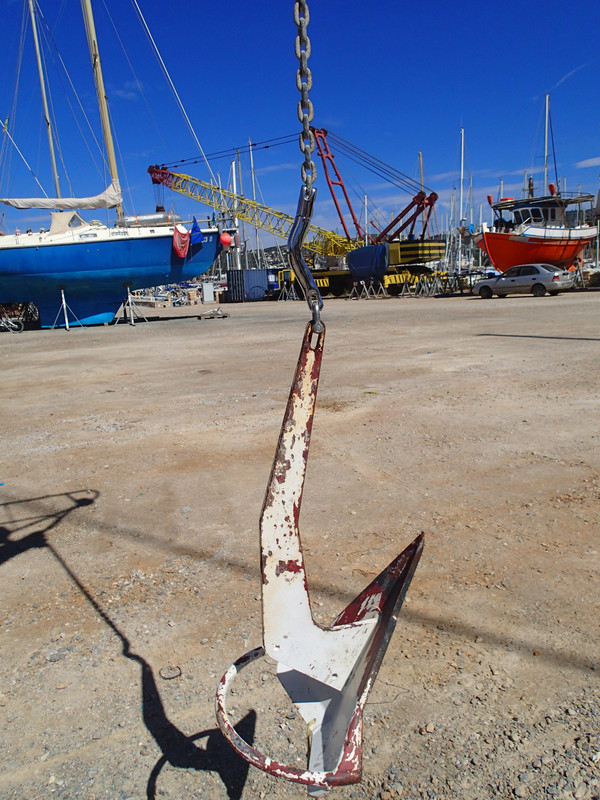
Anchor Chain Swivel

I blame vyv_cox's who seems to have inveted it , but I have to say it works for me and I bought the same set up as him after a good bit of research.
only time will tell , but ty to the invetor
Anchor is 25kg Rocna, not that that is the way forward just pointing it out:D

I certainly did not invent swivels, they have been around for years. I can claim the three links idea, which has led to the development of better and stronger designs from the manufacturers
 
I once noted the spin in an anchorage overnight. It was a few years back, in Tinkers hole (Mull area for southerners) and we did three complete turns in 16 hours. I don't think so many turns is normal, but it can happen. We use a Kong swivel.
 
I have explained this several times before but here it is again. Jill does the foredeck as she is not confident under engine in tight anchorages. The anchor inevitably comes up reversed if the boat is moving forward. She rotates it by hand courtesy the swivel. Easy and always successful. We have tried various alternatives including no swivel, a different type and a cranked Osculati one but the Kong works well for us. With no swivel the anchor will rotate reluctantly using the boathook but I need to go forward to turn the chain in the roller because she does not have the strength to lift and turn as needed. This is highly inconvenient. The cranked Osculati was a disaster, inhibited anchoring and led to frequent dragging, abandoned after a week.

Every boat, skipper and crew are different, and have different ways of doing things. Do whatever suits you best, but please don't try to persuade people that a swivel is necessary.
 
he wear on the chain introduces an interesting issue, that I suspect many ignore.

I find, and see on many yachts, that the first few links and the first especially wear more quickly than the rest of the chain. The usual remedy is to cut a link, or a few links off.

Go back in time - assume we have a slotted bow roller, so twists should not pass over the bow roller, and also assume the chain is untwisted to start with (between gypsy and slotted roller) and assume that when the anchor arrives at the roller, there are no twists in the rode. If we now cut off 1, 3 or 5 etc links (to remove the corroded links) then the anchor when it is re-attached will be at right angles to its original orientation - and will also be retrieved at right angles. It has nothing to do with twists in the chain - but has everything to do with how the anchor is attached. And of course if you attach it incorrectly in the first place - it will always arrive at the bow roller incorrectly.

Adding a swivel to 'correct' a misaligned chain is a very expensive, and totally unnecessary, remedy.

Every anchor chain today is proof tested during production and most if not all will have been sampled and tested to break. Good shackles, and I highlight Crosby and Campbell as being good, are all proof tested and a representative sample tested to break. Other shackles may appear to be rated - but that does not mean they have been tested (check the mall print on the website). I don't know about Kong and Ultra swivels but I very much doubts that the common stainless swivels are tested and their common method of production raises serious question marks over their integrity (which adding a few links in between does not entirely address) - especially with time.

It seems counter productive to buy a good chain (at some considerable expense), a good quality shackle, or 2, and match these with a swivel the manufacturer of which does not have the pride nor courage to mark it with the manufacturers brand name.

I agree with NormanS in post 43.

Jonathan
 
Last edited:
Read my post #6.

Fair enough.

I am really interested in what you say about your experience with the cranked Osculating link. I suppose it's quite similar to my "bent link" except that it has a swivel incorporated in it, and it's bright and shiny. You say it "inhibited anchoring, and led to frequent dragging". Can you expand on this, and give any explanation, please.
 
Last edited:
Fair enough.

I am really interested in what you say about your experience with the cranked Osculating link. I suppose it's quite similar to my "bent link" except that it has a swivel incorporated in it, and it's bright and shiny. You say it "inhibited anchoring, and led to frequent dragging". Can you expand on this, and give any explanation, please.

I have never experienced anything like it. Somehow the chain leaving the swivel was hooking itself around the shackle at the anchor. The swivel finished up at right angles to the shank and chain, sometimes upwards, sometimes down. I have photos on the laptop and will look them out later today. I thought I might have connected it incorrectly so reversed it but with the same result.
 
The message when purchasing shackles or swivels that are to be used on the anchor rode is the same: Buy a good quality, name brand and tested product.

If these components fail, not only will you lose your anchor but what is not commonly considered is the boat will drag rapidly, much more rapidly than a boat dragging with an anchor attached. This type of drag is harder to recover from in time to prevent a collision or grounding and the higher speed will likely result in more damage.

The risk is not high, but these products are not expensive so make the effort to select quality components and rig them correctly.
 
The message when purchasing shackles or swivels that are to be used on the anchor rode is the same: Buy a good quality, name brand and tested product.

If these components fail, not only will you lose your anchor but what is not commonly considered is the boat will drag rapidly, much more rapidly than a boat dragging with an anchor attached. This type of drag is harder to recover from in time to prevent a collision or grounding and the higher speed will likely result in more damage.

The risk is not high, but these products are not expensive so make the effort to select quality components and rig them correctly.

I can vouch for that. When my original cheap swivel failed, years ago, the wind was very light, around F2. The boat moved back surprisingly quickly but fortunately we were in the cockpit and started the engine quickly. We were in a very crowded anchorage at Ibiza and were fortunate not to hit another boat.
 
I have never experienced anything like it. Somehow the chain leaving the swivel was hooking itself around the shackle at the anchor. The swivel finished up at right angles to the shank and chain, sometimes upwards, sometimes down. I have photos on the laptop and will look them out later today. I thought I might have connected it incorrectly so reversed it but with the same result.

Yes, I can visualise that. I've had it twice in twelve years with my bent link. It's probably more likely to happen if the boat is stationary when the anchor is dropped, and chain lands right on top of the anchor.
 
A chain attachment that can become jammed on the shank at an unfair angle is something you should avoid at all costs. It can cause the anchor to behave very poorly. I suspect this is at least sometimes to blame when otherwise good anchors inexplicably fail.

With your chosen anchor/chain attachment installed, try pulling the chain from all directions including backwards to check if it has any tendency to jam in place.

The more components and complications to the anchor chain attachment, the more opportunity for it to jam. This is one reason why (together with the increased restriction to the anchor burying) I am not generally in favour of anchor straighteners for boats that frequently anchor overnight.
 
Last edited:
I anchor overnight for about 100 nights per year. It's happened to me twice in twelve years without any issues. I can live with that.
 
Yes, I can visualise that. I've had it twice in twelve years with my bent link. It's probably more likely to happen if the boat is stationary when the anchor is dropped, and chain lands right on top of the anchor.

Yes I think so too. In each case it happened in Greece in bays with a largely weed bottom and occasional sandy patches. It is virtually impossible to drop the anchor onto them with the boat moving, and hard enough with it stationary.
 
For those that are not sure what we are talking about, this is a photo from Anchor Right, who sell the simplest flat version. They call this the “Flip link”. You can also make your own.
It can be seen here:
http://www.anchorright.com.au/news/anchor-right-australia-introduces-innovative-flip-link/
And this is Anchor Right’s photo of the “Flip link”:

6gYPOSO.jpg


The round versions are made by many companies. They are a little more streamlined, don’t require any more shackles than direct connection and often incorporate a swivel and even a pivot, but as well as the drawbacks mentioned in my previous post, their ultimate strength is often questioned. Although with the pictured twist shackle this installation has other problems :).

cVu4zrT.jpg


The final option, which is quite different to others, is the Ultra Flip Swivel. This was developed for the Ultra anchor but works with some other anchor designs. It is quite expensive. This design removes many of the drawbacks. It is reasonably streamlined and therefore does not inhibit anchor penetration as much as the other flip options. More importantly it does not have numerous shackles and joints that can potentially jam. The ball and socket joint reduces the impact of side loading. Critics point out that this swivel increases the lever arm of the shank and suggest that the articulation is not sufficient to reduce all side loads.

JvbaADB.jpg


All of these products work well to rotate the anchor upright and some also provide a swivel function as well. They seem to be mainly used on powerboats where the anchor is often retrieved from the cockpit without anyone on the bow.

They can be used on yachts if you can live with drawbacks.
 
Last edited:
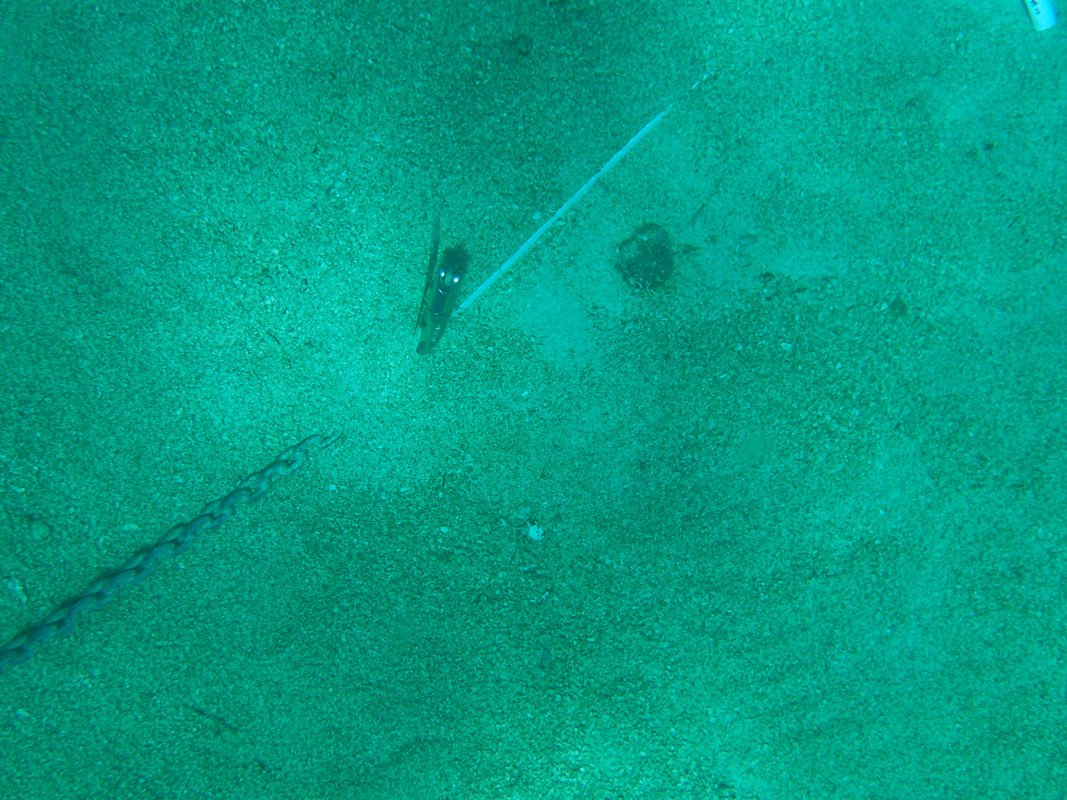
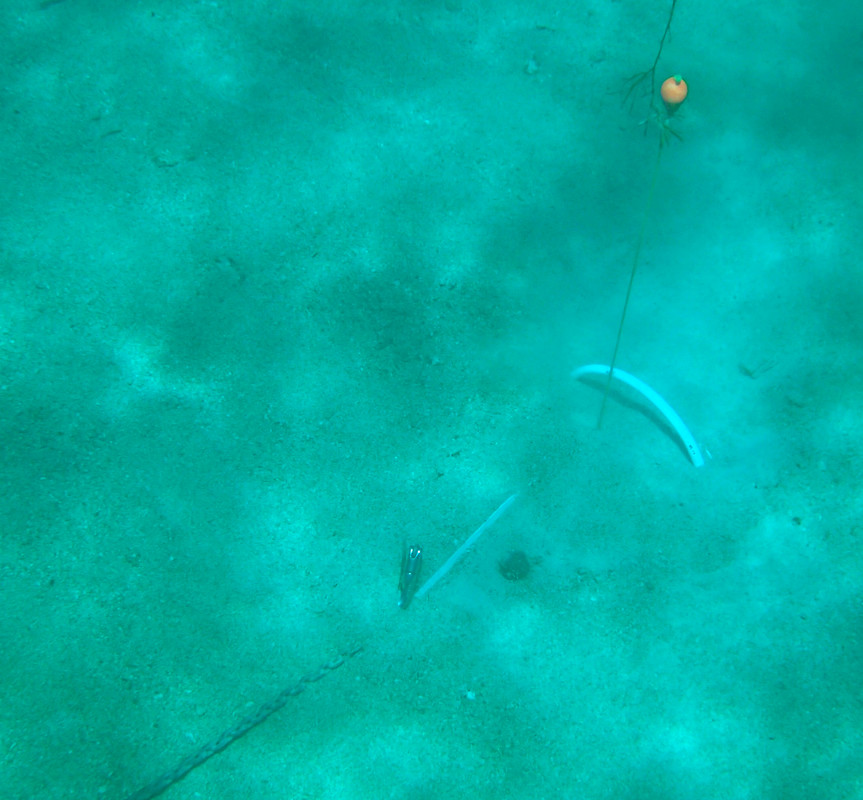
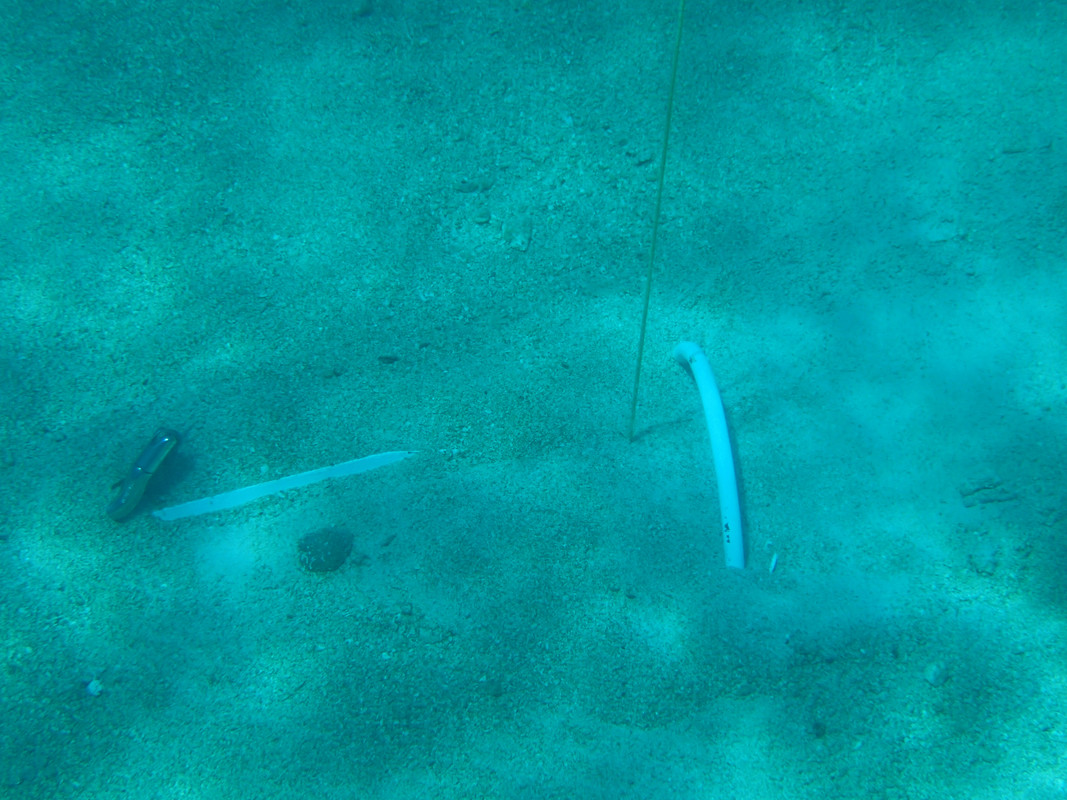
Pictures of my Osculati cranked swivel experience. After the initial failure to set the anchor I thought I might have installed the swivel the wrong way around, there being no instructions with it, but reversing it made no difference. As NormanS suggests, it seems likely that the problem is caused by dropping the anchor while the boat is stationary but our normal setup with the Kong plus three links copes with this perfectly well.

As usual we reverse pulled the anchor to 2500 rpm for around a minute.

This time the anchor held us but on several other attempts we could not stop dragging. Holding here is not ideal but we have previously spent several nights here with no problems.


Last edited:
The answer is in your first photo, Vyv. I think if you introduced your 3 or 5 links of chain between the anchor and the link, there would be much less chance of the link catching (kinking) on the anchor. But of course, that depends on whether you have sufficient length between your bow roller and your gypsy.
 
Last edited:
The one draw back of the bent link, my Boomerang (of which Anchor Right's Flip Link is a direct and exact copy) is that you do need those links between the anchor and the link (and 2 shackles + 1). On many yachts the combination of 3 shackles, the link itself and some chain is simply too much as the windlass is too close to the bow roller. You can reduce the number of chain links which might help a little. The other option is to use a shorter Boomerang. When I developed mine, using NormanS' bent link as inspiration, I made a very short one. It works well but very quickly and the anchor really does not have much time to self align as modern windlass are so quick - but it does work. In the original article see link in earlier post, dimensions are available and you can make one at home. The easiest home made solution would be to use Duplex stainless - or you need to galvanise your model.

The Boomerang has an additional advantage - when the anchor sets the link is pulled into the seabed, as a knife. It has a cross sectional area less than the chain, so burying the Boomerang is marginally easier than burying chain most other devices have a cross sectional area greater than the chain, including swivels (so most other devices hinder chain burial - and I've measured and checked - so no guesses :)). When the Boomerang is buried it increases the resistance of the chain to movement due to yawing, because in the vertical is has a cross sectional area greater than the chain. The anchor is thus less influenced by yawing of the yacht

It would be my suggestion that yawing and horsing are possibly, directly, or indirectly, the main cause of anchors breaking free - and dragging.

The picture Noelex attaches of the copy of my Boomerang is on a Lightwave yacht (a catamaran - sister vessel to ours) - which has a considerable distance between bow roller and windlass. Anchor Right's flip links are very popular in Australia, New Zealand and Canada and I have fitted, for owners, a number of them on monohulls and they are also used on commercial vessels where the anchors are simply too heavy to manipulate by hand. However you arrive at owning one they are much cheaper than an Ultra or Kong swivel :)

The original article, I link below, offered anyone the opportunity to make Boomerang, including Anchor Right. A batch of 20 were made at a yacht club in Melbourne. For High Tensile chain there are some slight modifications and the shackles are replaced by Omega links. Other than helping local owners, local to me, to fit them I have no association nor influence on Anchor Right's use of the freely available design - and certainly make no money, nor recognition (so I take Noelex attachment to remedy the absence of recognition :) )..

Jonathan

http://www.mysailing.com.au/cruising/how-to-boomerang-your-anchor-right-back-at-you

The next development is a bridle chain hook, a more conventional snubber (single line) chain hook and how to convert your Mantus anchor to double its hold and make it perform, more like, a Rocna :). All open source.
 
Last edited:
The answer is in your first photo, Vyv. I think if you introduced your 3 or 5 links of chain between the anchor and the link, there would be much less chance of the link catching (kinking) on the anchor. But of course, that depends on whether you have sufficient length between your bow roller and your gypsy.

Yes I agree but the point of having it is becoming less and less! Also as you say I am not sure we have the space. Easier to go back to the Kong.
 
Top