AIS System - Where to Start?

Is that how class B AIS works ? My AIS has to request data, it doesn't just receive it automatically ?
No idea if you are lacking in knowledge & unable to use google to find things out ..... or just being arsy. Probably the latter. ?
Class B transmits automatically but can also be polled by a shore station which asks for message 19.
Can poll for more apparently.

HqujIPJ.png

Sounds like textbook definitioin of a transponder when it does that...
 
Last edited:
On eBay there is Onwa KP39A chart plotter for 500 quid. It has both ais transmiter and receiver. It will be my choice when I will be ready to go further away. It’s little known company but I heard lot of good opinions about them.

I have KP39A with K-Charts ... Excellent all in solution for what OP wants ..... all you need extra - is the VHF antenna connected ...

Don't understand many posters reasoning ... OP said he had basic chart plotter and possibly replacing. So its very simple. Instead of spending inflated prices for brand XXXX .... XXXXXX .... XXXXXX new plotter .... get an Onwa Plotter with AIS ... free K charts .... job and finish ... for a lot LESS money ...

I would certainly advise against the suggested 'add-on' route because the price added to sorting out a display if old plotter is unsuitable is just plain 'idiotic' ..... sorry but being honest.

For Onwa .... Alan at Aves Marine is nice guy to deal with ... and you are talking direct to the authorised UK dealer and not some smarmy service tech.
 
Last edited:
No idea if you are lacking in knowledge & unable to use google to find things out ..... or just being arsy. Probably the latter. ?
Class B transmits automatically but can also be polled by a shore station which asks for message 19.
Can poll for more apparently.

HqujIPJ.png

Sounds like textbook definitioin of a transponder when it does that...

Perhaps it does (or not), in one isolated function that only a shore station can perform.

Most VHF sets can send and receive position requests, i don't think that makes then transponders.

In normal use an AIS will just be a transceiver.
 
I recently got a refurbished Onwa AIS chartplotter from aves Marine. I saw his ebay advert, called to ask about a used unit he had, and he told me about another one he had. A unit with new case and motherboard, and it looks new and unused. He set up the ariels for me and it was totally plug and play. I turned it on, could see other boats in the marina - could see my boat on Marine Traffic, The chart plotter is working perfectly, i really dont see a downside and it was £450 if i remember correctly.
 
I have KP39A with K-Charts ... Excellent all in solution for what OP wants ..... all you need extra - is the VHF antenna connected ...

Don't understand many posters reasoning ... OP said he had basic chart plotter and possibly replacing. So its very simple. Instead of spending inflated prices for brand XXXX .... XXXXXX .... XXXXXX new plotter .... get an Onwa Plotter with AIS ... free K charts .... job and finish ... for a lot LESS money ...

I would certainly advise against the suggested 'add-on' route because the price added to sorting out a display if old plotter is unsuitable is just plain 'idiotic' ..... sorry but being honest.

For Onwa .... Alan at Aves Marine is nice guy to deal with ... and you are talking direct to the authorised UK dealer and not some smarmy service tech.
The Onwa plotter cost twice what I spent on the VHF, and would have required some re-wiring for antennas etc. I'm sure I can sort out a way to hold the VHF for me where I can see it when I'm helming, and it should give me what I need for now: basic AIS visibility.
 
it should give me what I need for now: basic AIS visibility.

My basic need is for my ais receiver to see approaching big boys closing at 15 to 20 knots at least half an hour ahead of any close encounter. I doubt you will first see them within 10 mins at best given a cockpit level stubby receiver,

For a very few pounds more with a class b transceiver and a decent mounted antenna you could have alerted the big boy to your position an hour before he gets near you.

If you have a transceiver with a display then you can usually see when they alter course for you to give a minimum CPA of 1nm. This typically happens when they are out of normal visual range when even a hand bearing compass is useless!

Sorry to be blunt but I think your purchase is likely to give you false confidence.
I wouldn't be depending on it for a foggy shipping lane or channel crossing. None of the video reviews I have seen show range rings or contacts in excess of 2NM which doesn't give a lot of time to avoid a potential collision.
 
TSB240: Maybe, I'll just have to see how I get on, but the other AIS options are beyond my wallet so this has to be better than nothing. And, like I said, I'll try to set up a better antenna so I get improved range.
 
TSB240: Maybe, I'll just have to see how I get on, but the other AIS options are beyond my wallet so this has to be better than nothing. And, like I said, I'll try to set up a better antenna so I get improved range.
I have an AIS receiver that receives from a short stubby aerial, from an old hand held VHF, mounted less than two metres above water level. I receive signals from commercial shipping at 8 miles distance which I find is an acceptable range.

Www.solocoastalsailing.co.uk
 
with a class b transceiver and a decent mounted antenna you could have alerted the big boy to your position an hour before he gets near you.
Fwiw, I would not trust any class B (cstdma) to broadcast my position in a busy shipping lane, I actually shut mine off in such occurrences. Delays between subsequent class B position report messages are often around 5-6 up to 10+ minutes, one relies on receiving ship having some sort of alert "careful this sailboat position is XX minutes old" and people on watch readily realize that.
 
I don't understand. How does that help?
The ships can "see" your last AIS message, a B cstdma signal with say >30/40 transmitters around will often be delayed by several minutes. If your last message is say Xminutes old they might think your current position as being the one of X minutes earlier. One would rely on the fact that the ship equipment/watch has a means of seeing some warning "careful this position is xx minutes old", which may or may not be the case. In those cases I personally prefer not to send my Bcstdma message and just receive, I have increased my radar visibility so hopefully the ships will have only one real time position of my boat and no uncertainties caused by doubtful AIS positions.
 
The ships can "see" your last AIS message, a B cstdma signal with say >30/40 transmitters around will often be delayed by several minutes. If your last message is say Xminutes old they might think your current position as being the one of X minutes earlier. One would rely on the fact that the ship equipment/watch has a means of seeing some warning "careful this position is xx minutes old", which may or may not be the case. In those cases I personally prefer not to send my Bcstdma message and just receive, I have increased my radar visibility so hopefully the ships will have only one real time position of my boat and no uncertainties caused by doubtful AIS positions.

I'm not sold on that one, out of date positions are obvious on my obsolete raymarine gear. Also 30-40 vessels isn't a lot given the number of slots available, 10 minutes would mean over 20,000 slots have passed.
 
Delays between subsequent class B position report messages are often around 5-6 up to 10+ minutes,
Where did you get these numbers from? getting every 30 sec message much more normal, opencpn has the really useful function of plotting a "ghost" ship position based on where the vessel would be if it carried on at the last ais message cog/sog which flags up long delays very well. 40 ships is nothing really, though don't have any data to confirm class b still gets through in very busy areas much more reliably than your figures.
 
Where did you get these numbers from?
Actual measurements of B messages "age", both other sailboats messages and my own (two different sources, I have separate txr and receiver, the receiver tells me how old is my last sent message). More visually, in busy places one can sometimes "see" on the plotter his own real time position above the AIS icon of another B boat which is actually a few hundred meters away.
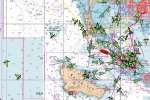
Also, there is no need to have dozens of class A, it also happens with only Bs: typical summer day these are 99% class B, I put "Mark target as lost after 3 minutes", want to bet the barred icons are class B cstdma?
Anyway, not telling anyone to believe, maybe make one's own measurements and see what happens :)

AIS quib.jpg
 
Also, there is no need to have dozens of class A, it also happens with only Bs: typical summer day these are 99% class B, I put "Mark target as lost after 3 minutes", want to bet the barred icons are class B cstdma?
Were the lost targets nearby?
Already I log distance of targets received & that can vary a lot over short time spans, a vessel coming through can just disappear for a while, with very few targets around. Seems unlikely to be too much trffic, very little around, always wondered why..

1669197520289.png
 
TSB240: Maybe, I'll just have to see how I get on, but the other AIS options are beyond my wallet so this has to be better than nothing. And, like I said, I'll try to set up a better antenna so I get improved range.

I think you will be ok, those screens are quite small but you will adapt to that. I have a crummy 3 quid telescopic aerial on top of the plotter and that works well enough for me; the position is just above the companionway so around 2m above the water, max. I might want to find a position to semi permanently mount the set.
 
Were the lost targets nearby?
All sort of distances, the ones farther away maybe 5-6 miles (?), the nearest I sailed above their target icons :)

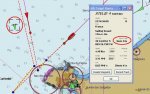
One (of many) cases with lots of class A, Spain/Portugal near a TSS, class B sailboat at 3.5miles with last message almost 4min old
ais delay.jpg

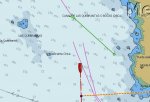
Same area, this is funny: the green icon is actually my own last AIS message (possibly I had not activated "mark target as lost" warning), whereas I am in the red icon position. By the length of the green "speed" vector that might be 5 min delay.
ais shadow 8.jpg

Of course theory tells there should be room for anyone's message, reality shows a different story.
These delays are always multiples of 30s, I have the impression class B "sense" if there is an ongoing transmission every 30 seconds, if they find a carrier no message is sent and they wait another 30s before sensing it again. If the length of time they try and detect the carrier is short enough, they might well find it busy several times in a row. I have no idea if it is really the case but it's the only kind of plausible explanation I could find, happy to have more/different ones :)
 
Top