What did PhillM do wrong?

I really dont think that a car gps system uses gyros or wheel speed. The software might do a bit of guessing, thats all.

Many 'built in' car gps systems do indeed have such inputs. It helps a lot in cities with tall buildings all around.
It is not a new thing either, I had a top model Ford (oxymoron alert?) from the tail end of the last century, its built in satnav was much better than a TomTom if you wanted to know how far down the Blackwall Tunnel you were.
Unfortunately it sulked in the Hindhead Tunnel as that wasn't on its map.
 
Ill get hammered now, but looking at charts for Plymouth, there does not seam a lot to guide you in for a large port. without referring to the charts as I write this. there is a Red buoy on the west side and the light on the west side of the breakwater. I see there are sector lights to guide you in but once you are behind the breakwater there are only a couple of red buoys. Is it correct that in the channel behind the breakwater large boats/ships anchor. if so its easy to understand how you could get disorientated. I appreciate there is another sector light on your starboard side, but it looks like a distinct lack of channel marker buoys until you get to the Bridge or follow the main channel.

Just putting myself in to someone elses shoes that had never entered Plymouth YET!! late at night and in reduced visibility. Perhaps ive missed something specific.

Steveeasy
 
Ill get hammered now, but looking at charts for Plymouth, there does not seam a lot to guide you in for a large port. without referring to the charts as I write this. there is a Red buoy on the west side and the light on the west side of the breakwater. I see there are sector lights to guide you in but once you are behind the breakwater there are only a couple of red buoys. Is it correct that in the channel behind the breakwater large boats/ships anchor. if so its easy to understand how you could get disorientated. I appreciate there is another sector light on your starboard side, but it looks like a distinct lack of channel marker buoys until you get to the Bridge or follow the main channel.

Just putting myself in to someone elses shoes that had never entered Plymouth YET!! late at night and in reduced visibility. Perhaps ive missed something specific.

Steveeasy

No, I don’t think you have. I think you are right.
 
Is it correct that in the channel behind the breakwater large boats/ships anchor. if so its easy to understand how you could get disorientated. I appreciate there is another sector light on your starboard side, but it looks like a distinct lack of channel marker buoys until you get to the Bridge or follow the main channel.
No, there is another sectorized Lighthouse

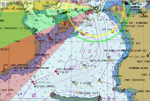
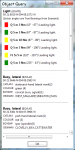
Ply Ent 1.png Ply Ent 2.png
 
The problem is that on the night in question the visibility of the lights would have been impaired so quite easy to become disorientated especially if you didn't know where you were in the first place.
Plymouth is no different to many large ports lots of lights and lots of distractions in the background. In good visibility even without a GPS and plotter it is relatively easy to navigate.
 
The problem is that on the night in question the visibility of the lights would have been impaired so quite easy to become disorientated especially if you didn't know where you were in the first place.
Plymouth is no different to many large ports lots of lights and lots of distractions in the background. In good visibility even without a GPS and plotter it is relatively easy to navigate.
Very true. Good summary of the situation.
 
Going back to early electronic days (I can't say pre . . . because I started navigation when RDF was used).
If viz was lost, the SOP I knew was to either anchor, if possible, where you were or to set a compass course in the general direction of open water and monitor the depth sounder.
Maybe this has been forgotten with all today's electronic aids, but the fact remains that in low viz our only source for position is GPS (and GLONASS or Galileo), loose that and you are back to pre RDF days and no sun or stars to point an astrolabe at :(
 
Here is my statement on the incident. At the below it some ideas about how I could have prevented this accident.

The passage upon which the incident happened was the delivery from Hamble to Plymouth, prior to the Jester Baltimore Challenge. I have previously sailed past Plymouth several times, but not entered before. It appeared to me to be a large, safe port of refuge, so I was not expecting to find entry difficult.

I left my home port (Hamble) around midday on Wednesday 26th May. I sailed all afternoon, experimenting with the new wind vane and reefing systems, then berthed in Cowes. Next morning (Thursday) I left for Plymouth at 0745. Wind was F5/6 WSW (so on the nose). I motor sailed down the Solent and exited via the Needles North Channel. I then turned off the motor and sailed close-hauled out of Christchurch bay. By late afternoon, I was fighting the flood tide, south of the Needles (about 180 T, 12 miles or so off). After the ebb started, I used this to my advantage and by about midnight I had passed St Albans Head. I planned to pass well south of Portland Bill, which I achieved by about midday on Thursday 27th (using a cycle of stemming the flood and making the most of the ebb tides). The wind then dropped to F2 or less variable, so I motor sailed across Lyme Bay.

I arrived in the vicinity of Start Point around 5 p.m. but again had to fight the tide. Winds were variable and then non-existent. Fog patches appeared. There was a lot of shipping about. I was concerned that large ships were neither using their foghorn nor altering speed to take account of the conditions. I was concerned about being run down, so plotted their courses using AIS receive (part of the Standard Horizon VHF radio) and took action to avoid getting to close inshore at the headland, as this is where the ships mainly were.

I slowly made my way around the headland about 3-4 miles off. By mid-evening I was making my down past Bolt Tail and in towards Plymouth, albeit the ebb tide that had helped me to pass the headland was now heading me off, so progress was slow. As I started to motor passed Bigbury Bay, there was a combination of mist and fog, which was confusing. I kept my speed down and eventually arrived outside of Plymouth around midnight.

I decided that my choice was to stay out, but risk being run down by shipping in the fog, or check out the entrances to see if they were viable. I looked at the Eastern entrance and decided against entry. I then motored back west to see what the Western entrance looked like. At about 2 a.m. I identified a Red light, that I thought was the Draystone and followed it and a series of what looked to me in the mist as the sector lights for the Western entrance. My plotter (Garmin Dragonfly 5) on high zoom appeared to confirm what I thought I was seeing. Shortly after, however, my plotter lost the ability to see satellites and stopped working. I had the Reeds almanac open, as well as my pen and paper plan (prepared pre-passage). Furthermore, I could see a line of ships moored behind what looked like a breakwater, this gave me confidence that the lights that I was following would take me into safety.

What I thought was the Western entrance wasn't. After the three white lights, I saw a set of R/G but not where I was expecting them to be. As I slowed down to tick-over, so as to consider what to do next, I ran into submerged rocks. Having heard a lot of water rush around upon impact, seeing more water than expected in the bilge and listing, I called Mayday. While waiting for the Lifeboat, I inflated my (rental) liferaft and activated my lifejacket worn PLB. My thinking being that these might not be needed but I would rather everything ready, just in case. Police Launch Endeavour and RNLI ILB both attended and between them towed me into Mayflower marina.


On reflection:

Simply stayed out and not attempted entry until daylight.

Installed an AIS transponder, so as to be less worried about fast moving ships, in fog.

At Start Point, instead of fighting the tide, I could have turned for Dartmouth. That would have also taken me away from the fog banks around the headland.

Planned a port of refuge or anchorage in case my destination was inaccessible. I had considered that Plymouth WAS my port of refuge, so not planned a backup.

Now over to the forum to add to my knowledge and ideas bank.

A Janner, I know Plymouth well.

Your decision to enter on the Cornish side of the breakwater was correct.

Believe you were planning to go to Mayflower so interested, did you plan to go west or east of Drake’s Island and where did you hit the bottom?
 
Ill get hammered now, but looking at charts for Plymouth, there does not seam a lot to guide you in for a large port. ..... Perhaps I've missed something specific.

Steveeasy

What 'steveeasy' and perhaps others have missed is that the lights provision is made for the needs and benefit of commercial and naval shipping, and not the occasional amateur yottie who passes by.

Put another way, what's there is intended to meet the needs of those wot pays the Light Dues. And it's my understanding that the fixed navigation resources and the people who support them provide a high standard as such things go.

I will not be critical of PhillM, but those other blinkered types who rabbit on here at length could do with a short sharp dose of basic seamanship. Get your heads out of your I-pads and learn something of 'the ordinary practice of seamen'..... IMHO, of course.
 
What 'steveeasy' and perhaps others have missed is that the lights provision is made for the needs and benefit of commercial and naval shipping, and not the occasional amateur yottie who passes by.

Put another way, what's there is intended to meet the needs of those wot pays the Light Dues. And it's my understanding that the fixed navigation resources and the people who support them provide a high standard as such things go.

I will not be critical of PhillM, but those other blinkered types who rabbit on here at length could do with a short sharp dose of basic seamanship. Get your heads out of your I-pads and learn something of 'the ordinary practice of seamen'..... IMHO, of course.


Zoidberg,
Oh sorry for making one slight observation. Perhaps I should have thought twice. blinkered, who rabbit on here at length. short sharp dose of basic seamanship. never had an ipad. cant remember being rude. just an observation, YOU form a small minority of miserable moaning old goats who frequent the forum that think they can be abusive. don't. its not fitting and makes you look an idiot.

Steveeasy

edit.
whilst I read your message as being rude and offensive towards me, perhaps Ive taken your post in the wrong spirit. I apologise for my response.

Steveeasy
 
Last edited:
It’s very easy to become disoriented in fog I recall being off the hook of holland and theskipper wanted to turn right into the waterway but observing the radar we had to turn left as we had passed the entrance coming from the south and where north of the entrance.
 
HERE IT COMES

Zoidberg,
Oh sorry for making one slight observation. Perhaps I should have thought twice. blinkered, who rabbit on here at length. short sharp dose of basic seamanship. never had an ipad. cant remember being rude. just an observation, YOU form a small minority of miserable moaning old goats who frequent the forum that think they can be abusive. don't. its not fitting and makes you look an idiot.

Steveeasy

You ended your post with "perhaps I have missed something specific" You did the OP was lost unaware of his position he had a circle of uncertainty in it that contained several significant and dangerous hazards. If even by dead reckoning and using contours he had narrowed his position down he could have navigated to safety easily. There will be many of us who have undergone a blind navigation exercise to simulate precisely that scenario not quite in a life or death situation but stressful enough in the sense of pass or fail.

Plymouth is nothing special or difficult in terms of navigation and its lights, yes it does have a myriad of confusing lights and unlit hazards just have many others the Solent being a good example of large unlit mooring buoys and confusing background lights. No one has mentioned the bell on the end of the breakwater fog doesn't interfere with that.

I can only assume that you are speaking from relative inexperience and as such your comments are to some extent understandable although not correct.

This is my last word on this subject, Phill should be allowed to lick his wounds and digest all the information and advice he has been given and put his experience in the learned from that folder. He has been gracious and honest enough to post about his mistakes and misfortune that have given him and possibly a few other food for thought and a little advice and learning.
 
What did he do wrong? Single handed overnight passage inshore. Inshore is not the place to be when tired and in the dark.
 
You ended your post with "perhaps I have missed something specific" You did the OP was lost unaware of his position he had a circle of uncertainty in it that contained several significant and dangerous hazards. If even by dead reckoning and using contours he had narrowed his position down he could have navigated to safety easily. There will be many of us who have undergone a blind navigation exercise to simulate precisely that scenario not quite in a life or death situation but stressful enough in the sense of pass or fail.

Plymouth is nothing special or difficult in terms of navigation and its lights, yes it does have a myriad of confusing lights and unlit hazards just have many others the Solent being a good example of large unlit mooring buoys and confusing background lights. No one has mentioned the bell on the end of the breakwater fog doesn't interfere with that.

I can only assume that you are speaking from relative inexperience and as such your comments are to some extent understandable although not correct.

This is my last word on this subject, Phill should be allowed to lick his wounds and digest all the information and advice he has been given and put his experience in the learned from that folder. He has been gracious and honest enough to post about his mistakes and misfortune that have given him and possibly a few other food for thought and a little advice and learning.

Yes whatever. All I merely pointed out was there seamed a lack of Marker buoys in the main channel, and the anchorages could hinder navigation in certain weather. Of course to those that frequent Plymouth , No Problem. the whole point is that if you know somewhere your fine. If its a new port and you've not been there, it could be difficult. Id rather be sailing in the Solent or up the Hamble in FOG rather than a new port such as Plymouth. Yes the Bell would be very useful.

Ive not been there. I will be in two weeks time. ill probably avoid going in in darkness, and im sure everything will be clear to me, especially following the thread.

Steveeasy
 
I will not be critical of PhillM, but those other blinkered types who rabbit on here at length could do with a short sharp dose of basic seamanship. Get your heads out of your I-pads and learn something of 'the ordinary practice of seamen'..... IMHO, of course.

PhillM himself says "Just to say thank you again to everyone for the constructive way in which the thread has gone. There is plenty to learn and plenty of excellent advice. I will take time to summarise at some stage. Lots of great experiences shared and I for one feel that I will be a better sailor for it." and in that spirit we can all become better sailors by discussing such events.

Your comments are clearly unwarranted and inappropriate so please delete them and apologise to Steve. :ambivalence:

Richard
 
Ive not been there. I will be in two weeks time. ill probably avoid going in in darkness, and im sure everything will be clear to me, especially following the thread.

Steveeasy

I hope people don’t avoid Plymouth by night. It’s one of the best lit ports you can find anywhere in the world. The possible confusion is that there are so many lights! With so many background lights you just need to take your time to look for and positively identify where the navigation marks are. (e.g. The isophase on the end of the W end of the breakwater is a key mark for me.)

I once was approaching a Caribbean island after several weeks at sea. I’d been speaking to another boat already in port who reassured me the nav mark lights were all working (bar one) which is always reassuring to know in the Carib! I briefed the crew on our entrance. One of them asked whether we should stay at sea for the night and enter when it got light. I’m still slightly bemused by his question. (And we were safely tied up alongside a few hours later drinking our first Rum Punches...)

When there’s a plethora of lights, stopping and looking carefully (through binoculars if necessary) and then timing the light to positively identify it helps avoid confusion.
 
. One of them asked whether we should stay at sea for the night and enter when it got light. I’m still slightly bemused by his question. (And we were safely tied up alongside a few hours later drinking our first Rum Punches...)
.

I don't see why you should be bemused* by what might have seemed to him a perfectly seamanlike course of action.

* Bemuse, v.t. : Stupefy (Concise Oxford Dictionary of Current English, 5th edition, OUP)
 
Last edited:
Top