What did PhillM do wrong?

I think, truth be told, even the best of us have had our 'egg on face' moments. Sometimes, expensive ones.....

There are quite a few positives PhillM can take away from this passage....

First, he and his boat managed a singlehanded passage of ~ 150 miles, away from home waters. So the boat/owner combo is up to the job.
Second, he had plenty of good equipment in mostly working order to assist.
Third, help comes when one needs it.... and also the knowledge that help asked for BEFORE it is needed is effective and cheaper.
Fourth, most of his planning approach works, and he now knows which techniques he needs to build on.

The next leg/stage of 'Paean's Progress' to passing the Isles of Scilly is, at around 115nm, a fair bit shorter - and there are bolt holes and all-weather havens every 30 miles or so..... Fowey, Falmouth, Helford, Newlyn, Isles of Scilly various..... One need never be out of VHF range, and the NCI stations dotted along the way are pleased to hear from you. Indeed, the radio chatter among other 'Jester' types nearby can be incessant! One can join in, or do a 'Greta Garbo' and keep to oneself.

Possibly more important, Radio Devon and Cornwall can be received until halfway across the Celtic Sea.... then Radio Cork comes in from those big mountain-top antennae.

Some 'Jester' participants have it in mind that one has to soldier on regardless. Not so. There's no embargo against pulling in for a few hours' zizz, or repairs, then resuming - provided one does the courtesy of letting someone know. Also, there's no embargo against using your engine to get in and out of a harbour or anchorage. The expectation is that, in the proper spirit, that one returns back out to the point where one started the engine, then switches off and continues under sail again. Not too difficult, not too restrictive....

Some worry about where they'll make landfall. It's hard to miss the powerful 'mark of the course' Fastnet light ( Fl.5s49m27M ), but there are powerful lights further east along the coast - and half-a-dozen harbours other than Baltimore where one could tuck in safely for a while.

All of this is mentioned in the 'Skippers Briefing', but sometimes such info does not 'stick'.
 
Echo sounder are often not particularly helpful in rocky locations. Can go from 10m (or a lot more) to nil in less than a boatslength amongst rocks

Well of course you are right about that, but when I go near rocks I would expect their location to be charted and there to be navigational marks to help you keep clear of them. I keep my boat in Brittany and am well used to avoiding rocks (I hope I am not going to regret that little boast! :o )
 
We only have hand held GPS and prior to that a very basic Decca. But we do have a comprehensive written list of useful way points also preplotted on charts. Most of these are in the handheld and even if we haven't created a route as such, it is very easy to just use the goto function which gives instant orientation through a course and distance.

Can this old, rather labour intensive system occasionally be more useful than a plotter screen? I do use one on my phone rather a lot now, but when it matters I can have instant fallback, with a bit of preparation.
 
We only have hand held GPS and prior to that a very basic Decca. But we do have a comprehensive written list of useful way points also preplotted on charts. Most of these are in the handheld and even if we haven't created a route as such, it is very easy to just use the goto function which gives instant orientation through a course and distance.

Can this old, rather labour intensive system occasionally be more useful than a plotter screen? I do use one on my phone rather a lot now, but when it matters I can have instant fallback, with a bit of preparation.

Unfortunately the OP lost his GPS signal and very quickly thereafter his position so waypoints or not he was into blind navigation with no start point. A very unenviable position which many of us have been close to when running for hours on end relying on a GPS and a position plotted an hour or more ago.
 
Echo sounder are often not particularly helpful in rocky locations. Can go from 10m (or a lot more) to nil in less than a boatslength amongst rocks

Hence my suggesting that one needs to study the chart. "No dangers outside the ten metre contour" or similar is a good way to ensure you CAN'T hit a rock. Especially with the shoreline to the W of Plymouth breakwater or similar places.

No criticism implied or intended but I think the OP won't be sailing blindly on when he's not sure of his position in the future.

I remember (not many years ago) entering L'Aberwrach when I was cold and tired and it was dark. I missed a light and got a bearing confused and ended up with breakers getting nearer and uncertain of my position. With heart in mouth, we stopped and reversed course and sorted things out, but it was a scary few minutes. Big tides sweeping across the entrance had put us off track more than I had anticipated or allowed for. Rocks everywhere...
 
...
I remember (not many years ago) entering L'Aberwrach when I was cold and tired and it was dark. I missed a light and got a bearing confused and ended up with breakers getting nearer and uncertain of my position. With heart in mouth, we stopped and reversed course and sorted things out, but it was a scary few minutes. Big tides sweeping across the entrance had put us off track more than I had anticipated or allowed for. Rocks everywhere...
My first time there I came in through the Passe des Malouines and then turned round because I was unsure of the lading mark in deteriorating visibility. It was so narrow I felt I almost had to do a 3-point turn to get out!

It was a stupid thing to be there at all when I was unfamiliar with it but the shortcut saves a few miles. I then went round the long way and made a mental note of the marks for future use when I was close by them.

After that I have used the pass several times with confidence but if you go through when there is not much rise of tide it is chastening to see how narrow it is and how carefully one must follow the leading marks.
 
but I think the OP won't be sailing blindly on when he's not sure of his position in the future..

Too true! :)

Just to say thank you again to everyone for the constructive way in which the thread has gone. There is plenty to learn and plenty of excellent advice. I will take time to summarise at some stage. Lots of great experiences shared and I for one feel that I will be a better sailor for it.
 
Too true! :)

Just to say thank you again to everyone for the constructive way in which the thread has gone. There is plenty to learn and plenty of excellent advice. I will take time to summarise at some stage. Lots of great experiences shared and I for one feel that I will be a better sailor for it.

Thank you for confirming which bit of shoreline you hit. I was a bit confused, but now think I understand how you managed to end up where you did.

Thank you also for being so upfront and encouraging the debate etc. I know I've learned a lot from this thread.

I'm really glad to hear that there's no lasting damage to the boat or to your confidence.
 
My first time there I came in through the Passe des Malouines and then turned round because I was unsure of the lading mark in deteriorating visibility. It was so narrow I felt I almost had to do a 3-point turn to get out!

It was a stupid thing to be there at all when I was unfamiliar with it but the shortcut saves a few miles. I then went round the long way and made a mental note of the marks for future use when I was close by them.

After that I have used the pass several times with confidence but if you go through when there is not much rise of tide it is chastening to see how narrow it is and how carefully one must follow the leading marks.


Been there got that T shirt and I did it a long time ago on transits, I shudder even now to think how foolish I was at the time to run it on spec to save a few miles.

It just proves that most of us have done daft things and been lucky enough to get away with it.
 
Just as a point of interest.

There are few dangerous rocks in the area where Phil found himself. The Shagstone (already mentioned in the other thread) is one obvious example as it rises almost vertically out of deep water and is unlit - which is why I speculated about it. Anchoring in 10m would give you a good chance of not hitting anything and not getting in the way.

It's my home port and I rarely enter at night but (like the others) almost always choose to anchor in Cawsand Bay

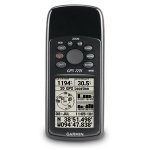
I have one of these for backup:

cf-lg.jpg

In fact it was my sole piece of kit for many years. It has got a built in map of half the universe which is great. Very crude but certainly good enough to get into safe water and you can add waypoints (which will be accurate) to your hearts content.
Cheap way of having a back up "chart plotter"

I find it difficult to pick complex sectored lights so tend not to bother.
 
Echo sounder are often not particularly helpful in rocky locations. Can go from 10m (or a lot more) to nil in less than a boatslength amongst rocks

At least in fairly rocky locations, the ground is unlikely to have moved much since the chart was published.
Looking at the chart in the other thread, it seems there is plenty of scope for heading in, between the 5 and 10m contours.
But really, you need someone on deck and someone working the chart.
 
I think, truth be told, even the best of us have had our 'egg on face' moments. Sometimes, expensive ones.....

There are quite a few positives PhillM can take away from this passage....

First, he and his boat managed a singlehanded passage of ~ 150 miles, away from home waters. So the boat/owner combo is up to the job. .....
That's a little bit like the flight was OK but the crash wasn't optimal.
 
Unfortunately the OP lost his GPS signal and very quickly thereafter his position so waypoints or not he was into blind navigation with no start point. A very unenviable position which many of us have been close to when running for hours on end relying on a GPS and a position plotted an hour or more ago.
Exactly, so knowing where to anchor isn't a great help.
 
That's a little bit like the flight was OK but the crash wasn't optimal.

In mil aviation circles last century, there was much wholly-warranted focus on the the significant problems of 'the last mile'. Airmanship and seamanship are but two sides of the same coin.

Also..... "any landing you can walk away from is a good one."

Plenty of celebrated sailors with books to their names have had a close encounter with the 'terra very firma'. PhillM hasn't lost his boat; he hasn't lost his life or limbs. He has learned some damned expensive lessons, cheaply.

Me, I'm looking forward to reading chapters 2, 3 and 4 of this adventure. :D
 
We notice when we're on the Eurotunnel train that sometimes the satnav puts the car icon bang on the railway track shown on the map for 5 or 10 seconds but then it suddenly decides that a car can't run on a railway track so it flips the icon over 100 yards to stick in on the nearest stretch of road. A few seconds later it decides that the road is too far away, so we're back on the railway etc etc.

Richard
I really dont think that a car gps system uses gyros or wheel speed. The software might do a bit of guessing, thats all.
 
Top