VHF GPS Input

A post earlier said NMEA + and NMEA - to be used ... not correct. Unless post meant NMEA + of one unit to NMEA - of other unit. He forgot the GND wire.

NMEA 0183 comes in 2 signalling types, older single ended which requires a common ground, and later differential, which doesn't. It changed between version 2.x and 3.0. An advantage of moving to a differential signaling was getting away from the need for common grounds. The different signals are called in the standard A and B, but manufacturer usually label them NMEA+ and NMEA-. This scheme needs no common ground.

In addition differential signalling is more reliable over long distances & noisy environments, useful because as you know NMEA standards apply to ships as well as small craft.

The receiver circuitry is designed in the later standards so that it will accept either a single ended or differential input safely and is required to be opto-isolated from the rest of the receiver's electronics.

The protocol format also changes throughout the standard's versions and many manufacturers, especially of GPS devices, use later protocol version with earlier hardware signalling version. Garmin are, or were, a standard sinner in this respect. These manufacturers claim to be NMEA 0183 devices, but strictly aren't.
 
Last edited:
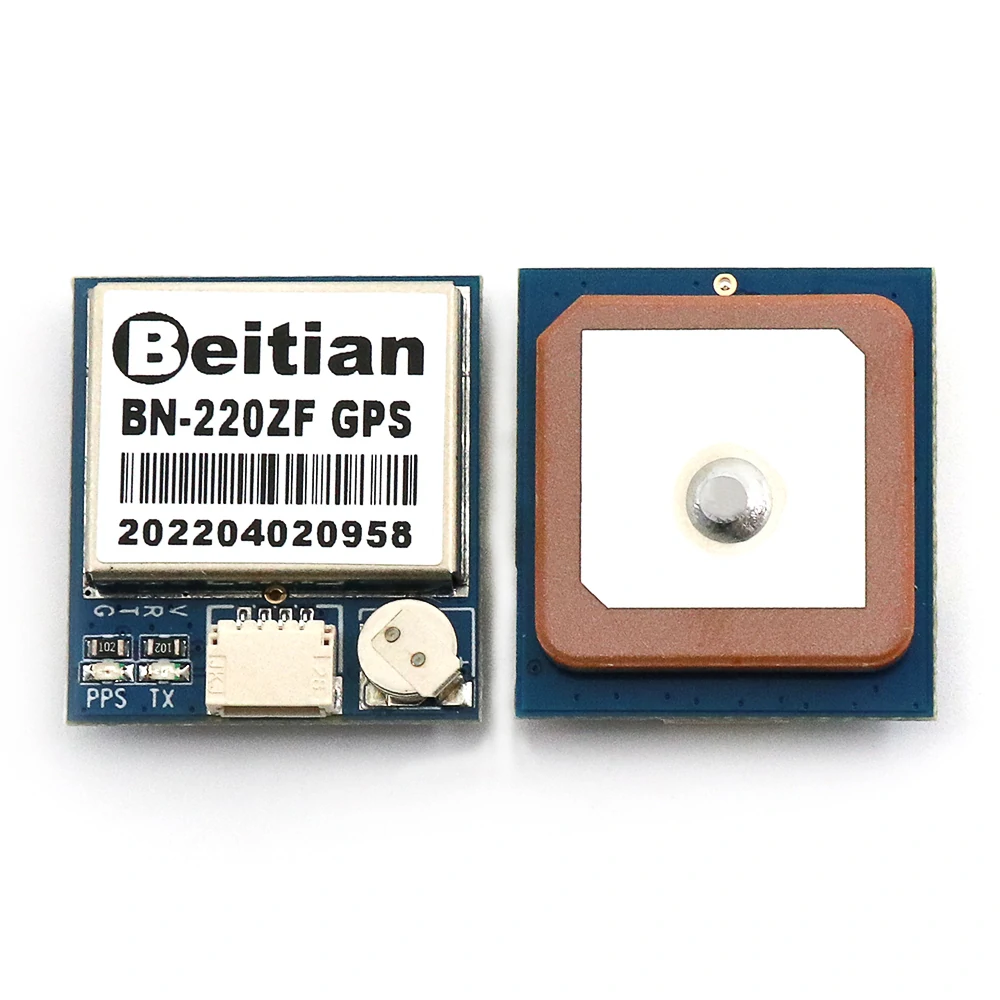
A simple separate way to 'GPS" a radio is to use a GPS Module such as sold by Banggood / AliExpress / Amazon and other online sellers. For less than 20 euros you get a module that is a) highly accurate, b) as small as a 50p piece and even smaller, c) you can double side tape to the radio out of sight.

It will need a BEC (about 5 - 10 euros) that reduces 12V to 5V ....

I am just waiting for replacement module myself after using my spare on another project.

GPS/GLONASS-Modul Beitian BN-220ZF mit hoher Genauigkeit, 72 Kanälen und NMEA-0183-Protokoll. Kompakte Größe ideal für FPV-Flugzeuge, Drohnen und Roboternavigationssysteme

0576d3fc-fa28-4c80-af8c-66f1a1187085.png.webp


Just have to read sales page to make sure module has NMEA 0183 ....

To give an idea of their accuracy and reliability - they provide the GPS positioning of expensive and highly agile drones ... even to autonomous flight capability. Far more than needed by a VHF.

The 5v BEC can be :

DC-DC-Wandler-Step-Down-Modul UBEC 3A 5V / 12V BEC für RC-Flugzeug FPV für RC-Drohne FPV Racing

Again small enough to stick to radio out of sight.


Just commenting on alternative way ...
A bit more expensive, but I prefer this kind as it comes in a more boat friendly enclosure...

5.0v Rs 232 Level Db9 Female Connector Gps Receiver 9600 Bps Nmea 0183 Protocol | eBay

Like yours it needs 5V supply. All versions of NMEA-0183 accept RS232 signalling. The connector either needs cutting off or a DB9 connector making up.

The manufacturer usually allows you to download Windows software to set the baud rate on the GPS device to the NMEA-0183 standards of 4800 or 38400 if needed.
 
5V supply is dead easy .... and cheap to do.

If I can trust those little DC-DC BEC's to fly my expensive models - I am sure it can look after my GPS module !!

DB-9 .... Oh memories of setting up printers etc with them !! But my original network on my motor sailer used DB-9 and telephone cable / plugs ... worked a treat.
 
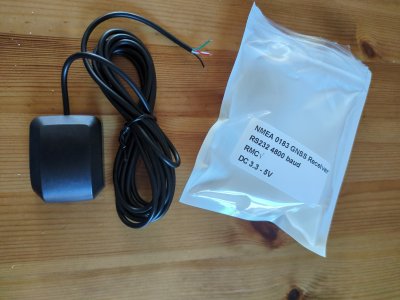
An old thread I know, but I just wish to thank all for the info. I also have something useful to add. The 'barebones' method described here requires a GPS receiver, an interface, and a laptop to program it. Nothing wrong with that but it is too high a threshold for some. There is an easier solution which has a much lower threshold of tech knowledge. On AliExpress it is possible to buy the same receiver chips pre wired in a waterproof case ready to wire into your system. If you look carefully you will see that some of the online stores offer to configure the receiver to your requirements before sending it out. These receivers only cost a couple of quid more and are better protected from the elements. IHMO being sealed, they are better suited for the damp environment under a headliner or suchlike. And of course preconfigured so 'plug and play'. You don't then have to buy an interface which makes the price difference between 'barebones' and 'sealed unit' insignificant. Of course, a separate 12v to 5v converter is still required to power the unit. Attached is a picture of the receiver I bought pre configured form the 'GPS module Master store' (no connection to me). It receives all four satellite systems and cost £17:50.
 

Attachments

  • 17557773132602937558132432185799.jpg
    17557773132602937558132432185799.jpg
    1.9 MB · Views: 6
Top