

vas
Well-Known Member
Re: port gearbox works only on reverse
David,
yes, this is a valid point, loose all drive in one go doesn't really fit with worn diverter valve body and slightly worn (possibly!) rings on the oil pressurising point.
I'm afraid I cannot think of a way of testing/pressurising the fwd axle oilway.
However, I could do something that I foolishly forgot in the afteroon:
Fit again the gauge on the pump checkpoint and see how much it drops on engaging fwd and then reverse.
It may give some extra pointers.
Further, I don't think my other idea holds any water, namely grindings from the casting found their way in the oilway and blocked it not letting enough oil through to press the disks. If that was the case the pressure on the fwd axle pickup would be HIGHER not lower...
This (although I definitely don't like it!) makes more sense engineering wise...
Would I expect to find big chunks of steel rings in the box when I emptied and replaced the oil? 'Cause I didn't find a thing!
Wonder what are my chances of doing such an operation with the box in situ. Should be possible to remove the axle mating plate (however you call that) and undo the bolts holding the thing together and open it up.
Is it possible or plain stupid as an idea?
other opinions welcomed!
cheers
V.
Hi Vas
Been following this thread.
From my limited experience with Borg warner marine and AP vehicle transmissions, the low oil pressure indicates a large leak, most probably caused bt the forward clutch piston seal having failed.
it would be interesting if you could pressurise the appropriate oil gallery o n the shafts with air and work out if the wear on the housing is serious. Cant see how the casing wear would lead the drive to fail in one go, if it had gradually got worse, yes.
David,
yes, this is a valid point, loose all drive in one go doesn't really fit with worn diverter valve body and slightly worn (possibly!) rings on the oil pressurising point.
I'm afraid I cannot think of a way of testing/pressurising the fwd axle oilway.
However, I could do something that I foolishly forgot in the afteroon:
Fit again the gauge on the pump checkpoint and see how much it drops on engaging fwd and then reverse.
It may give some extra pointers.
Further, I don't think my other idea holds any water, namely grindings from the casting found their way in the oilway and blocked it not letting enough oil through to press the disks. If that was the case the pressure on the fwd axle pickup would be HIGHER not lower...
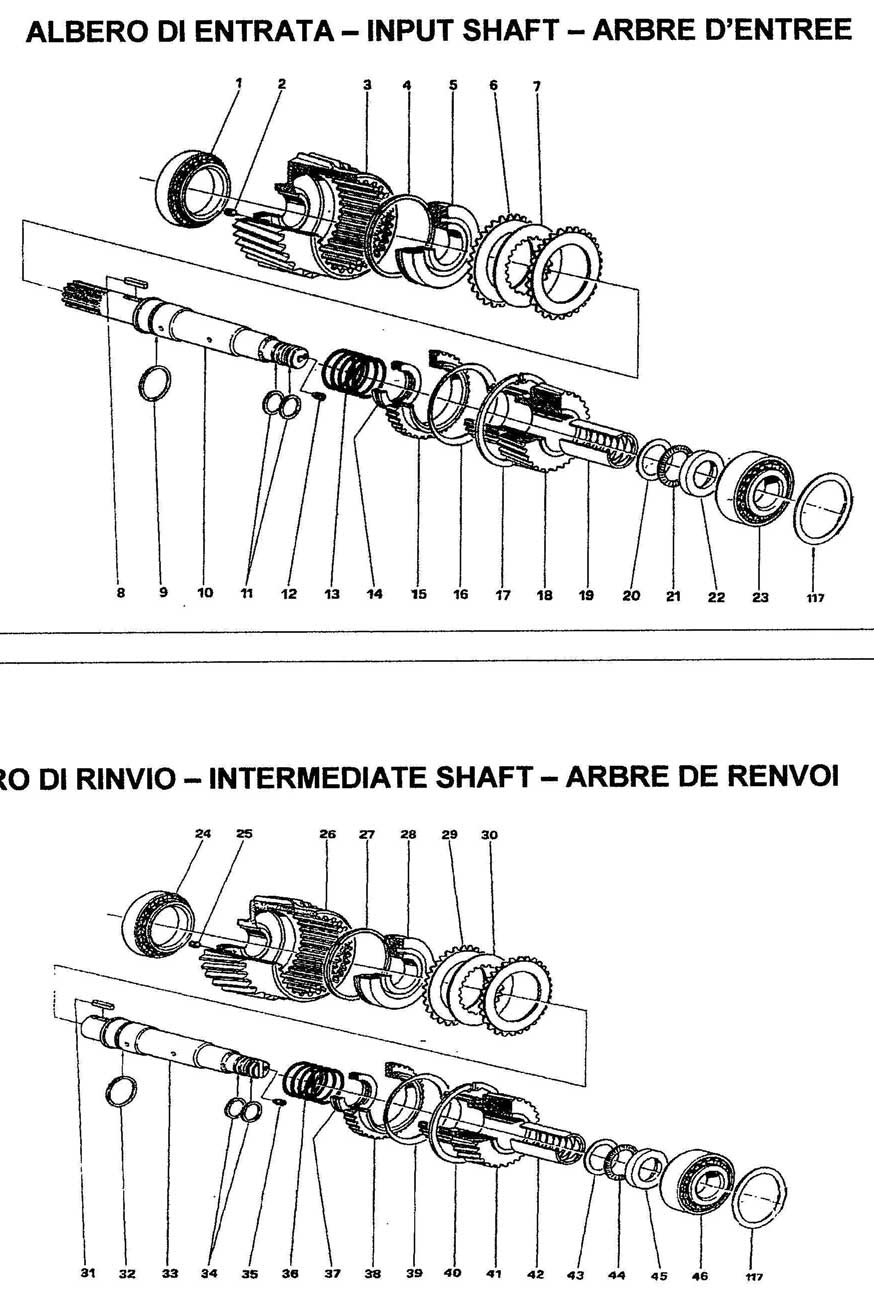
On one gearbox I had the forward clutch plate container ring failed,(item 40 in your diagram above) no drive forward, no noises etc as the bits stayed nearly in place , but the piston moved sufficiently for the resulting oil leak to cause the pressure to drop to near zero. Reverse only worked as well.
That was an instant failure as well.
This (although I definitely don't like it!) makes more sense engineering wise...
Would I expect to find big chunks of steel rings in the box when I emptied and replaced the oil? 'Cause I didn't find a thing!
Wonder what are my chances of doing such an operation with the box in situ. Should be possible to remove the axle mating plate (however you call that) and undo the bolts holding the thing together and open it up.
Is it possible or plain stupid as an idea?
other opinions welcomed!
cheers
V.




 I moved the gauge to the pump pickup and checked what happens when I change from idle to fwd or astern (engine at idle speed or around 630-650rpm:
