Graham376
Well-Known Member
Whatever the truth, it's likely more ammunition for insurance underwriters wishing to make life more difficult.


Well i don't know if what caused the fire, but there is for sure a reason and until that reason is known you are wise to keep your opinions of others to yourself.My point precisely, there are no facts to know. Lots of folk suggesting they know it was the batteries though. I won’t say what I think of those folk again, I was removed from the other thread for calling out their BS.
More money.Whatever the truth, it's likely more ammunition for insurance underwriters wishing to makelife more difficult.

By the same token people should avoid speculating wildly and suggesting that lithium is dangerous based on nothing at all. Otherwise they invite criticism as has been seen from the majority on the other thread.
Suggest you look at the new video on the thread on Scuttlebutt which does seem to add a bit more information about the boat. Pluss of course some new guesswork and misinformationThere were certainly a lot of conspiracy theories. I’ve yet to see a single piece of information aside from a boat caught fire, seemingly in the galley area and a fireman making a guess which was quoted.
It’s generated a lot of views for the video though, which I imagine is the point. Facts are irrelevant when profit can be made.
GrahamHere's the viewpoint from a guy present in the marina when the fire happened. He was already against EVs but I haven't seen the earlier video to which he refers.
I was removed from the other thread for saying uncomplimentary things about a conspiracy theorist.Suggest you look at the new video on the thread on Scuttlebutt which does seem to add a bit more information about the boat. Pluss of course some new guesswork and misinformation
Always a problem when 2 threads running on similar subjects
Graham
Done to death (almost) here forums.ybw.com/threads/a-man-who-does-not-mince-his-words.621434/page-7#post-8662969

A bit more "fact" in that the US dude shows some photos of the installation of batteries, motor and controls of a similar boat in the same fleet. It is a Beta installation with Victron chargers and 2 * 20 kWh banks, one for propulsion and one for domestic which he claims are located under the aft deck. Suggests that the fumes from overcharging might have leaked into the forward area through gaps around the cable runs in the bulkhead and maybe set off by sparks from the fridge starting up. Only reporting what he says. Does not make total sense as the aft part of the boat where he claims the batteries are seems totally unscathed.I was removed from the other thread for saying uncomplimentary things about a conspiracy theorist.
Does the new video contain facts or more speculation? I’m not supporting such Youtubers by adding to their views. If there’s information then there ought to be sources to verify.
This in itself would be enough to disprove the “lithium fire” theory. If the lithium were burning in the way being suggested the area the lithium is stored would be totally destroyed as Lithium Ion fires as seen in cars are self sustaining and extremely hot.Does not make total sense as the aft part of the boat where he claims the batteries are seems totally unscathed
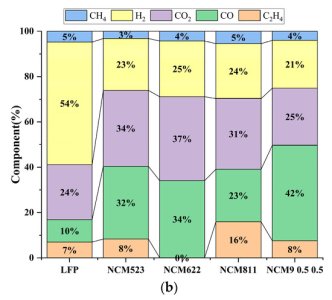

Very interesting. I didn't see any mention of how much gas was given off by each type of battery, just the comparison of the proportions. I suppose you'd have to measure it by Ah of battery to give a fair and useful result.I've now found the paper where General Custer got his gas production during thermal runaway diagram.
View attachment 197905
From the abstract from the same paper:
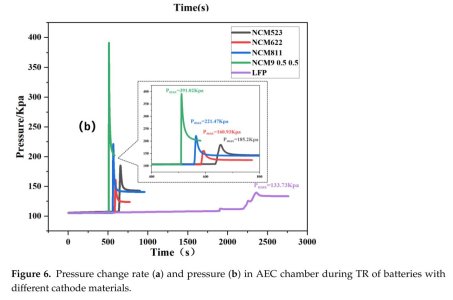
"The primary gas components during thermal runaway for both NCM and LFP batteries include H2,CO,CO2,C2H4, and CH4. The gas produced by LFP batteries contains a high proportion of H2. The high concentration of H2 results in a lower flammability limit (LFL) for the gas generated by LFP batteries during TR compared to the mixed gas produced by NCM batteries. Therefore, in terms of battery TR gas composition, the order of hazard level is LFP > NCM811 > NCM622 > NCM523 > NCM9 0.5 0.5 0.5. Although experimental results show that LFP batteries have superior thermal stability and lower gas production during large-scale battery thermal runaway events, considering gas generation composition and thermal runaway products, the thermal runaway risk of LFP batteries may be higher than that of NCM batteries."
I shouldn't need to point out these findings are 'in vitro' findings, and the conclusions are tentative ("thermal runaway risk of LFP batteries may be higher", [emphasis added]), but they may provide food for thought.
I didn't see any mention of how much gas was given off by each type of battery, just the comparison of the proportions. I suppose you'd have to measure it by Ah of battery to give a fair and useful result.
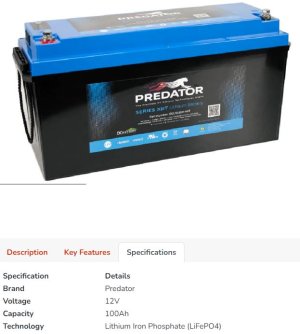
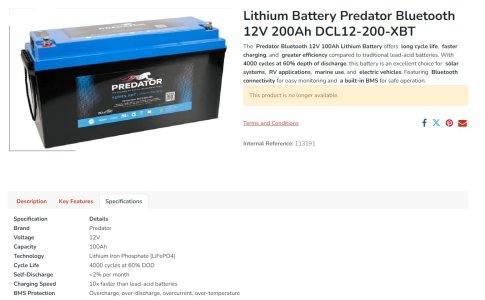
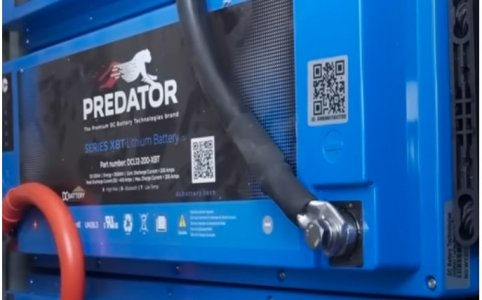
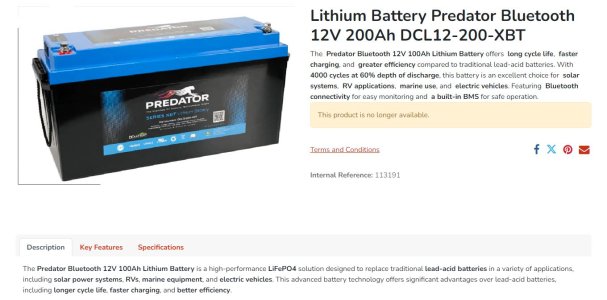
Even if we assume that’s the case (and I highly doubt it) it still isn’t a “lithium battery fire”.The American guy with the General Custer moustaches does bang on rather, but the batteries from another similar boat that he shows in his video are Predator XBT batteries and they are LifePO4 batteries. Screen grab from the video:
View attachment 197899
Description from a website that sold these batteries:
View attachment 197902
But the video from another boat doesn't prove these were the batteries on the boat that did explode.
His theory about what caused they explosion is that the batteries produced a LOT of hydrogen (to much to be explosive in the battery space as not enough air?) which then entered the main saloon area where it mixed with air to form a highly explosive mixture that was ignited, maybe by a spark from the fridge. This could explain why the explosion happened where it did, and why the battery area itself appears unaffected.
Does anyone know whether LiFePO4 batteries can produce significant amounts of hydrogen? If they can, then that may be important...
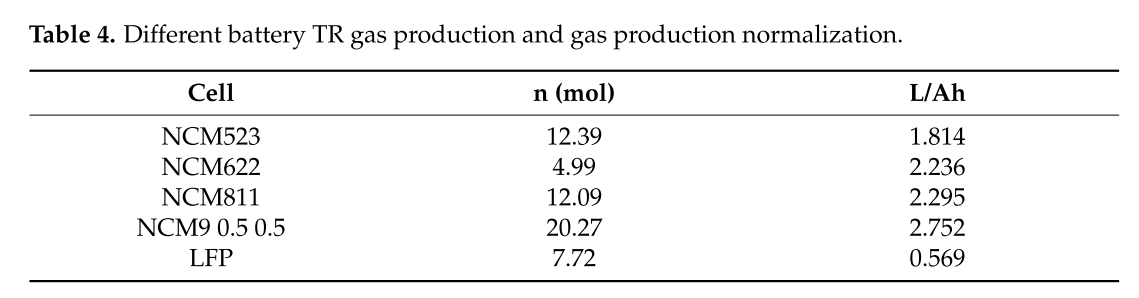
Is that worse than Lead Acid?And here is a table from the paper showing, conveniently, gas production per Ah:
View attachment 197950
It's late on a sunny Sunday evening hereabouts and I am going to call it a day, a sundowner beckons, but at 0.569L/Ah, an 100A/h LiFePO4 battery might suddenly produce over 50L of gas, of which more than 50% is hydrogen....
A quick Google suggests thats not only better than Lead Acid, but that it only happens during extremely rare thermal runaway. Lead batteries off gas any time the current is above acceptance rate and they generate very significant quantities in comparison.Is that worse than Lead Acid?