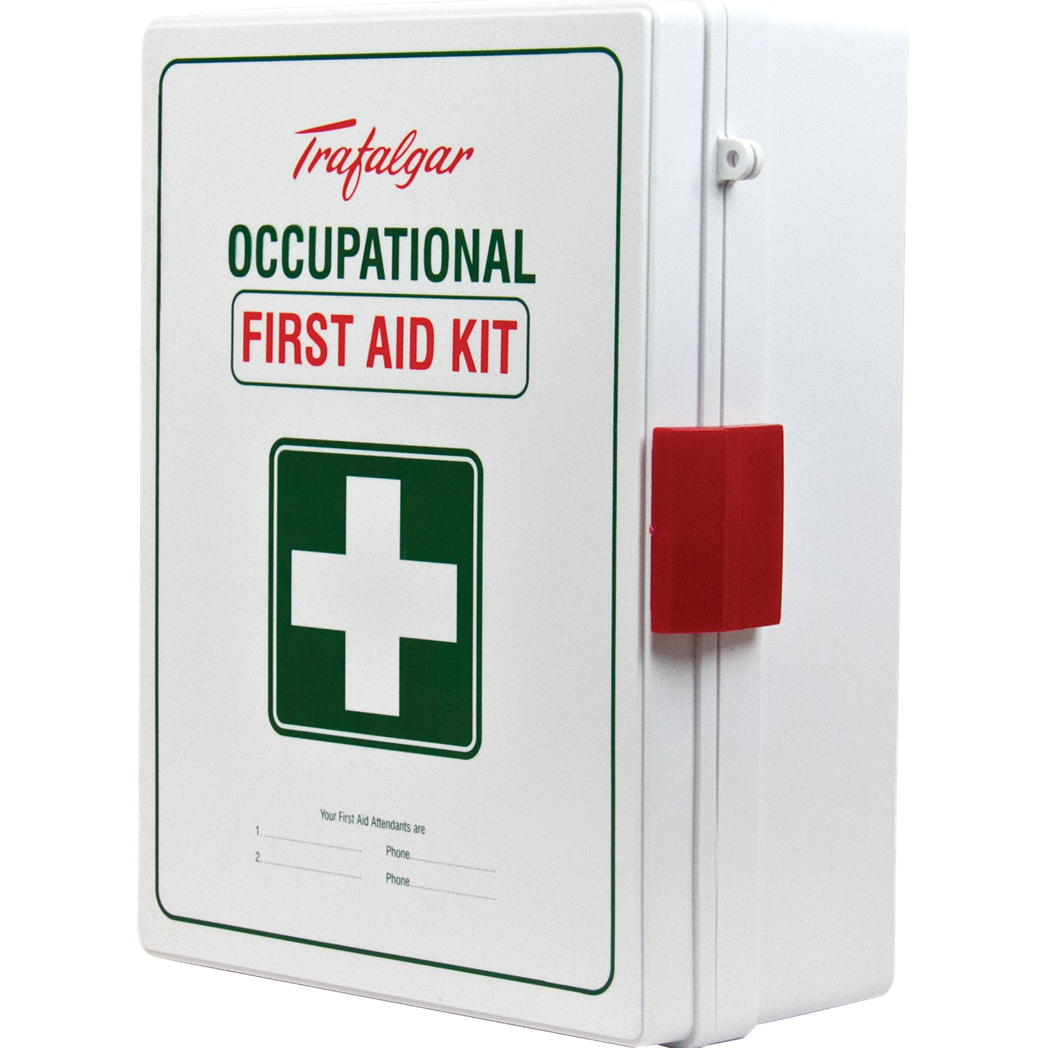
First Aid Bag

Ideally I want a waterproof bag that can be thrown in the dinghy if needs be, and is compartmentalised and organised sensibly.

I was thinking of something like this:

Elite Bags Jumble Red First Aid Bag EB159

Very hard to find a truly waterproof bag. So put your tupperware box in a good quality kayaking bag - these are the best you'll get if you want waterproof. Quick and easy to open, and a useful grab handle.

Don't go over the top wrapping individual items in plastic bags, you'll struggle to get access when your hands are dirty, wet, cold.
1678542874671.png
 
I have had a similar experience to LittleSister above, (I dropped an angle grinder onto my foot and couldn't find the bandages to stop bleeding). If ever it happened again I'd use a singlet or shirt to stem the flow.

I now have an ABS cabinet mounted on the bulkhead near the chart table. I down loaded suitable stickers and printed them on glossy self adhesive paper. From memory the ABS cabinet (with two shelves) on;y cost around $A30 on eBay.

s-l1600.png
Ouch!! regarding the foot.
I hope the cabinet door closes securely and is not prone to bursting open in a rough sea.
 
When I was instructing I made up FA kits, for a sailing-school fleet of 6 dayboats, of the ISA/RYA recommended items and put each category in ziplock bags with labels detailing the number of dressings or whatever, in each, and the legend ; "Replenish when used", so that when needed, all the necessary contents were present.
I divided it up into kits for '"Cuts and Knocks" and ''Burns" and the rest was for other injuries such as broken bones etc. The kits were kept in drybags and removed from the boats and stored ashore at the end of each session.
On my own boat I have a hinged, purpose- made box which came with the boat, and I have divided and bagged the contents in a similar manner.
 
In Latvia we are req'd to carry in the car :

Warning Triangle
Fire Ext
First Aid Kit

All 3 are sold in Supermarkets .... the First Aid kits are either in a Red Zipped pouch or in a hard plastic case with lid that seals quite well. The case actually will float with the lid joint above water.... so that plus the tight seal keeps things good even in extreme circumstance.

I have taken my old one from the car and replaced items that needed and its now on the boat.
 
Interesting to hear what people carry.

On the boat there are
  • a few open boxes of sticking plasters for scratches and minor cuts.
  • a tupperware box with a sealed box of plasters, a pair of scissors for cutting clothing off, a bunch of sterile pads, micropore tape (gaffer tape is in another bag and far more useful) and some Hemostatic Bandages.
  • an out of date, unopened Cat C first aid bag that came with the boat.
In the 50 years I've held a first aid certificate I've delt with head injuries, lots of trauma (legs and arms), heatstroke, hypothermia, diabetic hypo/hyper and never needed anything else.

Two instructors, one my original one, a Clydeside shipyard first aider, and the second about 10 years ago, a combat paramedic, gave me the same bit of advice - use what you have at hand, and there is lots of stuff on a boat that can be adapted. The Clydeside first aider did add, 'they will make a pin cushion out of the patient arse when they get to hospital', it will be a cannula these days.
 
As I get older I am increasingly thinking about adding a catheter to my first aid kit when planning longer passages. Urinary retention is a medical emergency, it is rather painful and very debilitating.

The quoted risks over a 5y period are 1:10 for 70y males and 1:3 for 80y males. So it is a bit surprising that the subject is never really discussed in the context of first aid and probably should be considered if you are male, over 70y and planning an ocean crossing.
 
Interesting to hear what people carry.

On the boat there are
  • a few open boxes of sticking plasters for scratches and minor cuts.
  • a tupperware box with a sealed box of plasters, a pair of scissors for cutting clothing off, a bunch of sterile pads, micropore tape (gaffer tape is in another bag and far more useful) and some Hemostatic Bandages.
  • an out of date, unopened Cat C first aid bag that came with the boat.
In the 50 years I've held a first aid certificate I've delt with head injuries, lots of trauma (legs and arms), heatstroke, hypothermia, diabetic hypo/hyper and never needed anything else.

Two instructors, one my original one, a Clydeside shipyard first aider, and the second about 10 years ago, a combat paramedic, gave me the same bit of advice - use what you have at hand, and there is lots of stuff on a boat that can be adapted. The Clydeside first aider did add, 'they will make a pin cushion out of the patient arse when they get to hospital', it will be a cannula these days.

If you've got a Cat A requirement, the kit is huge - it's likely to cause an accident getting it out of the storage hole.
 
If you've got a Cat A requirement, the kit is huge - it's likely to cause an accident getting it out of the storage hole.
Totally agree, I crew on a 30 metre boat with a max of 24 onboard. The skipper and often the first mate hold the STCW (MCA) Certificate of Proficiency in Medical Care.

The medical kit, stretchers and Oxygen is carefully stowed onboard, but is far more that most yachts carry.
 
Totally agree, I crew on a 30 metre boat with a max of 24 onboard. The skipper and often the first mate hold the STCW (MCA) Certificate of Proficiency in Medical Care.

The medical kit, stretchers and Oxygen is carefully stowed onboard, but is far more that most yachts carry.

Maybe we should be guided by Doctors of Medicine? Here are some links:

MEDICAL SUPPLIES
 
On my own boat I tend to use two boxes, one for pills and lotions etc and another for cleaning and plasters for minor injuries.
Anything bigger, I use what is also on the boat- disposable nappies and masking tape,[ the former kept for the engine bilge].
 
I may be stating the obvious but you can have the most comprehensive medical kit with enough stuff to perform minor surgery but you won't be able to use it under stress without training and practice. Get the training and you will know what to include.
 
Totally agree, I crew on a 30 metre boat with a max of 24 onboard. The skipper and often the first mate hold the STCW (MCA) Certificate of Proficiency in Medical Care.

The medical kit, stretchers and Oxygen is carefully stowed onboard, but is far more that most yachts carry.
I did that when it was called 'Ship Captains Medical' at the Warsash Nautical College. It was fab. Really interesting Instructoress and a great mix of seafarers of all types.

Regarding catheters, they had male and female rubber genitals to practice on called Bert and Mabel.

The course enabled me to deal with a number of situations at sea and on land over the years. Fortunately, although I know what to do, I've never had to use the lesson called 'Death'.
 
Top