Engine removal

The couple of calls to take pictures for future reference are good, but knowing my photography I'd be looking at them and thinking "what the hell is that?" I'd be better off taking video on my smartphone and making audible comments.
 
Thanks for understand me and not patronising me. My mast is down so I’ll need the crane. Might have to cut away part of the bridge. My refurb engine has new mounting blocks so I’d like to use them instead of the old ones. Yes I’ll watch out for the diesel spill and battery wiring. The engine came with a new loom.

No you won’t. Two of us removed an old 1GM10 and replaced it with a new one without a crane. It weighs about 90kg so two strong people will do.
 
I've just checked 2 Yanmar 1GM 10s and the top engine mount nuts are both 22mm. You may also need a 6mm hex key to remove the coupling from the shaft (see separate thread about removing a tight coupling - best done with the gearbox in place) or if re-using the coupling you need 2 x 17mm spanners to split the coupling from the gearbox.
A tackle with a jammer (kicking strap or mainsheet) is useful to allow you to pause and think while doing the lifting.
Yanmar spares are so expensive that even if the engine is scrap you can probably get quite a lot by selling the bits.
Getting the old engine out is the easy bit. Installing and lining up a new engine is more demanding so good luck with it.
 
When I did my 2GM20, the mounts are similar it was 24mm spanner for the jacking bolts and 19mm for the foot bolts, other than that 17mm/ 13mm and 10mm should do you, but have an 8” adjustable as standby, as others said though a have all sizes to 32mm when I’m doing any such job, both combination and sockets set
My wife says that I seem to need to have at least three toolboxes to do the simplest of jobs!?
 
What is it with this forum that people can’t stop making judgements? So patronising. I ask the question because I don’t want to drive for 90 minutes to the boat only to find out I have the wrong size spanner you snob.
To be fair he had a point, one view of your question suggested someone who was going to go to do a job with a minimum of gear, another may have been that you would not go without the correct size.... but that would require that someone could tell from their armchair what size spanner would suit your nuts, that itself hints at inexperience.

I took my engine out a few months ago and I brought every tool I could find with me, experience taught me that the one I left behind would always be handy.

I slid mine into the saloon on a plank which I was able to get in under the engine. ( I rebuilt it without taking it out of the boat so no lifting out but I had a chain block that was great for putting it back into place and would have been super for taking it out using the boom

Take loads of photos and then take some more...
 
We haven't addressed the high likelihood of corroded nuts and bolts yet.....

Digger, you might take every sized spanner and other tool known to mankind, only to find bolts/nuts which either won't move or end up rounded. Maybe you've already checked or it's a nice clean installation, but that would be the exception. Not hectoring or lecturing or bullying here, just saying you need to be prepared for it with the need for possible repeated sprays of your favourite loosen-it-up stuff, and hence visits. I exhort you to google problems people sometimes have when trying to disassemble prop -shaft couplings.

Cheers, Graeme
 
We haven't addressed the high likelihood of corroded nuts and bolts yet.....

Digger, you might take every sized spanner and other tool known to mankind, only to find bolts/nuts which either won't move or end up rounded. Maybe you've already checked or it's a nice clean installation and you're already across it.

Not hectoring or lecturing or bullying here, just saying you need to be prepared for it with the need for possible repeated sprays of your favourite loosen-it-up stuff, and hence visits. I exhort you to google the problems people often have when trying to disassemble prop-shaft couplings.

Cheers, Graeme
 
To be fair he had a point, one view of your question suggested someone who was going to go to do a job with a minimum of gear, another may have been that you would not go without the correct size.... but that would require that someone could tell from their armchair what size spanner would suit your nuts, that itself hints at inexperience.

I took my engine out a few months ago and I brought every tool I could find with me, experience taught me that the one I left behind would always be handy.

I slid mine into the saloon on a plank which I was able to get in under the engine. ( I rebuilt it without taking it out of the boat so no lifting out but I had a chain block that was great for putting it back into place and would have been super for taking it out using the boom

Take loads of photos and then take some more...
Digger seems to have taken the huff now, but Richard's point, whilst expressed a little inellegantly, is something that most of us will have thought, reading the OP.
I have helped many people do mechanical jobs, who had started on it with just a screwdriver and water pump pliers. ?
Previous Owners are a blight on the world. Even if someone with the self-same boat and engine had given a definitive answer it doesn't mean some PO hasn't "improved" the set up.

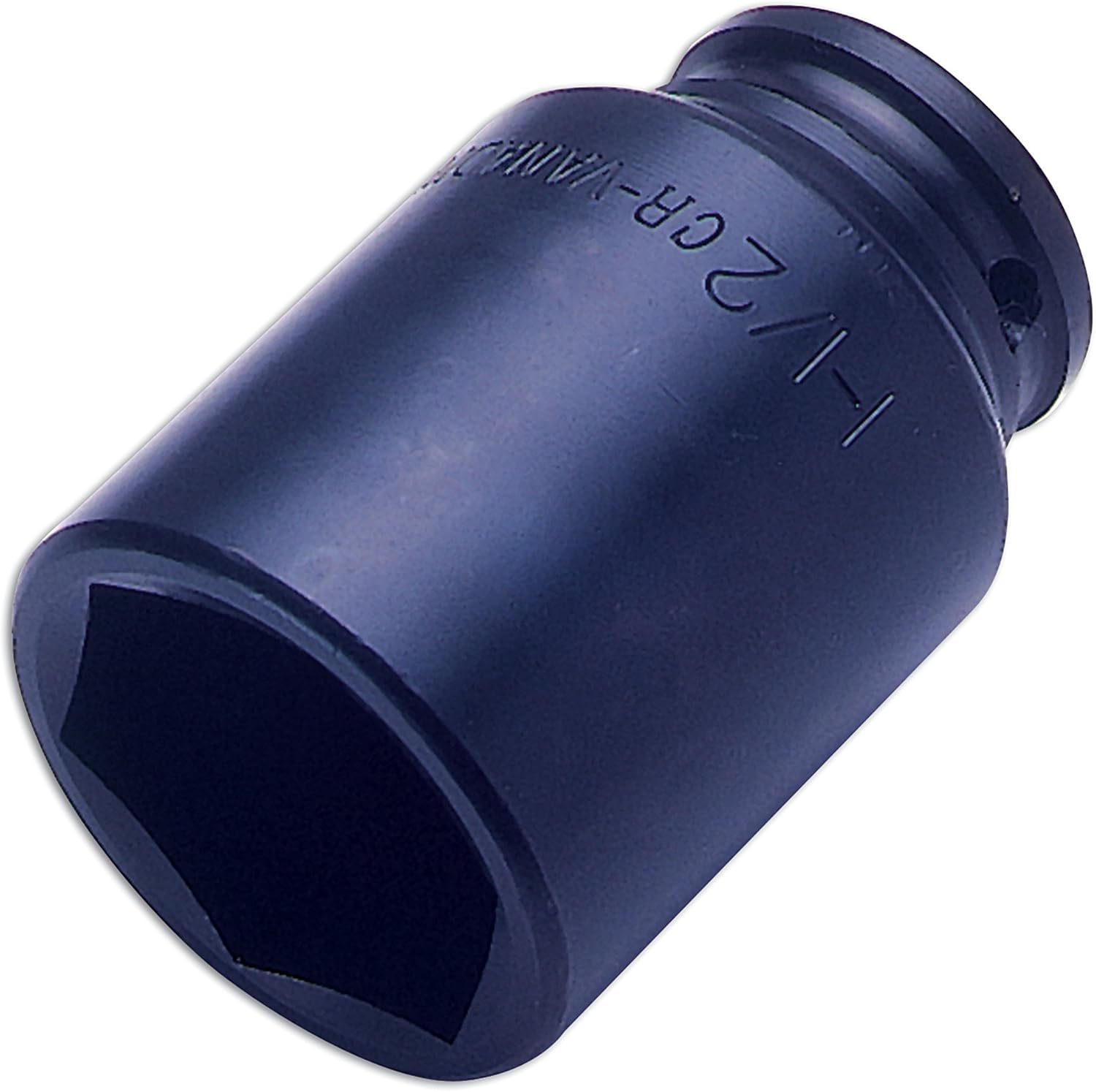
Another do-everything socket is a 1.5" AF deep socket for classic mini ball-joints, flywheel bolt, main shaft nut and loads of other things. I haven't had a Mini for nearly 20 years now, but it still has a special place in my tool box and gets used.


Rather smarter modern version
81WvLHdcngL._AC_SL1500_.jpg
 
Last edited:
And if you don’t have a favourite, I’d suggest PlusGas.

Pete
50/50 mixture of acetone and brake fluid or ATF is miraculous in freeing up rusted bolts.. (its what the vintage car guys use recovering rust seized engines etc)

I used it on many thing and it is truly much better than wd40 type stuff.. use small amounts and watch it suck it self into the rusted joint...
 
Even if someone with the self-same boat and engine had given a definitive answer it doesn't mean some PO hasn't "improved" the set up.

Or that over 30-odd years of production by at least two different companies (according to Yachtsnet) the size of bolts or screws they used to attach the engine feet to the bearers never varied. The spanner size thing was a silly question. Boats aren’t cars.

Pete
 
50/50 mixture of acetone and brake fluid or ATF is miraculous in freeing up rusted bolts.. (its what the vintage car guys use recovering rust seized engines etc)

I used it on many thing and it is truly much better than wd40 type stuff.. use small amounts and watch it suck it self into the rusted joint...
I agree that WD40 is not the best penetrating/easing fluid, although it is pretty good and I feel is too often dismissed.

In fact, I would argue that although neither is its prime function, it is a better penetrating fluid than it is a lubricating fluid.

Richard
 
I used [acetone and brake fluid] on many thing and it is truly much better than wd40 type stuff.. use small amounts and watch it suck it self into the rusted joint...

WD40 is a water-displacing agent; clue’s in the name. It can have a remarkable effect on wet outboard HT leads, and I used to spray it into a potentially-damp toolbox to keep the contents from rusting, but every other use is clever marketing.

I haven’t tried home-made mixes like yours, but PlusGas is made for the purpose and certainly wicks itself into joints the same way.

Pete
 
In fact, I would argue that although neither is its prime function, it is a better penetrating fluid than it is a lubricating fluid.

I think I agree. But I have dedicated cans of all three (penetrating, water displacing, and at least two varieties of lubricating) on the shelf so rarely need to use the “wrong” one.

Pete
 
50/50 mixture of acetone and brake fluid or ATF is miraculous in freeing up rusted bolts.. (its what the vintage car guys use recovering rust seized engines etc)......

I would strongly advise not to do this. I don't think there's anything clever about making home-made concoctions of harmful substances. Buy a can of Plus Gas.
 
Top