
Engine not starting - advice urgently needed

There is no mechanism to 'ram a pinion into the ring gear'. The pinion is firmly attached to the motor rotor. The whole rotor needs to move, energised by the solenoid, before engagement can occur. Totally different from a Bendix gear, which was used successfully for almost 50 years
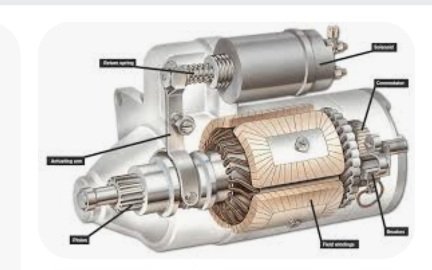
The fork that is moved by the solenoid slides the pinion gear on the starter motor rotor shaft ..into the engine flywheel ring gear. The starter motor rotor shaft has very little end thrust movement.
Screenshot_20250817_201230_Google.jpg
 
Rotation of the rotor cannot drive the pinion into the ring however it is configured
With the inertia design the pinion moves along the rotor shaft due to the design of the shaft and the pinion ,the initial excitement of the rotor creates inertia for the pinion to travel along the shaft against a very light return spring enabling the pinion to engage with the ring gear...

With the pre engage which means the pinion is pre engaged with the ring gear
prior to the rotor being excited.

If you short the terminals making the motor run and making the solenoid work and the fork sliding the pinion along the shaft all at the same time, the pinion will be rotating before it arrives at the ring gear and the pinion will be ramed against the ring gear if it doesn't locate, then you will hear a nasty noise.
 
The last pre-engaged starter I dismantled, probably over 30 years ago, was provided with a roller clutch to prevent over-run of the starter motor and aid disengagement.
For avoidance of doubt, shorting the studs was a very occasional rescue act when the engine was immediately required and the normal button failed.
 
The last pre-engaged starter I dismantled, probably over 30 years ago, was provided with a roller clutch to prevent over-run of the starter motor and aid disengagement.
For avoidance of doubt, shorting the studs was a very occasional rescue act when the engine was immediately required and the normal button failed.
Yes, the overun "clutch" was fitted to many types, and yes in an emergency get the thing going is priority...
More damage will be done to newer starter motors due to abuse because they are made much lighter and many are now fitted with plastic gears.
 
And does shorting the studs cause any damage?

Like molten copper in the eye? I'm horrified at all this advice to short across terminals connected to 12 or 24v batteries. Remember the OP claims an absolute minimum of technical knowledge. And so many forumites suggest doing something hazardous.
 
That's more than a lot of people do. I think we're on the same wavelength!
Probably ingrained from a few years driving boats for a living.
Fluids, belt, strainer. Look over the stern for water flow.

In all these years, I can only think of one time when my glance over the stern led to me shutting the engine down again. The water pump had failed, thanks to my over zealous belt tightening. Maybe the people who just turn the key and don't give it any thought have the right idea 😂
 
Like molten copper in the eye? I'm horrified at all this advice to short across terminals connected to 12 or 24v batteries. Remember the OP claims an absolute minimum of technical knowledge. And so many hazardous.
So what is your advice that helps the op?
 
Having succesfully started my old 2GM (oft discussed problem activating solenoid) with an 8mm allen key across the solenoid M8 studs, I disagree. As to the circuit which causes the solenoid to activate during this I neither know or particularly care. If I can be bothered I may investigate with the redundant (2GM long gone) spare in the garage.
Has been a pretty standard procedure on my cars, though I dunno about 21st century ones. Might be more of that negative progression thing.

A sharp tap with a hammer (rock, shackle, kedge, etc) can also help.
 
Last edited:
Why didn't you fix it so it worked correctly?

How can that help?

Just curious....
Because sometimes, after I did it, the car started (I wouldn't go so far as to say it "worked correctly", but it worked well enough)
Whereas before I did it, it didn't
This was helpful if I wanted to use the car
I found cars helpful because they gave relative freedom of movement and the ability to move relatively heavy stuff around.
YMMV
 
Last edited:
Like molten copper in the eye? I'm horrified at all this advice to short across terminals connected to 12 or 24v batteries. Remember the OP claims an absolute minimum of technical knowledge. And so many forumites suggest doing something hazardous.
Nothing hazardous about connecting a positive supply to the spade terminal of a pre-engaged starter motor, it's what happens every time you start the engine with the key/button.
 
Not having to have done what Paul suggests - or played with heavy screwdrivers near terminals - could I ask if anything has to be done with the diesel plug heaters before starting? Will it usually start cold?
 
Not having to have done what Paul suggests - or played with heavy screwdrivers near terminals - could I ask if anything has to be done with the diesel plug heaters before starting? Will it usually start cold?
Some engines don't have any sort of heater at all, and just need a bit more cranking before they'll start.
 
Not having to have done what Paul suggests - or played with heavy screwdrivers near terminals - could I ask if anything has to be done with the diesel plug heaters before starting? Will it usually start cold?
Shorting between the spade terminal and power attachment only activates the starter motor, nothing else. When I had glow plugs they were energised by a separate button.
 
I have had a similar problem in the past when one of the crimped connectors to the pos or neg battery wires had come loose. Try following these back to their sources checking the connections are sound
 
Top