
Engine failure in breaking waves

TomSummerbird

New Member
Joined
8 Aug 2021
Messages
3
Visit site
Hello, i was hit by a breaking wave just before passing behind the breakwater at Brighton Marina the other day and the engine cut out. It started first time, then stopped again a few seconds later, then I started it again and it ran fine. But it was a genuine “oh s**t” moment and shook us up!

My engine (a Volvo d2-50 with sail drive) is set up with all the parts shown on the diagram attached in terms of the exhaust, which I am assuming was probably the culprit. However I note I had quite low revs on at the time and I supposed a stall might be another explanation.

My questions are firstly, is this a normal occurrence given a properly set-up exhaust system? Or is there likely to be something that needs to be troubleshooted or changed? Finally, is there any maintenance I should do because of the incident itself / damage it might cause?

Thank you for any responses.
Tom
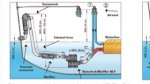
F4CF3B36-3190-4B66-BED7-C9B847E08FF6.jpg
 
I’m not certain a wave slap at or up the exhaust would stall a Diesel engine. I’ve had a diesel fail to start because it was hydraulically locked from wave slap up the exhaust pipe in rough seas, but the power of the diesel and inertia of the flywheel ought to keep it going unless the exhaust was seriously far underwater for a lengthy period.
The problem sounds much more like fuel blockage or starvation to me.
 
Tom

Welcome to the forum.

It might help if you define the yacht.

I speak from a rather restricted Australian perspective - Most yacht installations are approved by the engine manufacturer (so they check the proposed drawings). Even custom built yachts are usually signed off by the engine manufacturer ( or their appointed agent), they check before they sign off on warranty. It is thus unlikely, but not impossible, to be an installation issue. Volvo had, I assume still have, specifications for the antisyphon loop in their catalogue.

But if you advise the specific yacht someone here might have the same yacht and you can then better compare notes.

As John suggests - look at the primary and secondary fuel filters and check for gunge - it maybe dirty fuel or dirt/water in the fuel tanks that was stirred up by the wave and blocked, temporarily the fuel flow.

Jonathan
 
I would strongly suspect fuel starvation caused by crud (technical term!) in the fuel tank being stirred up by the motion of the yacht and temporarily blocking the dip tube in the fuel tank. You were fortunate - the bit of whatever fell off and that allowed you to restart the engine. But I'd be seriously investigating the state of the fuel tank. WHen something similar happened to me, it was a symptom of internal corrosion in the fuel tank that led in very short order to the tank needing to be replaced; when I had the tank cleaned, it turned out that the rust was all that was keeping diesel in!
 
I would strongly suspect fuel starvation caused by crud
I had the same thing happen to me after a bumpy beat with low fuel, but the engine didn't restart because the crud had blocked the filter.
My long-term solution was to fit a couple of filters in parallel, so I could switch in seconds. Sod's law, of course, ensured that since I was no longer vulnerable, the filters never blocked in the time I had the boat, around 15 years.
 
Hello, i was hit by a breaking wave just before passing behind the breakwater at Brighton Marina the other day and the engine cut out. It started first time, then stopped again a few seconds later, then I started it again and it ran fine. But it was a genuine “oh s**t” moment and shook us up!

My engine (a Volvo d2-50 with sail drive) is set up with all the parts shown on the diagram attached in terms of the exhaust, which I am assuming was probably the culprit. However I note I had quite low revs on at the time and I supposed a stall might be another explanation.

My questions are firstly, is this a normal occurrence given a properly set-up exhaust system? Or is there likely to be something that needs to be troubleshooted or changed? Finally, is there any maintenance I should do because of the incident itself / damage it might cause?

Thank you for any responses.
Tom
Entering Brighton Marina can be unpleasant even without an engine problem! Agree with all others above, crud or air in the fuel and very very unlikely to be related to your exhaust system.

www.solocoastalsailing.co.uk
 
Hello, i was hit by a breaking wave......
However I note I had quite low revs on at the time and I supposed a stall might be another explanation.
Without disregarding any of the above posts, I'd also consider the OP's 'stall' theory as quite likely. "Breaking waves", which intimate that the boat could've been 'climbing' the wave, where the revs are dropped, which if he's already at low revs, might've been enough.
I've not had an experience of fuel starvation clearing itself immediately.
Or, if it was the Renault engine that I've just sold, er, "They all do that guv!"
 
Without disregarding any of the above posts, I'd also consider the OP's 'stall' theory as quite likely. "Breaking waves", which intimate that the boat could've been 'climbing' the wave, where the revs are dropped, which if he's already at low revs, might've been enough.
I've not had an experience of fuel starvation clearing itself immediately.
Or, if it was the Renault engine that I've just sold, er, "They all do that guv!"
Surely in that case the propellor would cavitate, lessening the load on the engine? I can't imagine anything short of a rope or other obstruction in the propeller causing the engine to stall. It did happen to me once on entering Whitby - the branch of a tree fouled the prop, causing the engine to stall. But you couldn't mistake it - there was a massive bang when it happened! I think that a stall would be very obvious, and unlikely to be caused by any normal operation, as the propeller itself acts as a slipping clutch. It also doesn't account for the engine starting but immediately cutting out on the first attempt to restart it.
 
I've not had an experience of fuel starvation clearing itself immediately.
I have.. Princess 32 single volvo sterndrive. ..locking on the Thames..
Low revs going into lock engine cut, re started revs up ok, back to idle in gear engine stop.
No fuel gauge on tank, but a very nicely made mahogany dip stick, very neatly marked.

Dipping tank had fuel up two Mark's so must be ok...

Well not quite, I found that the tank was v shaped at the bottom and the tank was infact empty as far as the lifting pipe was concerned.

The dipstick wasn't fitted with a hilt to stop it at the top of the tank.

So yes they seem to restart with just a gulp of air.
 
Without disregarding any of the above posts, I'd also consider the OP's 'stall' theory as quite likely. "Breaking waves", which intimate that the boat could've been 'climbing' the wave, where the revs are dropped, which if he's already at low revs, might've been enough.
I've not had an experience of fuel starvation clearing itself immediately.
Or, if it was the Renault engine that I've just sold, er, "They all do that guv!"
In my 40 years of boat diesel engine ownership I have never has an engine stall without the prop hitting something. I have had experience of fuel starvation, due to air entering the pickup pipe causing the engine to stop but restarting when cranked. Many modern diesels will self-bleed on cranking.

Www.solocoastalsailing.co.uk
 
we had similar experience once outside eastbourne marina- had been faced with beat and lumpy seas from beachy head so motorsailing and suddenly engine revs died away to almost standstill then recovered - we believe cause was as some have said above - very low fuel level and engine sucked air rather than fuel when rolling around - reason I had run fuel level low was had been planning to fill to brim with white diesel in france to avoid and concerns with red fuel in tank in belgium- refilled with red and no more problems since
 
First of all thank you so much for replying. It is a re-engined Trident Warrior by the way.

The tank was pretty low - about 30% / 50L. The sucking air idea feels plausible given the sudden sideways motion as the breaking wave picked us up.

On the basis of the advice I have checked the primary fuel filter... and it had a lot of black gunge and some water. I’d checked it fairly recently and it was clear then, so it looks likely that either the motion stirred up parts not normally reached or there is a new problem to sort out. The tank looked pretty good last winter when I opened it up, but there is a baffle I couldn’t see behind. So the temporary gunge blockage feels pretty plausible too.

I have cleaned the filter out and feel pretty sure it is was a fuel issue not an exhaust issue, so many thanks all for helping to clarify.

It’s on the list for this winter to think about the tank and engine set up properly and an extra primary filter will definitely be in the running.
Tom
 
If you have the ability to drain the tank and to stir the contents about I'd invest in some clean diesel, swill it about, drain and repeat (until you are draining clean diesel). You can filter the diesel and re-use in the cleaning process. If you can remove the tank even better - but that seems most unlikely. Adding an extra CAV filter is a good idea anyway, but if the tank has crud in it you might end up with two gunged filters - so cleaning the tank is a first up. If it is crud being lifted from the bottom of the tank or air - then keeping the tank topped up will help. If you are still concerned a day tank might be an idea - but much more work. Most people survive very well with one primary and one secondary filter - cleaning the tank is the first step and if you are lucky your only investment is a stick to use as a stirrer, some diesel and a lot of faffing about.

Jonathan
 
If you have the ability to drain the tank and to stir the contents about I'd invest in some clean diesel, swill it about, drain and repeat (until you are draining clean diesel). You can filter the diesel and re-use in the cleaning process. If you can remove the tank even better - but that seems most unlikely. Adding an extra CAV filter is a good idea anyway, but if the tank has crud in it you might end up with two gunged filters - so cleaning the tank is a first up. If it is crud being lifted from the bottom of the tank or air - then keeping the tank topped up will help. If you are still concerned a day tank might be an idea - but much more work. Most people survive very well with one primary and one secondary filter - cleaning the tank is the first step and if you are lucky your only investment is a stick to use as a stirrer, some diesel and a lot of faffing about.

Jonathan
There are commercial companies who can clean fuel tanks; I used one but unfortunately cleaning demonstrated that the tank was badly corroded from the inside!
 
Top