STATUE
Well-Known Member
Looking down on them, turning clockwise loosens or tightens ?


Probably loosens in UK, but you can get either depending on the threads.Looking down on them, turning clockwise loosens or tightens ?

Not relevant unless you are trying to fit parts together from a box of boat jumble bits. Even then the "try it and see what happens" test will soon show which bits fit together without any further technical knowledge.Do you know if it is metric or imperial thread?
Not relevant unless you are trying to fit parts together from a box of boat jumble bits. Even then the "try it and see what happens" test will soon show which bits fit together without any further technical knowledge.
Surely all bottlescrews have both a RH and a LH thread. Otherwise they wouldn't work.Relevant because, according to the Jimmy Green website, imperial rigging screws are generally RH but metric are generally LH.
The example they use is of a swaged fitting at one end so that you can copy your current stay correctly. Since most yachts seem to use a swaged stud at one end, I have assumed, rightly or wrongly, that the OP also has this. Ie. the description and information on the Jimmy Green site is of the top thread, not the bottom.Surely all bottlescrews have both a RH and a LH thread. Otherwise they wouldn't work.
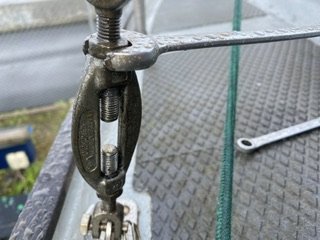

Looking down to the toggle - Righty TightyLooking down on them, turning clockwise loosens or tightens ?

Mine... tightenLooking down on them, turning clockwise loosens or tightens ?


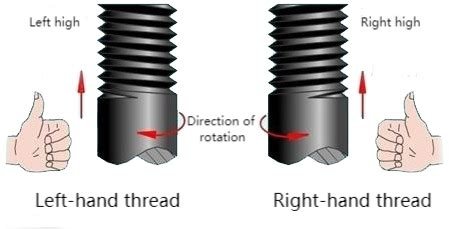

Reminds me a lot of Fleming ..Look closely and you can tel which is which - This might help
View attachment 209116
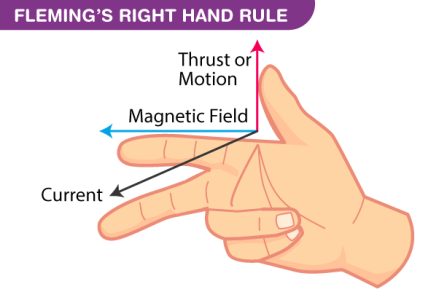
My AI says thats the normal convention. It gives this video as a source.I am surprised that no one has come along with an accepted convention. I my opinion it is most logical to turn the bottle clockwise when viewed from above to tighten the stay as its the same way as you tighten a RH bolt. The worst thing is to have a mix on the same boat. Many years ago most bottle screws had the same fitting either end so you just fitted then all the same way up.
David MH
Except both standards have left and right hand threads in bottle screws?Relevant because, according to the Jimmy Green website, imperial rigging screws are generally RH but metric are generally LH.
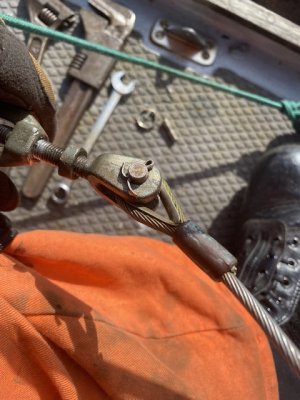
I was surprised how good water-pump pliers are at dealing with that kind of split pin use.Upper forks have stainless steel split pins which I find unacceptably difficult to remove (ok on a car but there they are usually in a rigidly mounted fastner and arent ss)
I suppose I could replace with little split rings, or maybe I could terminate a lock wire there, 2 dead birds 1 stone stylee?
View attachment 209211
Copper wire ought to be compatible with bronze turnbuckles, can be cut with common hand tools and should be foragable as old electrical wire

