MontyMariner
Well-Known Member
No it doesn't, as it refers to which way to twist the threaded part, not the 'bit' in the middle (equivalent to a nut)This might help

No it doesn't, as it refers to which way to twist the threaded part, not the 'bit' in the middle (equivalent to a nut)This might help
Split pins are the normal and secure solution, and generally easy enough to remove (unless wrong size clevis pjns).Upper forks have stainless steel split pins which I find unacceptably difficult to remove (ok on a car but there they are usually in a rigidly mounted fastner and arent ss)
I suppose I could replace with little split rings, or maybe I could terminate a lock wire there, 2 dead birds 1 stone stylee?
....
In addition, split pins should only be opened to an angle of 20 degrees, legs kept straight. Tape over the ends to help avoid snagging of lines. (Advice from Selden).Split pins are the normal and secure solution, and generally easy enough to remove (unless wrong size clevis pjns).
I would suggest persevere and refine your technique as most others find simple and secure.

I normally open mine enough so that the split pin ends are 'covered' by the fitting as it reduced the chances of snagging. mainly legs and feet. Depending upon split pin location it got a wrapping of my preferred tape to add extra protection.In addition, split pins should only be opened to an angle of 20 degrees, legs kept straight. Tape over the ends to help avoid snagging of lines. (Advice from Selden).
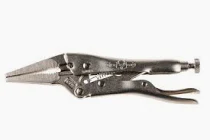
I tried a range of pliers and spanners, including water pump pliers. Took me over an hour to remove 2, in the yard. Wouldnt like to have to do it in a water bourne emergency, or in fact ever again in any circumstancesI was surprised how good water-pump pliers are at dealing with that kind of split pin use.
I think that personally I would not dare terminate the lock wire in there instead of some other fastening case that wasn't up to the job. I'm sure there are alternatives to the split pin that are ok, though.
In addition, split pins should only be opened to an angle of 20 degrees, legs kept straight. Tape over the ends to help avoid snagging of lines. (Advice from Selden).
Poll in the Boness yard would indicate most people here (many having had multiple decades to refine technique, which I wont be getting) find them an absolute PITA, expressed quite forcefully in some cases, as in "especially if some **** has wrapped the legs back".Split pins are the normal and secure solution, and generally easy enough to remove (unless wrong size clevis pjns).
I would suggest persevere and refine your technique as most others find simple and secure.
I'd think theyd be fairly straightforward if not wrapped, so avoiding that on a re-installation might be enough to render them usable.I never had anything like that bad a time removing a split pin, I wonder what's different about those ones... so there's something to avoid here, but it's hard to tell what.

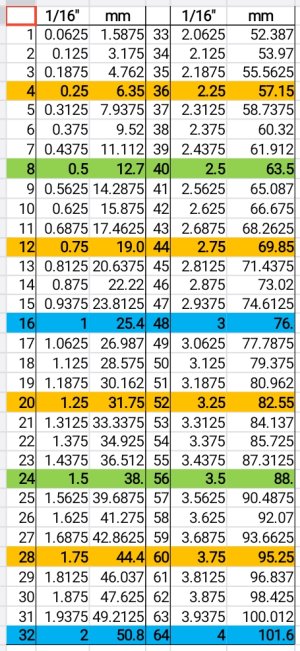
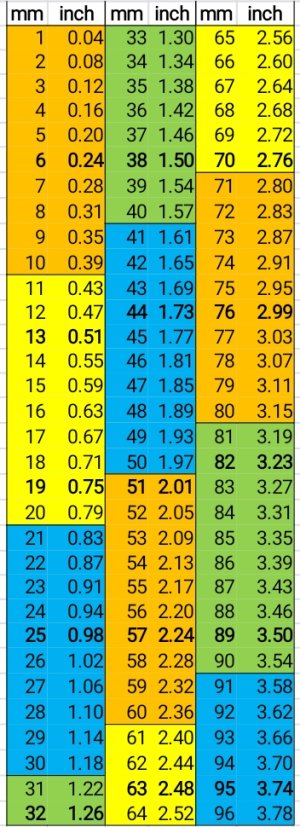
5/16 W, 3/8 BSF is 15.24mm across the flats.16mm spanner too loose on locknuts, 15mm too tight (though could be hammered on) and didnt find an Imperial fit either. Maybe they are Whitworth?(which I dont have).
IIRC 3/8 Imperial I tried was too loose.5/16 W, 3/8 BSF is 15.24mm across the flats.
.
You said you dont have WhitworthIIRC 3/8 Imperial I tried was too loose.