Afraid the horse has long since bolted ,

When is the installation of ICE engines in new boats likely to be prohibited ?
Or is there no plan?
There is no plan, and unless the greatly reduced range of electrical drives can be addressed, it is unlikely that any such plan could be put into effect. In terms of emissions and CO2, the leisure boating industry is a drop in the ocean! Road vehicles can conveniently be recharged at roadside installations (I drive an EV), but there is no such infrastructure available for boats, and the electrical supply at marinas is not sized to provide the necessary current for hundreds of boats. My car requires a 7kw supply to charge overnight; that gives me a range of around 220 miles with a 65kw motor - around 4 or 5 hours motoring. Charging "while you wait" requires supplies of 50kW or more. Translated into boat terms, the same battery driving a 30kw engine (roughly equivalent to the VP2003 I have) would give me a range of maybe 60 miles under engine. And I'd have to find space for such a battery - it occupies most of the floor pan of my EV and is a significant weight; my EV is substantially heavier than similar ICE cars of the same size. But few if any marinas could provide a 7kW supply at each berth, and of course demand would have a VERY high peak on Sunday evening! Of course, those on moorings or at anchor would have to rely on solar panels and generators - and friends who ran a solar-powered narrowboat reckoned a week's (good) solar would give them a weekend pottering at 4mph along the rivers and cana;s!

Bear in mind that it's not just sailing boats; after all, we use wind energy most of the time! But MoBos require high power and long endurance. There is absolutely no way MoBo could store enough electrical energy to have a meaningful range.
 
I may be wrong, but I seem to recall that Yanmar engines can be ordered as mechanical or electronically controlled as an option. If so, at least one manufacturer has been listening to its customers.

My 2005 Yanmar 4LHA-STPs are both fully mechanical with no electronic control.
 
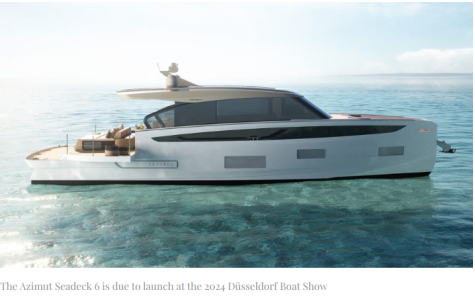
At some point in the future diesel and petrol engines may no longer be available. In the meantime some electric and hybrid boats are being produced.
The A-Z of electric boats: 34 of the best hybrid and all-electric models in build right now
View attachment 157810
Hybrid boats have been produced for a long time.

Most cruise ships are hybrid - electric propellor pods powered from on board generators.
Same for train locomotives and of course the intercity 125. All electrically powered from electricity generated on board.
 
Hybrid boats have been produced for a long time.

Most cruise ships are hybrid - electric propellor pods powered from on board generators.
Same for train locomotives and of course the intercity 125. All electrically powered from electricity generated on board.

Hybrid and Diesel Electric trains / ships are completely different ....

The Diesel Electric Trains are such because of the control aspect of the train ... and on ships because again ... the constant speed diesel generators.

Hybrid is where both Fuel and Electric can each provide separately direct motion power.
 
The Diesel Electric Trains are such because of the control aspect of the train ...

Diesel electric trains in the UK are used where the train travels in part on electrified railway and in part on non electrified railway.

PS Bi-mode would be a better terminology.
 
Last edited:
Oil and therefore diesel will eventually be exhausted and before that so scarce as to be unaffordable.
Not in our lifetimes, nor in our children's. I am a geologist; known reserves are ample and there are many unexplored basins. Most estimates fail to take into account that what is uneconomic to extract now will be economic in the future. However, I agree that whether we SHOULD extract it is another question, to which I would answer "Probably not, except as feedstock for chemical production". But scarcity isn't a good argument.
 
Oil and therefore diesel will eventually be exhausted and before that so scarce as to be unaffordable.
There is already alternates to diesel from crude oil

some people run their diesel on spent chip oil and petrol can come from plants based fuel.

Petrol already has a quantity of plant based alcohol
 
Not in our lifetimes, nor in our children's. I am a geologist; known reserves are ample and there are many unexplored basins. Most estimates fail to take into account that what is uneconomic to extract now will be economic in the future. However, I agree that whether we SHOULD extract it is another question, to which I would answer "Probably not, except as feedstock for chemical production". But scarcity isn't a good argument.


Having been a 'driver' of Seismic boats and spent many hours talking with various in the Oil Industry ... AP mentions economic recovery ... we can also add to that evolution of recovery increasing yields of fields ... in early days a field was generally rated at 14% recoverable ... yes 14%. Each year or so as the field was worked - that figure increased ... but we still do not actually get majority of oil out of a field. The economics decides whether a field continues or not. Its a major reason that USA oil fields - many were capped for decades ...
 
Diesel electric trains in the UK are used where the train travels in part on electrified railway and in part on non electrified railway.

That may be some but many only had the diesel as constant speed generators. The motive power being electricity from the generators.

Diesel-Electric Locomotives

How do diesel electric trains work, and why do they need turbochargers? - Accelleron Industries charge! magazine

There is another Diesel train - that the constant speed Diesel engine powered hydraulics .... now you going to tell me that railway lines had hydraulic lines as well ??
 
There is already alternates to diesel from crude oil

some people run their diesel on spent chip oil and petrol can come from plants based fuel.

Petrol already has a quantity of plant based alcohol
Yes but we must avoid having too many crops for fuel competing with crops for food .
Making enough fuel for diesel engines on a significant scale is not sustainable.
eg. Rainforest destroyed to grow palm oil to make HVO is not good.
 
Yes but we must avoid having too many crops for fuel competing with crops for food .
Making enough fuel for diesel engines on a significant scale is not sustainable.
eg. Rainforest destroyed to grow palm oil to make HVO is not good.

Being in the Fuel Business .... and blending FAME etc. I always said from the beginning that the levels of production to sustain the 'Bio' was never possible. It would also damage the fragile balance of food production in many of the poorest / worst arable lands ... where cash for Oil Seed would be too attractive over growing food to survive.

This is exactly what happened. Even UK and other rich farmland has suffered where vast tracts are put over to Rapeseed - destroying the rotational use of the land.

EU and other targets of Bio % in fuels has been delayed and actually reduced due to lack of volume .....
 
Yes but we must avoid having too many crops for fuel competing with crops for food .
Making enough fuel for diesel engines on a significant scale is not sustainable.
eg. Rainforest destroyed to grow palm oil to make HVO is not good.

Quite sustainable, we're sitting on millions of tons of coal which can be converted to fuel but the tree huggers won't allow it.
 
Quite sustainable, we're sitting on millions of tons of coal which can be converted to fuel but the tree huggers won't allow it.
Using coal is the same as using mineral oil in that consuming fossil fuels is thought to be responsible for climate change.
Coal is not considered to be a sustainable fuel.
 
Top