
Using Rope Anchor Rode

Dave 71

Well-Known Member
Joined
26 Mar 2021
Messages
125
Visit site
I have 28m of chain and 35m rope rode on my anchor. I would prefer all chain but this is what came with the boat. I expect I'll add more chain at some point but it's not a priority right now.

I have an anchor snubber with a hook for use with the chain and that's fine for lunch stops etc but the chain is insufficient for a full tidal range, so I'd need to use the rope.

I'm familiar with using snubbers on chain, but what about rope? All I can find on line is the train of thought that a snubber isn't needed as rope rode has the flex and takes the shock loads, so question is, is this correct? Would I not be taking the weight of the boat on the anchor winch? Doesn't seem right to me.

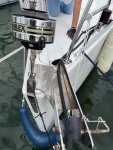
Attached is a picture of an experiment whilst along side in the marina, using the forward mooring cleats, however, I didn't like the way the rope laid against the bow roller, or the chafe potential of the rope against the exit from the locker hatch, although this would be slack once the line is secured on the cleat. The forward cleats are aft of the locker.

Photo shows a trial run of the rope rode secured to the port cleat, it is better if we use starboard, a straighter line onto the offset roller, but still seems to have potential for chafing on the bow roller and somehow just doesn't seem quite right.

Suggestions? How is rope rode best secured?
 

Attachments

  • anchor rode.jpeg
    anchor rode.jpeg
    342.7 KB · Views: 59
This thread could last for many posts.

Your rope portion of your rode should have an ultimate tensile strength a little bit greater than the appropriate chain. Both the rope and chain 'normally' need to be of a strength to secure the yacht. This means that your rope is beefy and lacks much eleaticity, and this lack of elasticity is of importance the less rope you need to deploy - more rope more elasticity. Do you know what is the polymer from which your rope is made - as this then determines its elasticity (if its a retired dyneema halyard - it has no elasticity).

But I exaggerate - the rope is likely to be nylon. - but beefy, to give strength, and is actually not very elastic. If you do not deploy much rope you may still need a snubber and then a Prussic knot is what you need. Take a closed loop of rope, attach to you rope portion of rode, use hook to attach snubber to loop.

None of this, the chain (if you are in shallow water) the rope portion of your rode, nor the snubber should be attached to the windlass (anchor winch) but should be attached to an independent strong point.

You snubber may have been used to use specifically in more shallow anchorages where no rope, of the rode, was needed. A snubber needs elasticty and the snubber is commonly, invariably, thin - to provide the stretch needed. A rule of thumb - you want 1m of elasticity from your snubber in about 30 knots. The snubber is not designed to take all the tension in the rode (at the extreme) - the chain is the ultimate fall back - the snubber is there to reduce the shock loads, the snatches.


Now I'll leave the discussion to have dinner (its that time in Oz) and leave the further contributions to the members in the Mother country.

I may return. :)


Not entirely relevant....

How to: Dealing with Snatch Loads in an Anchorage

Anchor Snubber Tips

Know how: Expanding your Anchoring Repertoire

There is nothing wrong with a mixed rode - it served our predecessors (and some fathers) for decades - before electric windlass became cheap, reliable and common.

Jonathan
 
Last edited:
Difficult to see from the photo, but wouldn’t the anchor rope run much more directly to the other mooring cleat, on the starboard side. Might need to leave the anchor locker lid up.
Definitely never lie to the anchor windlass (not least as it will have a clutch, designed to slip under excess load, so would release your anchor under strong load).
That type of three strand rope is pretty stretchy, so if more than 10m anchor rope out I personally wouldn’t bother with a separate snubber.
 
Unless you anchor for long periods the wear on the rope will be very little for most times. It's only when you stay in the same spot for long periods or exposed to strong winds you may need to let a bit more rope out to move the wear area.
When i had mixed rode (20m 8mm chain and 60m 14mm 3 strand nylon) I had a bit of plastic hose with a split down one side so that I could fit it on the rope to reduce wear. Either end had a light line to tie on to the rope to hold it in place.
Now I use all chain I have a snubber with a plastic sleeve, again with light line to hold in position as required.
 
Difficult to see from the photo, but wouldn’t the anchor rope run much more directly to the other mooring cleat, on the starboard side. Might need to leave the anchor locker lid up.
Definitely never lie to the anchor windlass (not least as it will have a clutch, designed to slip under excess load, so would release your anchor under strong load).
That type of three strand rope is pretty stretchy, so if more than 10m anchor rope out I personally wouldn’t bother with a separate snubber.
Yes, it does lie better if attached to the starboard cleat, but still seems to have potential for chafing on the bow roller. I hadn't thought of leaving the lid up. A bit untidy!

Neeve's suggestion of a closed loop and prussic knot is worth a try. I can see how that would work.
 
Unless you anchor for long periods the wear on the rope will be very little for most times. It's only when you stay in the same spot for long periods or exposed to strong winds you may need to let a bit more rope out to move the wear area.
When i had mixed rode (20m 8mm chain and 60m 14mm 3 strand nylon) I had a bit of plastic hose with a split down one side so that I could fit it on the rope to reduce wear. Either end had a light line to tie on to the rope to hold it in place.
Now I use all chain I have a snubber with a plastic sleeve, again with light line to hold in position as required.
Thanks - sounds like a good idea - something else to try.
 
There was an excellent article on snubbers in the November 2021 issue of YM (and I am sure you hold it in your archives). It has illustrations on how to centralise your snubber using a Low Friction Ring, a modification on a Barber haul) to minimise abrasion.

Dave71 is correct if you have decent length of nylon deployed it will offer the elasticity - but if its shorter or inelastic - its the worst of both worlds (no catenary, no elasticity). Think...... how old is the rope section, its really not expensive - might now be a good time to look at it more critically and retire it to mooring lines and replace with something you can trust. Chain senility is obvious - it rusts. Rope can be very deceptive.

Jonathan
 
I have a similar issue with chaff on my mixed rode, I use a small line from the opposite cleat to pull the line off the back end of the bow fitting so it can’t chaff.
 
1.8m draft, and spring range around 5m.

I can see that for overnight anchoring you will need a depth of, say, 8m + and will want 5:1 scope - which will demand you use a fair bit of your rope portion of you rode - hence your questions.

I would say that at the minimum rope deployment you will not enjoy much benefit from the rope portion of your rode, it will not offer much snubbing effect (too little elasticity as it will be sized for strength).

So....consider a Prussic knot on the rope portion - but start your snubber at the transom - then your snubber need not extend much beyond the bow.

Look at this article and extrapolate for a mono hull application (easily done with a bit of lateral thinking)

Adjustable Snubber Bridle and Chain Hook for Multihulls - Practical Sailor

The art of snubbing, in the nicest possible way - Mysailing

For further information keep asking the questions - or send me a PM.

Jonathan
 
I can see that for overnight anchoring you will need a depth of, say, 8m + and will want 5:1 scope - which will demand you use a fair bit of your rope portion of you rode - hence your questions.

I would say that at the minimum rope deployment you will not enjoy much benefit from the rope portion of your rode, it will not offer much snubbing effect (too little elasticity as it will be sized for strength).

So....consider a Prussic knot on the rope portion - but start your snubber at the transom - then your snubber need not extend much beyond the bow.

Look at this article and extrapolate for a mono hull application (easily done with a bit of lateral thinking)

Adjustable Snubber Bridle and Chain Hook for Multihulls - Practical Sailor

The art of snubbing, in the nicest possible way - Mysailing

For further information keep asking the questions - or send me a PM.

Jonathan
Thank you, lots of useful info.

On the prussic loop - what size/type of line should I use? It will need to be small enough to fit into the jaws of the snubber's hook - 6 or 8mm at the most. Would this be a weak point?

Running the snubber from the transom - I'm not really getting that - wont the boat just swing round until the portion of rode I'm trying to keep slack is taken up and puts load back on the winch? Obviously something there I'm not getting.

The snubber I have is far too short - can only be used from the bow cleats.
 
Thank you, lots of useful info.

On the prussic loop - what size/type of line should I use? It will need to be small enough to fit into the jaws of the snubber's hook - 6 or 8mm at the most. Would this be a weak point?

Running the snubber from the transom - I'm not really getting that - wont the boat just swing round until the portion of rode I'm trying to keep slack is taken up and puts load back on the winch? Obviously something there I'm not getting.

The snubber I have is far too short - can only be used from the bow cleats.

Running the bridle from the transom

Look at the link in Post 11 and the read the following

You secure at the transom (you have horn cleats on each transom), run forward through the stanchion bases, or use those devices attached to the stanchions to take furling lines. Near the bow, run the snubber from a stanchion through a low friction ring on a strop positioned to allow a clear run over the bow roller. Your snubber is now deck length, say 10m, and aligned perfectly in line with the rode. Run the snubber over the bow roller - maybe another 3m. You now have a 13m snubber - but only 3m forward of the bow. You have a lazy loop of chain between roller and hook.

If you need photos - I have them - but takes a bit of effort to have YBW accept them (not a problem but temporarily time short - later I can add)

Jonathan
 
Top