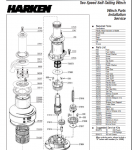
Trying to undo stainless bolts

Other more experienced people on the thread may have a better idea but I suggest you might have to get your angle grinder out.

Rev. 3-4-09 Galling
Thread Galling Thread galling is a common, yet seldom understood problem with threaded fasteners. Galling, often referred to as a cold-welding process, can occur when the surfaces of male and female threads are placed under heavy pressure. The frustrating aspect of fastener galling is that galled nuts and bolts may pass all required inspections (threads, material, mechanical, etc.), yet they still fail to function together. Stainless steel fasteners are particularly susceptible to thread galling, although it also occurs in other alloys that self-generate an oxide surface film, such as aluminum and titanium. During the tightening of thefastener, pressure builds between the contacting thread surfaces and breaks down the protective oxide coatings. With the absence of the oxide coating, the metal high points of the threads are exposed to one another, which increases friction. The combination of these two events can generate enough heat to fuse and seize the nut and bolt together. Minor galling may cause only slight damage to the thread surface and the installer may still be able to remove the fastener. However, in severe cases galling can completely weld the nut and bolt together and prevent removal of the fastener. If the tightening process is continued once galling begins, the fastener may be twisted off or have its threads stripped
.

https://www.fastenal.com/content/feds/pdf/Article - Galling.pdf
 
Last edited:
Minn,

You don't say but I have to assume that the halyard winch is on an aluminium mast, and not part of the cockpit winches (which would be set into fibreglass, through say, the cockpit roof, with suitable reinforcing underneath and a nut on the inside). On the mast, normally I would have thought the winch was on a saddle and the bolts simply tapped into the saddle and mast (and the stainless isolated from the aluminium with Duralac (and not Sika or any other tenacious rubber stuff). If its a metal to metal installation - heat is a common answer, decent heavy duty soldering iron on the end of the bolt (should destroy the rubber stuff).

Can you elaborate?

But still keep your angle grinder handy :(

Jonathan
 
Hi Johnathan,

It’s a Harken 44:2 on the mast. To be precise, the main halyard winch. It’s a non self tailer and I’m wanting to swap it for a 44:2 self tailer. The two bolts that have come out seem to be in what may very well be white Sikaflex; they don’t show any sign of interaction with the aluminium, but they were swines to get out.

Thanks for the tip on using heat.
 
On topic of heat boiling water might be a solution. Have used on bolts holding a sail track carriage for mainsheet as was worried at other sources we had available but I guess a gas powered rope cutter might be another source .
 
Surely you have saddles, winches have a flat base, masts tend to be curved.

No matter.

From memory - winches are usually retained with counter sunk bolts with a flat screw driver head ((m am sure there is a special name). Flat headed screw heads are a devil - when you reach the end of the road and all else has failed - and before you get out the angle grinder.

Drill off the head, remove winch or winch base. Add two relevant nuts (you may need to thread the 'studs') - lock nuts together - and then use a spanner.


As an aside.

We too have mast located winches one each side, primarily for halyard, main, 2 x headsails and spinnaker. They also were intended for reefing. Cats sail flat, or that is the marketing hype, reefing a cat is maybe a bit easier than a mono - but its better done in the cockpit (we altered that arrangement).

But winches on the mast catch sheets, underneath the winch. Anything else on the mast catches sheets as well, horn cleats (for the lazy jacks).

This needs some thought

But did it for you

https://www.practical-sailor.com/issues/37_40/features/DIY-Rigging-Hacks_11371-1.html

Jonathan
 
Last edited:
Hi Johnathan,

It’s a Harken 44:2 on the mast. To be precise, the main halyard winch. It’s a non self tailer and I’m wanting to swap it for a 44:2 self tailer. The two bolts that have come out seem to be in what may very well be white Sikaflex; they don’t show any sign of interaction with the aluminium, but they were swines to get out.

Thanks for the tip on using heat.

I had 4 2" BSP plugs fitted to my sea chest arrangement with white sikaflex and when I came to remove then I had to use a 3/4 " breaker bar with 3 socket extensions and a 2 meter tube shifted with all my 83 Kg weight standing on the end.

Sikaflex in screw threads can be very difficult to remove.
 
I had 4 2" BSP plugs fitted to my sea chest arrangement with white sikaflex and when I came to remove then I had to use a 3/4 " breaker bar with 3 socket extensions and a 2 meter tube shifted with all my 83 Kg weight standing on the end.

Sikaflex in screw threads can be very difficult to remove.

Mmmmm!

I'm in the process of making up sight glass fuel gauges for my diesel fuel tanks. I need a sealant for the glass tubes so I was thinking of using Sikaflex but I read that Sikaflex was not suitable for fuels.

Maybe some diesel might soften up the Sikaflex?
 
I don't think it's anything connected with galling. That wouldn't explain the white rubbery stuff. I'd go straight to the grinder but be careful not to damage the old winch which has a significant (to me) resale value.
Our metallurgy consultant recommended anything with lanolin in it as an anti galling lubricant - we used Boots lanolin rich hand creme and had no further problems. The local branch of Boots must have thought I had severe dermatitis.
 
I am astonished that any PU sealant has sufficient strength to combat loosening bolts. I would have thought the problem is more to do with stainless into aluminium, which is notorious for corroding into an unmovable mass. Galling certainly occurs stainless to stainless, I have had a couple of experiences with turnbuckles that were absolutely solid. Is there any possibility that Loctite has been used? The top grades of this product need serious heat to release their grip.
 
Heat works for most sealant/adhesives/locking compounds.

If it's and Al/SS corrosion issue then ACF-50 works well, or if you can soak it in citric acid you get from a home brew company that has worked where we've had taps broken off in SS.
 
Mmmmm!

I'm in the process of making up sight glass fuel gauges for my diesel fuel tanks. I need a sealant for the glass tubes so I was thinking of using Sikaflex but I read that Sikaflex was not suitable for fuels.

Maybe some diesel might soften up the Sikaflex?

Use nitrile O rings to seal the tubes. Nitrile is resistant to hydrocarbon fuels.
 
I am astonished that any PU sealant has sufficient strength to combat loosening bolts. I would have thought the problem is more to do with stainless into aluminium, which is notorious for corroding into an unmovable mass. Galling certainly occurs stainless to stainless, I have had a couple of experiences with turnbuckles that were absolutely solid. Is there any possibility that Loctite has been used? The top grades of this product need serious heat to release their grip.

Vyv
I have an Edson steering wheel set up , with the compass set in a housing above the wheel spindle. The housing is white powder-coated aluminum (sp USA?) and about six inches high. Several long s/s bolts hold it down to the rest of the steering binnacle, which is also aluminum. These bolts are now very stuck and I really need to lift the housing off to service the steering.
Is heat the only answer? How best to apply it?
Or should I just order a complete new assembly?
Peter
 
Vyv
I have an Edson steering wheel set up , with the compass set in a housing above the wheel spindle. The housing is white powder-coated aluminum (sp USA?) and about six inches high. Several long s/s bolts hold it down to the rest of the steering binnacle, which is also aluminum. These bolts are now very stuck and I really need to lift the housing off to service the steering.
Is heat the only answer? How best to apply it?
Or should I just order a complete new assembly?
Peter
When asked about siezed stuff, I always say there is no guaranteed answer. A combination of oils, including snake oils! heating, tapping, brute force, swearing will usually get you there!
 
If you have a reversible drill, try attacking the bolts with a left hand drill bit, which can easily be found on ebay. Even better if the drill has a hammer function because once the left hand drill bit bites, it'll unscrew the bolt for you.
This youtube video should give you a better idea of what I'm talking about
 
I've been looking recently at cordless impact wrenches, which are widely available for £50-£100, would one of these help, I wonder?
 
Top