
coopec
N/A
No coral reefs among the ice floes. What's the story behind the picture?
Well I didn't know this (maybe worth a read?)
Coldwater coral reefs, distribution
Coldwater coral reefs, distribution | GRID-Arendal

No coral reefs among the ice floes. What's the story behind the picture?


He is! But I hope I have his vim and vigour when I get to his age.I suspect that he is somewhat older. ?
Or, “Are you really going to sail to the Pacific in that?”How much of this is an internet thing.
Say you are on a real world port quay and someone comes along stating "the ideal blue water yacht is this and that".
Would you mind to reply?
Recognise the Giles' Knuckle. Some came in twin keels, yes? Not quite a fin in the manner Coopec critiques it.The legendary Dodos Delight, as i'm sure you knew.
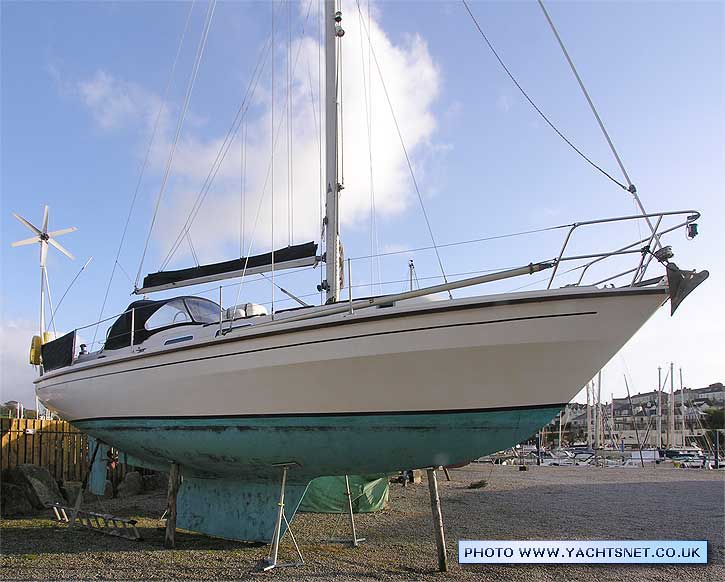
Recognise the Giles' Knuckle. Some came in twin keels, yes? Not quite a fin in the manner Coopec critiques it.
On weather: in the survey, quoted by Coopec (which I thought was pretty useless, by the way) the highest winds experienced by the boats surveyed was about 30 kts with the occasional micro burst or squall of 40kts lasting 45 min. I have been through numerous line squalls in the Pacific where things can go from a dead calm to howling madness in minutes.

 )
)
Recognise the Giles' Knuckle. Some came in twin keels, yes? Not quite a fin in the manner Coopec critiques it.
Yes, they did make some bilge keelers. The fin keel version is, erm... a fin keel, which Coopec went to great lengths to explain how they are prone to falling off. He also quoted "the “bluewaterness” of an offshore yacht boiled down to six main elements: a long keel, a skeg-hung rudder, heavy displacement, reputable offshore builder, large water and diesel tanks, and a cutter rig or ketch design."
How many of those features does Bob Sheptons boat tick ?

All due respect, I wasn't exactly blaming you for the contents of the survey. I just wondered, that after managing a single trip (Vancouver - South Pacific, as far as I can tell) the authors felt qualified to not just have an opinion, to which everyone is entitled, but to conduct, evaluate and publish a survey with what amounts to minimal technical insight into voyaging, boat performance and naval architecture for that matter.If you don't like the message shoot the messenger!
(I thought the rest of your post was interesting and informative. Thanks.
Actually, yes ... something along the lines of where are you going and you must be very brave to be going all that way in this etc., etc ... across that big scary ocean in that little boat, never mind that that little boat was 50' long ... The internet does not hold a monopoly on nonsensical chatter.How much of this is an internet thing.
Say you are on a real world port quay and someone comes along stating "the ideal blue water yacht is this and that".
Would you mind to reply?
All due respect, I wasn't exactly blaming you for the contents of the survey. I just wondered, that after managing a single trip (Vancouver - South Pacific, as far as I can tell) the authors felt qualified to not just have an opinion, to which everyone is entitled, but to conduct, evaluate and publish a survey with what amounts to minimal technical insight into voyaging, boat performance and naval architecture for that matter.
Much as (non-boaty) people asked me if I was going to write a book about it after crossing the Atlantic ....
May I ask what you would you call that keel then?Well I'd hardly call that a fin keel! Is it encapsulated or bolt on?
May I ask what you would you call that keel then?
PS It’s exactly like our keel on our current boat.
And to answer your question, It’s bolted on and not encapsulated. We have a boat by the same builder. The internal frame work that is moulded onto the hull as it is built (while the hull laminate is still tacky and not cured, the massive web of internal bracing was lowered in and bonded). The keel is bolted through the hull and this web that covers a vast area in the bottom of the boat. The mast compression post then sits on top of the web too, spreading the compression forces of the rig through the hull.
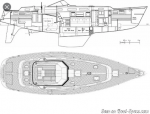
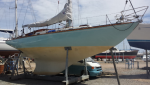
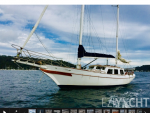
I see Coopec beat me to it and corrected what he was referring to. I wouldn't have called that a fin either. It's just a short long keel. A sort of demi-keel.Yes, they did make some bilge keelers. The fin keel version is, erm... a fin keel,
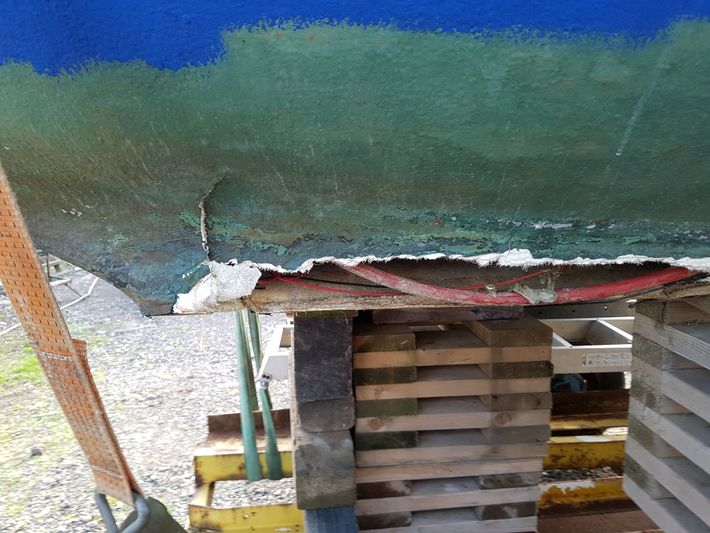

must have hit a coral reef!I see Coopec beat me to it and corrected what he was referring to. I wouldn't have called that a fin either. It's just a short long keel. A sort of demi-keel.
Reminds me of a grown up Pageant 23. Like one of these ...
Perhaps I'm missing something here. To me the definition of a fin keel begins when there is a structural separation between keel and rudder assembly, regardless whether skeg hung or spade. There are long and short fins, deep fins with bulbs or without. As far as the definition is concerned it is irrelevant whether the keel is bolted on or molded with encapsulated ballast.Well the keel is bolted on over a big area so that would be strong. (The keel will never fall of that)j
I'm damned sure your yacht could take a grounding
I thunk the Halberg Rassy 48 is encapsulated? (I don't class that as a fin keel)
View attachment 103748
But I'm old fashioned because I like Sparkman and Stephens'
View attachment 103747
View attachment 103749
must have hit a coral reef!
That sums it up for me but I don’t understand Coopec’s ‘like’ as it contradicts what he said before...Perhaps I'm missing something here. To me the definition of a fin keel begins when there is a structural separation between keel and rudder assembly, regardless whether skeg hung or spade. There are long and short fins, deep fins with bulbs or without. As far as the definition is concerned it is irrelevant whether the keel is bolted on or molded with encapsulated ballast.
Conversely, there are also different forms of long keels, such as traditional with a deep forefoot, cutaway forefoot or moderate long keels. In all cases the rudder is attached to the keel.
Either way, the Halberg above is a fin keel yacht as is the S&S. The CT 41 is a long keel with attached rudder.
