The ideal blue water yacht

Well my yacht is long keeled (as you know:)) but I went for a shallow draft of 5 ft for two reasons:
  • I had dreams of putting the yacht into the European canals and
  • I wanted to be able to seek shelter in a shallow bay (if need be) and from experience I could see the deep drafted racing yachts had to stay outside the sheltering reef
Our friends have been cruising the South Pacific for two years in sister ship to ours. Draft isnt a problem.
Having come from catamarans to a deep draft monohull I believe the shallower draft boat you have the more likely you are to hit the bottom. I know that’s counter intuitive but with shallow draft you tend to get in close to the beach because you can. When a 180 degree wind reversal comes through the anchorage at 0300 in the morning, which boats do you think will hit the beach first? The closer you get to the beach the more crowded the anchorage.
We now keep away from the swarm of boats if possible. We have a big dinghy and 15hp engine. Distance to the dinghy dock is not a problem. We also have a very slow roll motion. Being in the bumpier part of the anchorage rarely causes us a problem. Lighter boats will be rolling about when we are not. If it gets rolly we hoist the mizzen bar tight and flat, sheeted in so it cant move. Rolling stops.
 
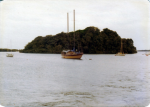
I was very surprised at the number of wrecks I saw when I flew from Fiji to Kiribati. Of course I don't know their construction but it is obvious that coral waters can be unforgiving. I've got photos of many of the wrecks (one looked like a ship). Is this one a wreck?

View attachment 103676
Got any pictures of boats that haven't been wrecked on reefs? ??
 
Got any pictures of boats that haven't been wrecked on reefs? ??

Well you asked for it !

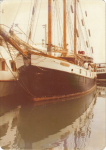
Screenshot_2020-11-25 Fiji Ketch moored at The Tradewinds Hotel Suva_edited.png
This ketch was owned by the Manager of the Tradewinds hotel at Suva where yachties from around the world stay

Screenshot_2020-11-25 Fiji Charter Boat Lautoka.png

This is a charter yacht that took us out from Lautoka to Mana island, (Day trip)

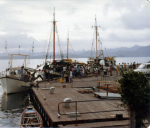
Screenshot_2020-11-25 Fiji Suva Harbour_edited.png

This is of Suva harbor. The local markets were nearby with all sorts of fish and fruit/veg
 
That'll be the article where the authors ... actually went out and bought a fin keeled cruiser racer and then discovered that it carried them safely across the oceans

Therefore, the most important and defining chacteristics are safe weather conditions ... perhaps the question should be, where do you want to put the gotchas that will catch you out one day?
 
Therefore, the most important and defining chacteristics are safe weather conditions ... perhaps the question should be, where do you want to put the gotchas that will catch you out one day?
If only we got to choose.
However, by choosing routes and seasons carefully, it’s possible to reduce the risk of major storm force winds and seas.
Some people choose to sail high latitudes. Not so easy to avoid storms then and your preparation and choice of boat might be different?
 
Worth a look at the boats that have completed the World ARC over the past 5 years or so. Now clearly, many of us would not choose to go round the world to a fixed schedule, but if anything that would expose boats to more severe weather than independent cruisers, who might wait for a better weather window. Lots of production GRP boats made it safely to Australia and back .....
https://www.worldcruising.com/content/S636410685465181254/Leg 9 Results by Class.pdf
 
If only we got to choose.
However, by choosing routes and seasons carefully, it’s possible to reduce the risk of major storm force winds and seas.
Some people choose to sail high latitudes. Not so easy to avoid storms then and your preparation and choice of boat might be different?
I know lots of people who cross oceans. I dont personally know anybody who has crossed an ocean out of season. The default is yachts cross oceans at the correct time of year but some occasionally do get in to heavy weather even so.
On occasion the ARC fleet has met heavy down wind weather crossing the Atlantic
 
I know lots of people who cross oceans. I dont personally know anybody who has crossed an ocean out of season. The default is yachts cross oceans at the correct time of year but some occasionally do get in to heavy weather even so.
On occasion the ARC fleet has met heavy down wind weather crossing the Atlantic
Indeed, and I don’t think we’re in disagreement.
 
I know lots of people who cross oceans. I dont personally know anybody who has crossed an ocean out of season. The default is yachts cross oceans at the correct time of year but some occasionally do get in to heavy weather even so.
On occasion the ARC fleet has met heavy down wind weather crossing the Atlantic
It must be great to have "seasons" for strong winds. In more northerly latitudes, we just have to take what comes. ?
 
Some boats can cope with a bit of Northerly weather apparently. Obviously not a production boat and certainly must be steel, or is it ?

yysw261323.jpg
 
I know lots of people who cross oceans. I dont personally know anybody who has crossed an ocean out of season. The default is yachts cross oceans at the correct time of year but some occasionally do get in to heavy weather even so.
On occasion the ARC fleet has met heavy down wind weather crossing the Atlantic
Strangely enough until yacht shipping became much more practical in very recent years then a lot of the European made AWBs and catamarans were delivered across the Atlantic out of season. I delivered one from La Rochelle to Fort Lauderdale in May and we had thundersqualls 30 out of the total 37 nights and some nasty weather off Finisterre and of course everything held up well, with us just being careful of chafe and then polishing the boat so it gleamed after a squally Bahamas to Florida overnight.

I suspect most new boats delivered have done the longest trip they will ever do.
 
I have crossed oceans both in long keel boats and in short fin (lifting keel).
As Geem made clear; there is a considerable difference between cruising a boat, which entails long term living aboard, and simply making an offshore passage or even an ocean crossing where you pack your bags at the other side and fly home. Unless the boat, in relationship to her crew size, is quite large, this means that she will be at least in the moderate to heavy category.

On weather: in the survey, quoted by Coopec (which I thought was pretty useless, by the way) the highest winds experienced by the boats surveyed was about 30 kts with the occasional micro burst or squall of 40kts lasting 45 min. I have been through numerous line squalls in the Pacific where things can go from a dead calm to howling madness in minutes. Worst case scenario you drop your sails, close the hatches against the rain and have a cup of tea. 40 min is not enough time to even build a sea. By all due respect and in this context it is really irrelevant what type or make of production boat you have and no matter how supposedly unsuitable it might be. The final truth is that, no matter how far you travel and if done with a modicum of sense, the great majority of sailors are not likely to ever encounter survival conditions where some variations in design might mean the difference between life and death.

The keel shape, given a modicum of hydrodynamic sophistication, is in terms of ocean cruising performance irrelevant. I have skippered a 60 year-old long keel (1960) Robert Clark design with a DWL of 35' from the Pacific North West to the Hawaiian Islands, some (nominally) 3600 miles one way. We accomplished the downwind leg outbound at an average speed of 6.5kts even though we were becalmed for two whole days. The return trip starts with 1500 miles to windward until you reach the westerlies. The closer you can hold this course in the open sea, the shorter the trip. During this part of the adventure we had two storms and we were hove to for 3 days while we made repairs to the rig when we lost the twin headstays. In the end, the return trip took us the same amount of time as the other, or in other words: we averaged 6.5kts over a total distance of over 7000miles including stoppages and 1500 miles to weather!
 
Someone mentioned the joys of shallow draft and I will reiterate and support their comment. I draw 1.6 metres which is surprising for a 50 foot yacht, but another advantage of a long keel. The tendency is for big fin keelers to be a lot deeper these days. It never ceases to surprise me how often other yacht skippers will comment - "well, I cant go there, far too shallow, or I wish I could get in closer to the shore but .." Again, what may be good for an ocean passage isnt necessarily the best solution for a blue water yacht which, for most of your time aboard, is not going to be sailing blue waters! There are some many opportunities to work into a beautiful lagoon, or wend your way up some distant creek when draft ultimately matters, so I will stick with my 1.6 metres, it is a great compromise and gets me into most places with a surprising number of other yachts that have excluded themselves because of their draft.
 
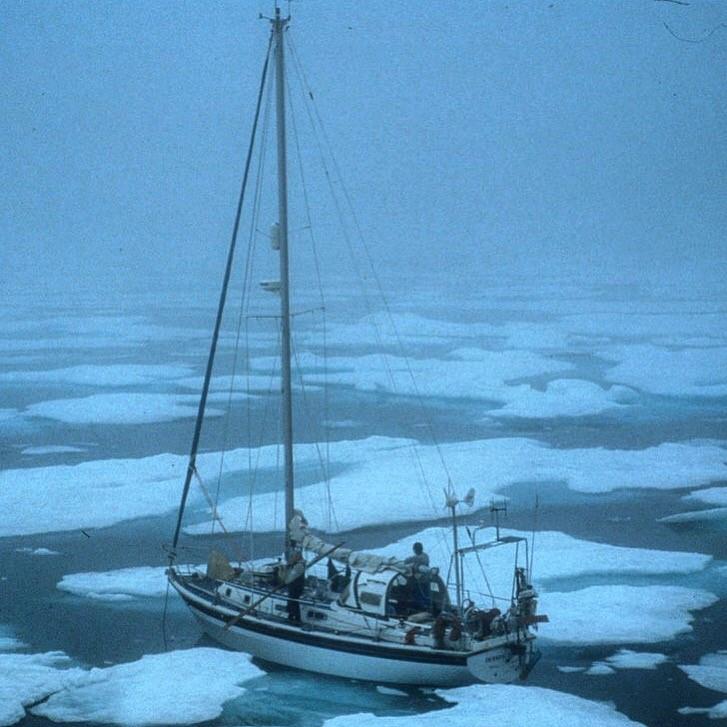
No coral reefs among the ice floes. What's the story behind the picture?

The boat in the picture is a GRP production boat, fin keeled with no major modifications from when she was built. Kind of flies in the face of much of what Coopec has said, particularly the bit about only steels hulls being suitable for coral seas, those lumps of ice don't exactly look soft. It isn't a one off picture, she's in one of her usual cruising grounds. She's also been around the World, so should qualify as a blue water cruiser too, surely ?

The owner/skipper is Bob Shepton, Yachting Monthly did an article about him a couple of years back: ‘What I learned from a dismasting in Antarctica’ - Yachting Monthly

Lots of stuff on the internet about him and the boat. I have a particular interest as i own one of Dodos Delights sister vessels :)
 
The boat in the picture is a GRP production boat, fin keeled with no major modifications from when she was built. Kind of flies in the face of much of what Coopec has said, particularly the bit about only steels hulls being suitable for coral seas, those lumps of ice don't exactly look soft. It isn't a one off picture, she's in one of her usual cruising grounds. She's also been around the World, so should qualify as a blue water cruiser too, surely ?

The owner/skipper is Bob Shepton, Yachting Monthly did an article about him a couple of years back: ‘What I learned from a dismasting in Antarctica’ - Yachting Monthly

Lots of stuff on the internet about him and the boat. I have a particular interest as i own one of Dodos Delights sister vessels :)
And as you probably know, Bob and I have something in common.
 
Top