Brent Swain
N/A
---------------------------------------------------------------------------------------I have no idea what a Maple Leaf is like or how it is built, but you seem woefully ill informed about how GRP boats are designed and built - at least this side of the Atlantic. Nobody uses chopper guns to lay up hulls. GRP hulls are immensely strong composites and often incorporate aramids such as Kevlar in the layup.
I suggest for a start you order the series of articles published about 10 years ago in Yachting Monthly which records a series of experiments aimed at identifying what causes yachts to sink. A real boat (1980s Jeanneau about 38'). Once you have read it you will realise how difficult it is to actually sink a modern GRP boat, particularly noting the difficulty the testers found trying to smash the hull with sledgehammers.
Then consider the chances of hitting something at sea, which is vanishingly small, which despite your handful of anecdotal reports means that an individual sailor has an almost zero chance of sinking. This of course varies according to where you are sailing and the chances of breaching the hull is arguably more likely in areas where there are lots of rocks, coral reefs etc in shallow water. So one can understand why some may be at a higher level of risk than others.
However, the reality is still that only a very tiny minority consider it worth living with the negatives of steel construction to gain whatever marginal benefit they may gain if they are unfortunate to hit something. You wrote elsewhere about the benefits of building your own boat and that steel is good for this - but it has also been the cause of many failed dreams and yards littered with rotting, badly built boats. On this side of the Atlantic there has been virtually no self build activity for the last 10 years. There are many reasons for this, probably chief among them high cost, long time scales, legislation, poor market for such boats and a huge stock of perfectly adequate GRP boats, both new and used available at modest prices for the would be ocean voyager.
So while it is interesting to hear what is going on in your part of the world from your perspective, it has little relevance to the European, particularly UK boating scene. As you have seen from some of the posts here, there is a tendency to look for hard evidence when somebody takes a position and makes claims that do not accord with our own experience. Hopefully by engaging with these discussions you learn a thing or two about how things are done here and why your claims might be challenged.
For a comparison, read "Storm Passage "by Web Chiles. Then read "The Long Way" by Bernard Moitessier. Chiles was constantly pumping for his life, the whole way, while Bernard's voyage was a breeze ,with no pumping. A recent series of Sail Magazine articles about someone doing he same trip in a Perry design, showed him constantly pumping, mostly soaking wet the whole way, shows little has changed.
Forums have some long lists of "missing at sea" boats.
The Sleavin family would have probably all survived, had they been in a steel boat.
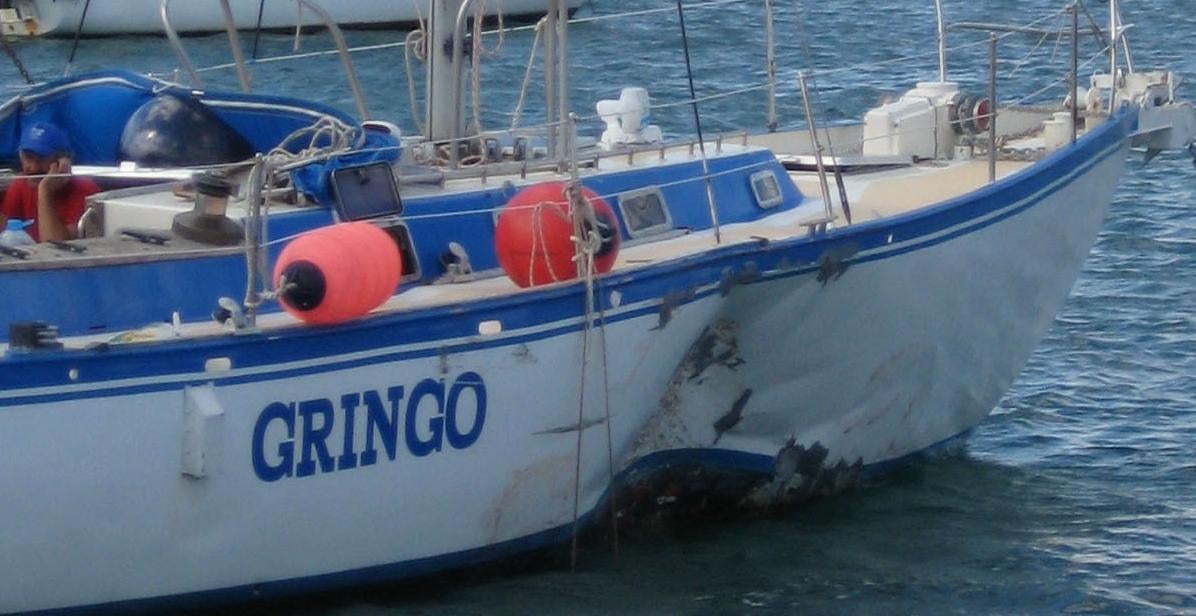
I have hit enough in mid ocean, that I wouldn't be here ,had I been in plastic. Ditto my friends.
Around here, there are a lot of huge logs, which we hit with impunity, which often severely damage and sink plastic boats. They fear being out after dark, while we enjoy night sailing .
Further north, reports of uncharted reefs are a daily occurrence.
An Alaskan said he hit several with one of my boats, with no consequences.
The further north you get on this coast, the more popular steel becomes.
The complete elimination of deck leaks is another factor, in these wet latitudes.
Yes ,the availability of cheap plastic boats has reduced the number of home built boats .It's only after dealing with one, over some extensive cruising, that some take a keen interest in building their own, in steel. Some thoroughly enjoy the building process.
Yes , I do see the odd spot of rust, which takes me a couple of hours a year to adequately deal with. The trick is not to panic at the first sign , and to stay on top of it. I have never found it to be a major problem, less so than having to keep rebedding, leaky, bolted down fittings on plastic.
Much easier to deal with than sinking in mid ocean.
95% of my boats are finished in reasonable time by their original owners .
Last edited: