Starting out sailing... Mast broke in storm Amy - any help please?

Would good quality 2 or 3 foot bolt cutters be able to cut the stainless steel? If it came to the point of needing to do this
Probably but a hacksaw goes through 4/5mm wire easily if you provide some support. Chisel a 5mm trench in a bit of wood and have another bit of wood to put over the top.
A cordless angle grinder will be through in a few seconds if you have one.
 
I got bored of reading the full thread so apologies if already stated
If you do decide to re rig then you do not need to get a furler straight away. You could just fit gunmetal piston hanks up the luff of the jib & run it up the forestay as we used to years go You do not need a sailmaker to do that. Just a hammer. If you hit rough weather there are loads of old smaller sail about that you could buy for when the wind gets up.
As for the mast , if the broken piece is not very long it would be easy to get a solid lump of Iroko & shape it to fit carefully inside the upper section with a rebate for it to sit on. Then screw it in place. If you have inner halyards just move the outlets up a bit. If you have inner wires just router grooves for them & epoxy them into the grooves or cap them off with some 1.5mm ply
Having had a joinery works I would have sleeved the break between the 2 bits with solid timber- I may even have hollowed it out like my hornet mast . It is only a small mast after all & 2 ft into each half would be ample.
 
Subsequent inspection showed that the forestay wire inside the roller-furling foil had snapped about 3–4 metres above the lower swaged terminal.
This shows the importance of regular replacement. It is simply impossible to inspect the forestay inside the furler.
 
You might find a cheap cordless angle grinder from Lidl is a useful investment (other suppliers exist of course such as Aldi etc) but more importantly get the right quality discs. We keep a Lidl one on board on basis can use one handed if needed
 
We always had/have two forestays - boats did then - with a large sail on one and a smaller sail on the other, and also a babystay - so if one forestay was to break the other one would hold the mast up - and strings to pull the sail down without having to go on deck if it was a bit lumpy Also two lower shrouds so there is a chance to hold the mast up if one breaks or unwinds (remember one unwinding in Burnham week) Now we have a roller headsail we always tie the spinnaker halyard to the pulpit - Belt and Braces
 
I think the discussion about cutting the wire is inappropriate. He should be able to disconnect at clevis pins and or turn buckles. Cutting wires is for emergency abandonment of mast when at sea.
As said easiest way to get mast ashore is to haul it aboard the boat then motor to a jetty. Need some helpers but just get a rope around the mast and lift onto side deck.
I am not a fan of furling jibs. I accept most UK sailors have them. I reckon it was wind in the furled jib that caused vibration to begin failures.
As said he could have some nice sailing with a hank on jib and perhaps a smaller option for stringer winds. I imagine replacing repairing furler and foil will be expensive.
I would suggest OP proceed from here with DIY mast repair. If he find a replacement mast it will have to be of similar section to fit the mast base plug. Other wise major problems replacing or redesigning base. Hence if mast is not bent then shorten or splice is best option. ole'will
 
Added a section of pitch pine of about a meter with additional two feet fashioned to slide up inside alloy extrusión using epoxy .Was quite satisfactory and lasted for several years until boat was wreaked in a storm ..If you furnish you whereabouts I am convinced thereareforum members who whole be pleased to help.
That was my first thought, but then I wondered about swelling busting the mast when/if the wood got wet. Perhaps pitch pine (nice stuff) is dimensionally stable enough for this not to be an issue, and/or you prevented it getting wet by treating it with something?

Er...hesitate to say this, since it isn't very punk tech, but a varnished timber mast base could end up looking quite nice...

If not splicing the mast to restore its original length, I'd think if the required height isn't too great extending the mast step upwards so the rig dimensions stay the same could be a fairly undemanding option, since its only loaded in compression, and its at the base so heavy stuff might be tolerable .

Block of wood? - dimensional changes not much of an issue here since the mast isn't enclosing it.

Aluminium, stainless steel, or steel tube? - This wouldnt have to match the mast section so maybe a section of a larger destroyed mast could serve, if you could find one.

Bucket (or tube) full of concrete? - You could use a lightweight high tech aggregate such as microspheres if it made you feel much better, and perhaps a central polystyrene plug so you end up with a concrete tube.

No one need see the concrete.

Steel tabernacle? - Rather more elaborate, but might make deliberate mast dropping more of an option in the future

Lots of possibilities, but simple is seen sooner.
 
Last edited:
From the pictures the mast is broken above the gooseneck. Comments above about using the mast as a shorter piece do seem a bit silly.
From the last comment the tabernacle would need to be about 5 ft tall so one might not wish to go down that route
As for wood I suggested Iroko earlier because it is well known for its dimensional stability when wet. Swelling is pretty insignificant. Especially if the Op gets air dried rather than kiln dried iroko. Air dried is easier to work has retained its oil content better & will have not lost any moisture under kiln drying which tends to have an effect on the grain making it harder to work. .
 
Last edited:
If it can be *safely* DIY fixed at a reasonable cost of materials , labour time not applicable and growing knowledge I'll do everything in my power with help of some boating associates I'll surely take a bash. Pending assessment of course if the current mast is even salvageable. I'm into robots , mechanics , and make countless intensive projects , fix my own cars and motorbikes. Etc. I chopped top of my thumb off about a month after getting the boat in a non boat related incident, but that's just a small side quest I'm competing with. Nothing is impossible, but also some things pending damage assessment needs to be let go. I guess will know more once the mast is brought back aboard or on shore.co sidering floating the mast to shore using 3x 200litre plastic drums... Ratchet strapped to the underside and slowly towed back to shore. But that's just a crazy side thought I'm contending with 😅 at least it would keep the deck free for motoring for a while until a plan is made .
The mast probably only weighs about 50kg so your 600l of buoyancy should cope with that :)
My Dad used to keep a wooden boat on a mooring a mile or so from his house. His garden ran down to the sea. In the winter he would row home in the dinghy, towing the wooden mast behind him so that he could store it in the garden.
 
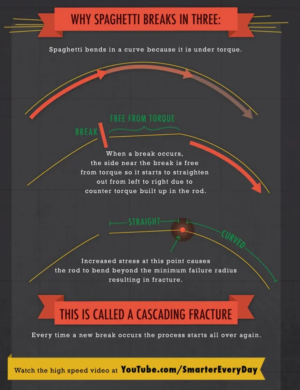
Got the mast pulled out the water today. It was in 3 separate 8 foot sections. Looks like there's a little more work than just new mast lower section repair and rigging. What sort of event must have happened to split it into 3. Can't see hitting the water do that sort of damage. At least it's all out the water.. And still got out for some motoring
 
Got the mast pulled out the water today. It was in 3 separate 8 foot sections. Looks like there's a little more work than just new mast lower section repair and rigging. What sort of event must have happened to split it into 3. Can't see hitting the water do that sort of damage. At least it's all out the water.. And still got out for some motoring
Possibly the same reason as spaghetti?
 

Attachments

  • 48441.png
    48441.png
    535.3 KB · Views: 14
Got the mast pulled out the water today. It was in 3 separate 8 foot sections. Looks like there's a little more work than just new mast lower section repair and rigging. What sort of event must have happened to split it into 3. Can't see hitting the water do that sort of damage. At least it's all out the water.. And still got out for some motoring
That's a shame.
I think you need a different mast. With a bit of luck, patience, and willingness to travel, you may find something. Being a small boat, you have the option of finding a larger mast and cutting it down. Keep all of the old one for now, you may want to transfer fittings from it.
Best of luck.
 
When looking for a mast bear in mind that actual mast height (sail area) is a compromise between getting good light weather performance and having a rig which will not need reefing/ sail area reduction when the wind blows harder. We have fairly consistent 18 knots wind in afternoon in summer such that I rarely have full sail area out. So if OP does come across a shorter mast it will be good in stronger winds but not so good in light winds. Not always a bad thing. Of course a samller mast will mean need to shorten stays (reterminate the bottom end) and possibly sail cut down. ole'will
 
The last thing the OP would want would be a shorter mast. It would involve sail re cutting, Probably some head banging on the boom & reduced performance. As for William H's comments about the wind; the OP does not say where he is based in his avetar but assuming the UK we do not have anything as predictable as Australia - other than rain on our days off
 
the OP does not say where he is based in his avetar but assuming the UK we do not have anything as predictable as Australia - other than rain on our days off

His boat is located at Rhu, Helensburgh, I think on the Rosneath side. This is the Firth of Clyde, at the mouth of the Gareloch (or Gare Loch). Rhu marina, way back in the 80's was wrecked in a storm from the SE, similar to Storm Amy. Today Rhu Marina has better protection.
 
When looking for a mast bear in mind that actual mast height (sail area) is a compromise between getting good light weather performance and having a rig which will not need reefing/ sail area reduction when the wind blows harder. We have fairly consistent 18 knots wind in afternoon in summer such that I rarely have full sail area out. So if OP does come across a shorter mast it will be good in stronger winds but not so good in light winds. Not always a bad thing. Of course a samller mast will mean need to shorten stays (reterminate the bottom end) and possibly sail cut down. ole'will
It's a Westerly Pageant. It needs all the performance it can get 😀
 
Top