splice 3 core to chain - which method would you use ?

I've used both with 10mm chain and 14mm (or might be 16mm) polyester but prefer the back splice which is apparently stronger. Also easier so see any wear. Both go easily over our windlass.
 
I would need some clarification.

If you are using a mixed rode to save weight then you sensibly will be using a smaller sized high tensile chain. If you then match the rope to the chain you will find the rope to be oversized and difficult, if not impossible, to splice to the smaller chain. The solution then is to use some form of enlarged link at the junction of rope and chain - but then you will be unable to sensibly use the rode with a gypsy - as the enlarged link will jamb in the gypsy.

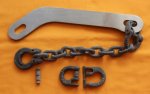
This is one example of the use of 'enlarged' links - in this case use of a hammerlock at one end of a boomerang and an omega link at the other end of the chain. Both make ideal enlarged end links, both would accept a splice of rope with the same strength as the chain - but neither will pass through the gypsy.

If you are downsizing chain, so the size (not the strength) is less than recommended on a conventional chain/yacht spread sheets then the use of a mixed rode is an issue that is simply ignored by chain suppliers - their expectation appears to be that you do not use, say, G70 chain in a mixed rode.

IMG_0050.jpeg

Apologies if I have introduced a bit of thread drift.

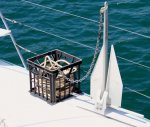
Our spare, or second rode, is 6mm high tensile chain with a strength of 4t (replacing 8mm G30 with MBS of 3,000kg (actual 4,000kg) and 12mm 3 ply (MBS of 3,000kg). The connection of chain to rope is a simple eye splice and an Omega link. At the anchor end we have used a G80 shackle and hammerlock

IMG_0349.jpeg

The 6mm chain we use in the spare rode is simply a 15m length from the chain we use as our primary rode (our yacht is a 38' cat, weighing 7t fully laded for a 3 month independent] cruise). Our primary rode, 75m, is all chain.

Jonathan
 
I used to haul chain through a pot hauler which doesn't haul chain at all. If you had to pass a splice, thimble, shackle, it's the same: I had a slackback, a rope alongside, when the chain arrived I would transfer to the rope and haul the anchor up with that.
 
Check with Lewmar.

Quick recommend a quasi-back splice, which I have used and works well. 2 strands one way, the third the other way. No evidence of frayed strands after a few nights' use in max 35 knots. Quick said "we cannot recommend or comment on the performance of any other splice".

Either way, it seems reasonable to shorten and re-splice every now and again, or after heavy use
 
I've used both and tested both.

The advantage of the backsplice method is that a drunken monkey can get it right. The disadvantage is that it does not feed through a vertical windlass if high strength chain is used with suitable rope (rope working load does not need to equal chain working load, because the maximum load is less, but you need to get close).

The advantage of the second method is that it goes through a vertical windlass like silk and will go through with a fatter rope. The primary disadvantage is that it takes a more skilled hand to get it right (equal tension). As for weakness, not really; it tests at about 90% of the backsplice, and is stronger if a larger rope can be used. The rope won't break at the splice anyway, it will break where the it bears on the side of the roller or where is wraps around something sharp or abrasive.

I'll use the first method if there is no windlass or a horizontal windlass, and the second method for a vertical windlass.

Often the main reason to resplice is that the last link corrodes from being wrapped in wet rope.

---

The differnce only matters if you are frequently passing the splice through the windlass. Most of us anchor all-chain 95% of the time. If you have only a little chain, you'll be pulling it by hand. I only switched to the long splice method when I started doing some testing that required much longer than my customary scope.
 
I have little, ie no, experience of the anchor windlass you use.
However, if you were to splice a thimble in the rope end and use a shackle to the chain that is best practice, but won't pass through, yes?
So have a short rope with a hook or pelican. Haul the rope rode up to the shackle, then use the hook into the chain as far down as you can reach to bring some slack chain into the gypsy.
 
I have little, ie no, experience of the anchor windlass you use.
However, if you were to splice a thimble in the rope end and use a shackle to the chain that is best practice, but won't pass through, yes?
So have a short rope with a hook or pelican. Haul the rope rode up to the shackle, then use the hook into the chain as far down as you can reach to bring some slack chain into the gypsy.

There is no reason to say that a shackle and thimble is best practice. Additional failure points, snag points, and not stronger. More like an archaic practice. The sole advantage is that it is a little quicker to end-for-end the rodes, or to add length.

I splice the chain to the rode even when there is no windlass; easier to handle, nothing to snag, no shackle to come loose.
 
Top