Spade anchors

The only downside I've found is that the spade penetrates weed quite well. Mostly it holds but sometimes not. End of last season I woke up at sea heading towards the Corryvreckan. With my previous anchors CQR, Danforth, Delta and Bruce if you were on weed you could generally tell but with the Spade it's a bit more difficult. It also brings up rather a lot of the seabed on occasions but at least that's never too much of a problem.
 
Mostly it holds but sometimes not.
As I indicated earlier, the steel Spade is an excellent anchor, but its Achilles heel is thick weed. The bulky balast chamber struggles to penetrate thick weed.

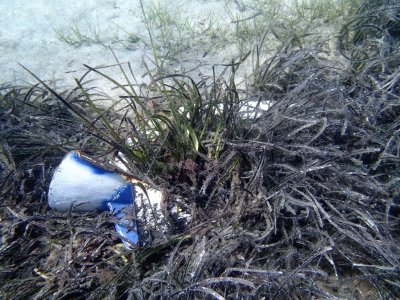
Below is just one example in a small patch of only mild/moderate weed where the anchor is struggling to penetrate the weed bed despite being given every chance with a reasonable setting distance and adequate scope ( 8m @ 4:1).

IMG_8571.jpeg
 
As I indicated earlier, the steel Spade is an excellent anchor, but its Achilles heel is thick weed. The bulky balast chamber struggles to penetrate thick weed.

Below is just one example in a small patch of only mild/moderate weed where the anchor is struggling to penetrate the weed bed despite being given every chance with a reasonable setting distance and adequate scope ( 8m @ 4:1).

View attachment 199361
Interesting. We find that our Spade performs exceptionally well in weed. Lots of reverse engine thrust and the anchor will penetrate through the weed with the sharp tip. We don't have an oversized anchor, so that probably helps penetrate the weed.
 
Interesting. We find that our Spade performs exceptionally well in weed. Lots of reverse engine thrust and the anchor will penetrate through the weed with the sharp tip. We don't have an oversized anchor, so that probably helps penetrate the weed.
Maybe depends on the weed. I bought the spade because of seagrass in the Med. Made no difference. But if there was no weed it would hold a cruise ship.
 
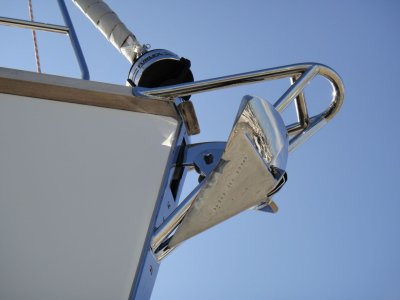
Our Spade anchor is now 10 years old and still looks exactly the same as the photo. I felt that investing in the stainless steel version would work out cheaper in the end, but I'd probably need to live for 200 years before breaking even. It does, however, look wonderfully bling on the bow, and it has never let us down; first time, every time setting, and never dragging...


anchor.JPG
 
As I indicated earlier, the steel Spade is an excellent anchor, but its Achilles heel is thick weed. The bulky balast chamber struggles to penetrate thick weed.

Below is just one example in a small patch of only mild/moderate weed where the anchor is struggling to penetrate the weed bed despite being given every chance with a reasonable setting distance and adequate scope ( 8m @ 4:1).

View attachment 199361
Noelex,
I used to hv a 20 kg Bruce which I changed to 20kg Spade bec the Bruce was struggling in weed. I love the success of the Spade design but changed to the 25 kg (they call it their S120). I think anchoring technique might play a role in weed. I make sure I am slowly in reverse when the anchor reaches the sea bed. This orientate it in the right direction as well as avoiding any chain falling on top of it. Then I let out 30-40m but DO BACK DOWN to dig in the anchor until about 5 mins have passed. If you back down immediately many anchors will skim through the weed collecting an enormous bunch so the top never get a chance to dig in.
Top marks for the Spade design. Bottom marks for the galv but there is a solution to that.
 
Some of you might have noticed that I am a big fan of Spade anchors. I have been using them since 2004. They are an excellent holding anchor and they set very quickly in their own length. Here is the rub.
The galvanising is terrible. In 2020 we found ourselves back in the UK having been in and around the Caribbean since 2014 on this boat. Whilst I was home I decided to do something about my very rusty Spade anchor. After numerous calls and emails Spade very kindly offered to provide me with a new Spade at half price on the proviso that I cut the old one up and sent them a photo. I did this and a couple of weeks later took ownership of a shiny new Spade.
During our conversations with the UK suppliers we talked at length about the reason why my old Spade was a ball of rust. I spoke to my friend who is a metalagist and we agreed that the exposed lead and zinc coating of the anchor in seawater was likely contributory. We sent Spade evidence to this effect. We also said that I intended to pour epoxy into the top of the ballast chamber on the new anchor to encapsulate the lead and thereby isolate the lead from the galvanising. When mine turned up it had already been done. In fact all Spades now seem to have this epoxy addition.
In July 2021 we relaunched our boat and sailed from Lancaster to the isles of Scilly, then Falmouth, Bayona in Spain, Cascais, the Algarve, the Canaries then the Caribbean. Apart from a six week stay in a marina where we did a stint back in the UK for family reasons and an attempt at Portuguese residency, we have either been sailing or at anchor.
The new Spade anchor is rusty. It's not just at the pointy end but all over in locations that you wouldn't expect. More emails with the UK importers and they offered to give me another one at the cost of shipping to the UK and VAT. All in about £200. That then leaves me with problem if getting it to the boat in the Caribbean.
I tried to explain that they have an issue with their galvanising but they don't want to know. They suggest I have an electrolyse problem. By comparison, my anchor chain lasts about three to four years before it starts to show rust. That is being constantly rubbed across the seabed by the movement of the boat but still lasts at least three times as long as the galvanising on the Spade.
I have declined a new Spade anchor. It would cost me about £400 to ship it to Curacao. I could get a friend to bring one out for me but in 12 months I would be in the same situation with a rusty Spade. Until Spade can accept they have a problem and address the galvanising issue, I for one won't be buying another one even heavily discounted.
It might be time to try a Viking ..
Your experience closely tracks mine.

And that's why there's an Ultra on my bow roller now, and the Spade is apart in the bilge.

My impression -- and this is just an impression, no science to it -- is that the galvanising of the Spade is simply poorly done. I've had lots of other anchors in a lifetime of cruising, and never had one rust anywhere near like my various Spades have (and I've been using various Spades on three different boats since the 90's).

If this is true, then I would think that there is a good chance that a good, heavy hot-dip coat from a competent galvaniser could make all the difference. I've had Rocnas, Deltas, CQR's, all of which lasted for many years without a spot of rust. I see no reason why Spade couldn't be galvanised to the same standard.
 
Noelex,
I used to hv a 20 kg Bruce which I changed to 20kg Spade bec the Bruce was struggling in weed. I love the success of the Spade design but changed to the 25 kg (they call it their S120). I think anchoring technique might play a role in weed. I make sure I am slowly in reverse when the anchor reaches the sea bed. This orientate it in the right direction as well as avoiding any chain falling on top of it. Then I let out 30-40m but DO BACK DOWN to dig in the anchor until about 5 mins have passed. If you back down immediately many anchors will skim through the weed collecting an enormous bunch so the top never get a chance to dig in.
Top marks for the Spade design. Bottom marks for the galv but there is a solution to that.
I agree with this.

Technique is critical in this type of bottom. But I think not only with the Spade, but pretty much any anchor.

In my experience the Spade does quite OK in weed -- if used correctly. Because it's balanced to come down on its tip, which is just what you want in weed. And the tip is pretty sharp, even if the heel of the anchor, with the ballast chamber, is somewhat bulky, as Noelex said.

Another point -- the anchor size may play a big role here. Different sizes of anchors don't scale exactly -- weight goes up faster than fluke area. A lot faster. So larger size anchors are DENSER, with more weight per unit of area and therefore better penetration. I think this goes far to explain the widely observed but inexplicable "100 pound magic", where anchor starting with this size suddenly perform much better.

Obviously weight and density are not the only things which produces penetration of the seabed -- the fluke geometry and sharpness are also important, are more important, actually. But other things being equal, a denser anchor will punch through weed better.
 
I use a fishfinder which shows me precisely where weed is or isn't. I'm not saying that you can always avoid it, but I know some anchorages which are notorious for weed, but there are often clear patches, which the fishfinder can find for me. If all else fails, I carry an old fashioned fisherman (anchor). I've used it very seldom.
 
We had a ~15kg aluminium Spade anchor when we bought our (aluminium) Ovni 385 in 2004, and after nearly 20 years (and an awful lot of nights at anchor), it had a tiny bit of corrosion around the edges but that was it. I think it dragged once in ~20 years (when admittedly we were very close inshore and didn't have a huge amount of chain out).
 
I agree with this.

Technique is critical in this type of bottom. But I think not only with the Spade, but pretty much any anchor.

In my experience the Spade does quite OK in weed -- if used correctly. Because it's balanced to come down on its tip, which is just what you want in weed. And the tip is pretty sharp, even if the heel of the anchor, with the ballast chamber, is somewhat bulky, as Noelex said.

Another point -- the anchor size may play a big role here. Different sizes of anchors don't scale exactly -- weight goes up faster than fluke area. A lot faster. So larger size anchors are DENSER, with more weight per unit of area and therefore better penetration. I think this goes far to explain the widely observed but inexplicable "100 pound magic", where anchor starting with this size suddenly perform much better.

Obviously weight and density are not the only things which produces penetration of the seabed -- the fluke geometry and sharpness are also important, are more important, actually. But other things being equal, a denser anchor will punch through weed better.
When I regalvanised the Spade anchor I described in my previous post, I added a little bit more lead to the tip to make up for a bit I lost during the removal. When I weighed it, the 30kg Spade anchor weighed 33kg. My bit more was in fact, quite a bit more. Its sets great!!
 
When I regalvanised the Spade anchor I described in my previous post, I added a little bit more lead to the tip to make up for a bit I lost during the removal. When I weighed it, the 30kg Spade anchor weighed 33kg. My bit more was in fact, quite a bit more. Its sets great!!
I think this improvement would be sensible. The Spade anchor has a high tip weight, which contributes to its ability to set in difficult substrates. Increasing this further should help performance.
 
Previous owners had used Hammerite but that is pointless in key wear areas like the point and pivot.
But doesn't galvanizing (even "good galvanizing"?) also wear off in those areas?

When/if I get access to my boat and anchor again I'll be trying my aluminium/vegetable oil trick on it. I dont expect it to resist wear but am pretty confident it will resist rusting while not in use, which I'd guess is when most of the rusting happens.
 
I'll be trying my aluminium/vegetable oil trick on it.
Is it like wok curing the traditional way, i.e. successively burning to charcoal thin layers of oil until it all becomes bright black? I cured two woks that way and the burnishing lasts a very long time even when using metal spoons scrapers etc, good idea might try that on the anchor tip indeed, saves from using a wok to anchor :)
 
But doesn't galvanizing (even "good galvanizing"?) also wear off in those areas?

When/if I get access to my boat and anchor again I'll be trying my aluminium/vegetable oil trick on it. I dont expect it to resist wear but am pretty confident it will resist rusting while not in use, which I'd guess is when most of the rusting happens.
Galvanising can protect adjacent areas so losing a little bit of coating on e.g. the tip of the anchor might not be as bad as you'd think.
 
Spade aluminium anchors have suffered severe galvanic corrosion between the aluminium and the lead ballast. Corrosion
They tried to overcome the problem by casting epoxy above the lead but I have heard of several similar problems since.
Spade aluminium anchors are also are prone to the shank bending. I have bent 2 since 2004. On the Spade, if the shank is not 100% straight, they do not work at all well, now using a steel spade for the last 4 years not much rust yet!
 
Spade aluminium anchors are also are prone to the shank bending. I have bent 2 since 2004. On the Spade, if the shank is not 100% straight, they do not work at all well, now using a steel spade for the last 4 years not much rust yet!
How much time do you spend at anchor. Mine has been buried in the sea bed pretty well for the last 5 weeks. We will be spending the next 18 month at anchor when not sailing
 
Is it like wok curing the traditional way, i.e. successively burning to charcoal thin layers of oil until it all becomes bright black? I cured two woks that way and the burnishing lasts a very long time even when using metal spoons scrapers etc, good idea might try that on the anchor tip indeed, saves from using a wok to anchor :)
A wok with a stock would be essentially a mushroom anchor, so would probaby do ok in mud until/if it turned inside out.
 
Top