
Spade anchors

geem

Well-Known Member
Joined
27 Apr 2006
Messages
9,233
Location
Caribbean
Visit site
Some of you might have noticed that I am a big fan of Spade anchors. I have been using them since 2004. They are an excellent holding anchor and they set very quickly in their own length. Here is the rub.
The galvanising is terrible. In 2020 we found ourselves back in the UK having been in and around the Caribbean since 2014 on this boat. Whilst I was home I decided to do something about my very rusty Spade anchor. After numerous calls and emails Spade very kindly offered to provide me with a new Spade at half price on the proviso that I cut the old one up and sent them a photo. I did this and a couple of weeks later took ownership of a shiny new Spade.
During our conversations with the UK suppliers we talked at length about the reason why my old Spade was a ball of rust. I spoke to my friend who is a metalagist and we agreed that the exposed lead and zinc coating of the anchor in seawater was likely contributory. We sent Spade evidence to this effect. We also said that I intended to pour epoxy into the top of the ballast chamber on the new anchor to encapsulate the lead and thereby isolate the lead from the galvanising. When mine turned up it had already been done. In fact all Spades now seem to have this epoxy addition.
In July 2021 we relaunched our boat and sailed from Lancaster to the isles of Scilly, then Falmouth, Bayona in Spain, Cascais, the Algarve, the Canaries then the Caribbean. Apart from a six week stay in a marina where we did a stint back in the UK for family reasons and an attempt at Portuguese residency, we have either been sailing or at anchor.
The new Spade anchor is rusty. It's not just at the pointy end but all over in locations that you wouldn't expect. More emails with the UK importers and they offered to give me another one at the cost of shipping to the UK and VAT. All in about £200. That then leaves me with problem if getting it to the boat in the Caribbean.
I tried to explain that they have an issue with their galvanising but they don't want to know. They suggest I have an electrolyse problem. By comparison, my anchor chain lasts about three to four years before it starts to show rust. That is being constantly rubbed across the seabed by the movement of the boat but still lasts at least three times as long as the galvanising on the Spade.
I have declined a new Spade anchor. It would cost me about £400 to ship it to Curacao. I could get a friend to bring one out for me but in 12 months I would be in the same situation with a rusty Spade. Until Spade can accept they have a problem and address the galvanising issue, I for one won't be buying another one even heavily discounted.
It might be time to try a Viking ..
 
Why not regalvanize it? You need to melt out the lead first, quite easy to do with a blowlamp or even a gas stove. I assume there will be plenty of galvanizers around the Carribbean who can hot dip it for you. Then pour molten lead back in. Solve the current problem and probably the original one.
 
Why not regalvanize it? You need to melt out the lead first, quite easy to do with a blowlamp or even a gas stove. I assume there will be plenty of galvanizers around the Carribbean who can hot dip it for you. Then pour molten lead back in. Solve the current problem and probably the original one.
There are no galvanizers in the Caribbean. Nearest one we know is in Colombia. We could get it done back at home in the future but probably about 3 years off. It will be scrap at the current rate of corrosion by then
 
Some of you might have noticed that I am a big fan of Spade anchors. I have been using them since 2004. They are an excellent holding anchor and they set very quickly in their own length. Here is the rub.
The galvanising is terrible. In 2020 we found ourselves back in the UK having been in and around the Caribbean since 2014 on this boat. Whilst I was home I decided to do something about my very rusty Spade anchor. After numerous calls and emails Spade very kindly offered to provide me with a new Spade at half price on the proviso that I cut the old one up and sent them a photo. I did this and a couple of weeks later took ownership of a shiny new Spade.
During our conversations with the UK suppliers we talked at length about the reason why my old Spade was a ball of rust. I spoke to my friend who is a metalagist and we agreed that the exposed lead and zinc coating of the anchor in seawater was likely contributory. We sent Spade evidence to this effect. We also said that I intended to pour epoxy into the top of the ballast chamber on the new anchor to encapsulate the lead and thereby isolate the lead from the galvanising. When mine turned up it had already been done. In fact all Spades now seem to have this epoxy addition.
In July 2021 we relaunched our boat and sailed from Lancaster to the isles of Scilly, then Falmouth, Bayona in Spain, Cascais, the Algarve, the Canaries then the Caribbean. Apart from a six week stay in a marina where we did a stint back in the UK for family reasons and an attempt at Portuguese residency, we have either been sailing or at anchor.
The new Spade anchor is rusty. It's not just at the pointy end but all over in locations that you wouldn't expect. More emails with the UK importers and they offered to give me another one at the cost of shipping to the UK and VAT. All in about £200. That then leaves me with problem if getting it to the boat in the Caribbean.
I tried to explain that they have an issue with their galvanising but they don't want to know. They suggest I have an electrolyse problem. By comparison, my anchor chain lasts about three to four years before it starts to show rust. That is being constantly rubbed across the seabed by the movement of the boat but still lasts at least three times as long as the galvanising on the Spade.
I have declined a new Spade anchor. It would cost me about £400 to ship it to Curacao. I could get a friend to bring one out for me but in 12 months I would be in the same situation with a rusty Spade. Until Spade can accept they have a problem and address the galvanising issue, I for one won't be buying another one even heavily discounted.
It might be time to try a Viking ..
That’s why we bought Vulcan. So far so good.
 
Leaving aside appearance, how do you assess whether the rust on an anchor has gone from cosmetic to structural? I can live with a rough looking anchor as long as I know its sound.

I suspect the answer is similar to anchor chain.....

Previous owners had used Hammerite but that is pointless in key wear areas like the point and pivot.
 
We have a Spade, new in 2006. We’re based in Greece so at anchor 4-5 months pa. Theres surface rust, but nothing like the flaky rust of our old anchor chain. Every few years I paint the top of the blade in yellow Hammerite, which lasts well.
Ours has many years use left!
 
Leaving aside appearance, how do you assess whether the rust on an anchor has gone from cosmetic to structural? I can live with a rough looking anchor as long as I know its sound.

I suspect the answer is similar to anchor chain.....

Previous owners had used Hammerite but that is pointless in key wear areas like the point and pivot.
It's a long way off structural but it's only going in one direction ?
Once the things going flakey and you have rust all over the deck as our last Spade did, you will want to get rid.
We have a Spade, new in 2006. We’re based in Greece so at anchor 4-5 months pa. Theres surface rust, but nothing like the flaky rust of our old anchor chain. Every few years I paint the top of the blade in yellow Hammerite, which lasts well.
Ours has many years use left!
My last one was better. The current one definitely has a galvanising problem
 
Ours is aluminium. It's my first Spade experience, it came with the boat. I count myself lucky. Fling it overboard and put the kettle on, almost. We spent the weekend watching others struggle, Maybe the thing to do is get the alloy version, or stainless steel
 
Ours is aluminium. It's my first Spade experience, it came with the boat. I count myself lucky. Fling it overboard and put the kettle on, almost. We spent the weekend watching others struggle, Maybe the thing to do is get the alloy version, or stainless steel
Spade aluminium anchors have suffered severe galvanic corrosion between the aluminium and the lead ballast. Corrosion
They tried to overcome the problem by casting epoxy above the lead but I have heard of several similar problems since.
 
I've noticed some serious rust appearing on the pointy bit of my spade, and I was wondering what to do about it. Like geem I'm not in a place where regalvanising is possible, but as I've been anchoring for about 320 days per year for the last 5 years, maybe its just time to bite the bullet and get another one. The problem is that they are such a good anchor that I don't really want to change
 
4 years life, measured in nights at anchor, seems about right for the life of chain. This assumes not 24hrs x 4 years - the assumption is you day sail as well. Its a very vague figure but seems to be what liveaboards achieve. Expecting an anchor to be much different is a big ask. It might be 3 years or 5 years but given the environment in which it is used and the fact it will be galvanised to a similar specification to the chain - I'd expect the life of the galvanising, hot dipped, to be about the same.

I'm obviously interested and have been noting what people post on the life of their chain, here and on CF. 1,200 days is typical. Oddly they don't mention their anchor.

Most galvanising is to a specification of 80 microns, so 4 years means 20 microns a year - wear of 20 microns a year is pretty amazing when you consider that the chain is constantly rubbed over an abrasive surface - and in the case of the anchor is driven into the seabed, also abrasive, will move a little in use and is then pulled out of that abrasive medium.

Add to this the fact the chain is washed with salt water, sometimes left with some mud on it, is stored in a damp (humid - liveaboards tend to be located in a warm climate) environment.

Crude arithmetic - that's 2 microns of abrasion + chemical degradation a month.

There is no alternative (apart from thermal diffusion galvanising) - live with it.

Thermal diffusion galvanising (I use Armrogalv but there are a few other processes) produces a harder coating (and hardness determines abrasion resistance) and is all alloy - no metallic zinc. My specification is 100 microns. Hot Dipped Galvanising might be 80 microns, who measures it, who cares, but some of that coating is pure, shiny, zinc and zinc is soft. When you buy your chain I bet you want the shiny chain :( . I've mentioned it before - who queries the galvanising thickness, of their chain or anchor - who cares - until it starts to rust (and then you complain)

My chain is thus coated with a harder galvanised coating than normal hot dipped galvanising. My coating is all hard alloy, HDG has an over layer of soft zinc. My coating is over 20% thicker than HDG.

I have had a number of recent discussion about TDG coating thickness - because its harder and has no zinc processors want to thin down the coating - they seem unable to grasp that chain is used in an abrasive environment. The US Navy specification for TDG on chain is 80 microns. Theoretically both HDG and TDG could be much thinner - as most items are only subject to, at worst, acid pollution - no abrasion at all. The studs used to hold up wind farm towers are being specified in TDG. The studs are about 2m long, 100mm in diameter - 120 are used to hold up the pylon. They are set in concrete - they suffer no pollution, no abrasion - there is no great need for thickness of coating - it simply needs to be flaw free.

So reflecting on my ideas - does your anchor last a similar length of time to the chain. Are your expectations too high. I recall a well known member here complaining with passion that his G70 chain lasted only 4 years. I think he thought that because it was a G70 and expensive it should last longer - why - its the same galvanising process, its galvanised to the same specification - why would it last longer? If no-one asks about gal thickness - why not shave a few microns off the coating (it will save money for the galvaniser - as long as its shiny zinc ..... who cares).


I note someone suggesting their Vulcan would last longer than a Spade - why? Unless you are a live aboard you will never test the gal on your new anchor and new chain - you will have sold the boat and the boat might need to pass through 4 or 5 owners before you approach 1,200 nights at anchor.

Take care, stay safe

Jonathan
 
I removed the lead and had a 10kg Spade regalvanised, TDG aka Armorgalv. Being 10kg it was relatively easy - weight does make a difference.

However the process is relatively easy - but you do need a convenient galvaniser. I had the anchor TDG coated with a new 6mm chain,, replacing 8mm chain, for the owner.

For more detail check here:

Removing lead and galvanising a Spade anchor

Jonathan
 
4 years life, measured in nights at anchor, seems about right for the life of chain. This assumes not 24hrs x 4 years - the assumption is you day sail as well. Its a very vague figure but seems to be what liveaboards achieve. Expecting an anchor to be much different is a big ask. It might be 3 years or 5 years but given the environment in which it is used and the fact it will be galvanised to a similar specification to the chain - I'd expect the life of the galvanising, hot dipped, to be about the same.

I'm obviously interested and have been noting what people post on the life of their chain, here and on CF. 1,200 days is typical. Oddly they don't mention their anchor.

Most galvanising is to a specification of 80 microns, so 4 years means 20 microns a year - wear of 20 microns a year is pretty amazing when you consider that the chain is constantly rubbed over an abrasive surface - and in the case of the anchor is driven into the seabed, also abrasive, will move a little in use and is then pulled out of that abrasive medium.

Add to this the fact the chain is washed with salt water, sometimes left with some mud on it, is stored in a damp (humid - liveaboards tend to be located in a warm climate) environment.

Crude arithmetic - that's 2 microns of abrasion + chemical degradation a month.

There is no alternative (apart from thermal diffusion galvanising) - live with it.

Thermal diffusion galvanising (I use Armrogalv but there are a few other processes) produces a harder coating (and hardness determines abrasion resistance) and is all alloy - no metallic zinc. My specification is 100 microns. Hot Dipped Galvanising might be 80 microns, who measures it, who cares, but some of that coating is pure, shiny, zinc and zinc is soft. When you buy your chain I bet you want the shiny chain :( . I've mentioned it before - who queries the galvanising thickness, of their chain or anchor - who cares - until it starts to rust (and then you complain)

My chain is thus coated with a harder galvanised coating than normal hot dipped galvanising. My coating is all hard alloy, HDG has an over layer of soft zinc. My coating is over 20% thicker than HDG.

I have had a number of recent discussion about TDG coating thickness - because its harder and has no zinc processors want to thin down the coating - they seem unable to grasp that chain is used in an abrasive environment. The US Navy specification for TDG on chain is 80 microns. Theoretically both HDG and TDG could be much thinner - as most items are only subject to, at worst, acid pollution - no abrasion at all. The studs used to hold up wind farm towers are being specified in TDG. The studs are about 2m long, 100mm in diameter - 120 are used to hold up the pylon. They are set in concrete - they suffer no pollution, no abrasion - there is no great need for thickness of coating - it simply needs to be flaw free.

So reflecting on my ideas - does your anchor last a similar length of time to the chain. Are your expectations too high. I recall a well known member here complaining with passion that his G70 chain lasted only 4 years. I think he thought that because it was a G70 and expensive it should last longer - why - its the same galvanising process, its galvanised to the same specification - why would it last longer? If no-one asks about gal thickness - why not shave a few microns off the coating (it will save money for the galvaniser - as long as its shiny zinc ..... who cares).


I note someone suggesting their Vulcan would last longer than a Spade - why? Unless you are a live aboard you will never test the gal on your new anchor and new chain - you will have sold the boat and the boat might need to pass through 4 or 5 owners before you approach 1,200 nights at anchor.

Take care, stay safe

Jonathan
A quick add up and I reckon we have done about 235 days at anchor since the Spade went in to service. General corrosion in areas you wouldn't expect demonstrates the very poor galvanising on my Spade. Very disappointed as I think it is a great anchor.
 
Spade aluminium anchors have suffered severe galvanic corrosion between the aluminium and the lead ballast. Corrosion
They tried to overcome the problem by casting epoxy above the lead but I have heard of several similar problems since.
I’ll bring mine home this winter, wash and inspect it, but it looks ok at the moment. A bit of protection should slow that up, and for recreational users like me, I think it’ll last long enough.
 
I’ll bring mine home this winter, wash and inspect it, but it looks ok at the moment. A bit of protection should slow that up, and for recreational users like me, I think it’ll last long enough.

There is some sort of romantic notion that ground tackle will last for ever, unlike virtually every other item used on a yacht. No-one complains (well they do complain but no notice is taken) that their sails wear out, their antifouling loses its potency, that ropes are abraded, their rigging needs to be replaced (and the yacht looks old a tired). If we are a bit more critical - the owner also ages :). So why this idea that anchor chain and anchors will last forever. Where did this idea come from?
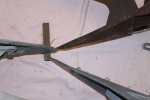
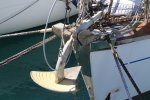
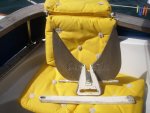
We have had an alloy Spade, A80, for almost 2 decades. Initially we did not have a weight fixation and it was simply 'another' anchor. When we became more focussed on weight it became our standby anchor - and was always on the boat. Its been on the boat in a bow locker for 15 years. It is our go to anchor whenever we anchor in a 'V' or fork. Its easier to deploy than a Fortress from a dinghy. I had no ideas of 'longevity' at the time and never documented usage. I have no idea, being honest and considering statistical accuracy, how many times we have used it - but it has been used and never washed, it does sit in a bow locker - there is no sign of corrosion.

The shank is another story - ours bent, enough to be a slight worry, and I made a new one from a solid plate from the 5083 aluminium alloy using an angle grinder. The new shanks works well enough that we continue to use it.

Our primary anchor is an Anchor Right aluminium anchor, their No4, which replaces our No 4 steel Excel. The aluminium Excel has a 7075 aluminium alloy shank. Armchair gurus claim 7075 has poor corrosion resistance - reality is different - after 10 years as our primary - no corrosion. I bowed to the armchair gurus (a big mistake) - I should have used 7075 not the 5083 I used for our Spade and my home made shank could have been thinner (and lighter). The steel Excel has steel cast into the toe. I believe the aluminium Excel also has steel in the toe but don't think it possible to cast steel into the aluminium ballast chamber. I have, at the back of my mind, that they drop a cast steel weight into the toe and then seal the toe by welding a plate to the rear of the ballast chamber - so no moisture in the chamber - thus no chance of corrosion.

I'm a fan of aluminium anchors, Fortress, Spade, Excel - but there is an obvious cost, I'm prepared to pay the price - I understand why others might not. My enthusiasm for aluminium is the weight saving (which is part of a philosophy) but it is unnecessary for many heavier yachts (but the philosophy has merit for the AWBs commissioned over the last, say 10 or 15 years). Viking are now offering an alternative to aluminium as a means to save weight by their use of high tensile steels. Sadly lightweight anchors are an uphill struggle as the market is firmly wedded to weight - not design. We will retire the Spade in favour of the Viking. We would retire, to use as our 'second' anchor the Excel, promoting the Viking to primary - except it does not fit on our bow roller.

Illustrating how HT steel can save weight, top left - the fluke of a Mantus, top right - the fluke of a Rocna, bottom the fluke of a Viking. The anchors are similar in area. The Viking fluke has half the thickness of the Mantus, 255 of the thickness of the toe (aka ballast) of the Rocna.

IMG_4603.jpeg


If I look at Spade it was a revolutionary design that suffered from appalling marketing and languished. It was introduced in the early 90s. It may also have been too confrontational for the conservative anchor lobby. It has enjoyed some modification but the major complaints of galvanising and weak shanks have been largely ignored (it makes one weep). The major design improvements to the Spade concept have been made by Peter Smith, initially with his Rocna, then Vulcan (and the latter is also languishing, maybe we hav e enough anchor designs?), Ultra (a resounding success) and finally Epsilon - on which the jury is deliberating. Spade's revolutionary introduction was the fluke - the shank profile is a direct copy of Delta ( or a product of serendipity). Peter Smith has hardly taken design forward but has reduced production costs significantly. We need wait to see if Epsilon offers any improvement in design and costs.

These are two significant changes to Spade, one positive one a negative.

IMG_4919.jpeg

Most aluminium anchors are simply a copy of a steel anchor from the same manufacturer and designer - and this maybe be a problem in that they have not been designed based on aluminium but based on steel. The most successful aluminium anchor was designed to be made from aluminium (even though it is based on a concept from the 1930s). Maybe there are lessons to be learnt from Fortress.

There have been other aluminium anchors - this is an FOB Light

Bild 043.JPG

Jonathan
 
We would have bought a Spade in a heartbeat but having checked a few out in a marina, they all were rusty almost beyond recognition so money spent on another brand. I think if they could sort out the galvanising issue and aligned there prices similar to a popular brand beginning with R, they could quite easily take a market leading position. At current price/quality (of galvanising) it doesn't make much economic sense.
 
I can well understand why the galvanising on anchor chain wears away. We see how a boat swings about at anchor, and we've probably all seen the pretty pattern left on the sand or mud by the movement of the chain.
What I'm not so sure about is why it is acceptable that the galvanising on an anchor deteriorates at a similar rate. We're all led to believe by the aficionados of modern fashionable anchors, that they set within their own length, and having set, don't budge. If that's the case, and therefore the lack of abrasion, why does the galvanising wear so much and so fast?
 
Top